Pericles
Pericles (c. 495-429 BC) was an Athenian statesman and general whose name is linked with the height of Athenian democracy in the fifth century BC. His age is often treated as classical Athens at its peak, although it ended in the hard Peloponnesian War. In brief: - city: Athens; - office: strategos; - main themes: democracy, naval power, the Acropolis and war with Sparta; - significance: a symbol of the political and cultural strength of classical Hellas.
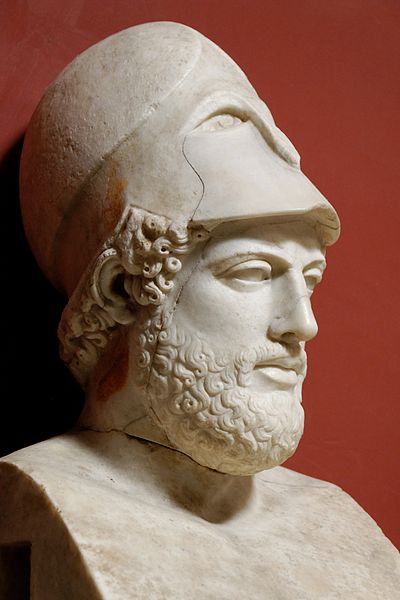 Bust of Pericles
Background and Political Setting
Pericles came from an aristocratic family, but his political career was tied to the democratic side. After the Persian Wars, Athens became a naval power and the center of the Delian League. This gave Pericles resources for domestic policy and at the same time increased tension with Ancient Greek poleis, especially Sparta.
Democracy and the Citizen Body
Under Pericles, Athenian democracy became more accessible to poorer citizens. Payment for jury service and public offices allowed citizens without large property to take part in politics. Yet Athenian democracy remained limited. Women, metics and enslaved people had no citizen rights, and the prosperity of the polis depended on allies who increasingly saw Athens as an imperial power.
Building Program
The most visible monument of Pericles' age is the building program on the Acropolis. The Parthenon, Propylaea and other structures expressed not only worship of Athena but also the political idea of Athenian leadership. For a modern reader it is important to see the double meaning of this program. It produced masterpieces of classical art, but was financed in the context of Athenian control over allied funds.
The Peloponnesian War
In 431 BC war began between Athens and the Peloponnesian League. Pericles proposed a strategy in which the people of Attica withdrew behind the walls while the Athenian fleet maintained pressure on the enemy. The strategy recognized the strength of the Spartan land army, but had severe consequences. Crowding in the city contributed to the plague, from which Pericles himself died.
Legacy
Pericles became a symbol of political leadership, rhetoric and cultural achievement. Thucydides preserved his funeral speech as an ideal image of Athenian civic ideology. At the same time his age shows the contradiction of classical Athens: internal democracy existed alongside the dependence of allies and growing inter-polis conflict.
Related topics
- Great Figures of Antiquity
- Athens
- Athenian Democracy
- Peloponnesian War
- Ancient Greece - Hellas
- Themistocles
Literature and sources
1. Herodotus. Histories. 2. Thucydides. History of the Peloponnesian War. 3. Plutarch. Parallel Lives. 4. Diodorus Siculus. Library of History.
Interested in Ancient Rome beyond reading? Join Legio X Fretensis or explore our reenactment directions.


