Rheinisches Landesmuseum Trier
The Rheinisches Landesmuseum Trier is important as the museum of one of the main Roman cities of the north-western provinces. It connects Augusta Treverorum, a late Roman capital, urban archaeology, inscriptions, mosaics, glass, funerary monuments and everyday objects.
Trier provides evidence not only for the military frontier but also for a civilian, elite and Late Antique city. It is a rare opportunity to show a Roman province through a major urban centre rather than only through a fort or frontier camp.
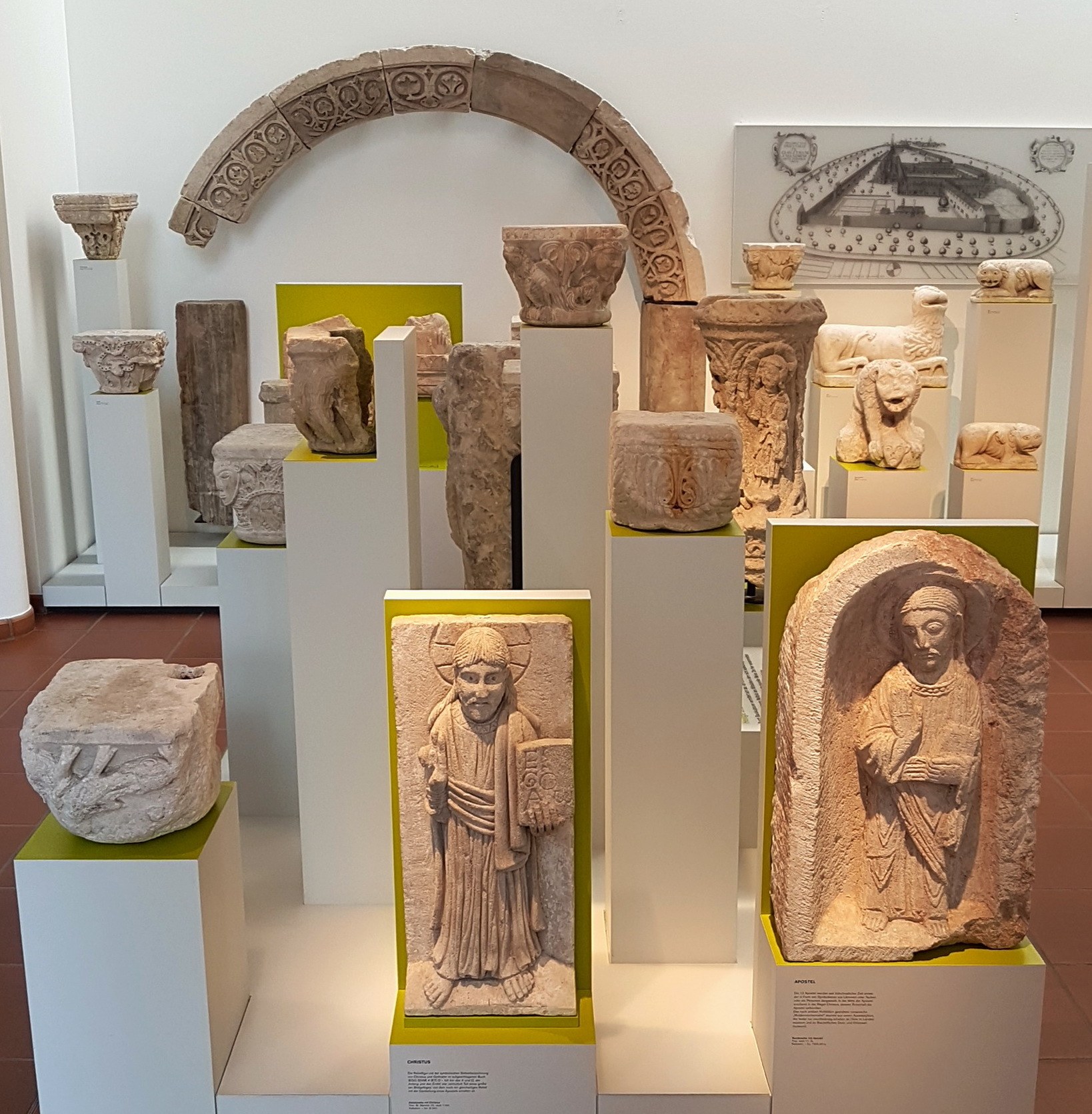 Rheinisches Landesmuseum Trier: 2018 Rheinisches Landesmuseum Trier, romanische Bauskulpturen 01.
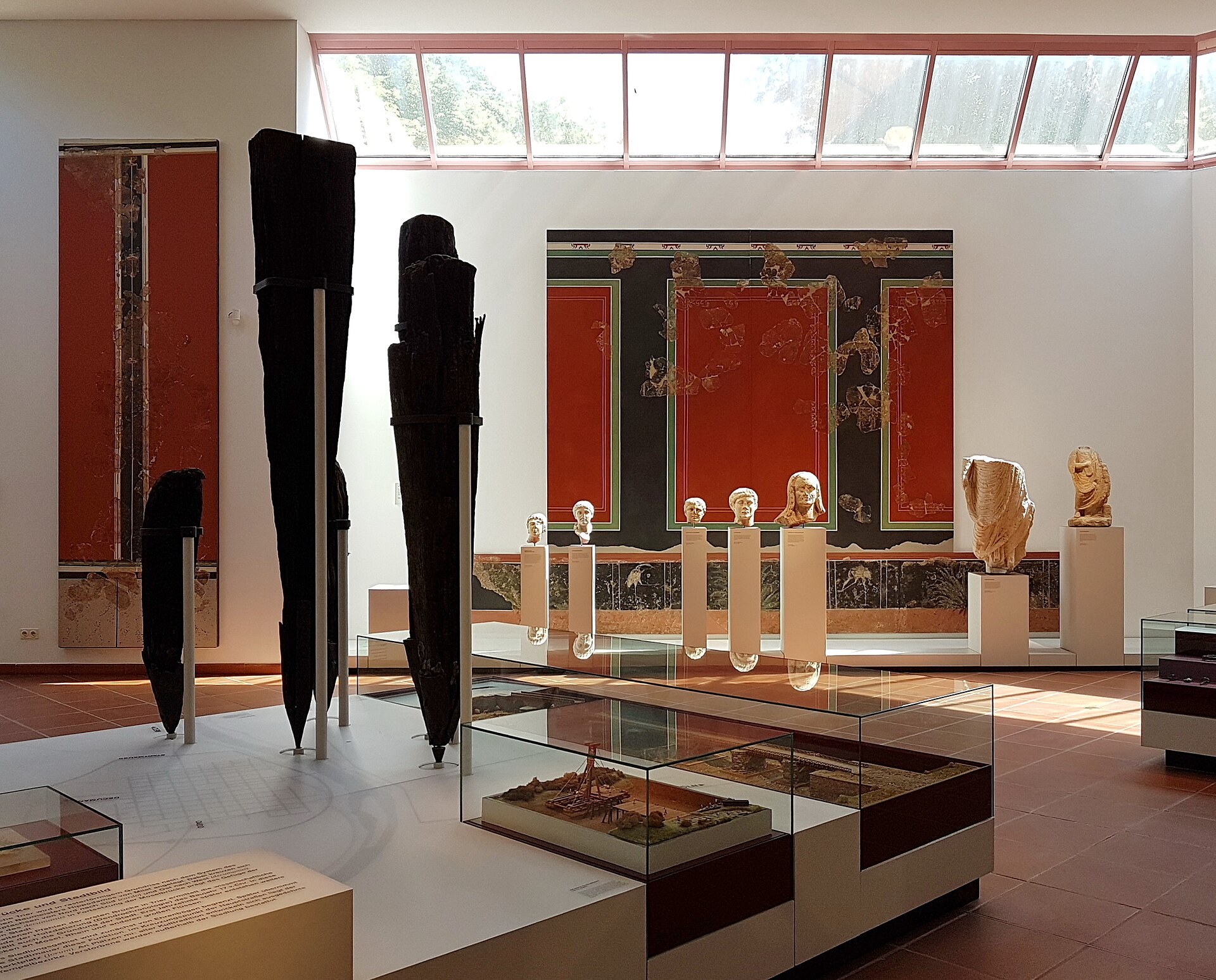 Rheinisches Landesmuseum Trier: 2018 Rheinisches Landesmuseum Trier, Freskensaal 1.
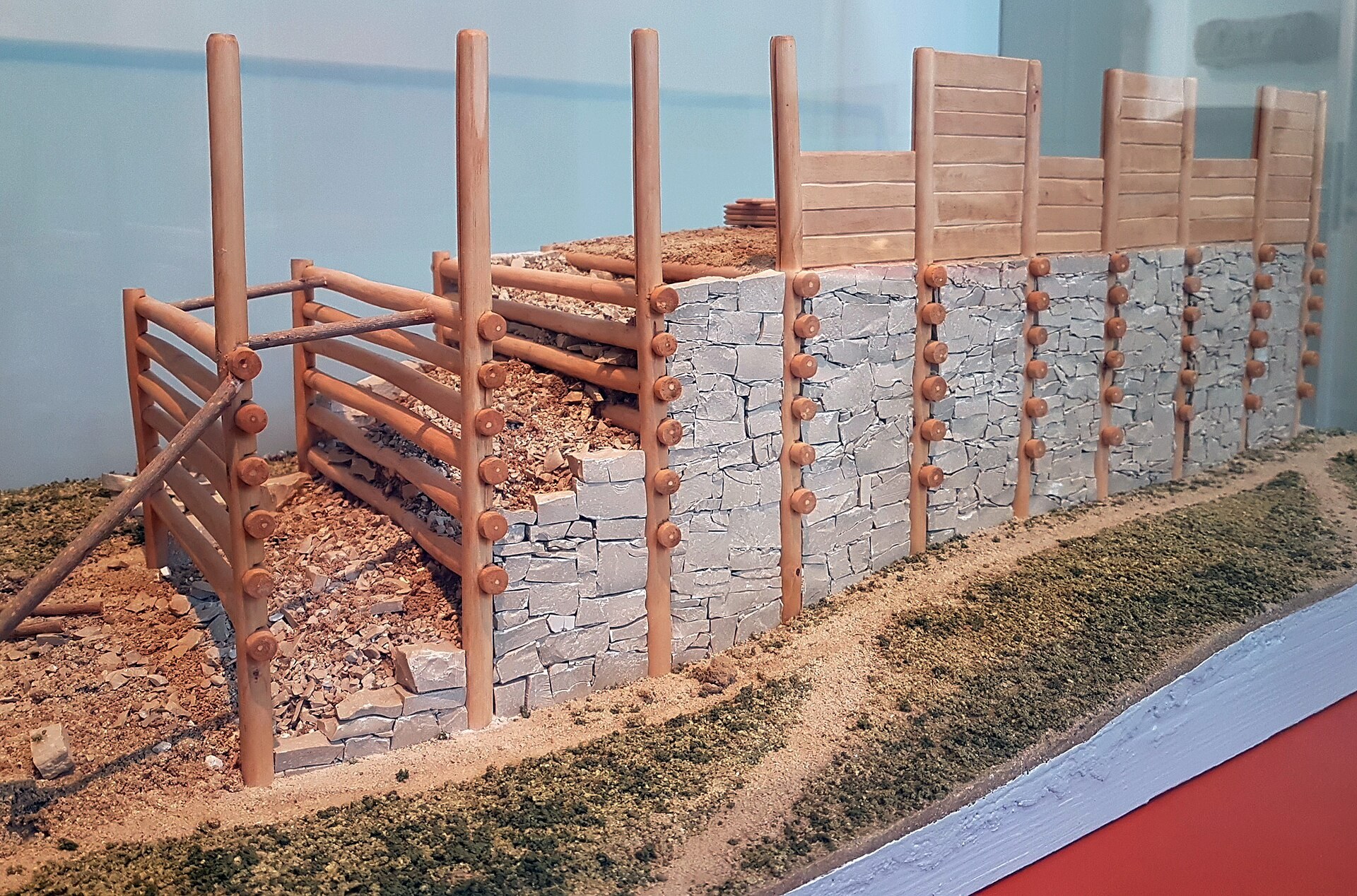 Rheinisches Landesmuseum Trier: 2018 Rheinisches Landesmuseum Trier, Keltischer Wehrmauer.
Collection and Historical Context
Trier is not an average provincial town: its status and late history make it exceptional. Conclusions drawn from it should therefore be transferred to other provinces carefully.
Display and Main Materials
Mosaics, glass, terracottas, coins, funerary reliefs, inscriptions, urban decoration and material connected with late Roman administration are central. For reconstruction, displays that tie objects to domestic settings, workshops, cemeteries and public buildings are especially useful.
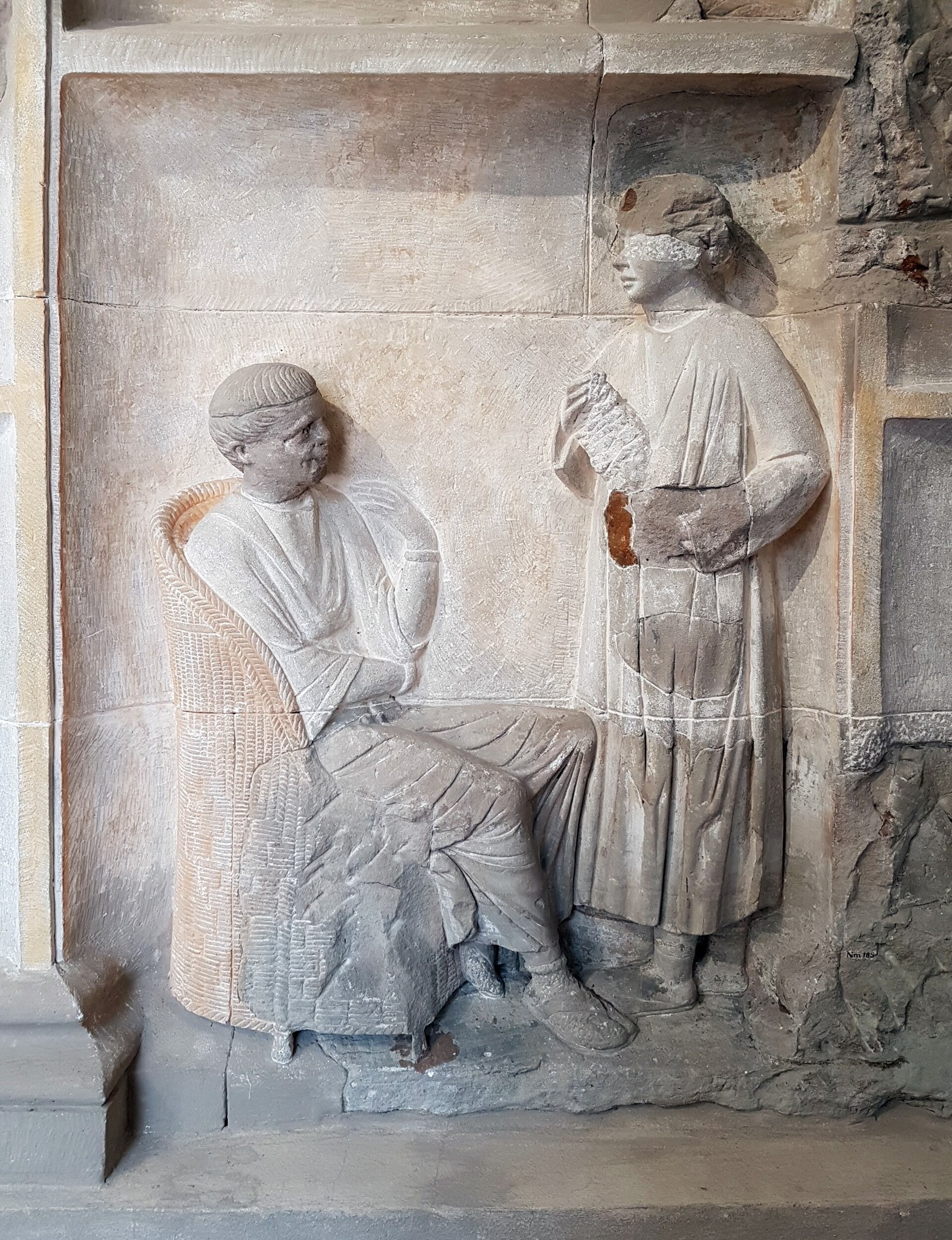 2018 Rheinisches Landesmuseum Trier, Relief eines Grabmals, Neumagen. Object from the collection: Rheinisches Landesmuseum Trier.
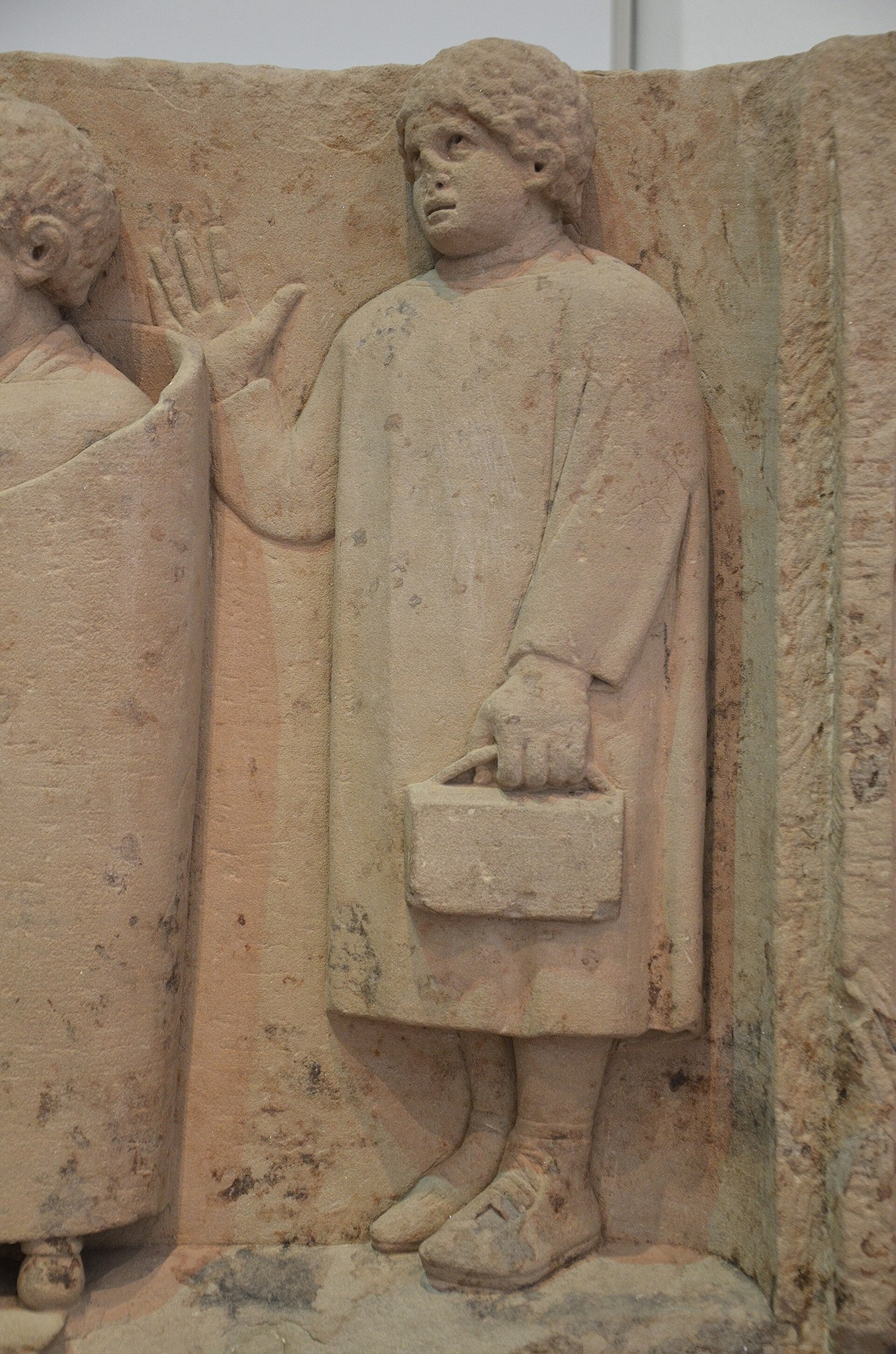 Funerary relief found in Neumagen near Trier, a teacher with three discipuli, around 180-185 AD, Rheinisches Landesmuseum Trier, Germany (29031806843). Object from the collection: Rheinisches Landesmuseum Trier.
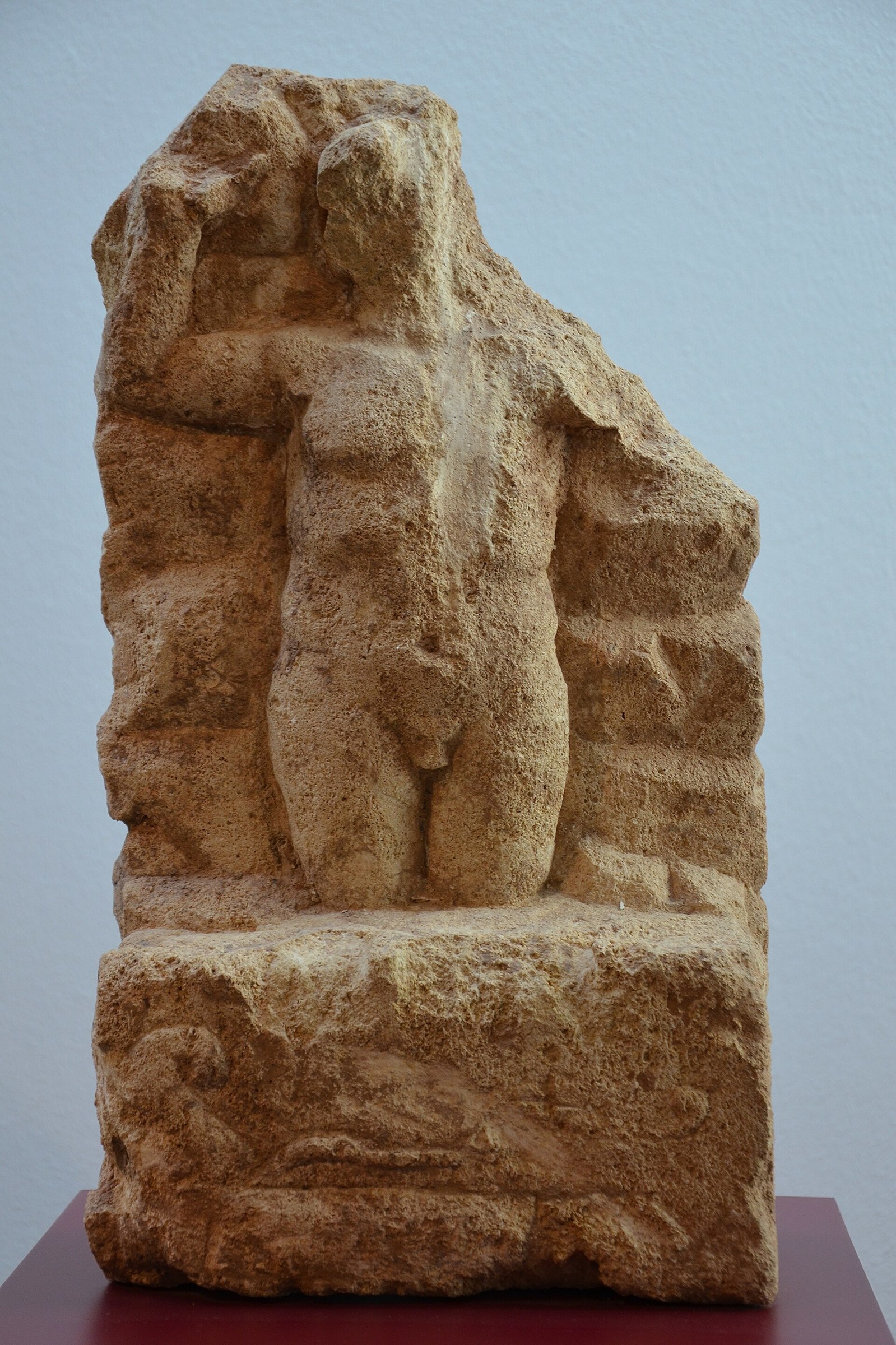 Limestone relief depicting the birth of Mithras, 2nd half of 2nd century AD, Rheinisches Landesmuseum Trier, Germany (29537412190). Object from the collection: Rheinisches Landesmuseum Trier.
Related Topics
- Museums of Antiquity
- Mainz Museums of Antiquity
- Carnuntum and Museum Carnuntinum
- Lugdunum Museum and Roman Theatres
- Archaeology and museums
Official Pages and Catalogues


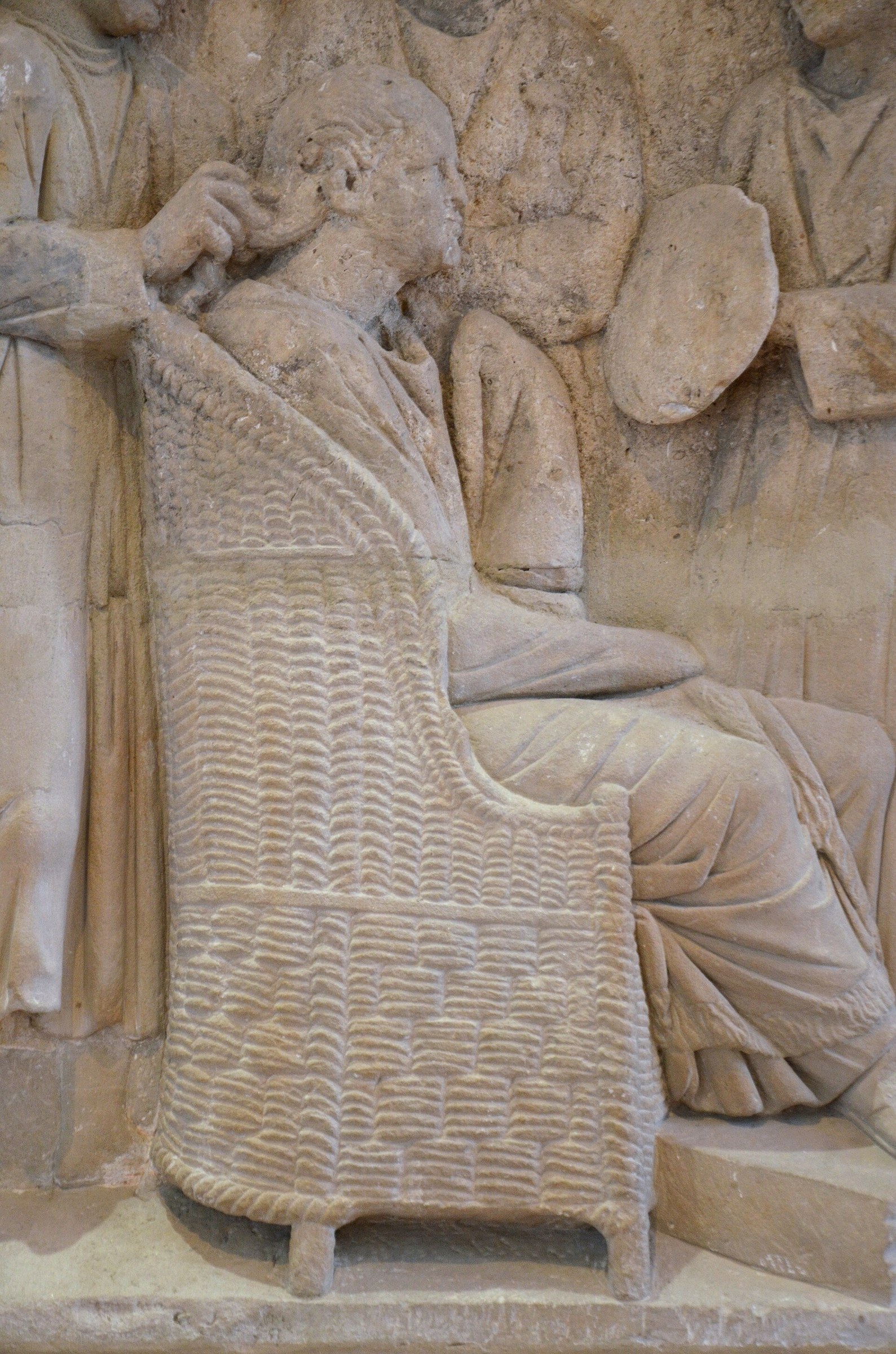 Detail of a funerary relief from Neumagen depicting a woman's hair being dressed by her slaves, circa 220 AD, Rheinisches Landesmuseum Trier, Germany (34626917895). Object from the collection: Rheinisches Landesmuseum Trier.
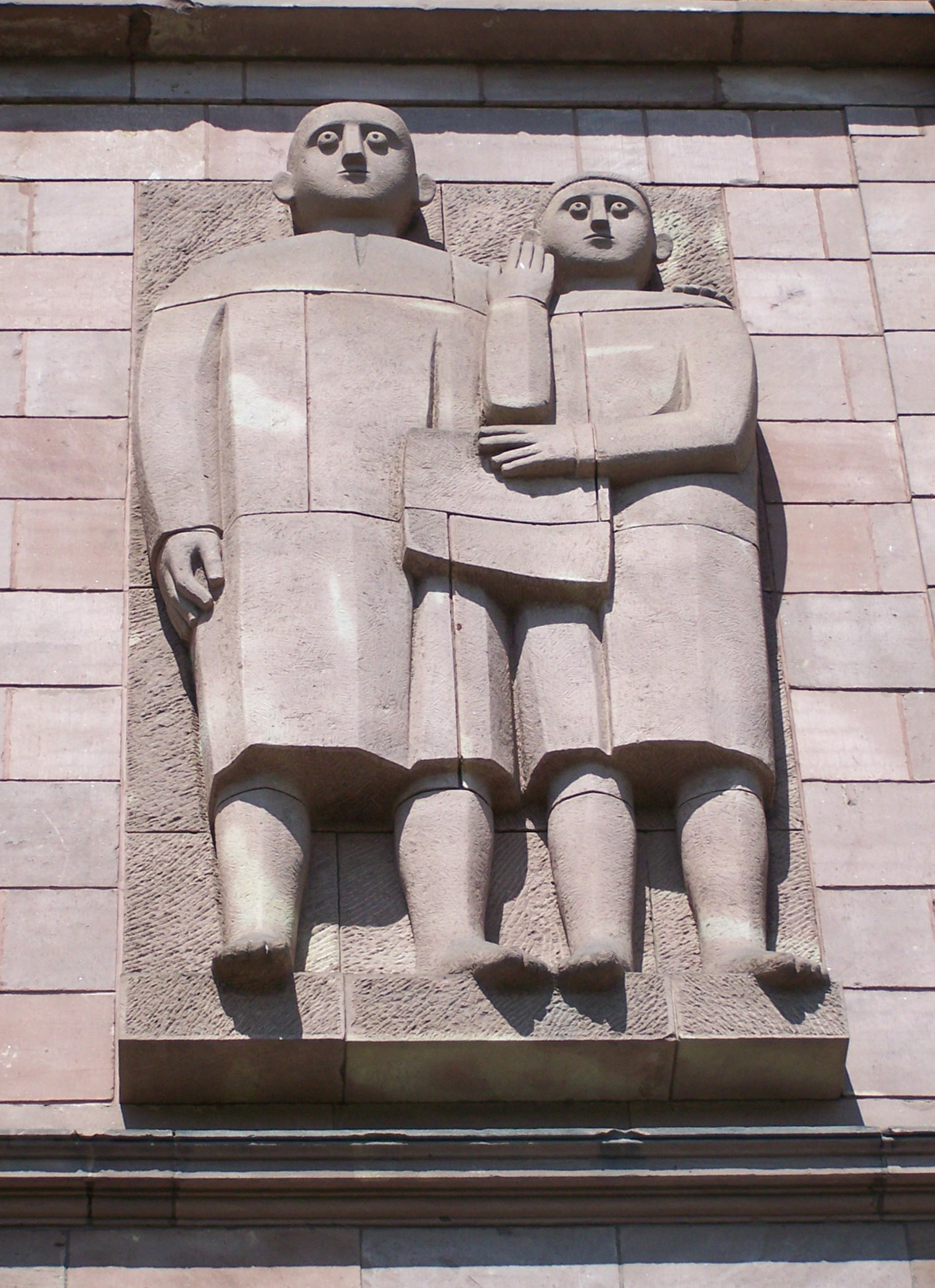 Relief Rheinisches Landesmuseum Weimarer Allee Trier. Object from the collection: Rheinisches Landesmuseum Trier.
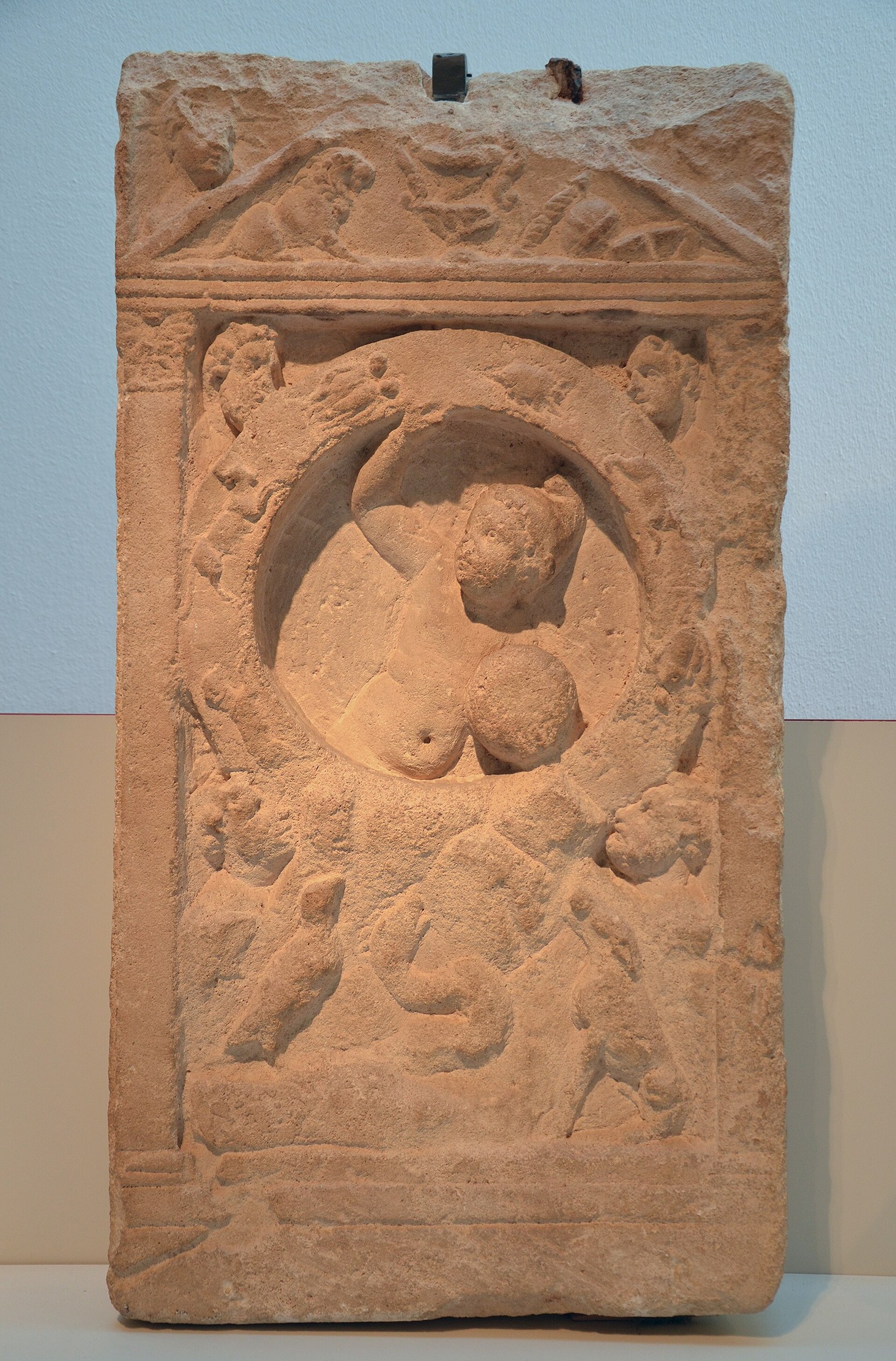 Stone relief depicting the birth of Mithras from the rock surrounded by the signs of the zodiac (CIMRM 985), found at Trier in the Altbachtal in 1928 (Tempelbezirk im Alt. Object from the collection: Rheinisches Landesmuseum Trier.
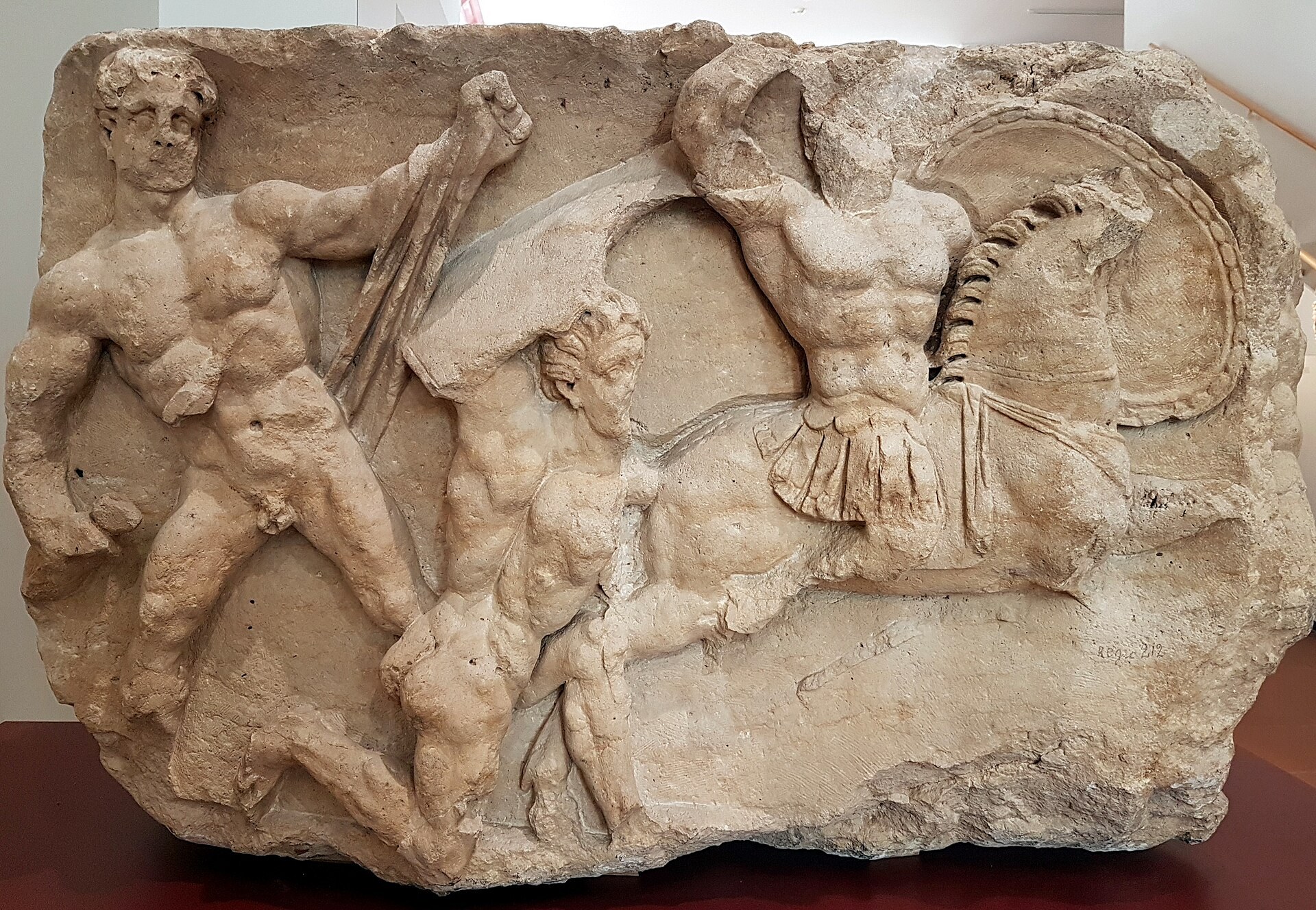 Relief with a warrior figure, associated with an honorary arch. Rheinisches Landesmuseum Trier.
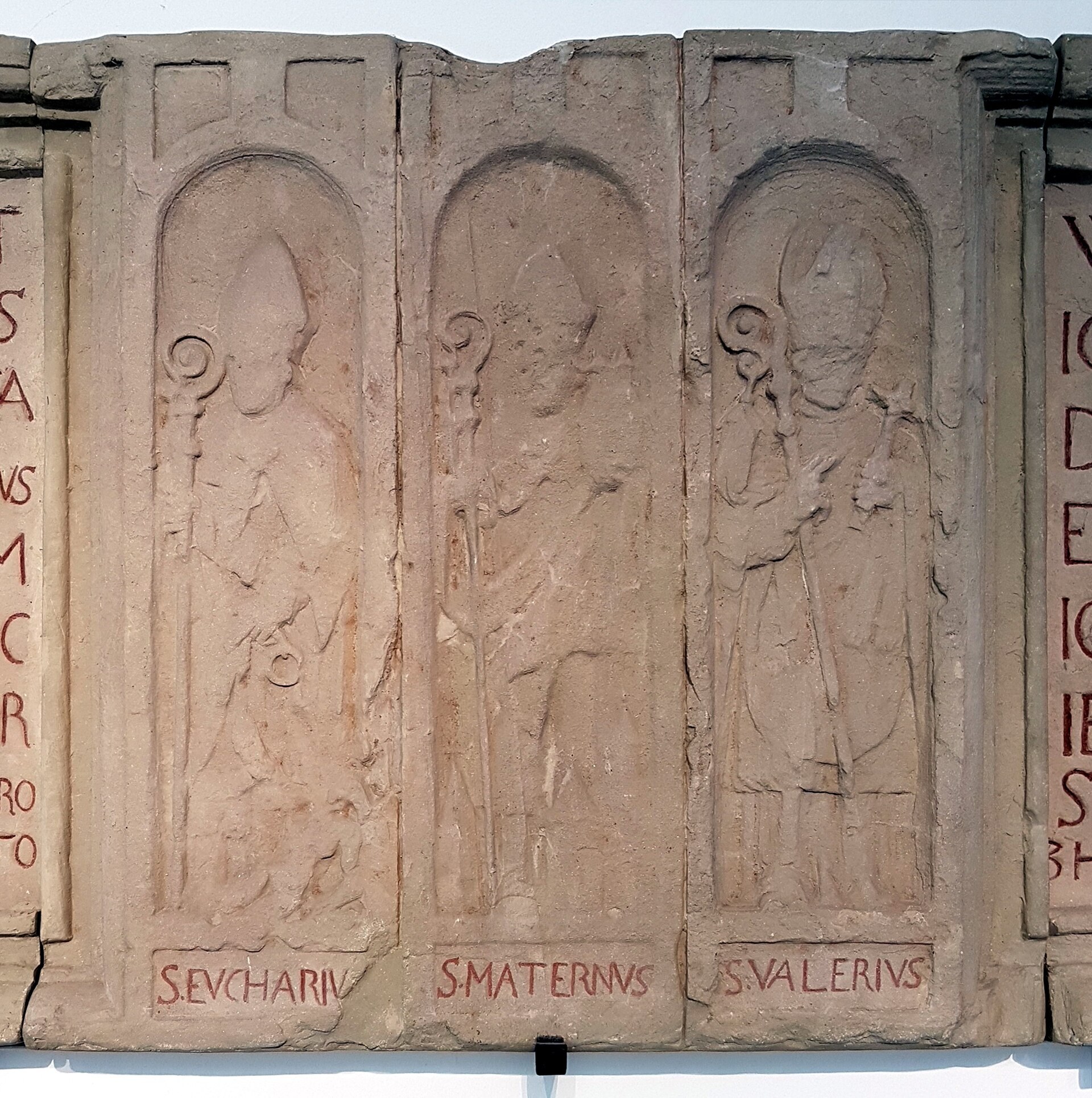 Detail of a relief depicting bishops from St Matthias Abbey. Rheinisches Landesmuseum Trier; not evidence for Roman antiquity.
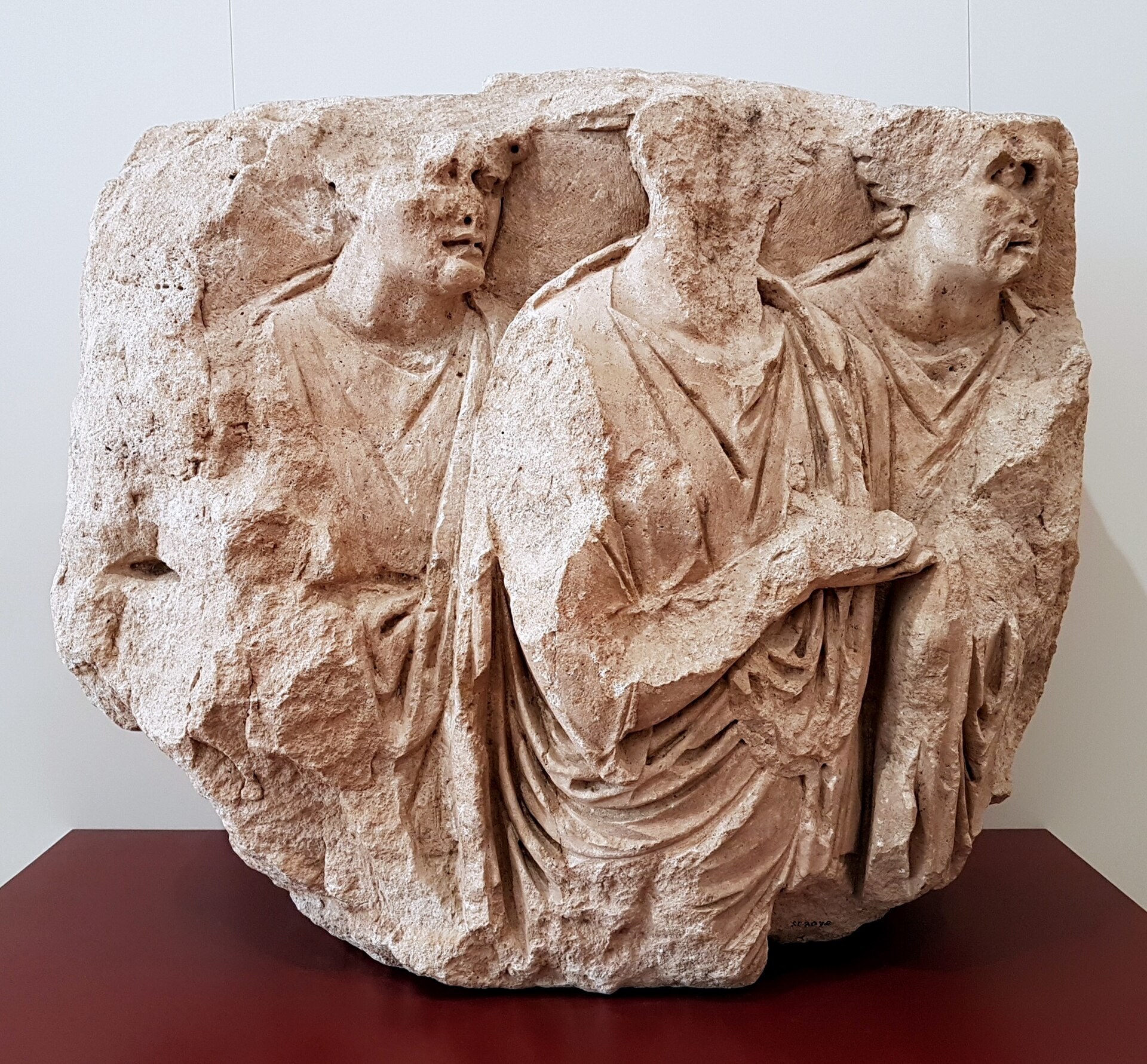 2018 Rheinisches Landesmuseum Trier, Togati-Relief. Object from the collection: Rheinisches Landesmuseum Trier.
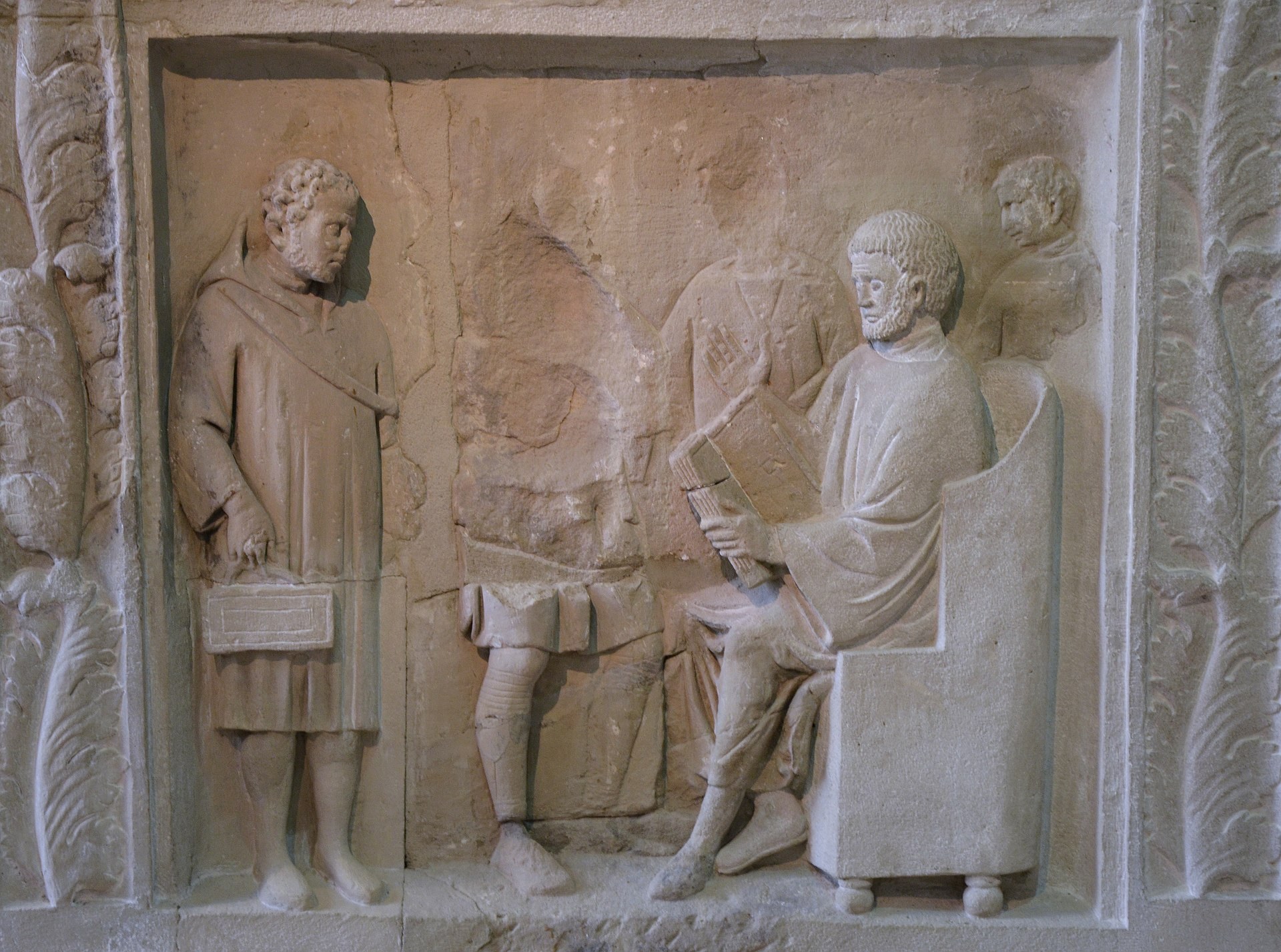 Funerary relief from Neumagen depicting a man (the master) consulting a register, around 220 AD, Rheinisches Landesmuseum Trier, Germany (34486326592). Object from the collection: Rheinisches Landesmuseum Trier.
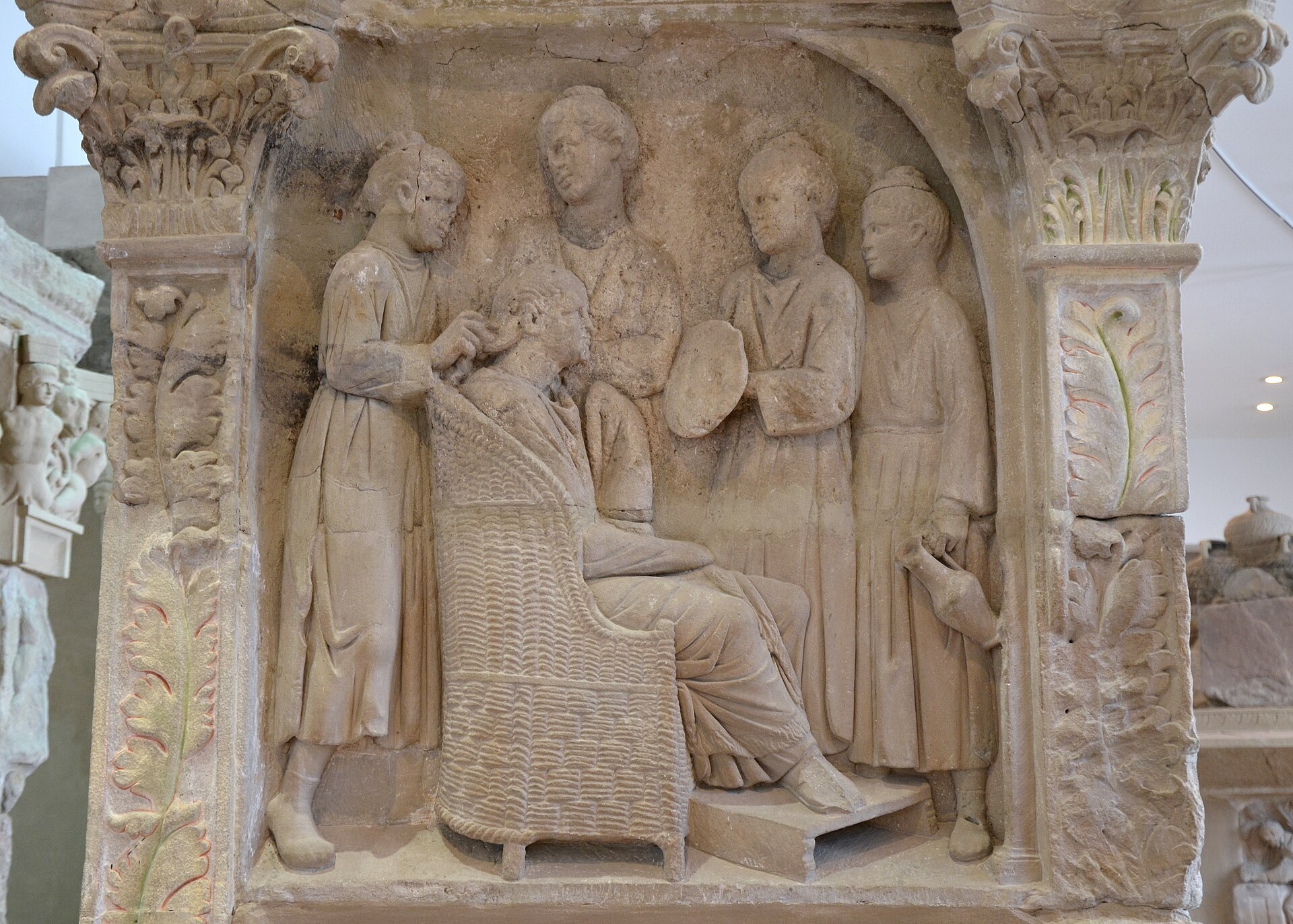 Funerary relief from Neumagen depicting a woman's hair being dressed by her slaves, circa 220 AD, Rheinisches Landesmuseum Trier, Germany (34626922225). Object from the collection: Rheinisches Landesmuseum Trier.
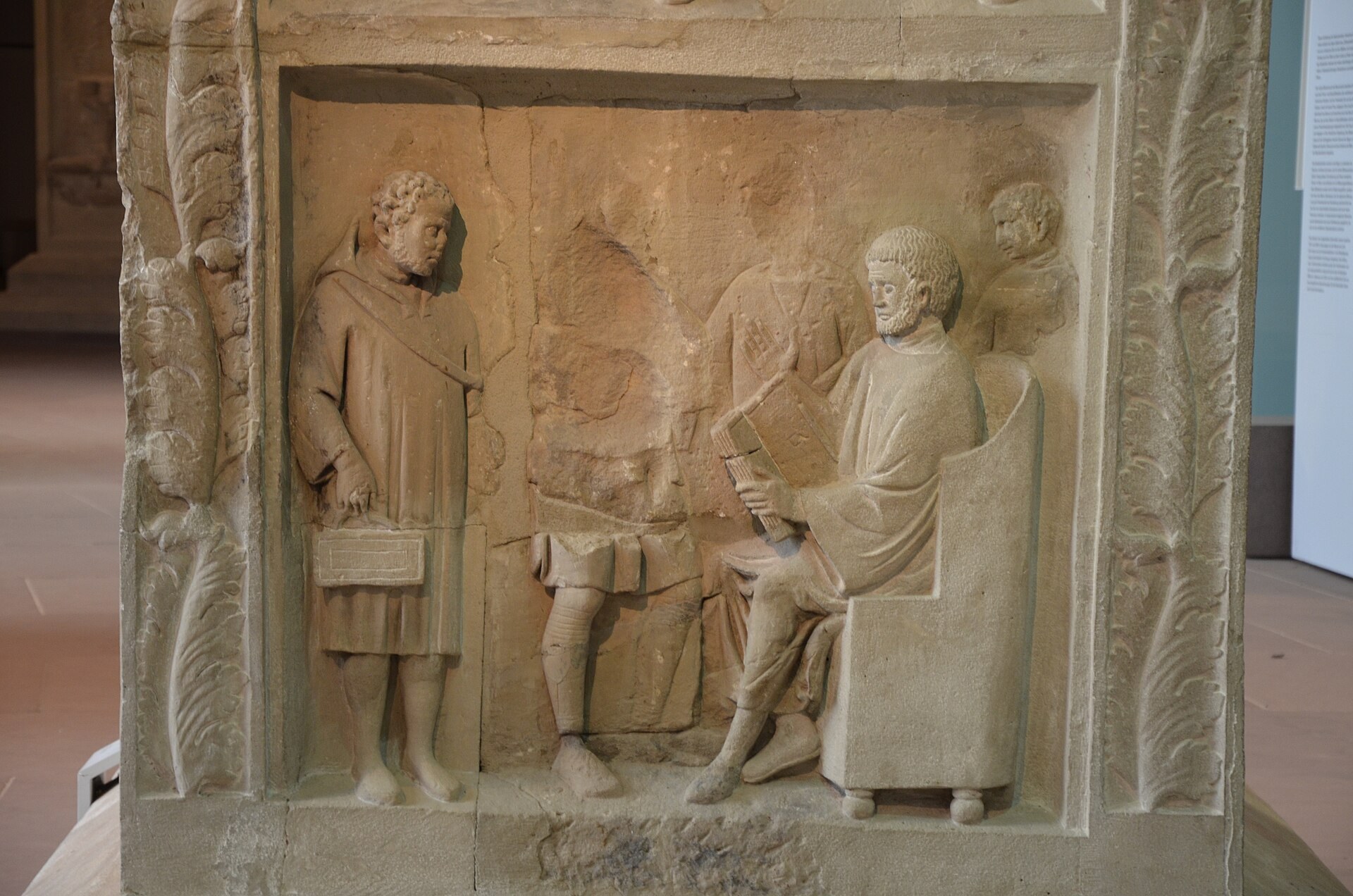 Funerary relief from Neumagen depicting man consulting a register, 2nd-3rd century AD, Rheinisches Landesmuseum Trier, Germany (34486326592). Object from the collection: Rheinisches Landesmuseum Trier.
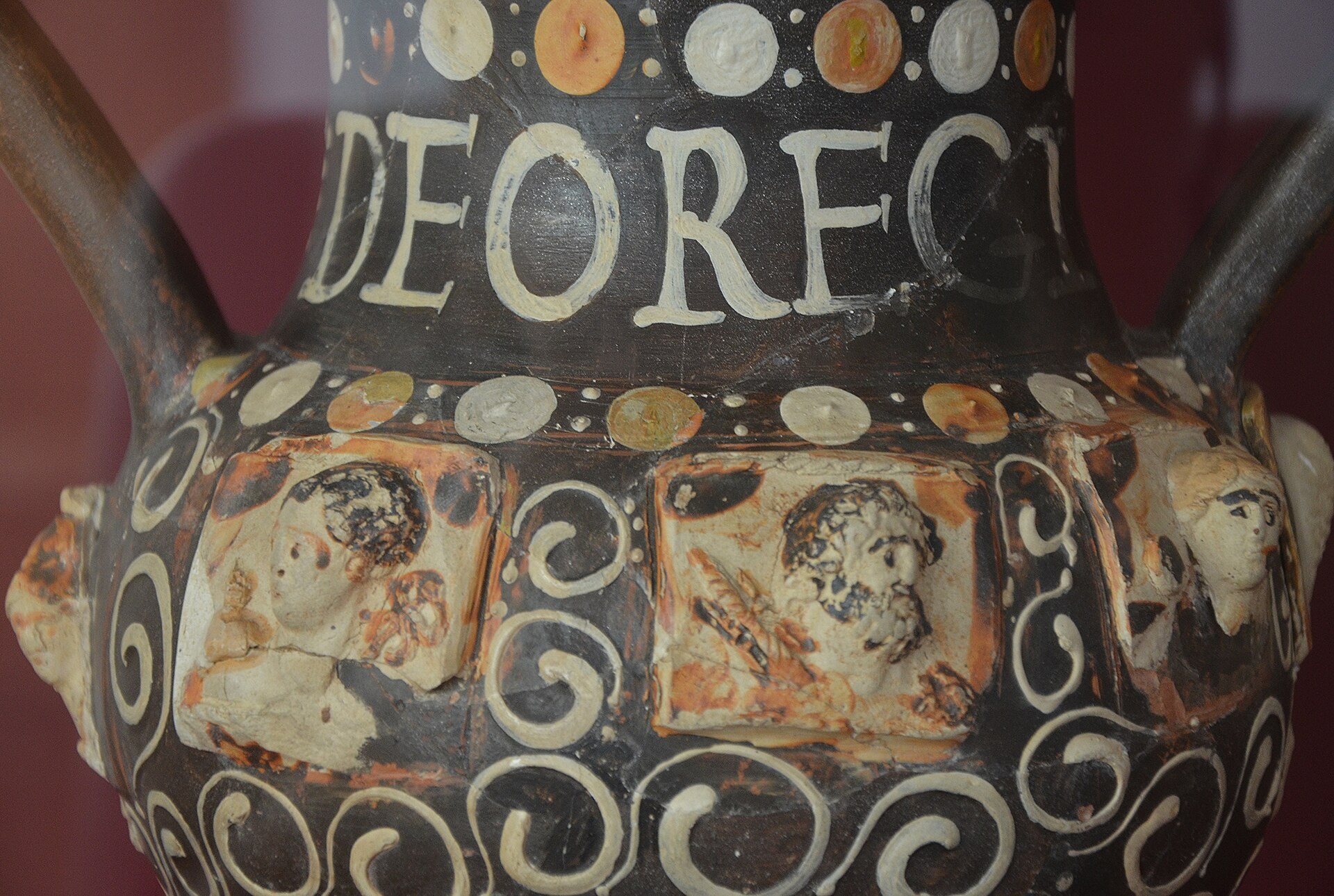 Terracotta vessel with relief decoration and the inscription DEO REGI CVPITI in white barbotine, end of 3rd century - early 4th century AD, Rheinisches Landesmuseum Trier. Object from the collection: Rheinisches Landesmuseum Trier.
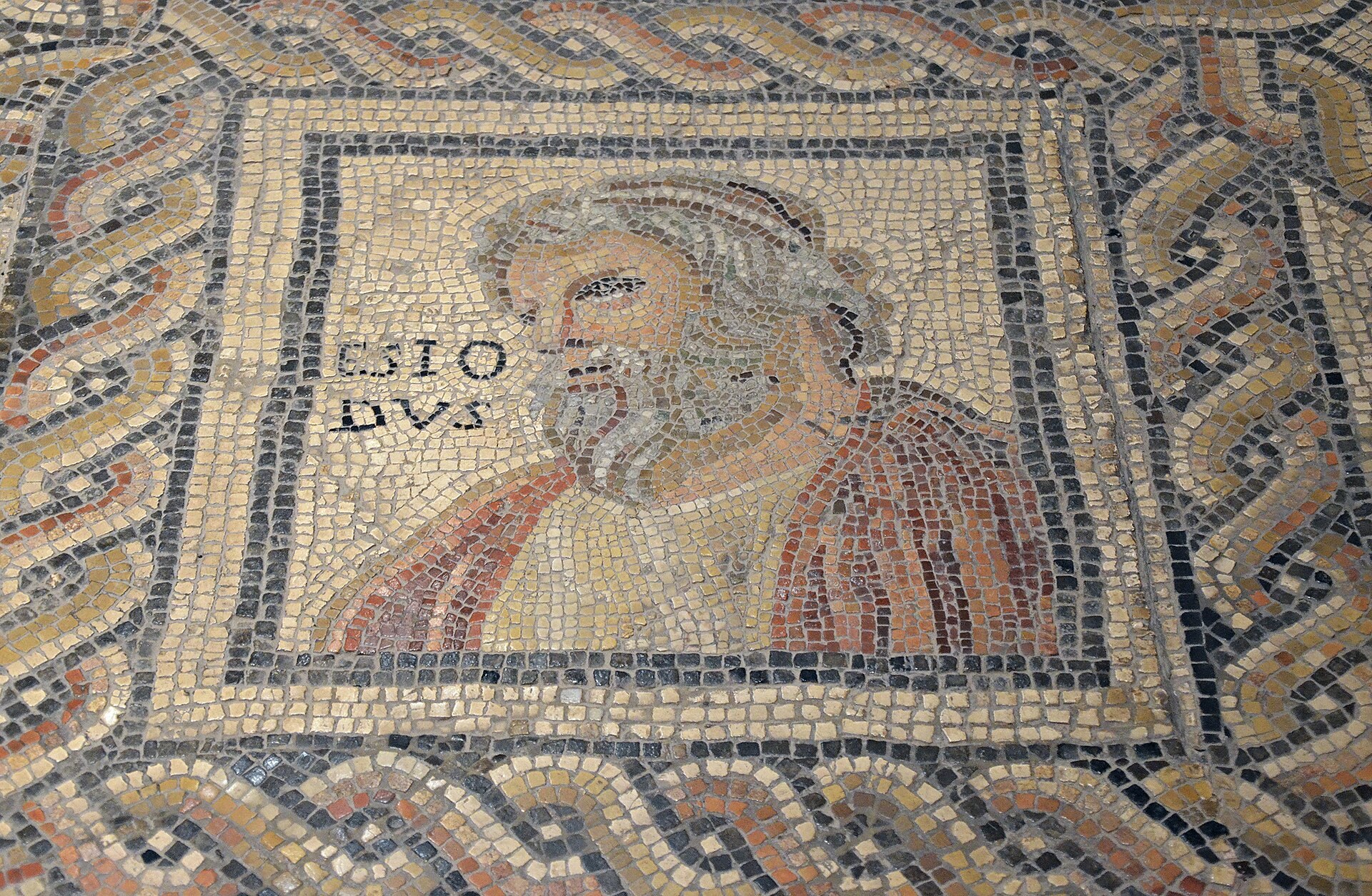 Monnus Mosaic, detail of Hesiod (ESIO-DVS) from a Roman Domus in Augusta Treverorum (Trier), end of the 3rd century AD, Rheinisches Landesmuseum Trier, Germany (300385628. Object from the collection: Rheinisches Landesmuseum Trier.
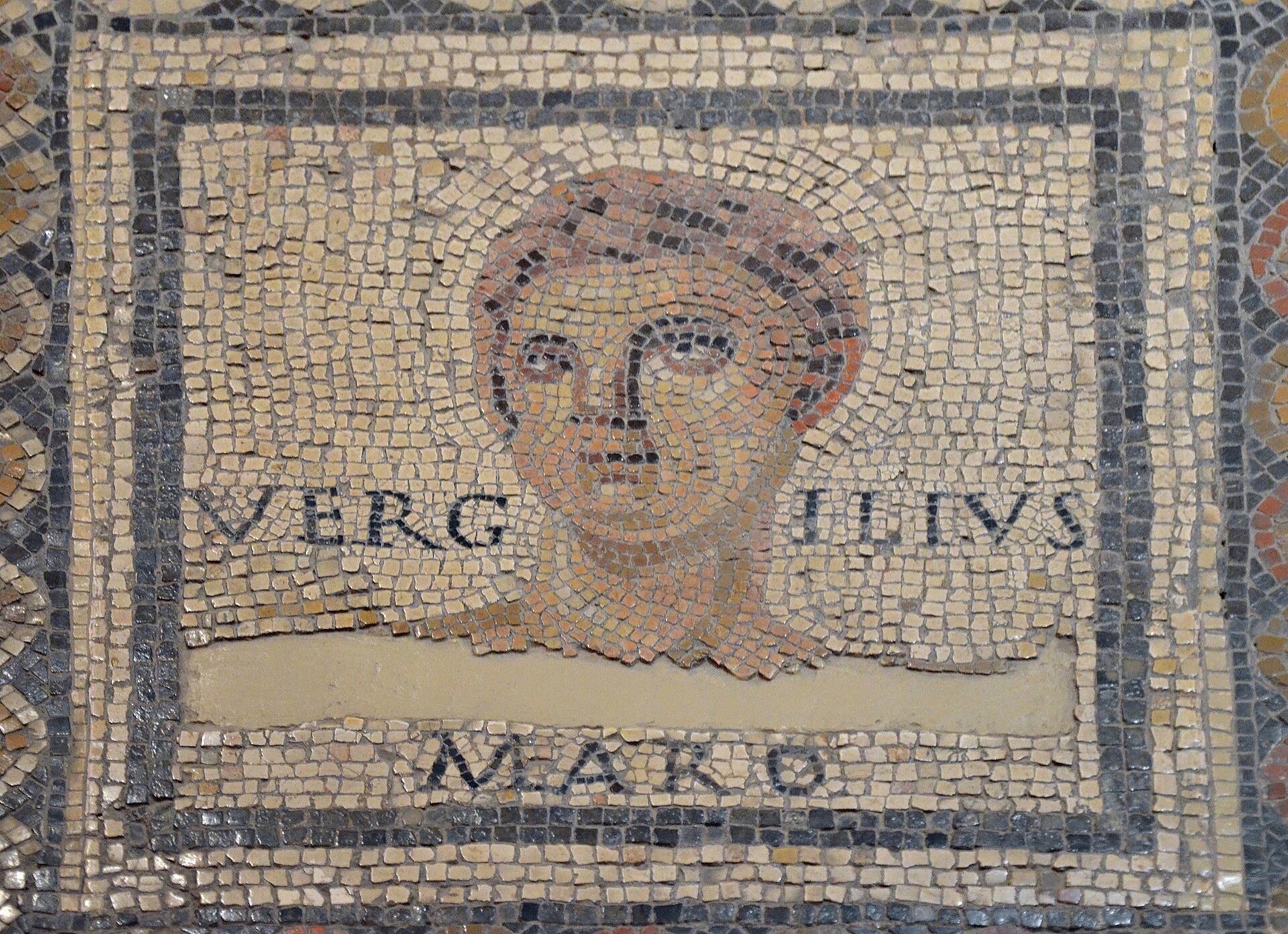 Monnus Mosaic, detail of Virgil (VERGILLVS MARO) from a Roman Domus in Augusta Treverorum (Trier), end of the 3rd century AD, Rheinisches Landesmuseum Trier, Germany. Object from the collection: Rheinisches Landesmuseum Trier.
Interested in Ancient Rome beyond reading? Join Legio X Fretensis or explore our reenactment directions.


