Segedunum
Segedunum at Wallsend marked the eastern end of Hadrian's Wall by the River Tyne. Unlike many stretches of the Wall, it allows the line of the frontier, the fort plan, museum, reconstructed bath-house and modern viewing tower to be read as one system. Segedunum is therefore important as a frontier monument, not simply as the last point on a Wall itinerary.
The fort was built around AD 124-125, when the original design of the Wall was changed and forts were added directly to the frontier line. Its position on a plateau above the north bank of the Tyne allowed control of river movement, the approach to the coast at South Shields and communication with other points of the eastern sector. Segedunum shows that the Roman frontier was not one wall, but a combination of walls, gates, roads, barracks, bath-house, stores, garrison, civilian zone and river logistics.
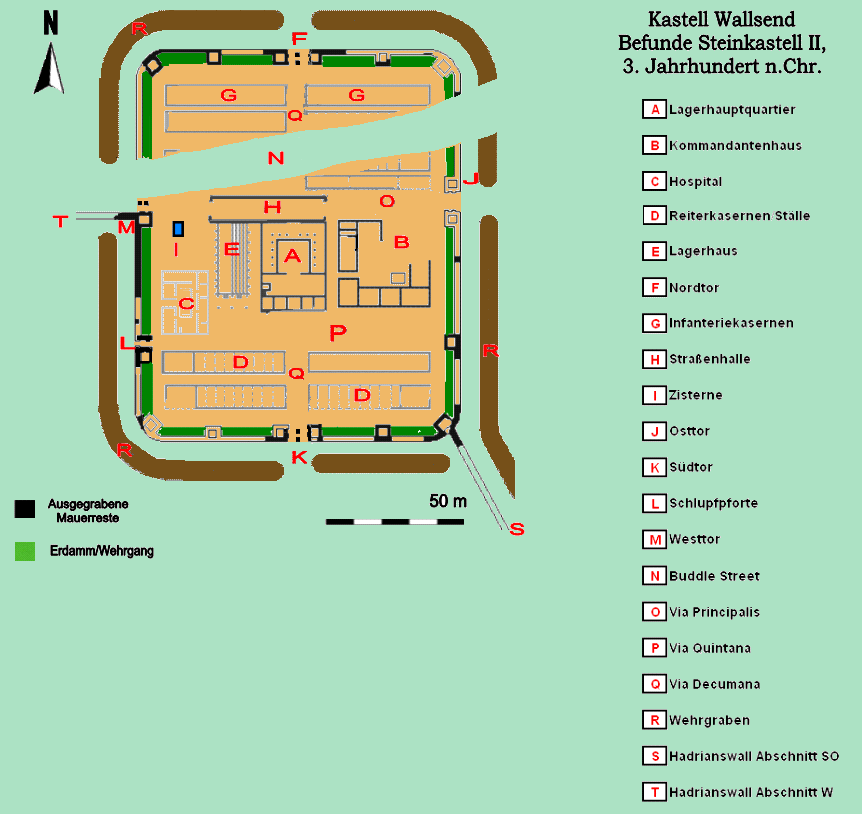 Plan of Segedunum fort at Wallsend, third century AD. The scheme shows walls, gates and internal buildings.
The Eastern End of the Frontier
Before Segedunum was built, the site of the future fort belonged to a local agricultural landscape. Archaeological evidence shows that the land had been prepared for cultivation shortly before Roman construction. This detail matters: the Roman frontier did not appear in empty space, but over land already being used. Building the fort meant taking the area, replanning it and incorporating the bank of the Tyne into the military system of the province.
Segedunum occupied the place where the Wall reached the area that later gave Wallsend its English name. The River Tyne was not merely an obstacle, but part of communication. Goods, people, building materials and information moved along it. The eastern end of the Wall had to control not only land, but also the river corridor: movement toward Newcastle, toward the sea and toward neighbouring military points.
This sector shows especially clearly why Hadrian's Wall cannot be understood as an immobile defensive line. Wall, ditch, road, fort, gates and river connection worked together. Even a high stone barrier made sense only when joined with garrisons, observation, patrols, signals and the ability to move people rapidly along the frontier.
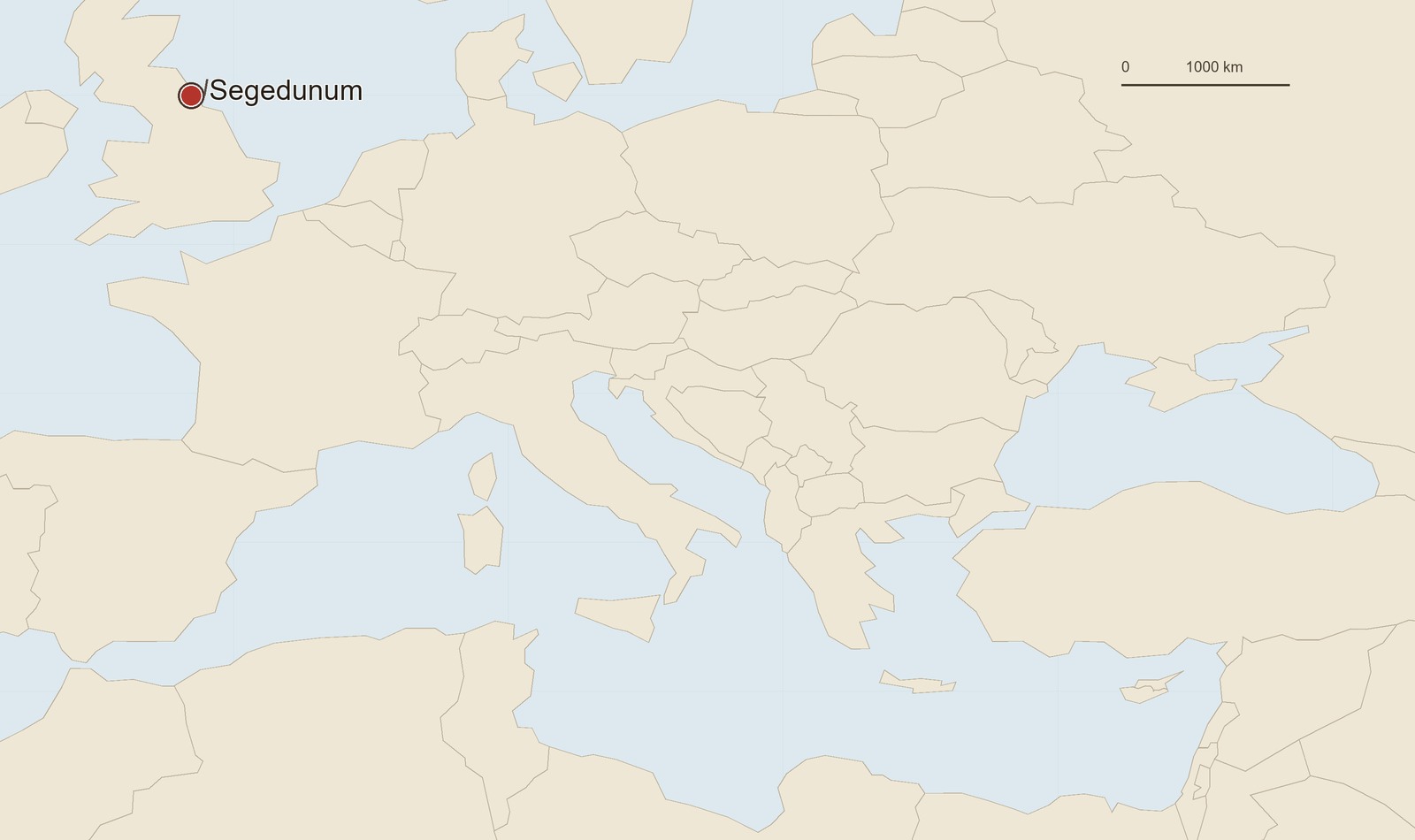 Location map: Segedunum. The marker shows the ancient site or main archaeological complex.
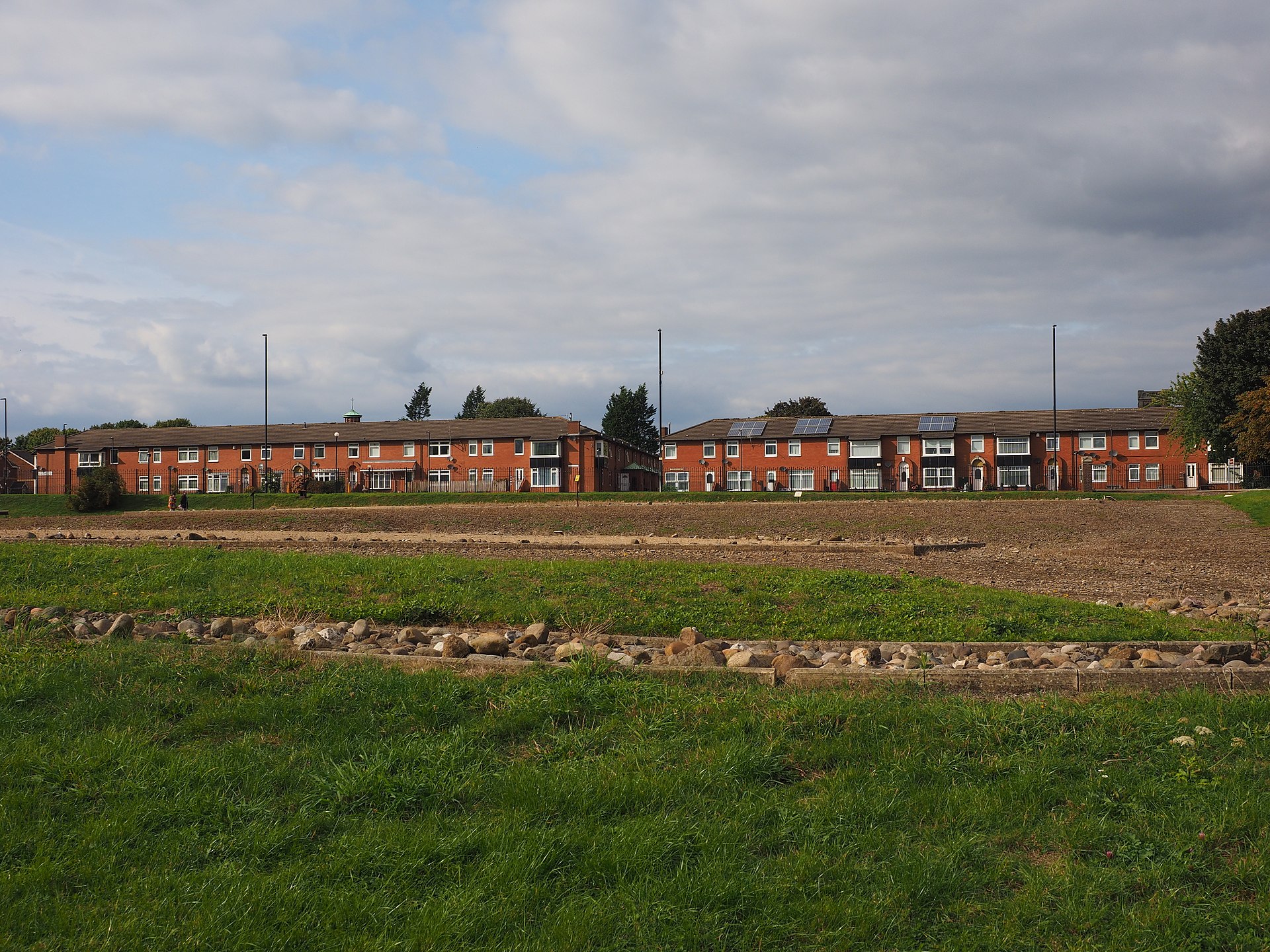 Remains of Roman buildings at Segedunum, Wallsend.
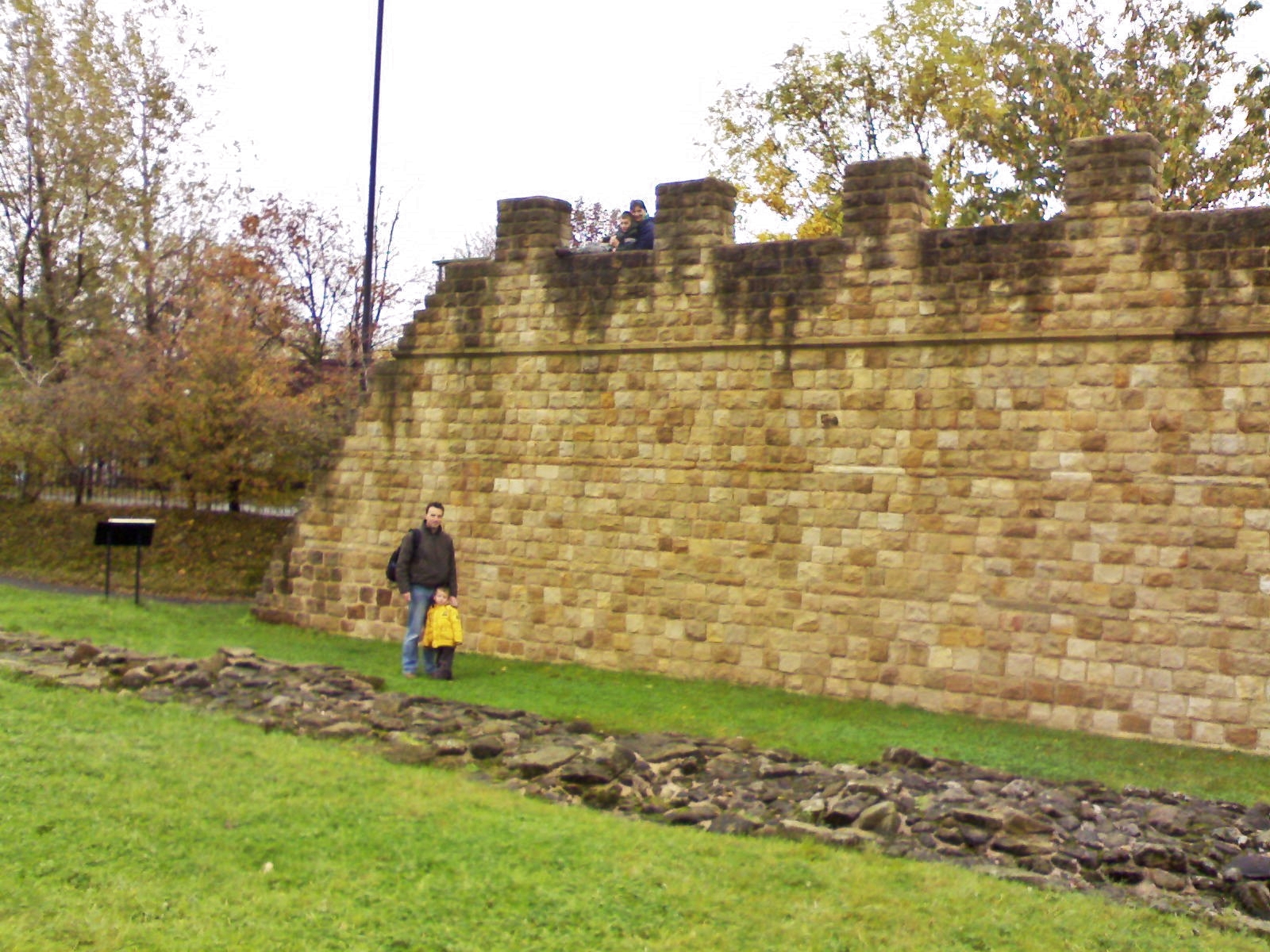 Reconstructed section of the Wall at Segedunum.
Fort and Garrison
The plan of Segedunum is especially valuable because it allows the fort to be seen as organised space. Within the walls were gates, streets, barracks, central buildings, service zones and rooms connected with managing the garrison. This layout was not accidental: it directed movement inside the fort, separated service and living areas, connected gates with the road along the Wall and subjected everyday life to military discipline.
Around AD 200 the fort can, according to museum material, be connected with a mixed cohort garrison of about 480 infantry and 120 cavalry soldiers. This explains why Segedunum has to be read with both infantry and mounted elements in mind. The eastern end of the Wall needed not only men at gates and on the Wall, but patrols, river communication, supply movement and response to activity outside the fort.
Segedunum was part of a network. To the west were other forts and mile installations, to the east and south river and coastal communication, and nearby civilian and economic life. The archaeological meaning of the fort therefore appears not in one attractive plan alone, but in the combination of plan, finds, road and surrounding landscape.
Phases of Rebuilding
Segedunum changed during nearly three centuries of use. The early fort included timber buildings and stone central structures. Within the first decades some timber buildings were replaced in stone, and the plan became more stable. In the third century older barracks were rebuilt, new arrangements for housing men appeared, and open areas within the fort were filled by smaller timber buildings. In the fourth century some gates and internal spaces may already have been used differently from the early period.
These changes matter for any interpretation of finds. An object from Segedunum should not automatically be assigned to the moment when the fort was first built. Phase, layer, location and building function have to be considered. Hospital, barrack, gate, bath-house and service area provide different contexts; the same object type may mean different things in them.
The modern site does not show every phase at once, but above all a readable archaeological plan. The museum reconstruction and viewing tower are therefore useful not as decoration, but as a way to see how closely walls, gates, streets and internal buildings were connected in reality.
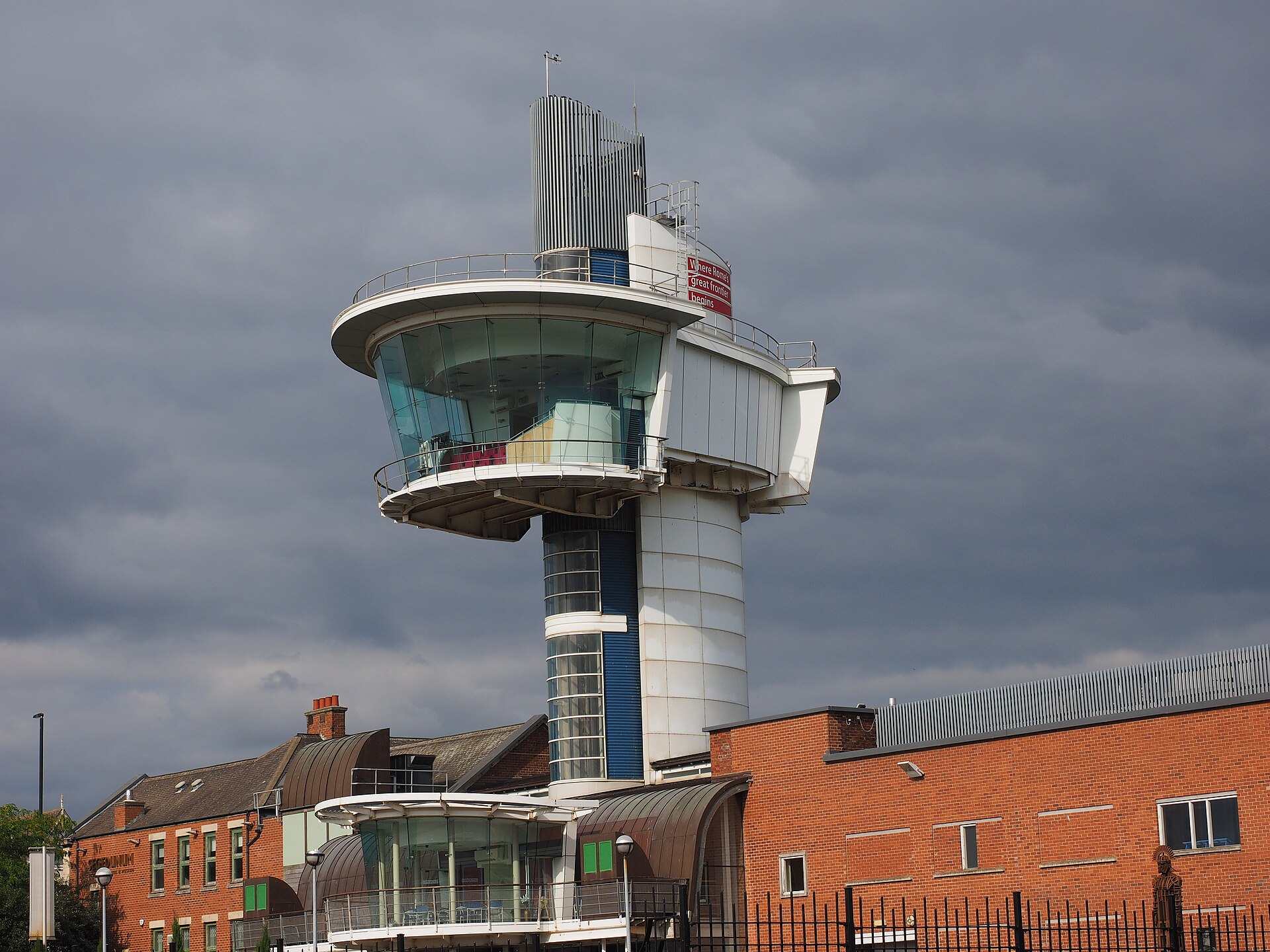 Viewing tower of the Segedunum museum, from which the fort plan can be read.
Bath-House and Garrison Life
The bath-house was a necessary part of garrison life. It expressed Roman habits of body, rest and social contact even on the northern frontier. A bath-house was not secondary luxury: it required fuel, water, maintenance, repair, room planning and regular movement of people. Through it the fort was connected with everyday imperial culture.
At Segedunum the reconstructed bath-house helps show how changing room, warm and hot rooms, heating and visitor movement worked. It is important to separate reconstruction from ancient material: the modern building is not a preserved Roman bath-house, but it is based on archaeological evidence and makes the function of the space understandable. This is especially useful where excavation leaves only foundations and outlines.
The bath-house also reminds us that a fort was not only a military machine. People in the garrison ate, played, washed, fell ill, repaired objects, wrote, traded and interacted with the surrounding environment. Segedunum is therefore well suited for discussing everyday life on the Roman frontier.
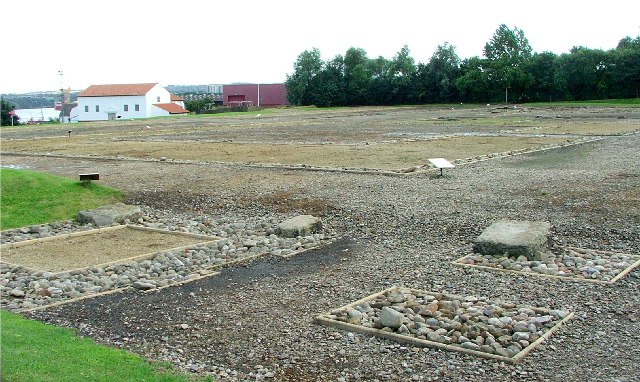 Segedunum: the Roman fort and bath-house site at Wallsend.
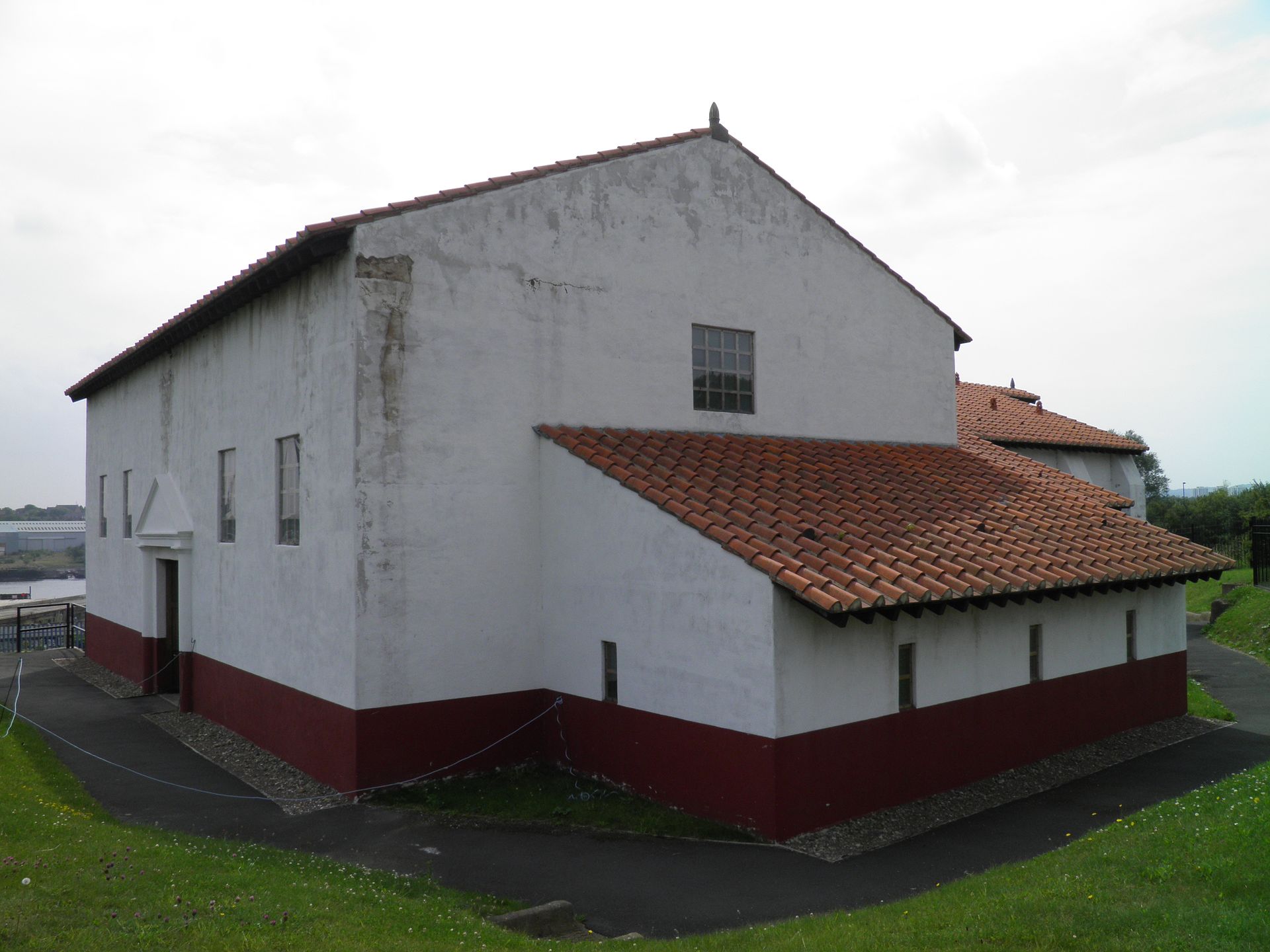 Replica Roman bath house at Segedunum fort in Wallsend.
Museum Objects
At Segedunum the connection between fort plan and museum objects is especially important. A display with ring-mail fragments and armour fittings shows the military side of the garrison: protection, repair, storage and wear of equipment were part of daily life. Such objects should not be treated as an abstract set of "Roman weapons." They make sense beside barracks, gates, road and the tasks of the eastern end of the Wall.
Other objects reveal a less military side of the complex. A gaming board, die and counters show leisure; vessels, jewellery, building ceramics and small everyday objects allow people inside and around the fort to be discussed. It is precisely the combination of military and domestic finds that makes Segedunum useful: it shows not only the function of the frontier, but also the life of those who maintained it.
Museum images need careful captions and reading. If an object is shown in a display case, it must be clear whether it belongs to Segedunum itself, to the eastern sector of the Wall or to a wider museum collection. Without such anchoring a single object easily becomes attractive but weak illustration.
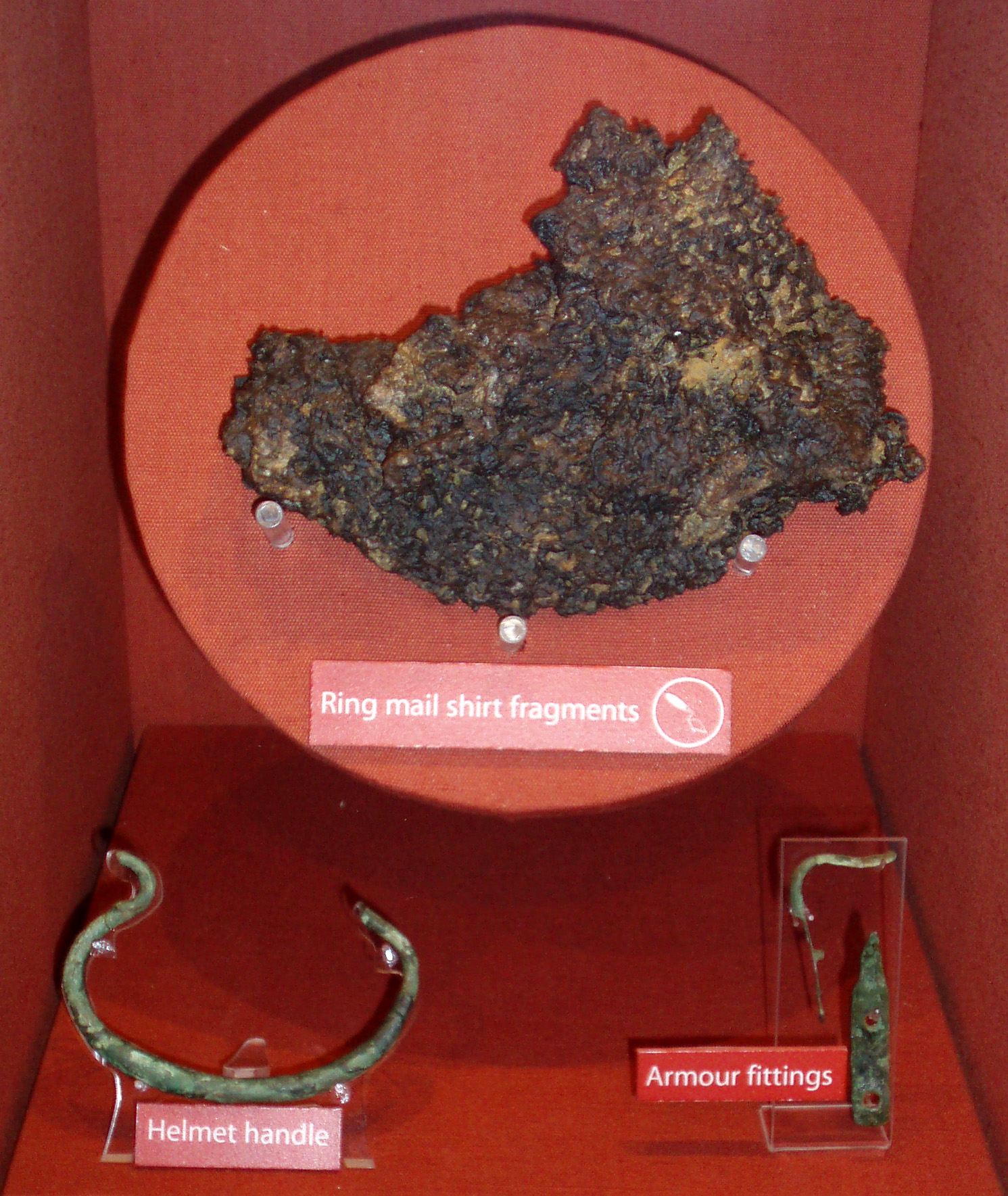 Fragments of mail armour and armour fittings from Segedunum. Roman period; Segedunum Roman Fort, Baths and Museum.
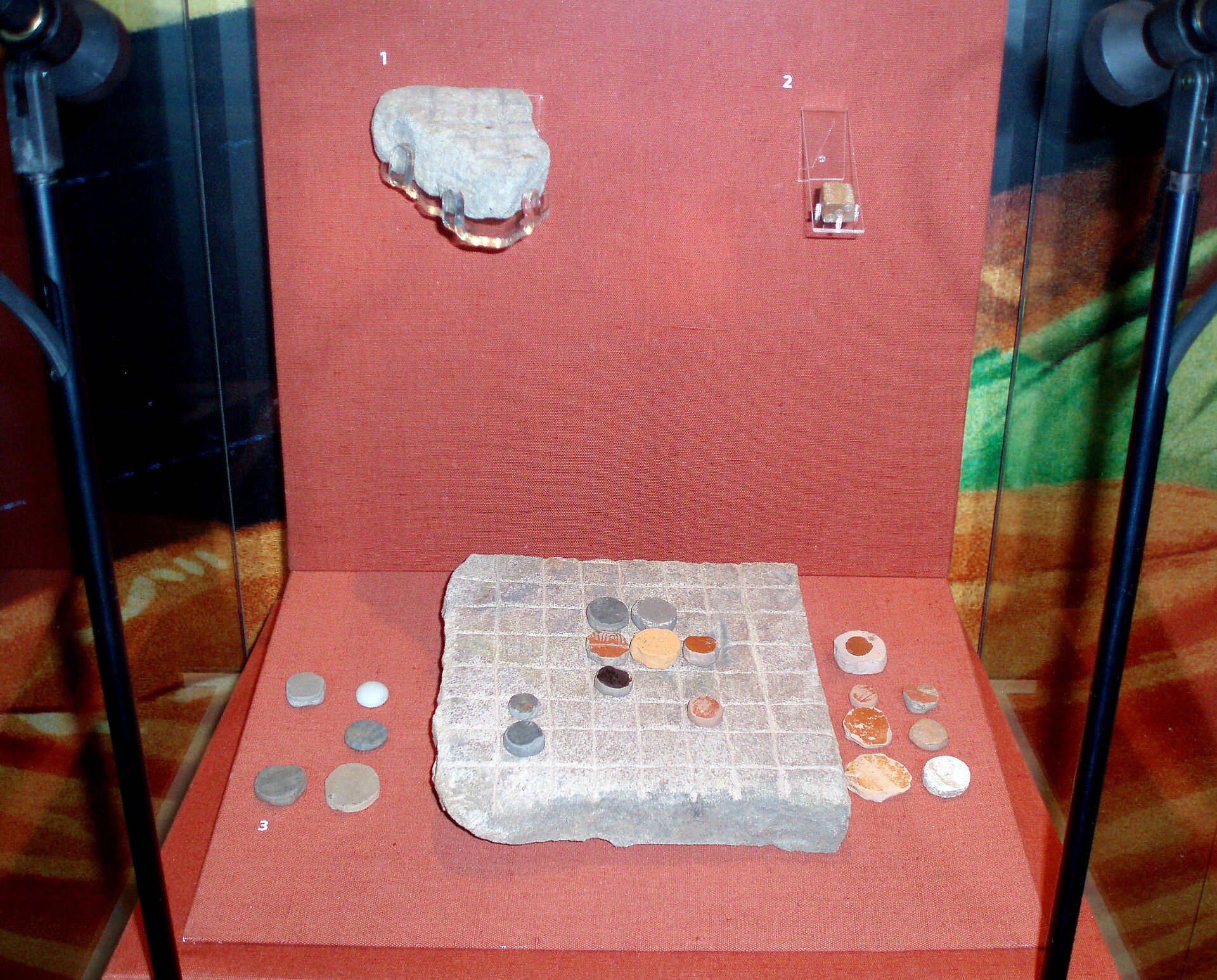 Game board, die and counters from Segedunum. Roman period; Segedunum Roman Fort, Baths and Museum.
Wallsend after Rome
Segedunum also matters because its archaeology lies inside the later urban and industrial history of Wallsend. Coal mining, shipbuilding, building and demolition changed the preservation of the ancient layer. The modern monument and museum did not appear in untouched open ground, but in a town where Roman remains had to be identified, excavated, preserved and explained again.
This context helps explain why the fort is so visible today. On one hand, industrial history destroyed part of the ancient landscape; on the other, excavation and museum work made the plan accessible. For archaeology this is an important example: a monument exists not only in antiquity, but also in a chain of later decisions, losses and acts of preservation.
Chronology
- Before the AD 120s - a local agricultural landscape existed on the site of the future fort.
- Around AD 122 - construction of Hadrian's Wall begins.
- Around AD 124-125 - Segedunum is built as part of the expanded design of the eastern end of the Wall.
- Second century AD - timber buildings are gradually replaced in stone and the internal layout of the fort becomes more stable.
- Around AD 200 - the fort can be connected with a mixed cohort garrison including infantry and cavalry.
- Third century AD - barracks and internal buildings are rebuilt and use of space inside the fort changes.
- Fourth century AD - late changes to gates and internal zones; use of the complex gradually declines toward the end of Roman Britain.
- Nineteenth-twentieth centuries - the industrial history of Wallsend and later excavations change the preservation and visibility of the monument.
- AD 2000 - Segedunum Roman Fort, Baths and Museum opens, making the site accessible as a museum and archaeological complex.
Archaeological Sources
The main sources for Segedunum are the excavated fort plan, remains of walls and internal buildings, the bath-house reconstruction, museum objects, evidence for rebuilding phases and material from the eastern sector of Hadrian's Wall. The plan shows the military organisation of space; the bath-house reveals the everyday culture of the garrison; armour and domestic objects show the people who lived and served at the end of the Wall.
Segedunum is strong because different types of evidence can be compared on one site. From above the plan can be read, on the ground the outlines of buildings are visible, in the museum objects can be seen, and in surrounding Wallsend the later history of preservation is noticeable. Fort, Wall, river, bath-house, museum and urban setting together explain the site better than an isolated view of the Wall.
Related Topics
Literature and sources
- Breeze D. J. Hadrian's Wall.
- Hodgson N. Hadrian's Wall 1999-2009.
- Bidwell P. T. Hadrian's Wall 1989-1999.
- Symonds M., Mason D. Frontiers of Knowledge: A Research Framework for Hadrian's Wall.
- North East Museums: Segedunum Roman Fort, Baths and Museum.
- Segedunum Roman Fort: background information and fort-site guide.
- Wikimedia Commons: Segedunum category; Segedunum Roman Baths Reconstruction category; photos of fort remains, reconstructed wall, bath-house and museum displays.


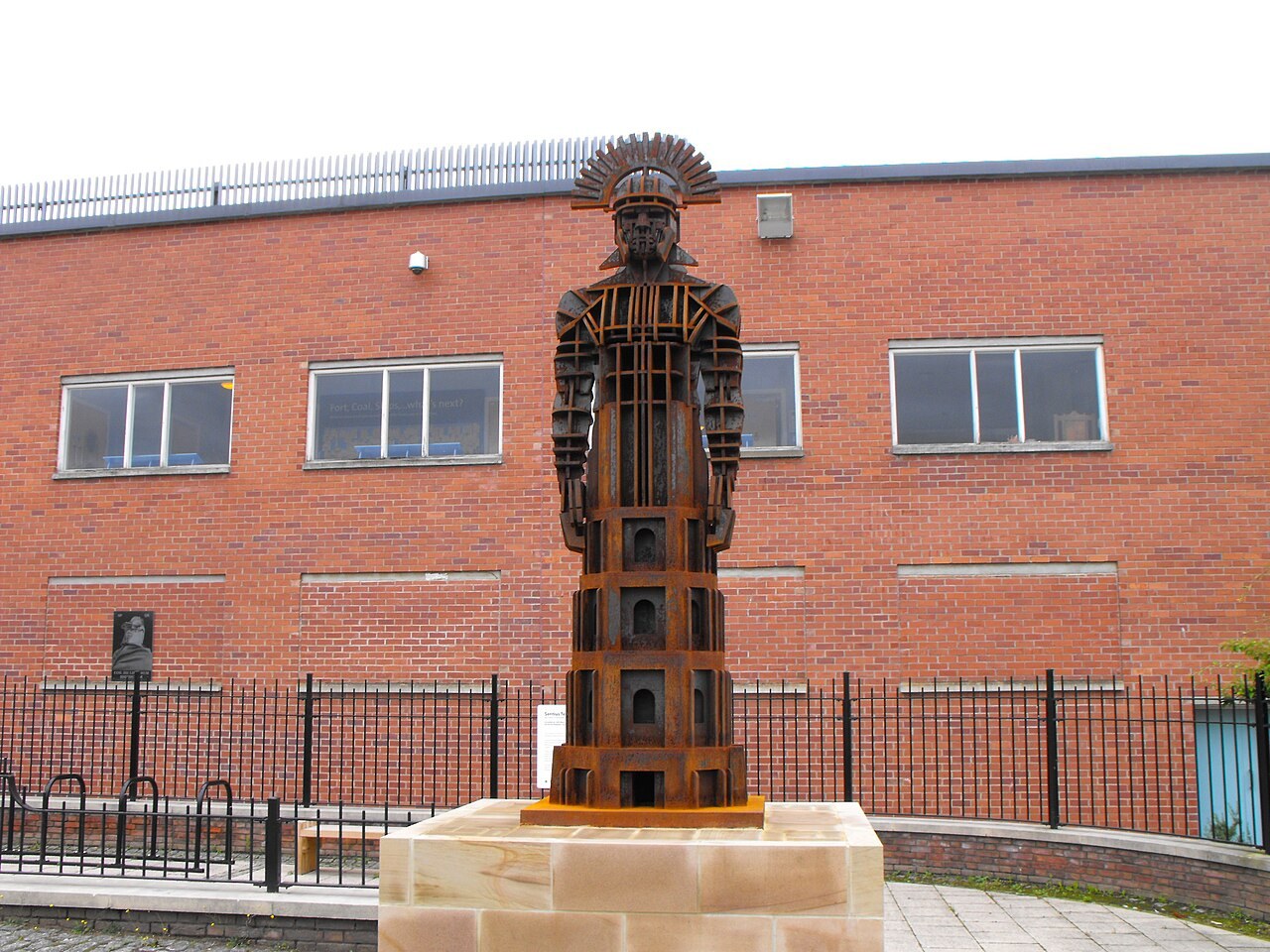 Segedunum: Roman statue at Segedunum Fort, Wallsend; material-culture object or museum find connected with the site, Roman period or local archaeological context.
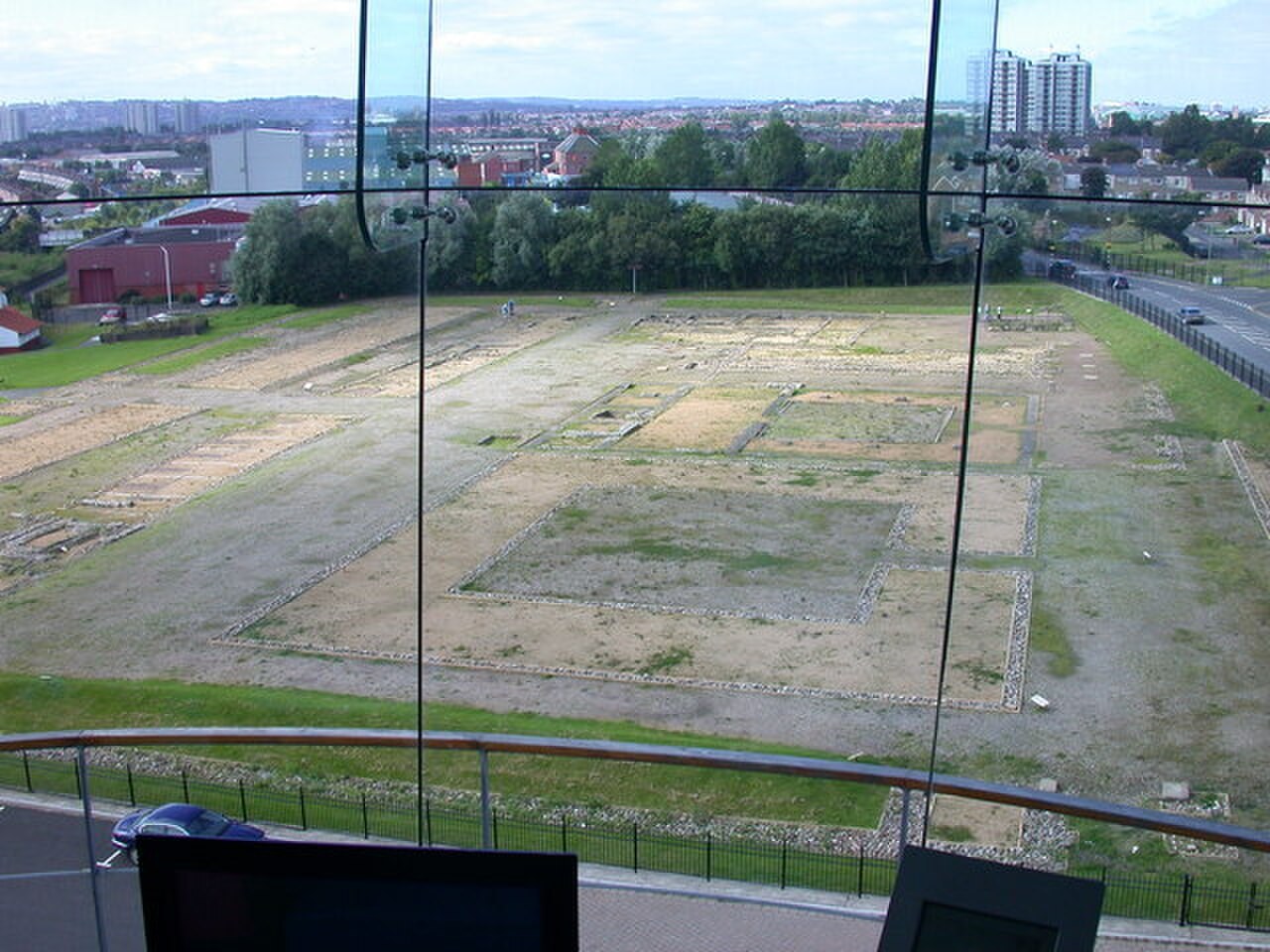 Segedunum: Segedunum Roman fort - geograph.org.uk - 725604; archaeological view, find or museum context connected with the site, Roman period or local archaeological context.
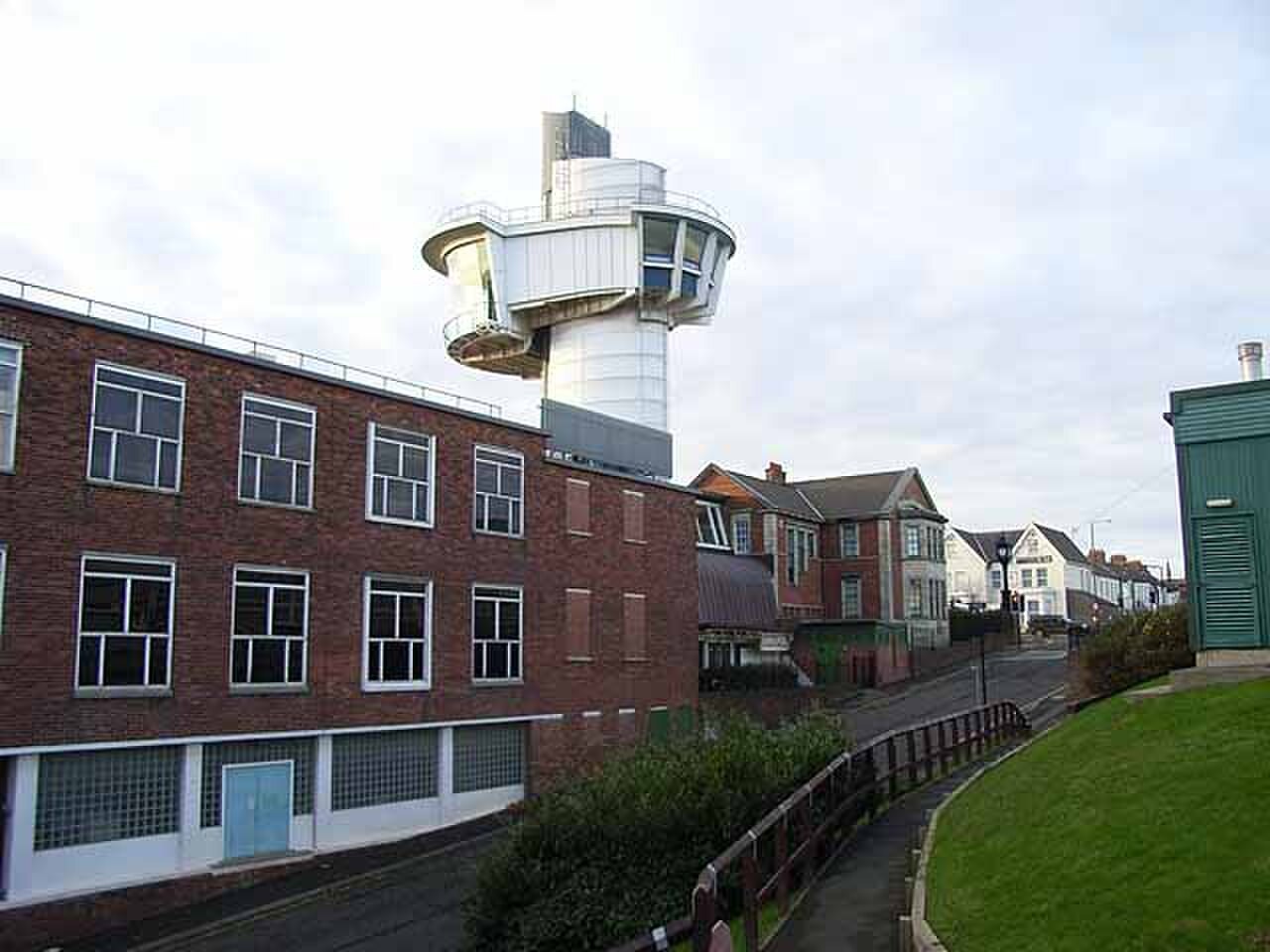 Segedunum: The viewing platform of Segedunum Roman Fort - geograph.org.uk - 1052516; archaeological view, find or museum context connected with the site, Roman period or local archaeological context.
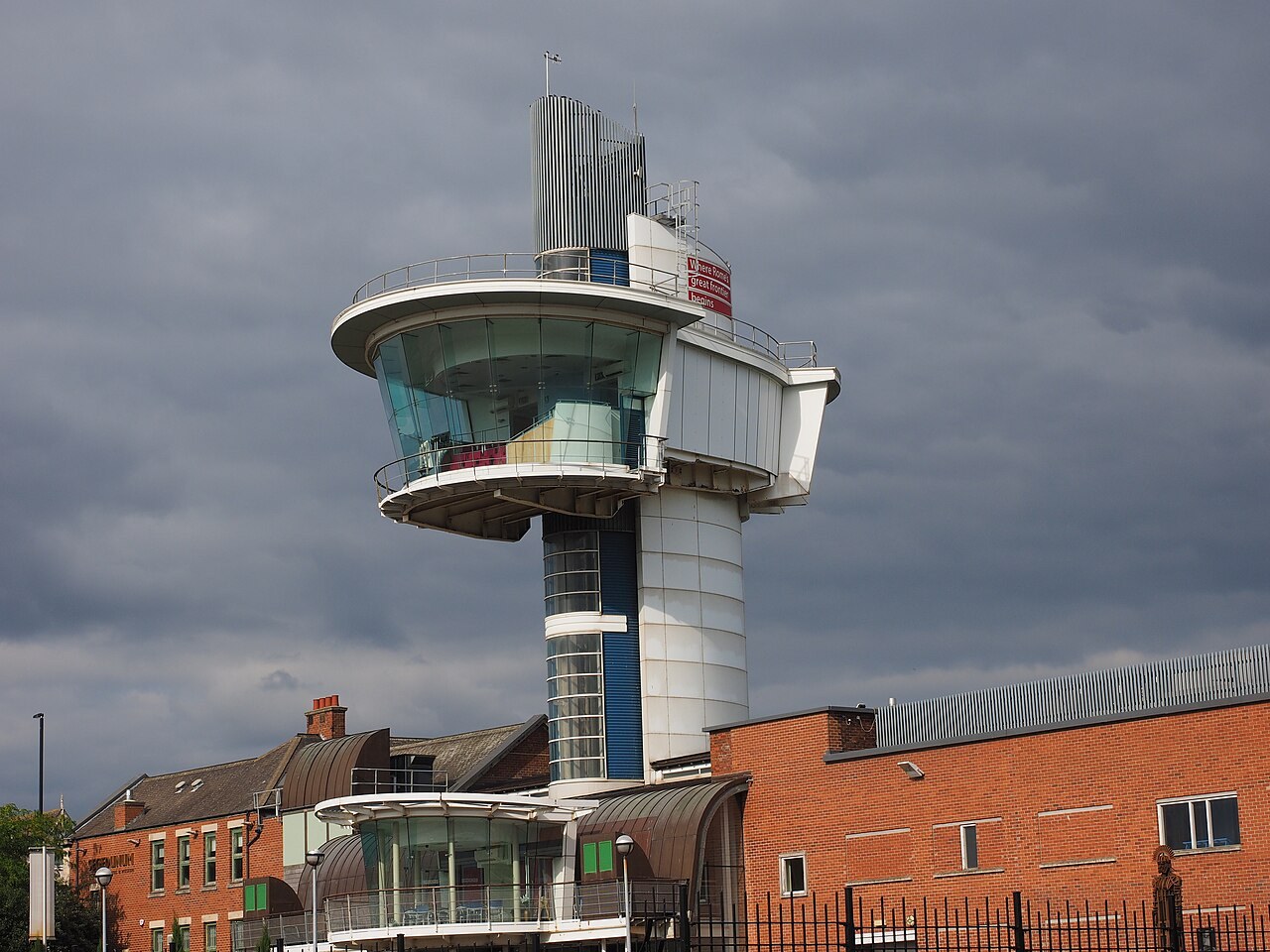 Segedunum: Viewing tower at Segedunum September 2022; archaeological view, find or museum context connected with the site, Roman period or local archaeological context.
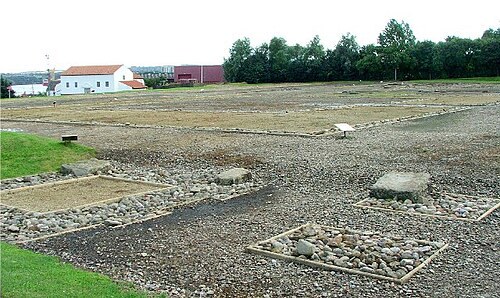 Segedunum: Segedunum Roman Fort and Baths - geograph.org.uk - 37360; archaeological view, find or museum context connected with the site, Roman period or local archaeological context.
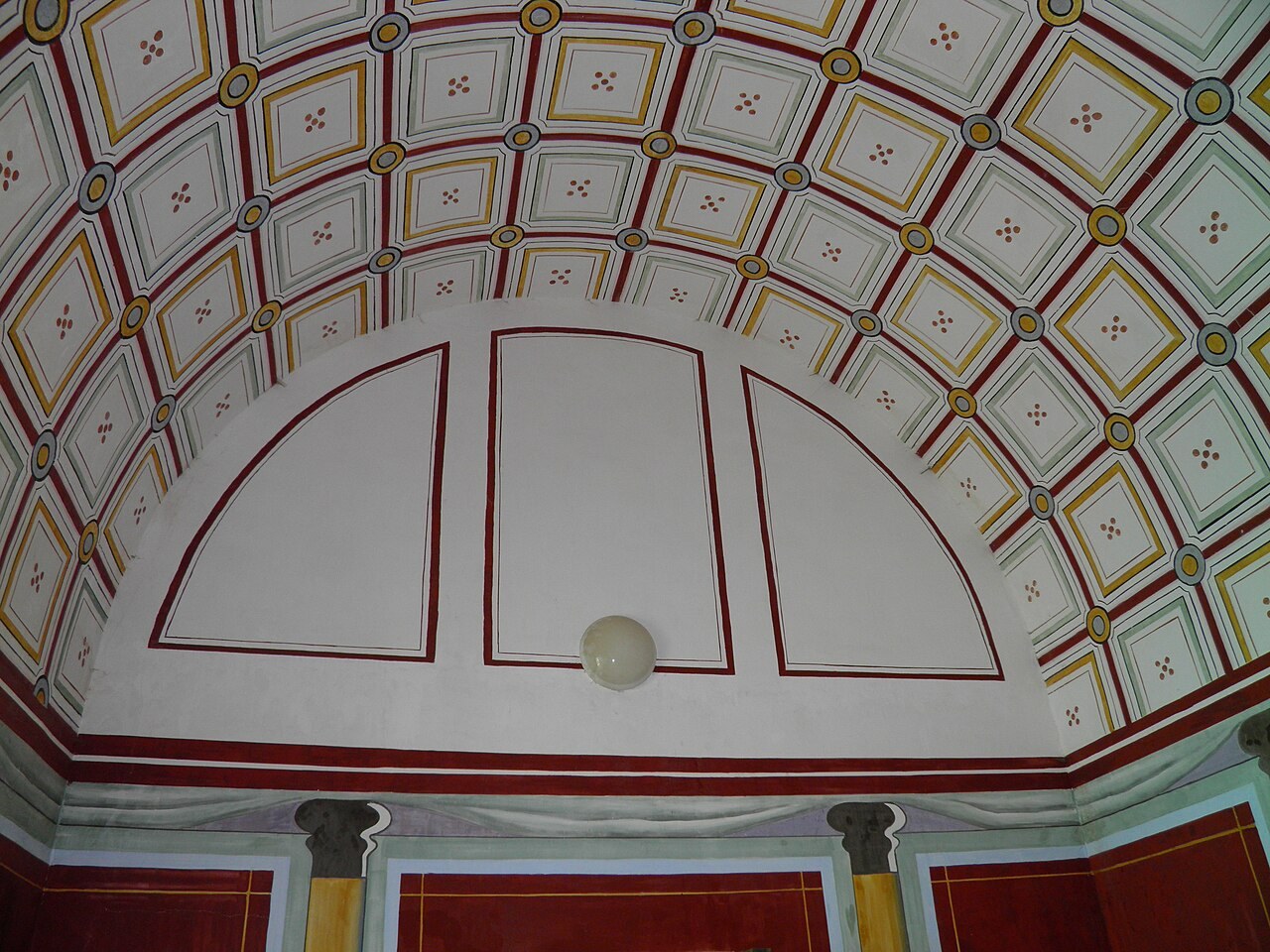 Segedunum: The replica Roman bath house at Segedunum fort in Wallsend; archaeological view, find or museum context connected with the site, Roman period or local archaeological context.
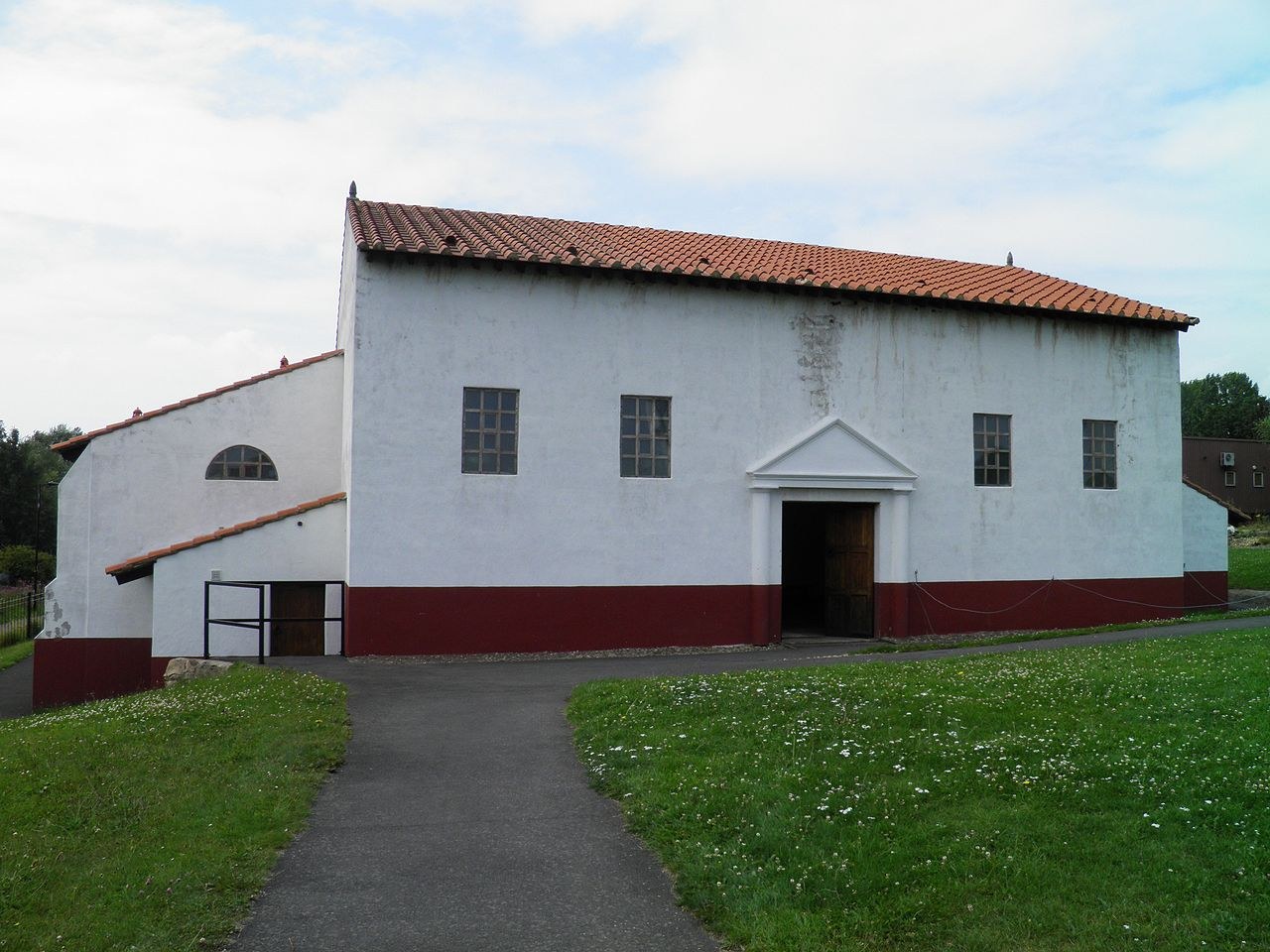 Segedunum: The replica Roman bath house at Segedunum fort in Wallsend; archaeological view, find or museum context connected with the site, Roman period or local archaeological context.
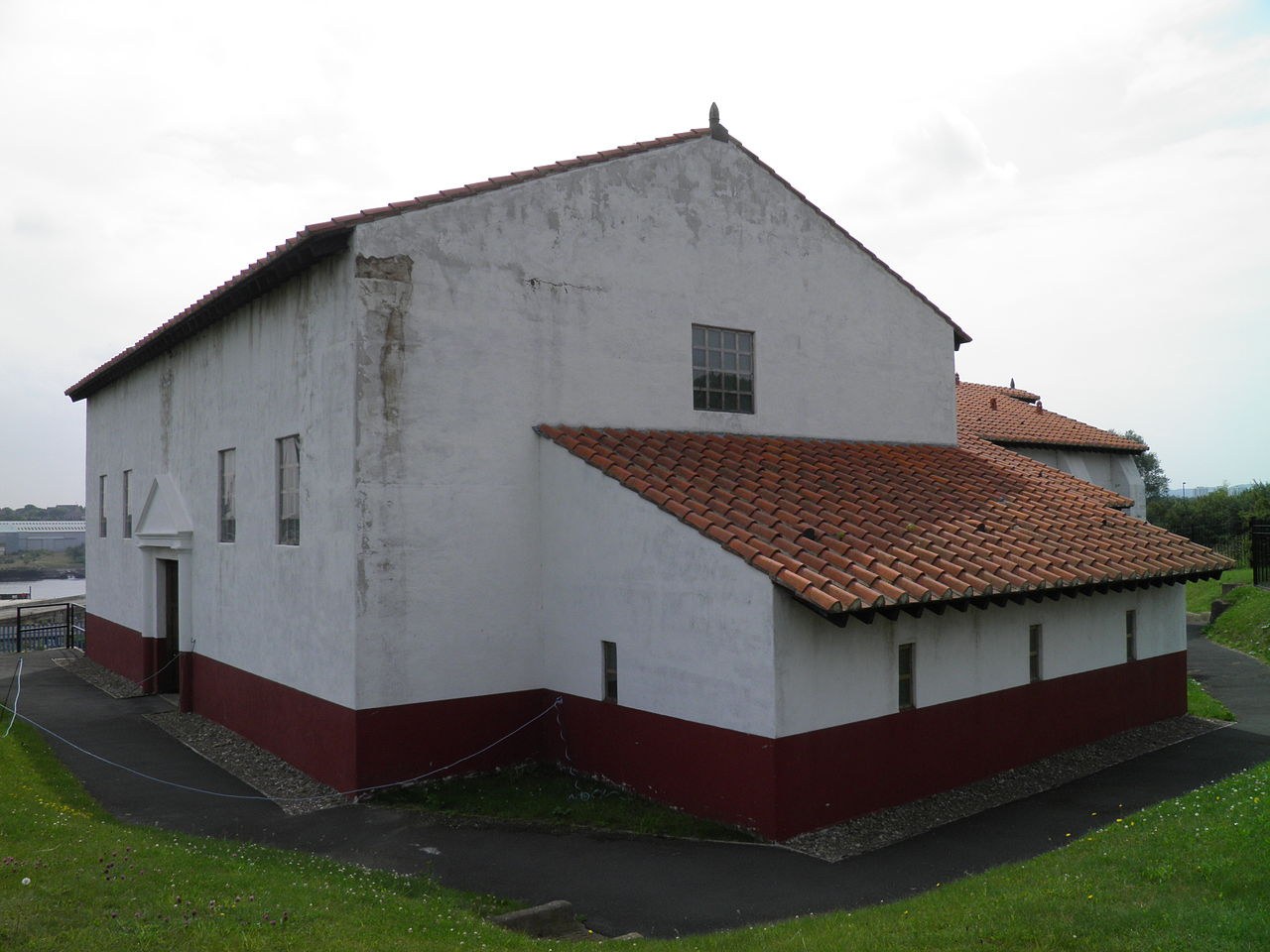 Segedunum: The replica Roman bath house at Segedunum fort in Wallsend; archaeological view, find or museum context connected with the site, Roman period or local archaeological context.
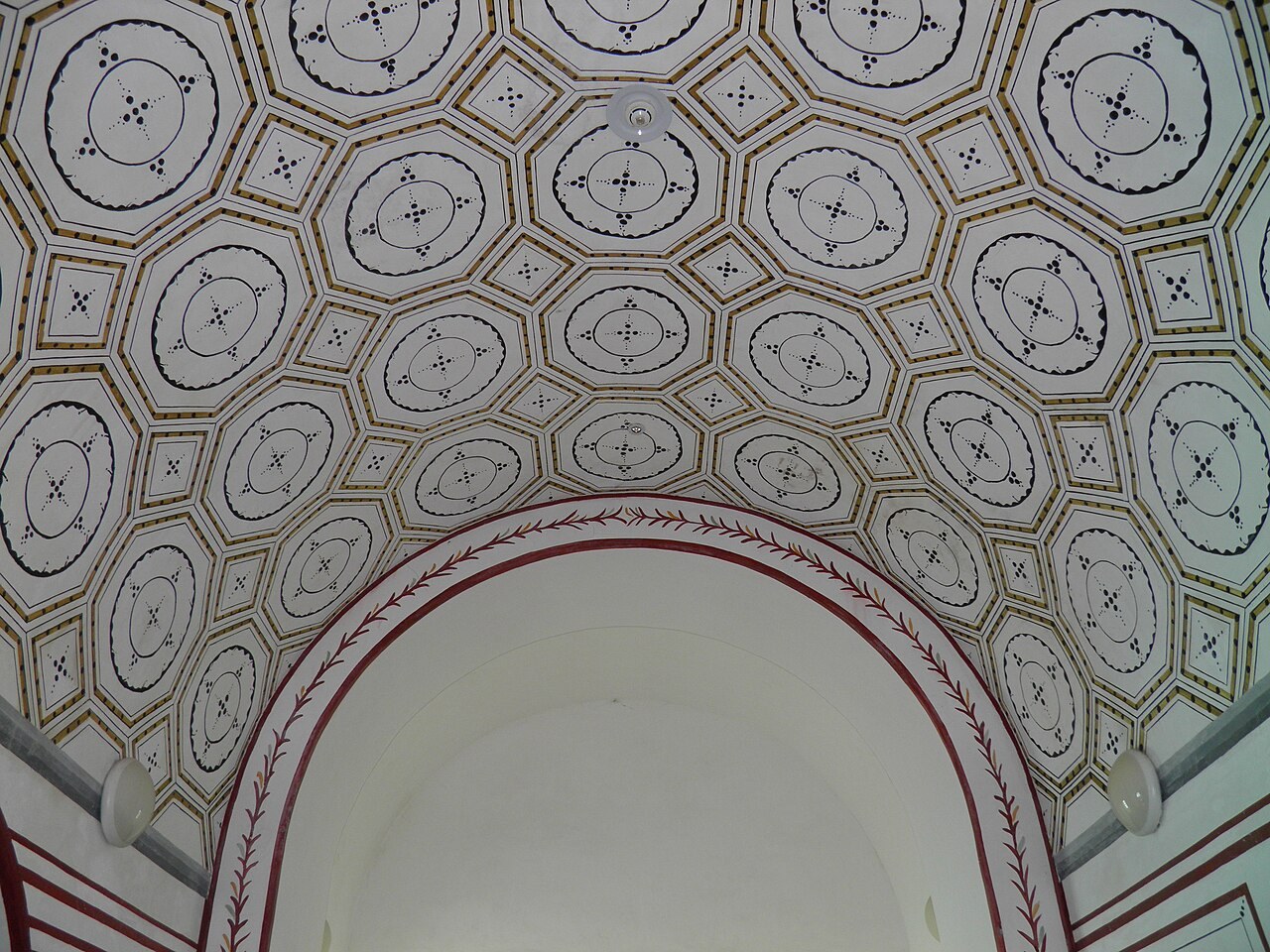 Segedunum: The replica Roman bath house at Segedunum fort in Wallsend; archaeological view, find or museum context connected with the site, Roman period or local archaeological context.
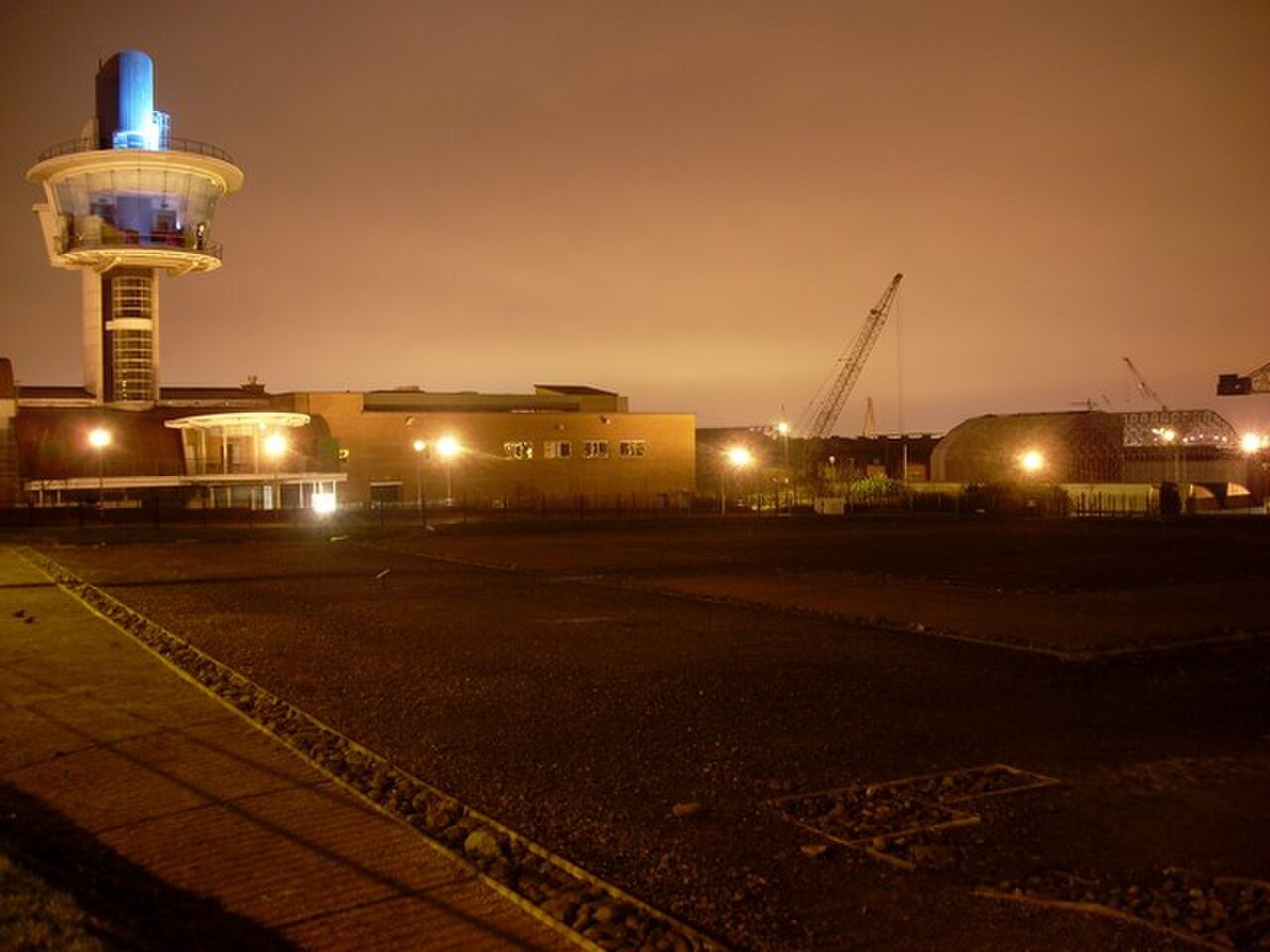 Segedunum: Museum and viewing tower, Segedunum - geograph.org.uk - 1116255; archaeological view, find or museum context connected with the site, Roman period or local archaeological context.
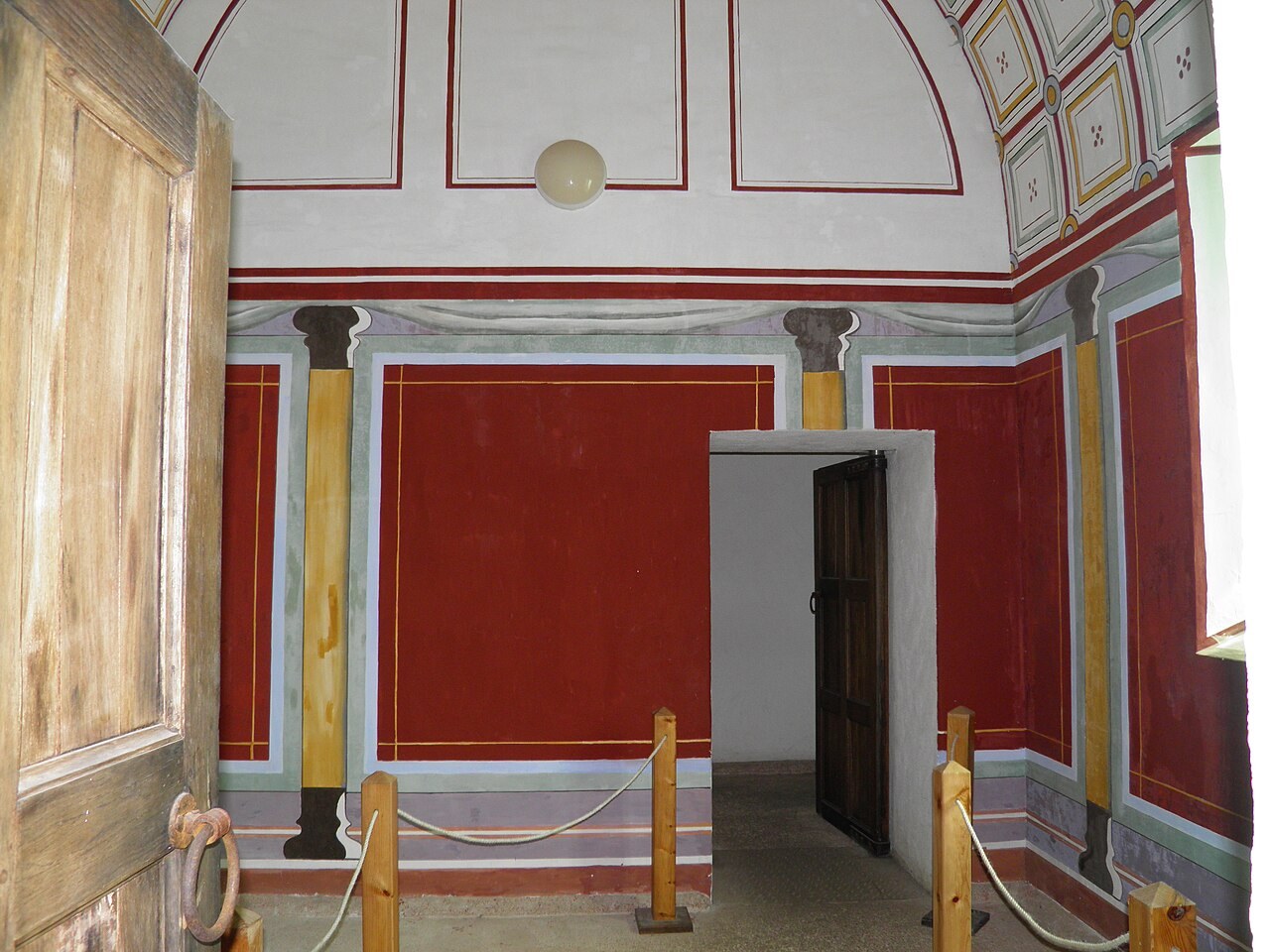 Segedunum: The replica Roman bath house at Segedunum fort in Wallsend; archaeological view, find or museum context connected with the site, Roman period or local archaeological context.
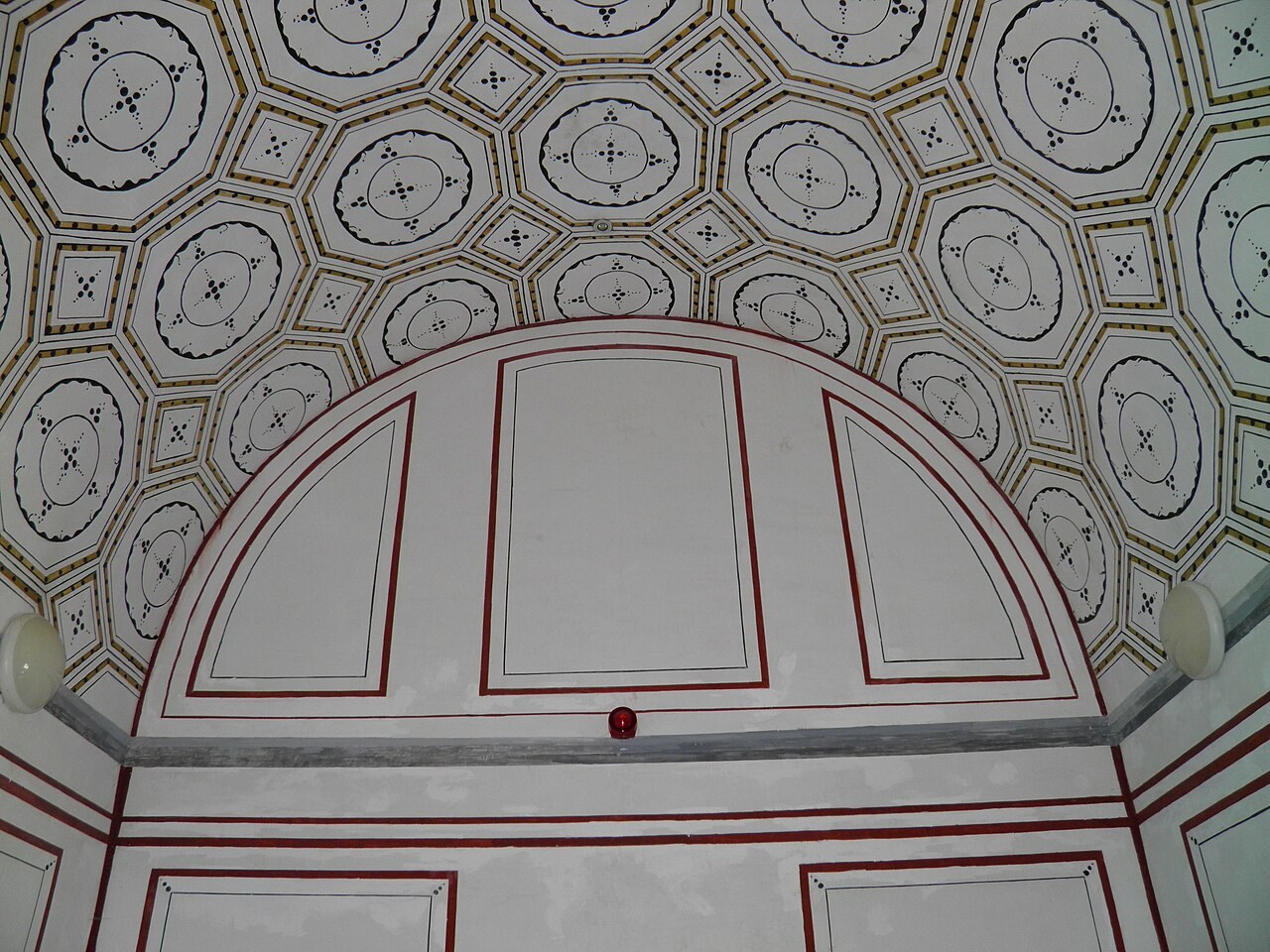 Segedunum: The replica Roman bath house at Segedunum fort in Wallsend; archaeological view, find or museum context connected with the site, Roman period or local archaeological context.
Interested in Ancient Rome beyond reading? Join Legio X Fretensis or explore our reenactment directions.


