Gods of Ancient Egypt
Gods of Ancient Egypt were not a simple "family" of characters, but a multitude of powers through which Egyptians explained the sun, the Nile, kingship, writing, craft, death, fertility, illness, household protection and the danger of the desert. One god could be the patron of a city, a figure in myth, an image of royal power and a personal protector in an amulet. The Egyptian pantheon is therefore best understood as a network of cults and images, not a closed list.
A deity was recognised by name, crown, animal form, attributes and setting. Re could be the solar disk or falcon-headed Re-Harakhty; Thoth could be an ibis or baboon; Hathor could be a cow, a woman with horns and solar disk, or a face on a mirror; Anubis could be a jackal or a man with a canid head. Archaeological sources for the gods are varied: temple reliefs, statues, bronze figures, amulets, coffins, papyri, stelae, ostraca and everyday objects.
Solar and Cosmic Gods
Re was the chief solar god. He was seen in the daytime sun, the solar bark, the disk and the falcon-headed form of Re-Harakhty. Visual evidence ranges from temple reliefs to late statuettes and amulets: it shows not one "portrait" form, but a set of signs of solar power.
Atum is linked with Heliopolis and the myth of the self-generation of the world. He could be shown as a man in the double crown, while mythological texts connected him with the evening sun and the first act of creation. Khepri, the scarab god, expressed the morning rebirth of the sun; scarab amulets and seals made this one of the most widespread images in material culture.
Nut, Shu and Geb described the structure of the world: Nut as sky, Shu as air and separating force, Geb as earth. Nut often appears on coffins and pectorals as a winged goddess or celestial body receiving the sun at evening and giving birth to it in the morning. Such images are especially important in funerary religion, where the cosmos literally surrounded the body of the deceased.
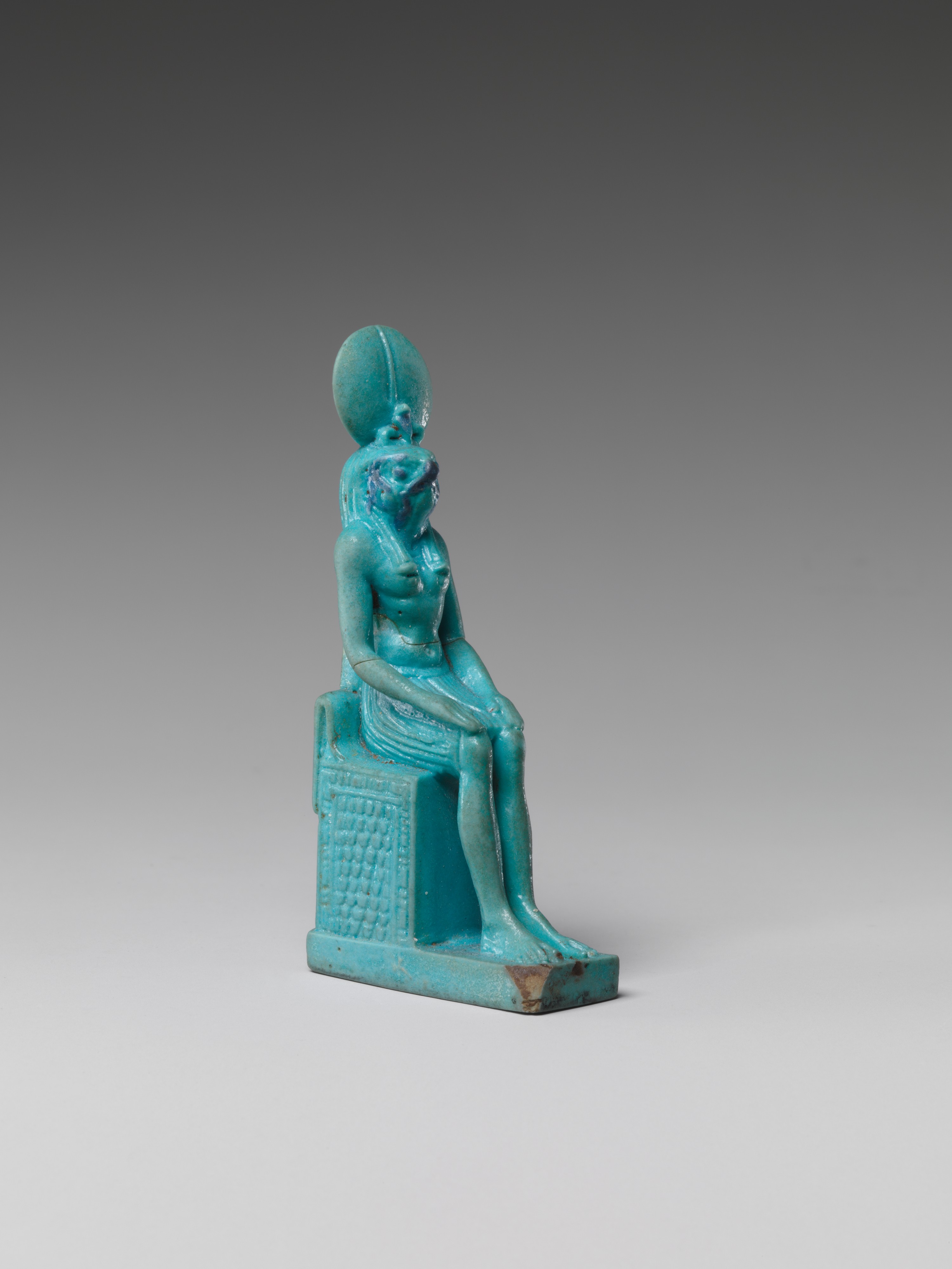 Statuette of Re-Harakhty. Ptolemaic Period, 332-30 BC; Metropolitan Museum of Art.
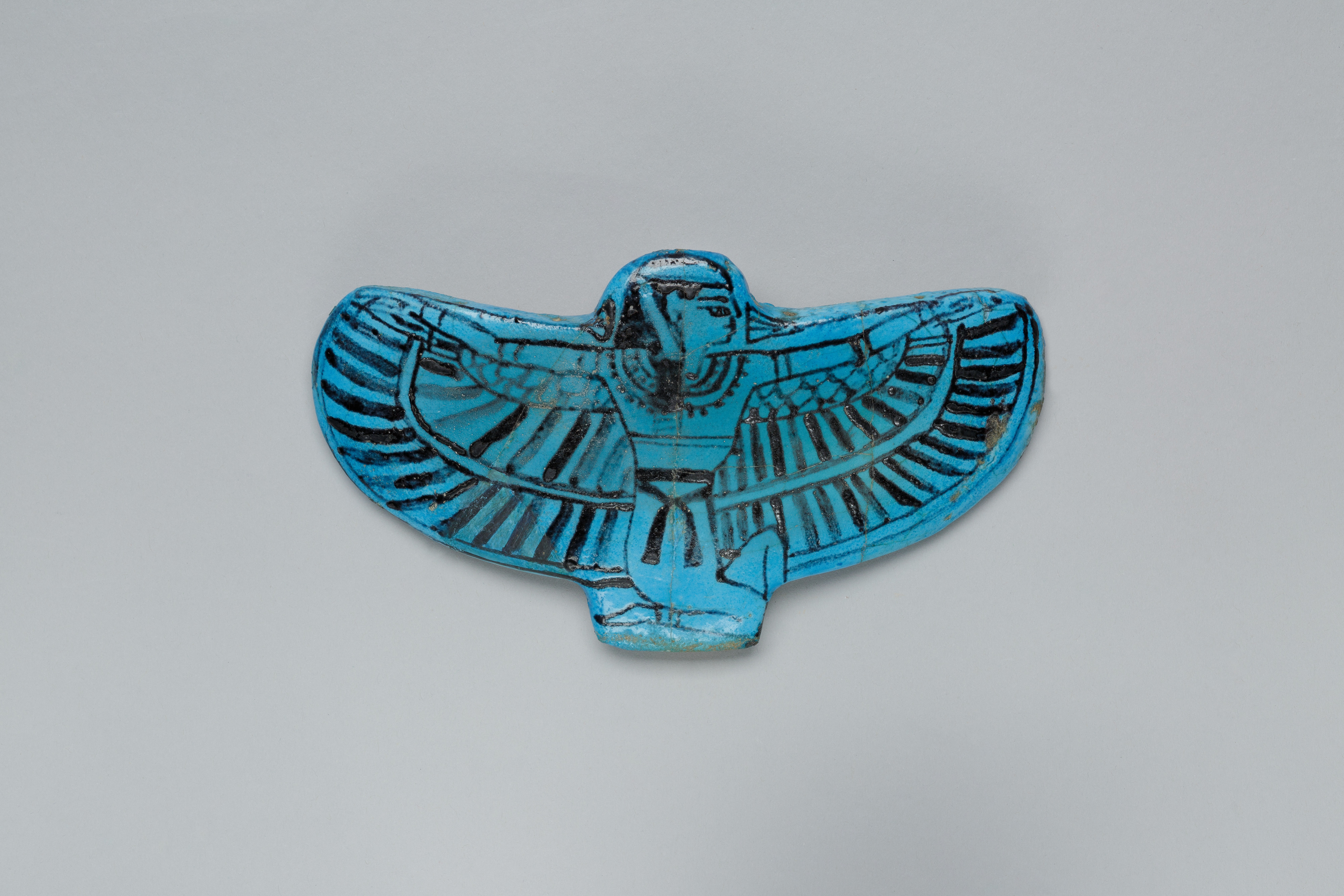 Pectoral of a winged goddess, probably Nut. Dynasties 19-20, ca. 1295-1186 BC; Metropolitan Museum of Art.
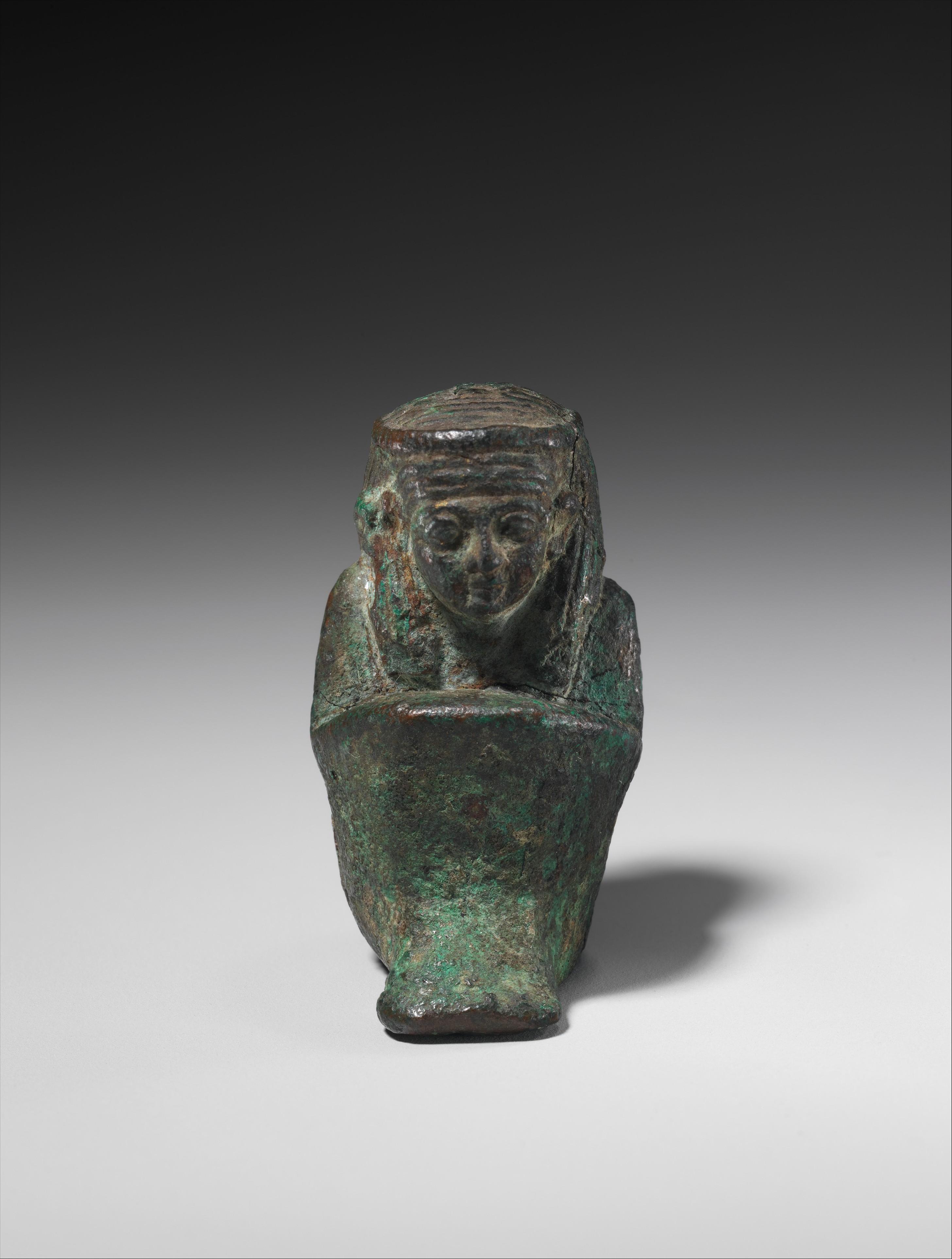 Figure of Maat with feather on her head. Third Intermediate to Late Period, ca. 1070-332 BC; Metropolitan Museum of Art.
Osiris, Isis and the Myth of Kingship
Osiris was god of the dead, renewal and legitimate succession. He is recognised by his mummiform body, atef crown, crook and flail, and greenish or dark skin in painting. Figures of Osiris, coffins, sarcophagi and judgement scenes show that his cult joined hope for afterlife with the restoration of disrupted order.
Isis was the wife of Osiris, mother of Horus, protector of the dead and goddess of magical help. In art she may bear the throne sign on her head, the wings of a mourner or the image of a mother with the infant Horus. Statuettes of Isis with Horus are especially important for the later periods: they show how the myth of Osiris' heir became a personal image of protection and motherhood.
Horus was god of kingship and the celestial falcon. The Horus name formed part of royal titulary, the falcon stood over the king's name, and amulets and stelae of Horus the Child protected against poison and danger. Seth in this myth is the opponent of Osiris and Horus, but he is not simply an "evil god": he is linked with desert, storm, foreign lands and dangerous force that could sometimes be directed against chaos. Nephthys, sister of Isis, is most often visible in funerary scenes as mourner and protector of the dead.
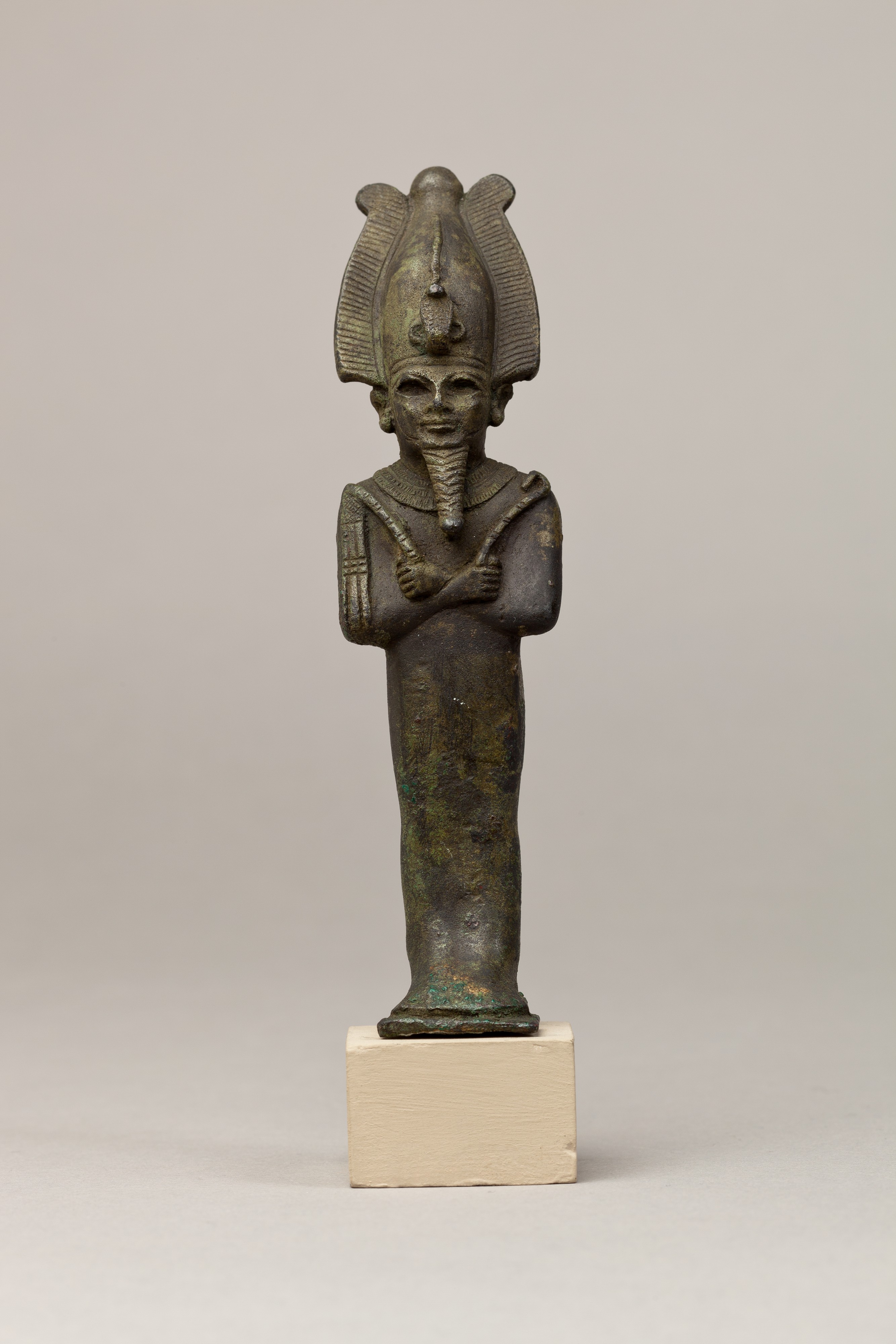 Figure of Osiris. Late Period to Ptolemaic Period, 664-30 BC; Metropolitan Museum of Art.
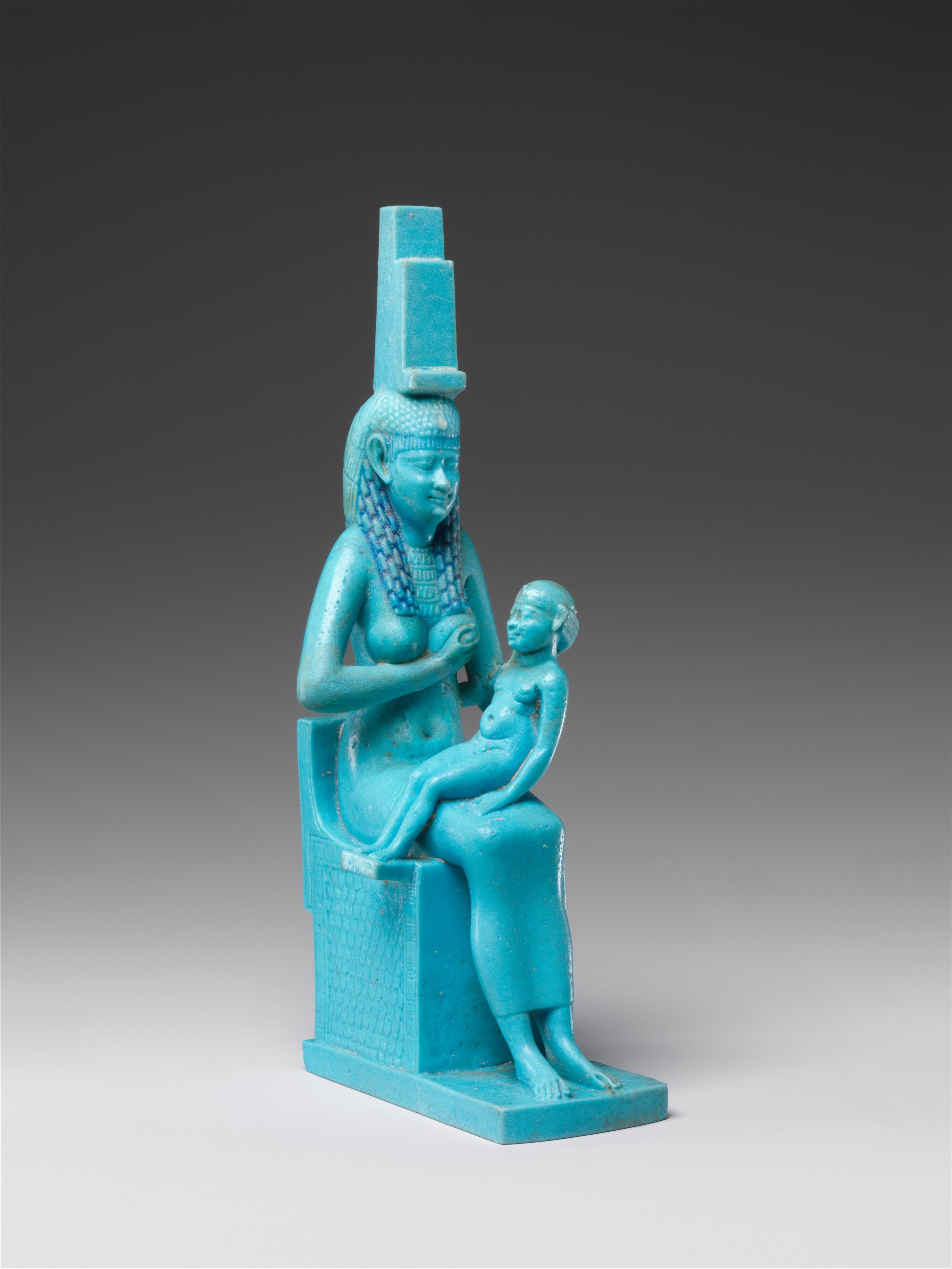 Statuette of Isis with the infant Horus. Ptolemaic Period, 332-30 BC; Metropolitan Museum of Art.
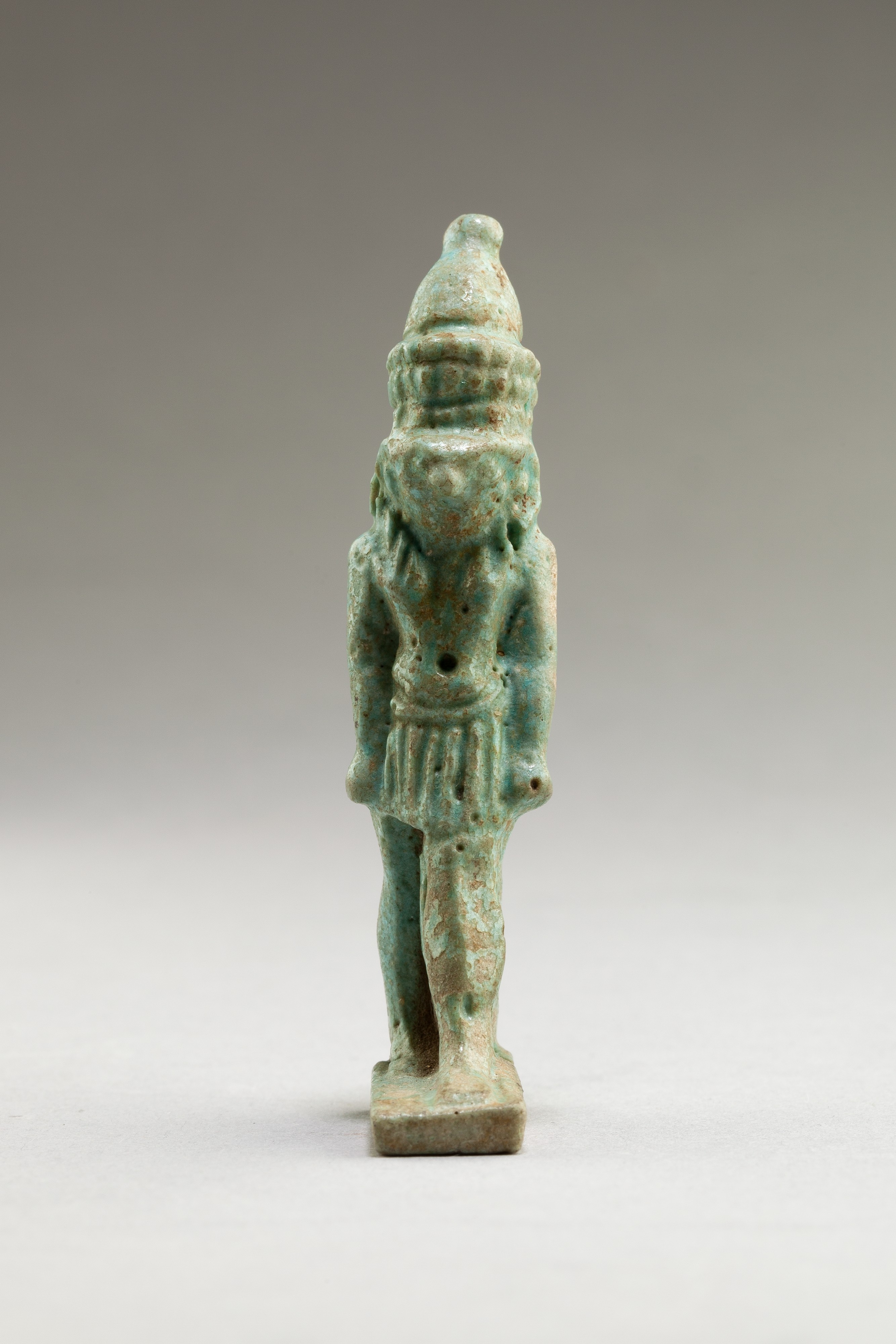 Horus amulet. Late Period to Ptolemaic Period, 664-30 BC; Metropolitan Museum of Art.
Funerary and Protective Deities
Anubis is linked with the necropolis, embalming and protection of the body. His jackal or canid image appears on coffins, amulets, sarcophagi, funerary beds and scenes of mummification. He does not replace Osiris but acts beside him: preparing the body, guiding the dead and guarding the boundary between living and dead.
Ma'at was goddess of truth, order and rightness. Her feather became a sign of balance, and the weighing of the heart shows that a person's religious fate depended on moral and ritual order. Ma'at was also offered to the gods as a gift: the king holding a figure of Ma'at expressed the very meaning of kingship.
Thoth was god of writing, calculation, the moon, knowledge and the recording of judgement. In funerary scenes he writes down the result of the weighing of the heart, and in temple culture he is connected with texts, calendars and learning. His ibis or baboon images occur on statuettes, amulets and reliefs.
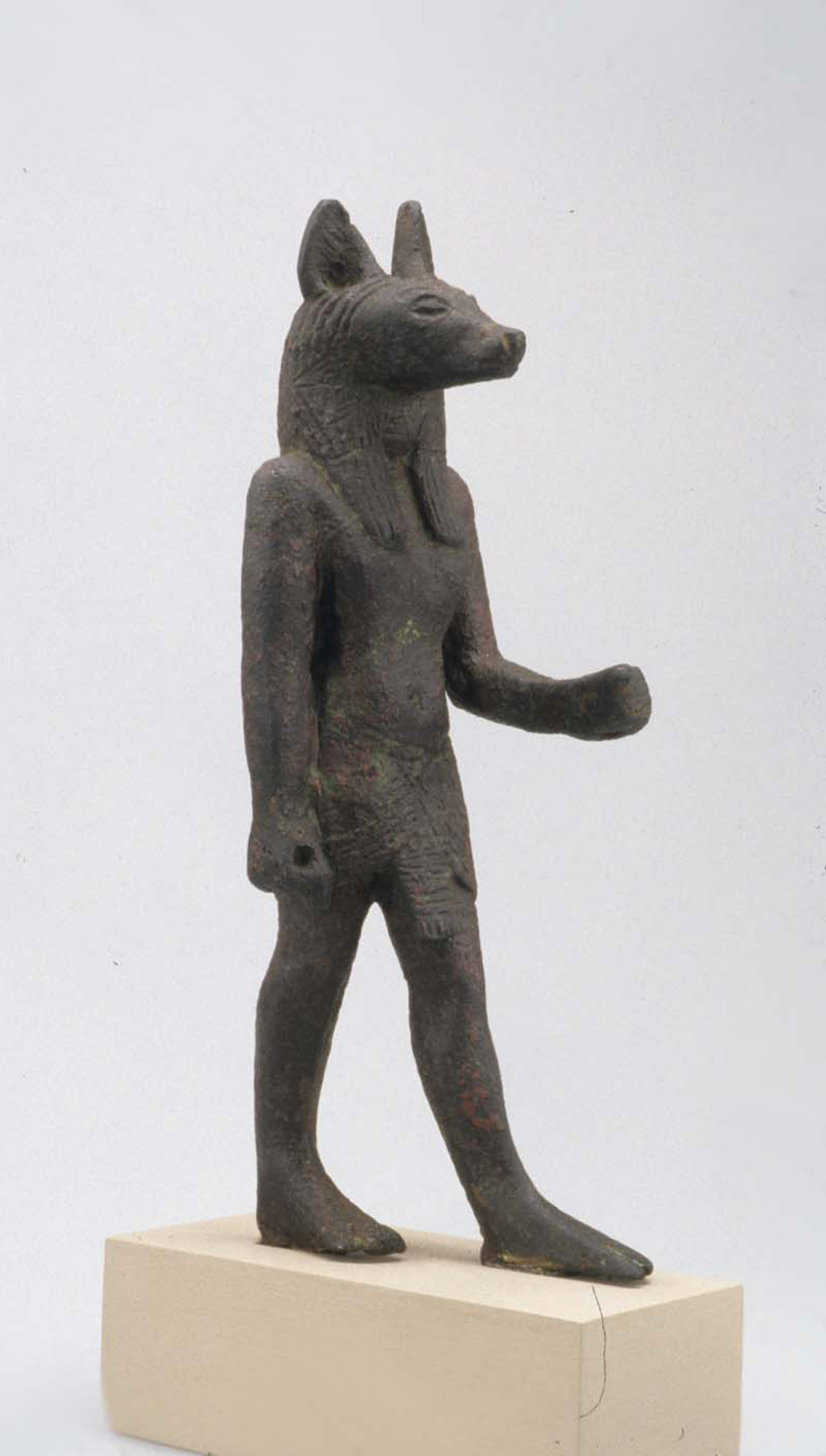 Figure of Anubis. Late Period to Ptolemaic Period, 664-30 BC; Metropolitan Museum of Art.
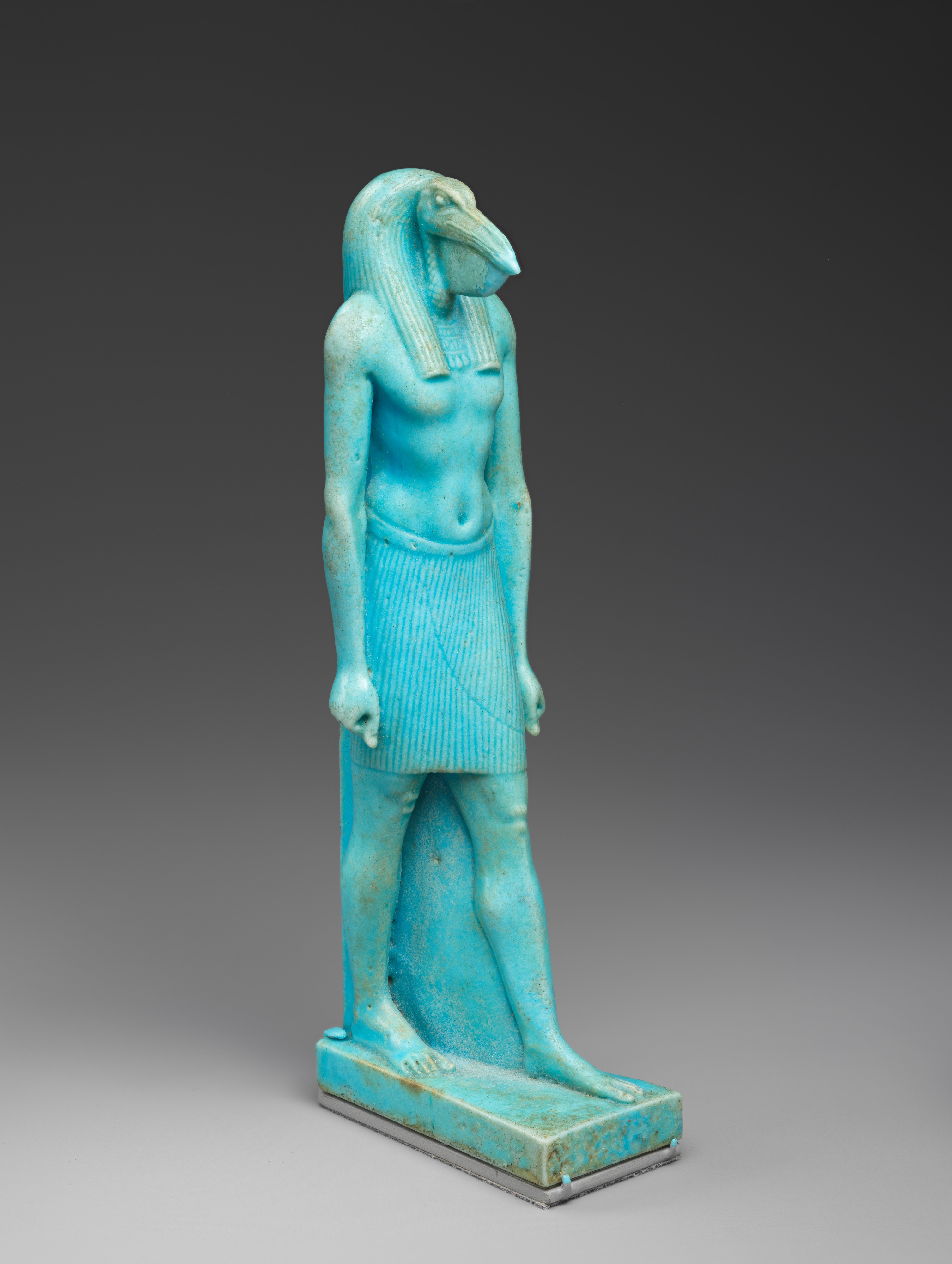 Striding Thoth in ibis form. Ptolemaic Period, 332-30 BC; Metropolitan Museum of Art.
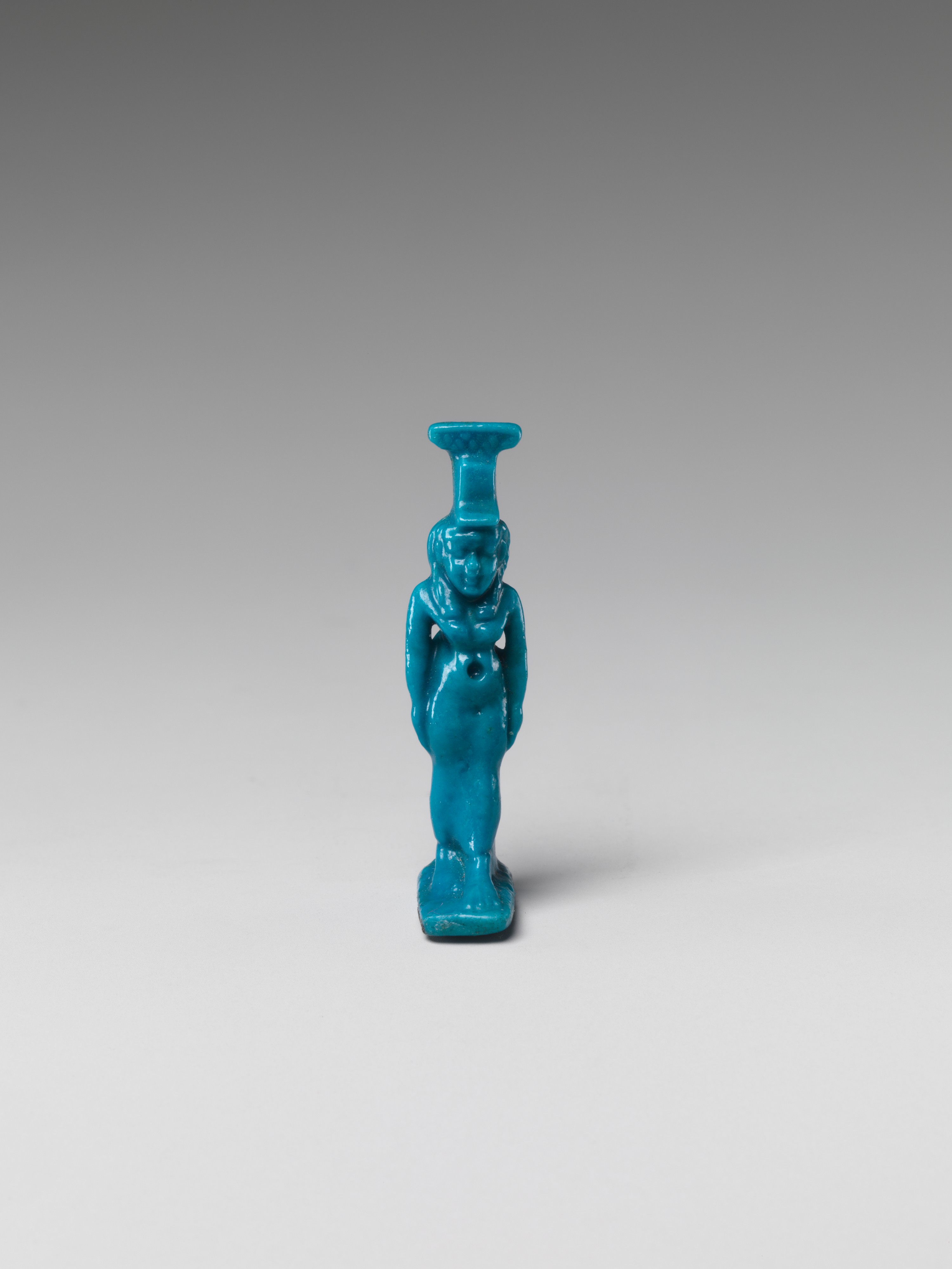 Nephthys amulet. Ptolemaic Period, 332-30 BC; Metropolitan Museum of Art.
Memphis, Thebes and Temple Triads
Ptah was the chief god of Memphis, patron of craft, creative thought and skilled making. His mummiform body, tight cap and staff joined the power of a creator with the image of a craftsman. The Memphite tradition is especially important because it connected creation with word, heart and intention.
Amun was originally a Theban god, but in the New Kingdom became one of the central gods of the empire. Joined with Re he became Amun-Re, patron of royal power and the temple wealth of Thebes. He is recognised by his high feathered crown, and also by ram imagery and processional cult forms.
Mut and Khonsu formed the Theban triad with Amun. Mut was a royal mother goddess, often with the double crown or in leonine form; Khonsu was a lunar god linked with time, healing and youth. The triad shows that Egyptian temple cult was often built not around a solitary deity, but around a divine family and a local festival system.
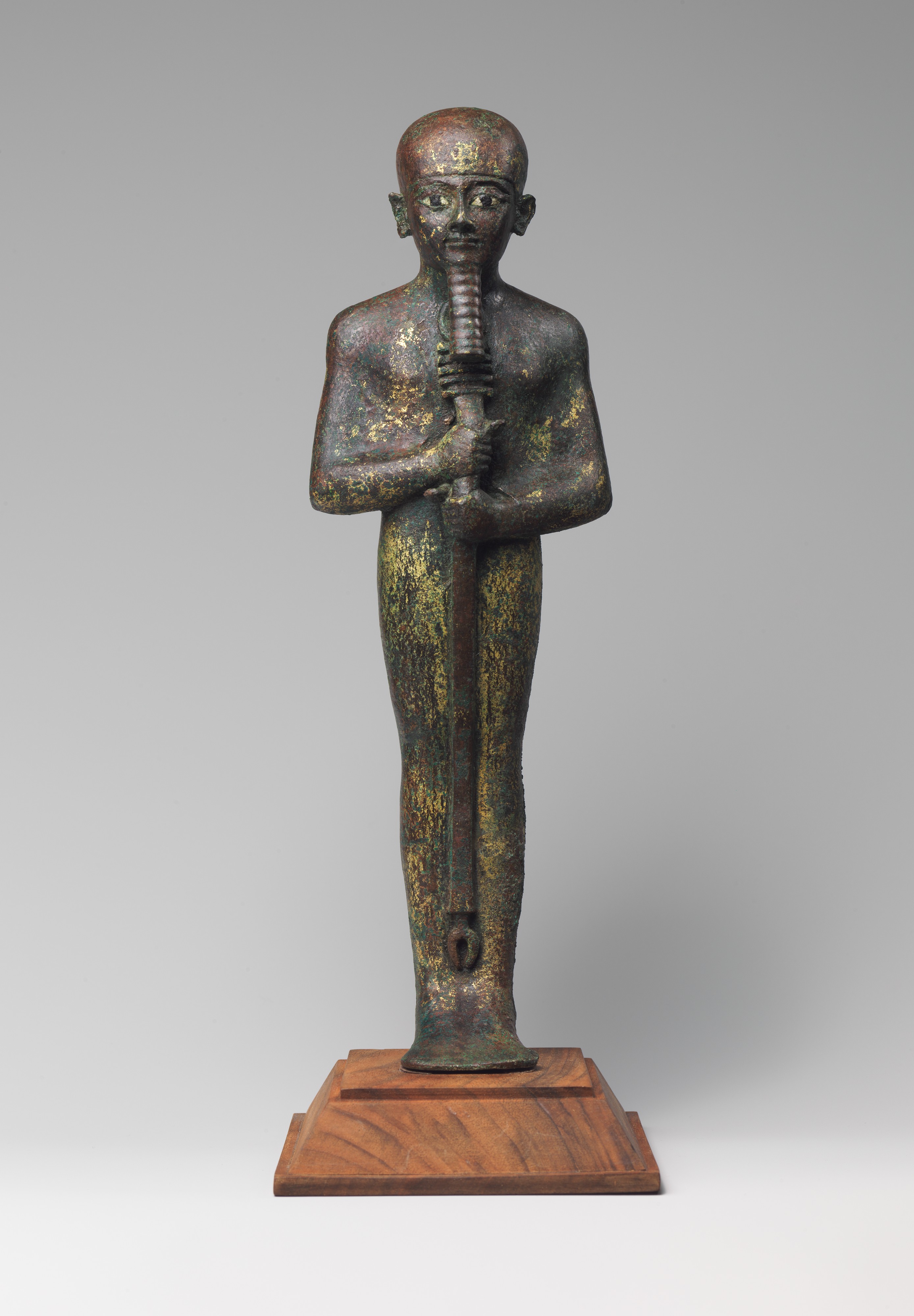 Statue of the god Ptah. Third Intermediate Period, ca. 1070-712 BC; Metropolitan Museum of Art.
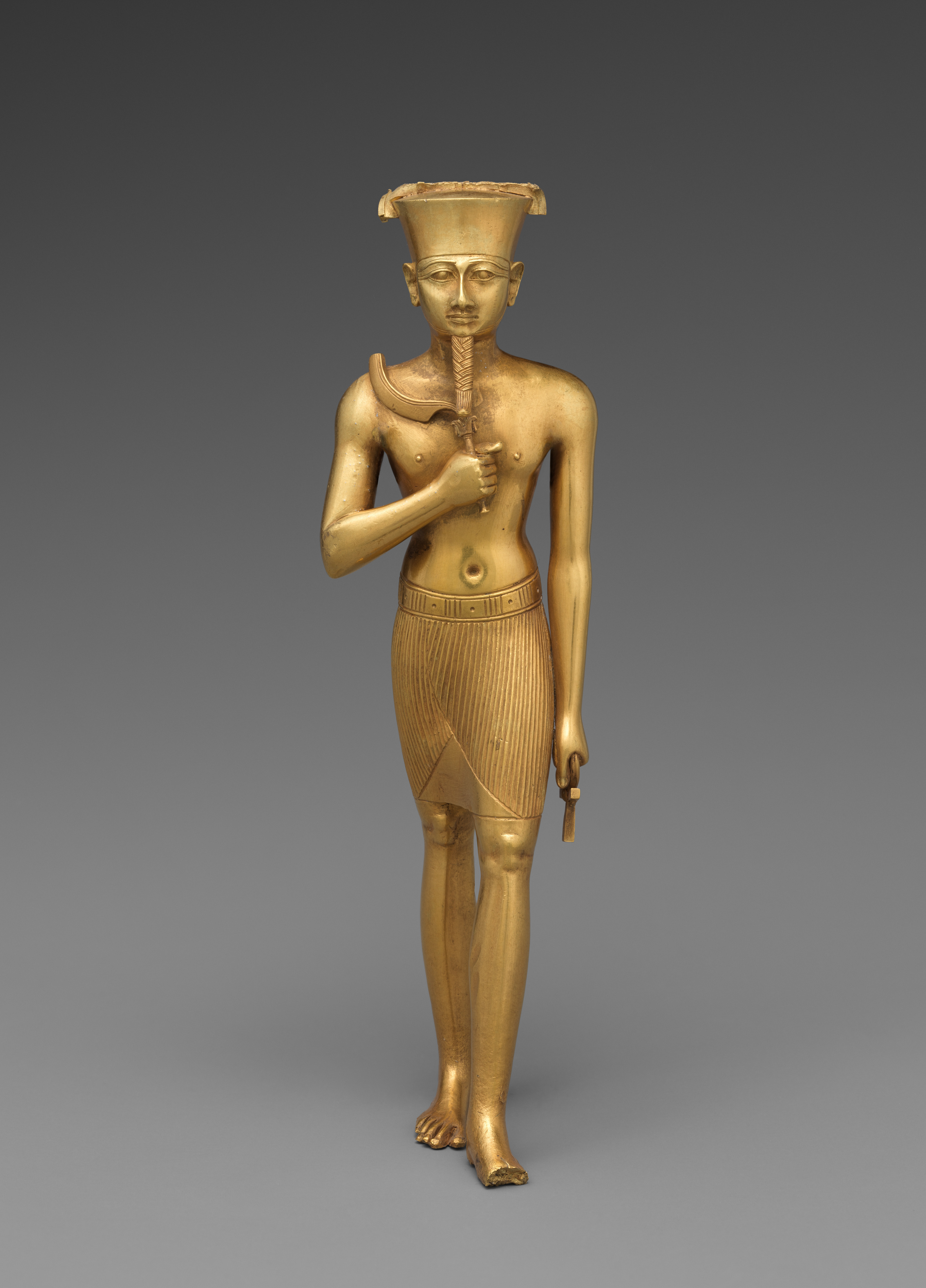 Statuette of Amun. Third Intermediate Period, ca. 945-712 BC; Metropolitan Museum of Art.
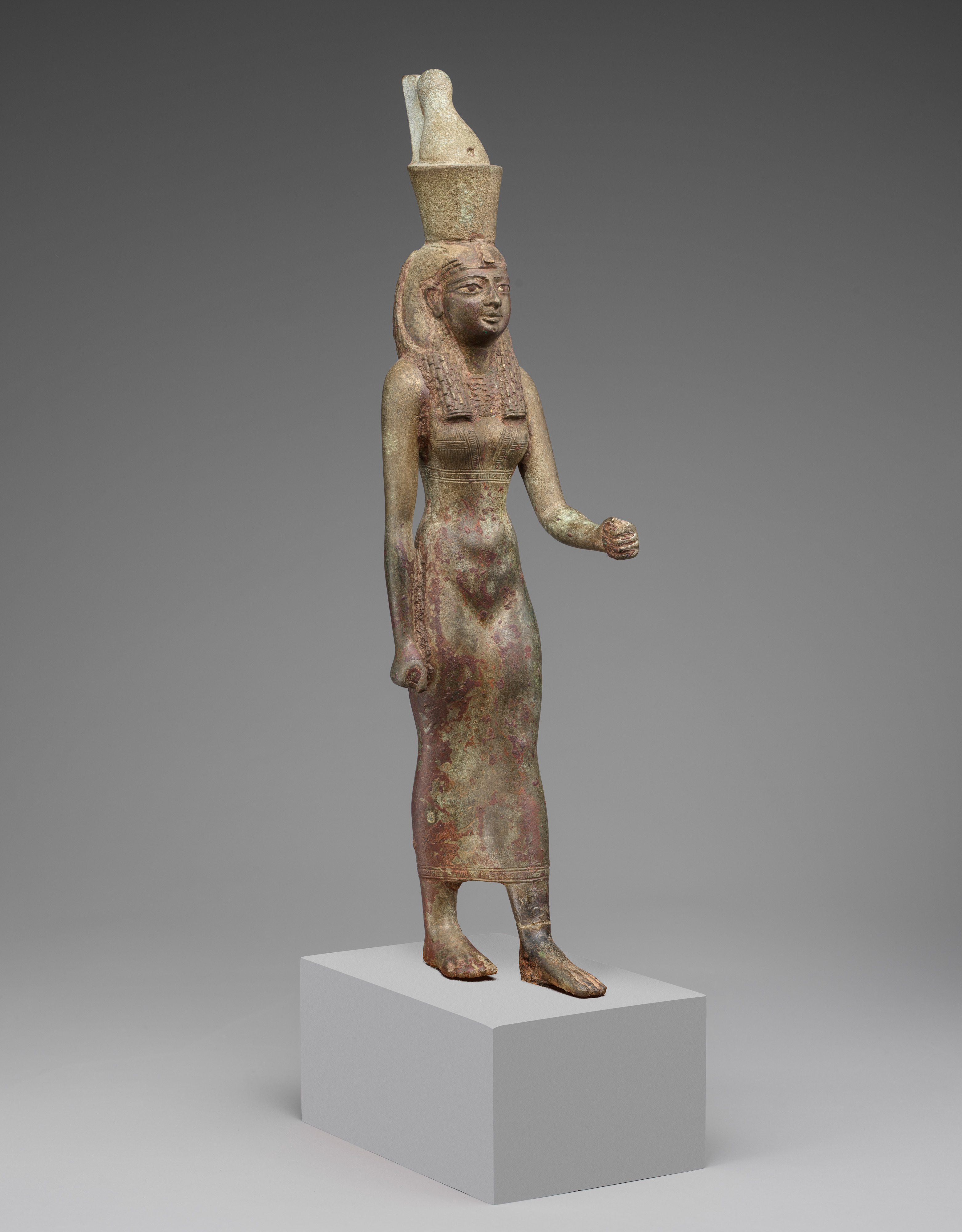 Statuette of Mut. Third Intermediate Period, ca. 1070-664 BC; Metropolitan Museum of Art.
Fierce, Household and Healing Deities
Hathor was goddess of joy, music, love, motherhood, intoxication and funerary welcome. She is recognised by cow horns, solar disk, sistrum, menat necklace and the face with cow ears on mirrors and capitals. Images of Hathor join temple solemnity with personal objects, so she is visible in both monumental and domestic art.
Sekhmet is the lion-headed goddess of rage, illness, war and healing. Her power could destroy, and for that reason it had to be appeased and directed. Statues and amulets of Sekhmet show how dangerous divine energy could become protection.
Bastet in early forms could be a lioness goddess, but she is especially known as a cat-like protector of home, fertility, joy and safety. Bronze and faience cat figures, amulets and dedicatory objects of the later periods made her one of the most recognisable images of Egyptian religion.
Taweret and Bes protected childbirth, children, sleep and the household. Taweret has the body of a pregnant hippopotamus with lion and crocodile features; Bes is shown frontally, with grotesque face, beard, protruding tongue and dwarf body. They are often found not in great temples but on amulets, beds, headrests, vessels and objects of everyday protection.
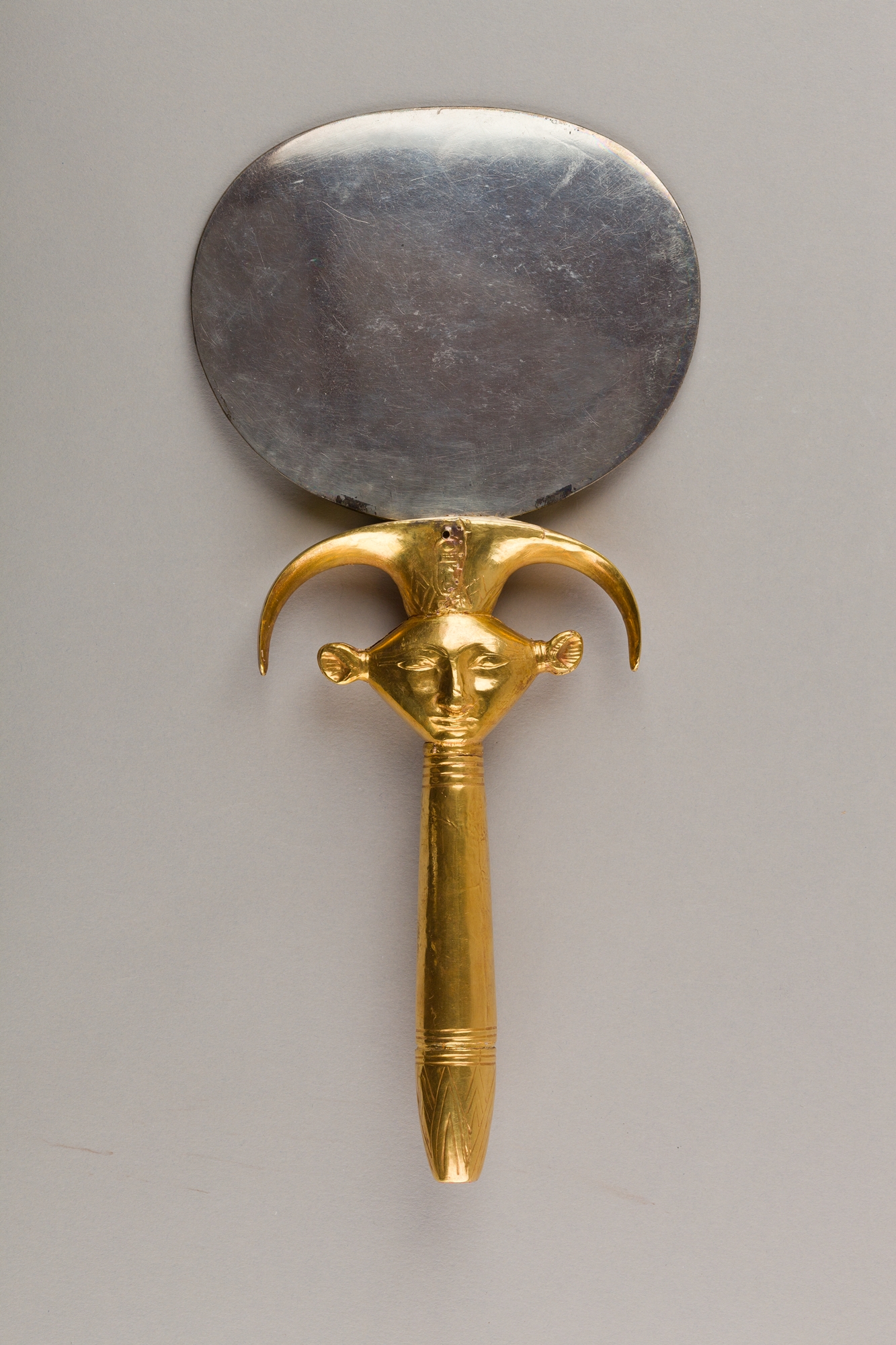 Mirror with handle in the form of a Hathor emblem. Dynasty 18, ca. 1479-1425 BC; Metropolitan Museum of Art.
 Sakhmet amulet. Late Period to Ptolemaic Period, 664-30 BC; Metropolitan Museum of Art.
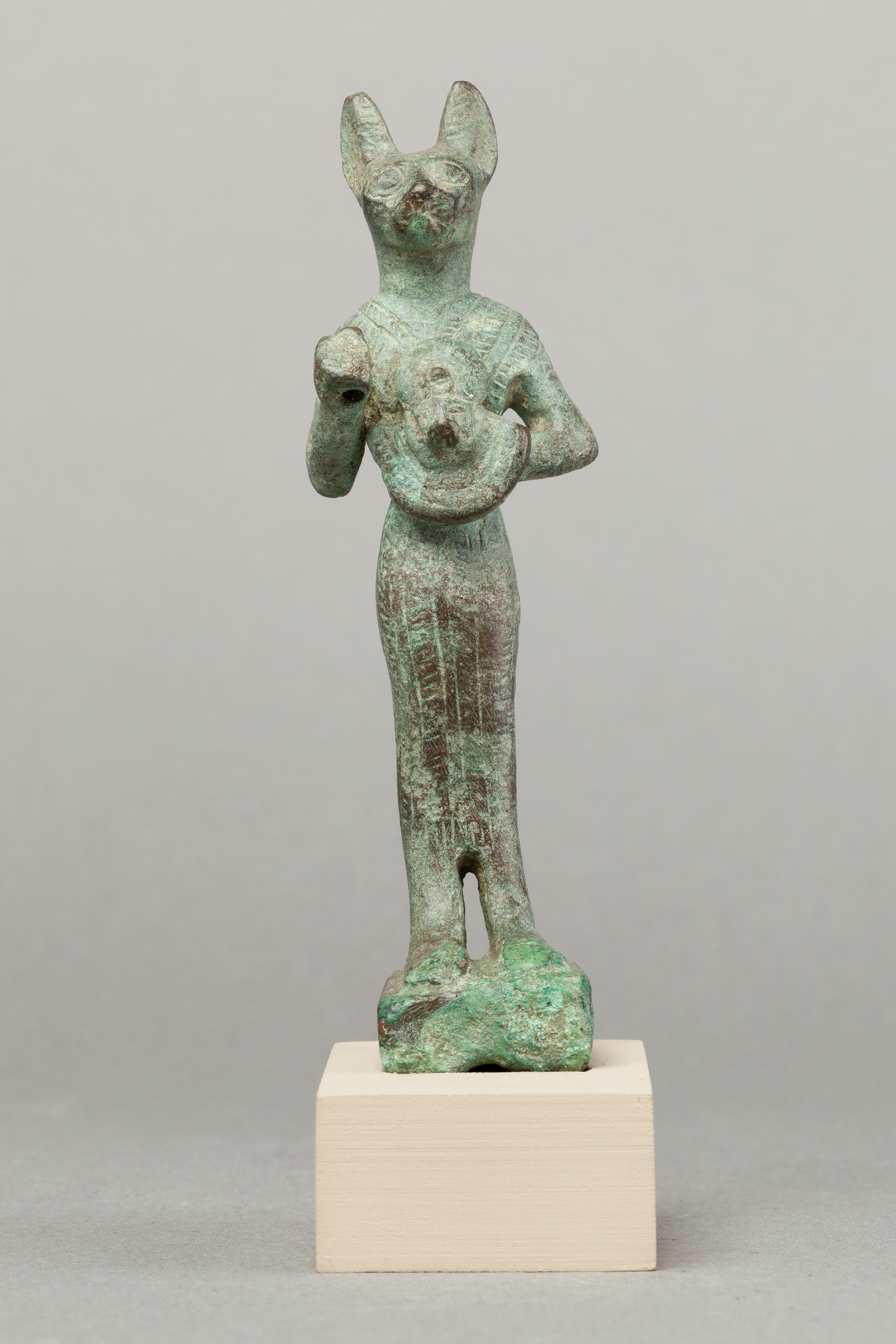 Figure of Bastet. Late Period to Ptolemaic Period, 664-30 BC; Metropolitan Museum of Art.
Water, Desert and Local Patrons
Sobek was the crocodile god, especially important in the Faiyum and Kom Ombo. His cult joined fear of the crocodile, the fertility of water, royal force and protection. Ostraca, scarabs, bronze figures and crocodile mummies show that Sobek could be both dangerous and beneficial.
Khnum, the ram god, is linked with Elephantine, the sources of the Nile and the image of a potter-creator shaping people on a wheel. Min was god of fertility and male power, especially connected with Coptos and Akhmim; his images are usually frontal and recognisable by the raised arm and phallic sign. Montu, a falcon- or bull-headed warrior god, was important in the Theban region before the rise of Amun and retained military significance later.
Neith of Sais joined war, hunting, weaving, motherhood and antiquity. Her sign, a shield with crossed arrows, shows how a local goddess could be both city patron and participant in cosmological myths. Such deities remind us that Egyptian religion was not only a national pantheon but also a map of local cults.
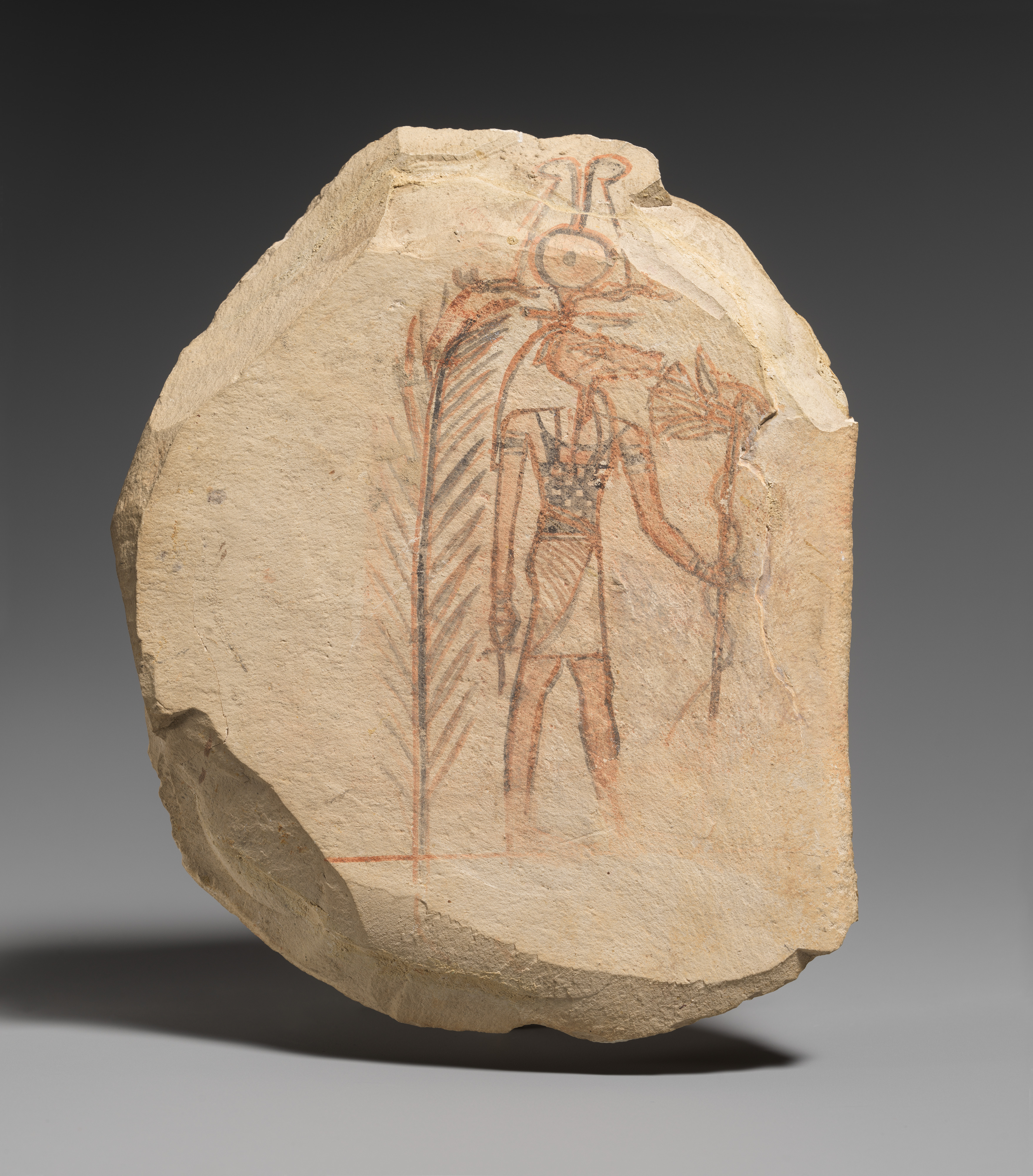 Ostracon depicting the god Sobek. Dynasties 19-20, ca. 1295-1070 BC; Metropolitan Museum of Art.
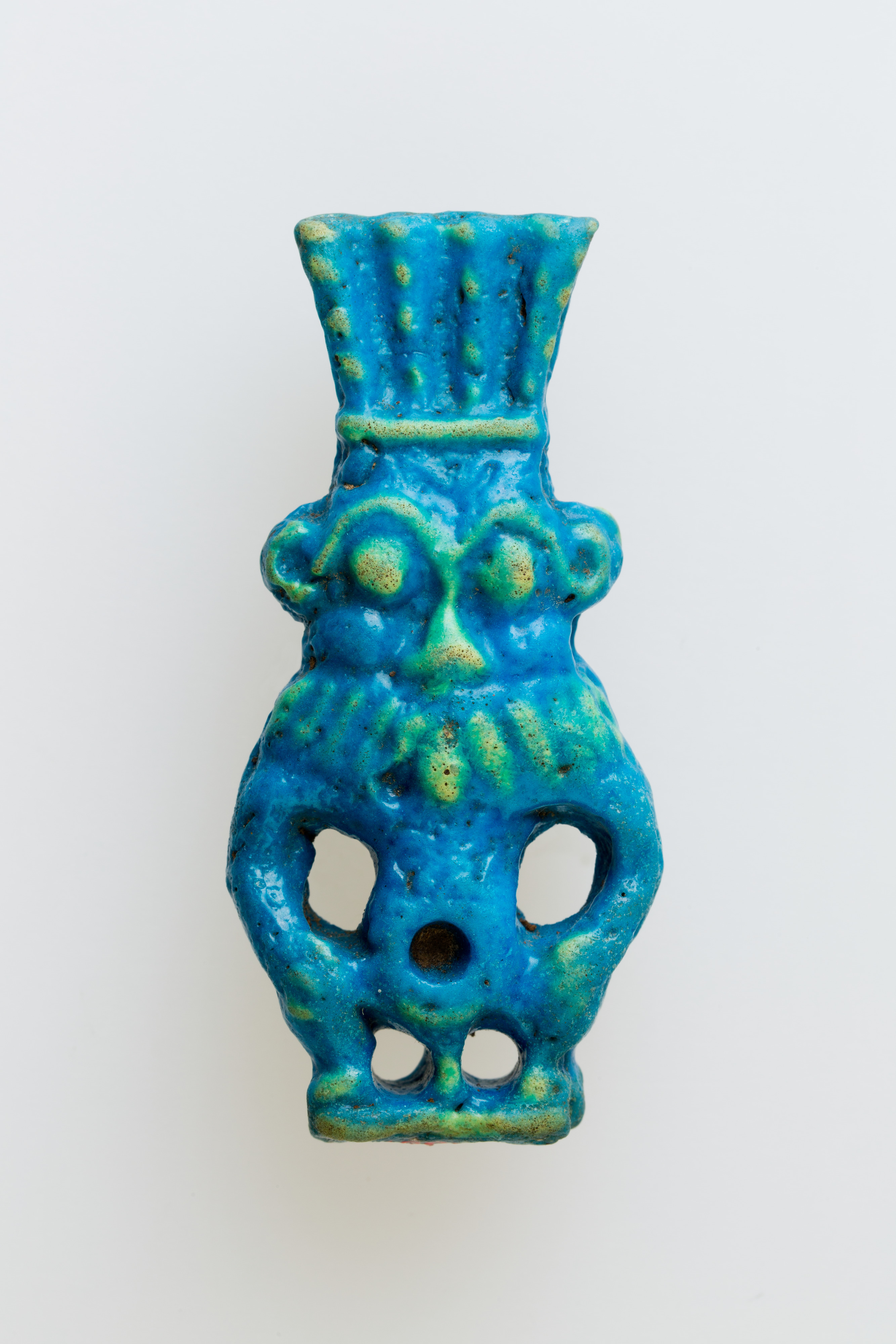 Figure of Bes. Late Period to Ptolemaic Period, 664-30 BC; Metropolitan Museum of Art.
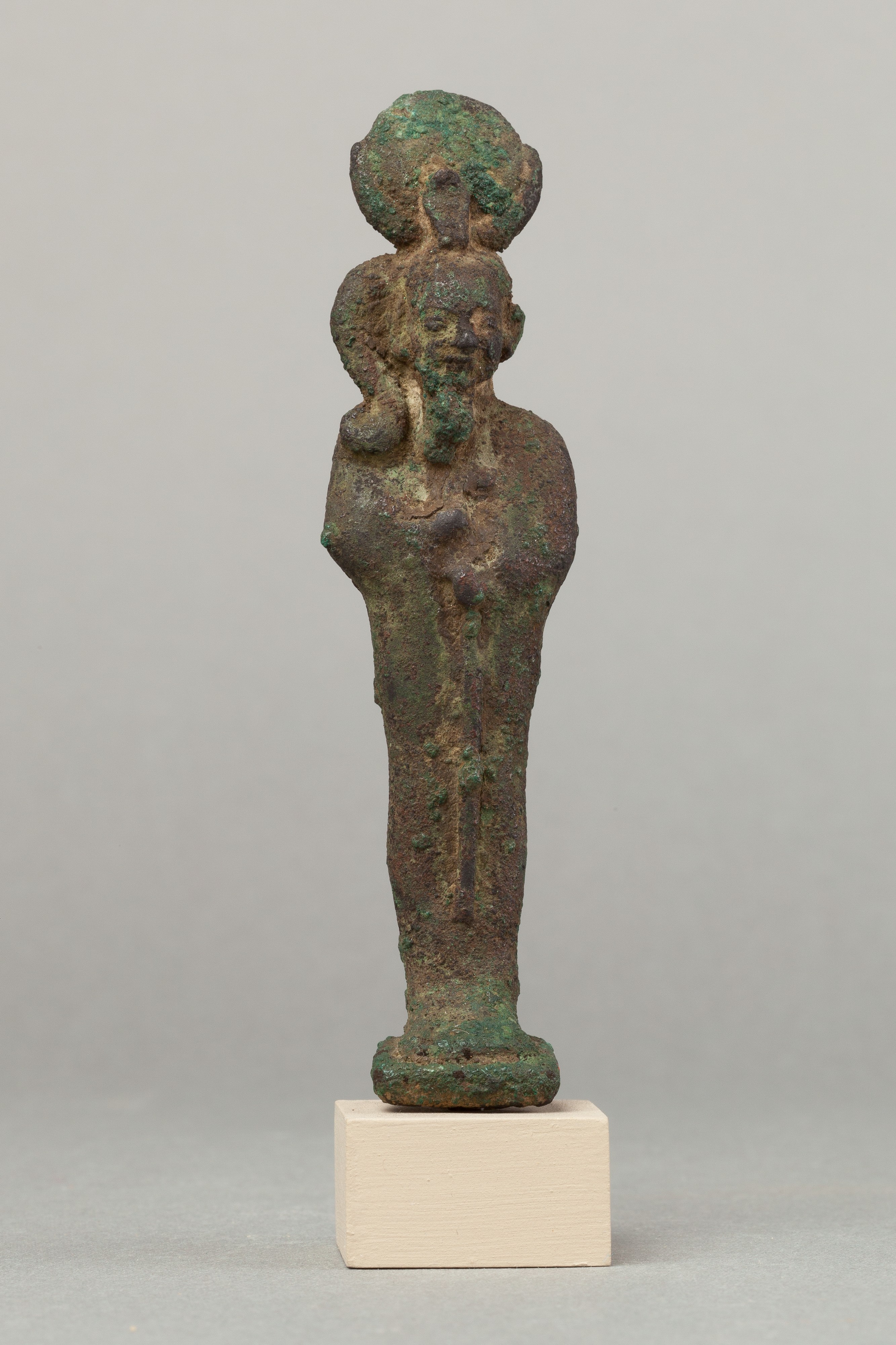 Figure of Khonsu. Late Period to Ptolemaic Period, 664-30 BC; Metropolitan Museum of Art.
Syncretism and Late Forms
Egyptian gods often merged with one another. Amun-Re joined hidden Theban power with solar kingship; Re-Harakhty joined the sun with the horizon and the falcon form of Horus; Ptah-Sokar-Osiris linked Memphis, the necropolis and renewal. Such forms did not erase the original gods, but created a new way to speak about their power.
In the later periods cult images become especially numerous: bronze statuettes, faience amulets, votive animal figures, temple reliefs and Demotic texts show gods in private piety, city cults and great sanctuaries. Ptolemaic and Roman Egypt preserved the Egyptian language of images while adding new political and artistic conditions.
Serapis, Isis in the Hellenistic world and Greco-Roman forms of Harpocrates show that Egyptian gods could move beyond the Nile. Yet to understand pharaonic Egypt, periods should not be collapsed into one picture: a Late Period amulet, a New Kingdom relief and a Ptolemaic temple speak about connected but different historical settings.
Related Topics
- Ancient Egyptian Religion
- Temples of Ancient Egypt
- Priests of Ancient Egypt
- Mummies of Ancient Egypt
- Pharaohs of Ancient Egypt
- Ancient Egypt
Literature and sources
- Wilkinson R. H. The Complete Gods and Goddesses of Ancient Egypt.
- Hornung E. Conceptions of God in Ancient Egypt.
- Assmann J. The Search for God in Ancient Egypt.
- Pinch G. Egyptian Mythology: A Guide to the Gods, Goddesses, and Traditions of Ancient Egypt.
- Hart G. The Routledge Dictionary of Egyptian Gods and Goddesses.
- Metropolitan Museum of Art collection: Re-Harakhty, Osiris, Isis with Horus, Horus, Anubis, Amun, Ptah, Thoth, Hathor, Sakhmet, Bastet, Sobek, Maat, Bes, Mut, Khonsu, Nephthys, Nut.
Interested in Ancient Rome beyond reading? Join Legio X Fretensis or explore our reenactment directions.


