Mummies of Ancient Egypt
Mummies of Ancient Egypt are not simply well-preserved bodies, but part of a religious, technical and social system. Egyptians sought to preserve the body of the dead because body, name, memory, tomb, images and funerary cult together sustained a person's existence after death. The mummy was linked with Osiris, Anubis, judgement of the dead, offering cult and the hope of continued life in another world.
Mummification changed by period and by wealth. Some bodies dried naturally in desert sand; others underwent complex treatment in an embalmers' workshop and received a mask, amulets, several coffins, a sarcophagus and a decorated tomb. The Egyptian mummy is therefore important for the history of religion, medicine, chemistry, craft, textiles, art and archaeology at the same time.
Why the Body Was Preserved
Egyptian ideas about the person included body, name, heart, shadow, ka, mobile ba and the transfigured state called akh. For the dead to receive offerings, recognise their name, return to the tomb and participate in afterlife existence, the body could not be allowed to disappear completely. The preservation of flesh sustained the connection between the living, the deceased and the gods.
The myth of Osiris was especially important. His body was dismembered and restored by Isis, after which Osiris became lord of the dead. The mummy repeated this model of restoration: the body of the deceased was treated, wrapped, supplied with amulets and transformed into a protected image of a person ready for judgement and renewed life. Anubis was the patron of embalming and the necropolis within this system.
The mummy did not work apart from the tomb. Without name, texts, images, funerary offerings and a place of memory, the body remained only one incomplete part of the rite. Egyptian burials therefore unite biological body, architecture, writing, image and the regular participation of living relatives or priests.
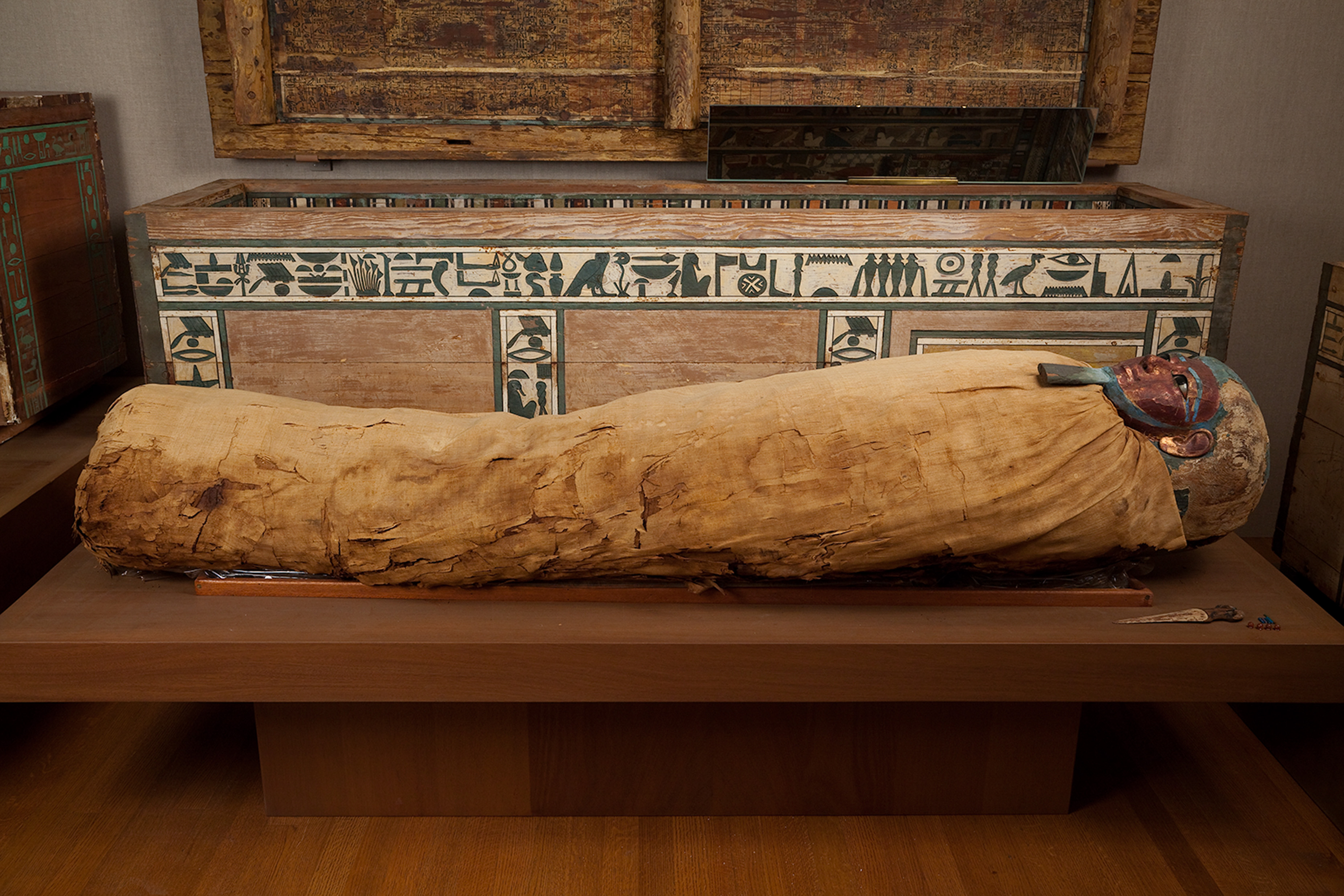 Mummy of Ukhhotep, son of Hedjpu. Middle Kingdom, ca. 1981-1802 BC; Metropolitan Museum of Art.
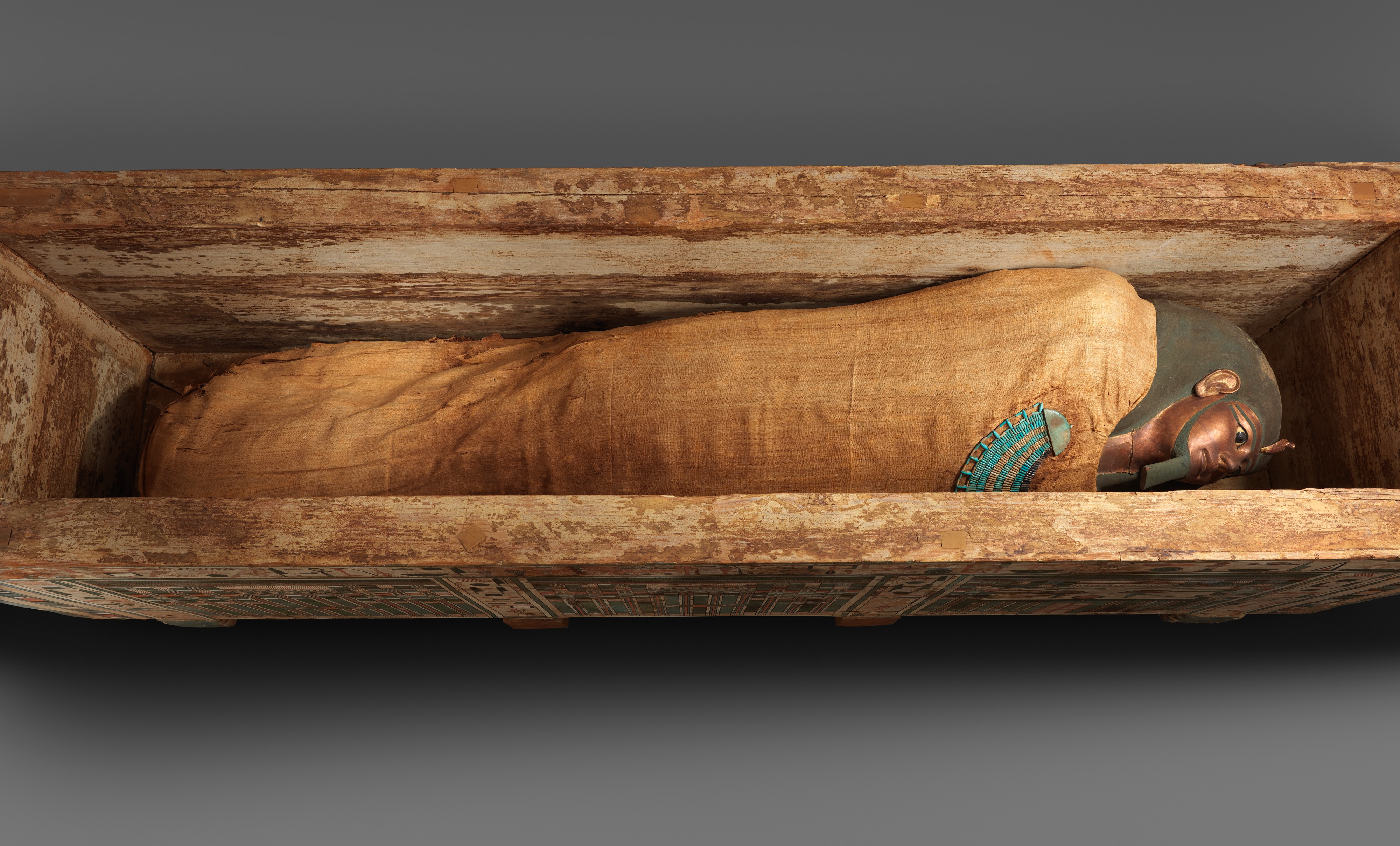 Mummy of Khnumhotep with mask and broad collar. Middle Kingdom, ca. 1981-1802 BC; Metropolitan Museum of Art.
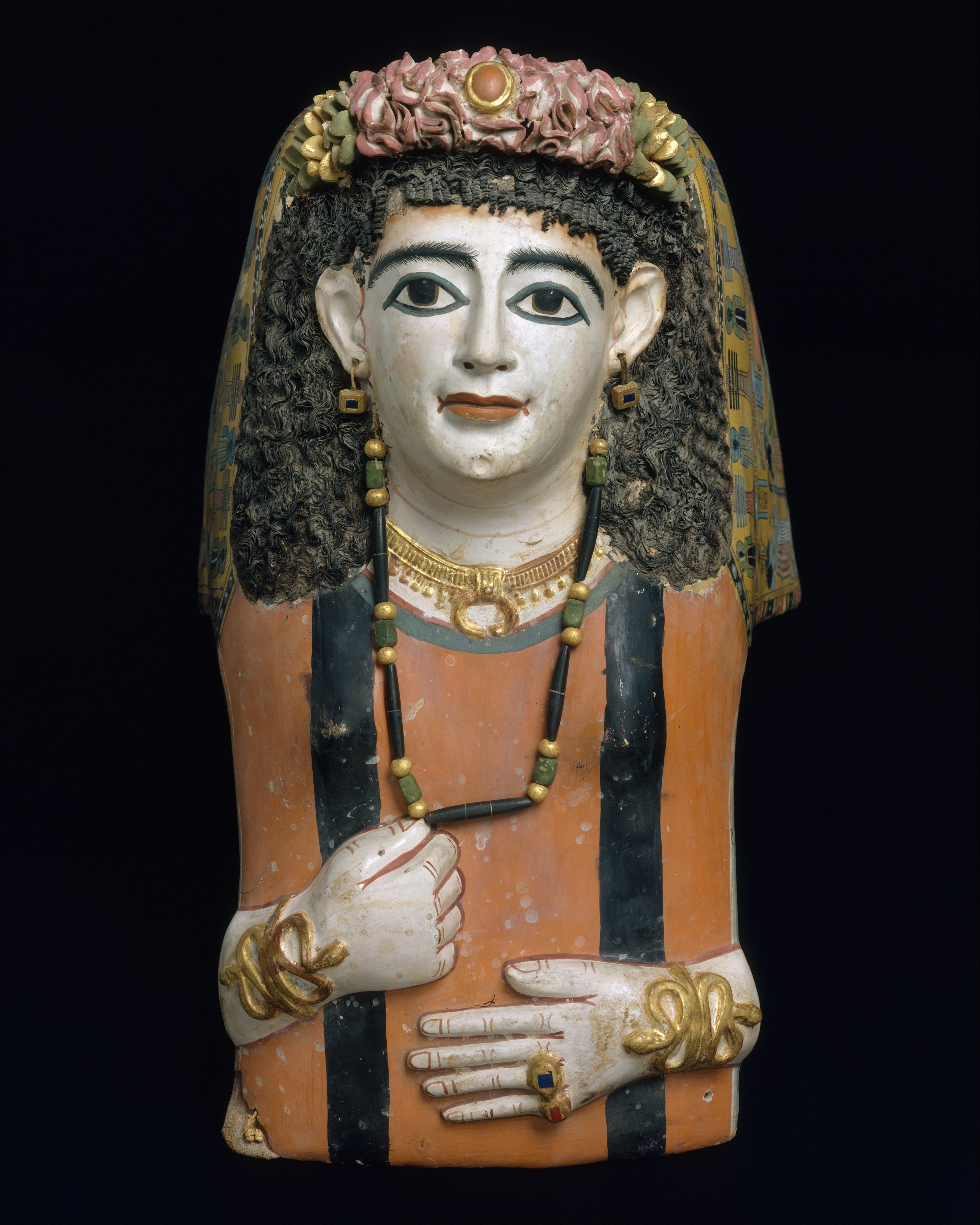 Mummy mask of a woman. Roman Egypt, AD 60-70; Metropolitan Museum of Art.
From Natural Mummies to Embalming
The earliest Egyptian bodies could be preserved naturally. A shallow pit in dry sand, hot air and lack of moisture dried the body faster than decay could proceed. As burials became more elaborate, the body was placed in a coffin, chamber or lining, and natural drying no longer worked as reliably. This encouraged the development of artificial mummification.
In the Early Dynastic and Old Kingdom periods methods of treatment were not yet uniform. Embalmers experimented with resins, linen wrappings, modelling the body's shape and separate treatment of head, face and limbs. By the Middle and New Kingdoms the procedure became more complex: the body was dried with natron, organs were removed, skin was treated with oils and resins, and wrapping became a ritual in its own right.
The quality of mummification depended on period, region, status and family wealth. A royal mummy, the burial of an official, a modest village mummy and an animal mummy could differ greatly. There was therefore no single technology for all Egypt; it is better to see several traditions joined by the shared aim of preserving body and name.
The Mummification Process
The classic embalming process began with preparation of the body. The deceased was washed, purified, taken to the workshop and entrusted to people who knew both practical technique and ritual formulae. Later sources mention different levels of funerary service, from costly full treatment to simpler options for families with fewer resources.
First the internal organs were removed, because they decayed most quickly. Through an incision in the side embalmers removed liver, lungs, stomach and intestines; these were treated separately and placed in canopic jars or returned to the body in packets. The heart was usually left in place because it was the centre of personality and had to take part in judgement. The brain was often removed through the nose, though technique and care varied.
The body was then dried with natron, a natural mixture of salts. Natron covered the body outside and filled cavities; over several weeks it drew out moisture. After drying the body became light and fragile, so it was treated with oils, resins and aromatics, and sometimes packed with linen, sawdust, resin or other materials to restore volume.
The next stage was wrapping. Linen bandages were applied in layers, with amulets placed between them: scarabs, djed pillars, the Isis knot, wedjat eyes and figures of gods. Priests recited formulae, and individual body parts were protected by words and images. A mask, portrait, mummy board or painted cartonnage helped return a recognisable and ideal form to the dead.
The mummy was then placed in one or more coffins, sometimes inside a stone sarcophagus. The Opening of the Mouth ritual was meant to restore the ability to breathe, see, speak and receive offerings. In this form the body became the centre of the burial complex, but its protection continued through tomb, texts and cult.
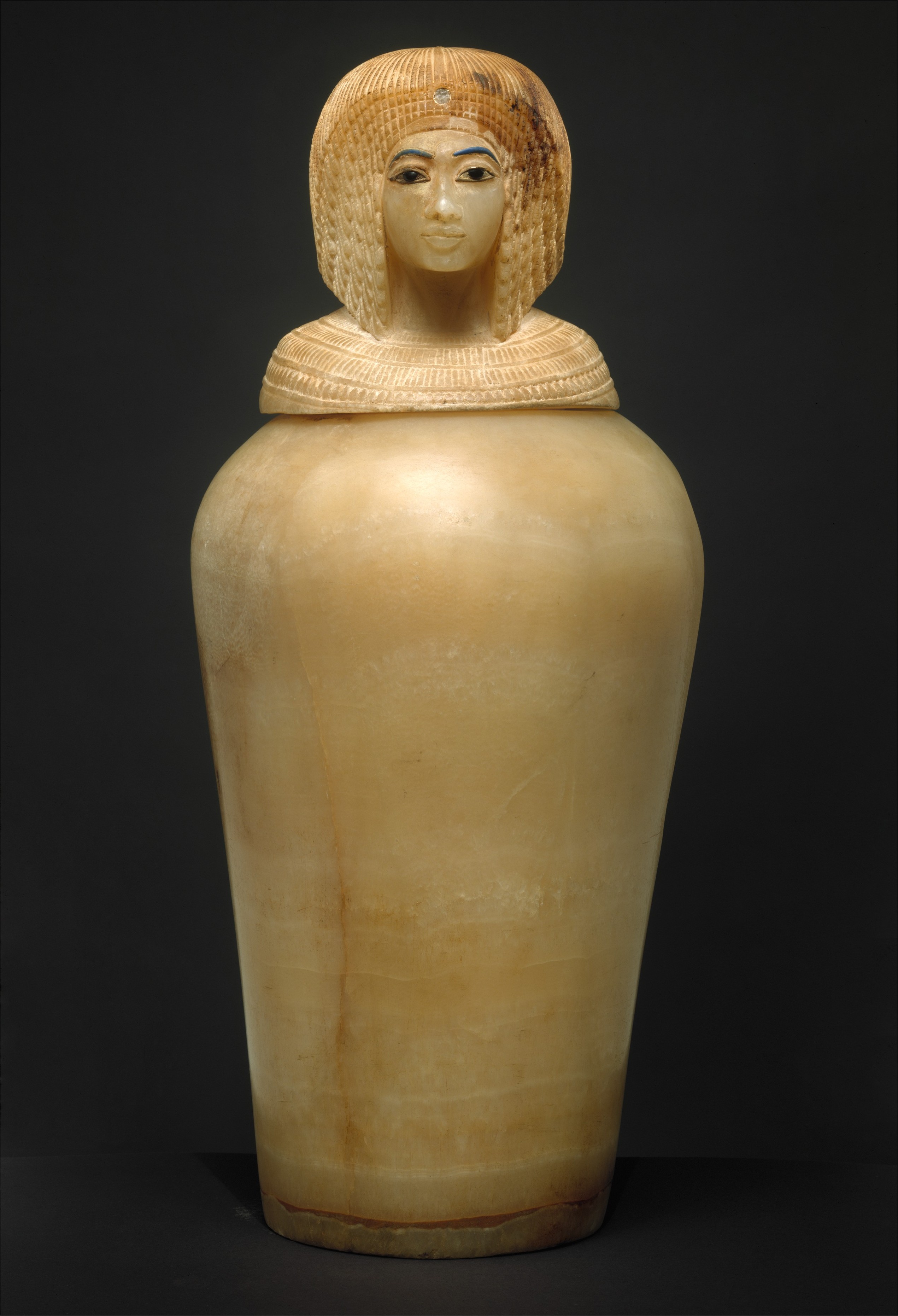 Canopic jar with a lid depicting a queen. Amarna Period, ca. 1349-1330 BC; Metropolitan Museum of Art.
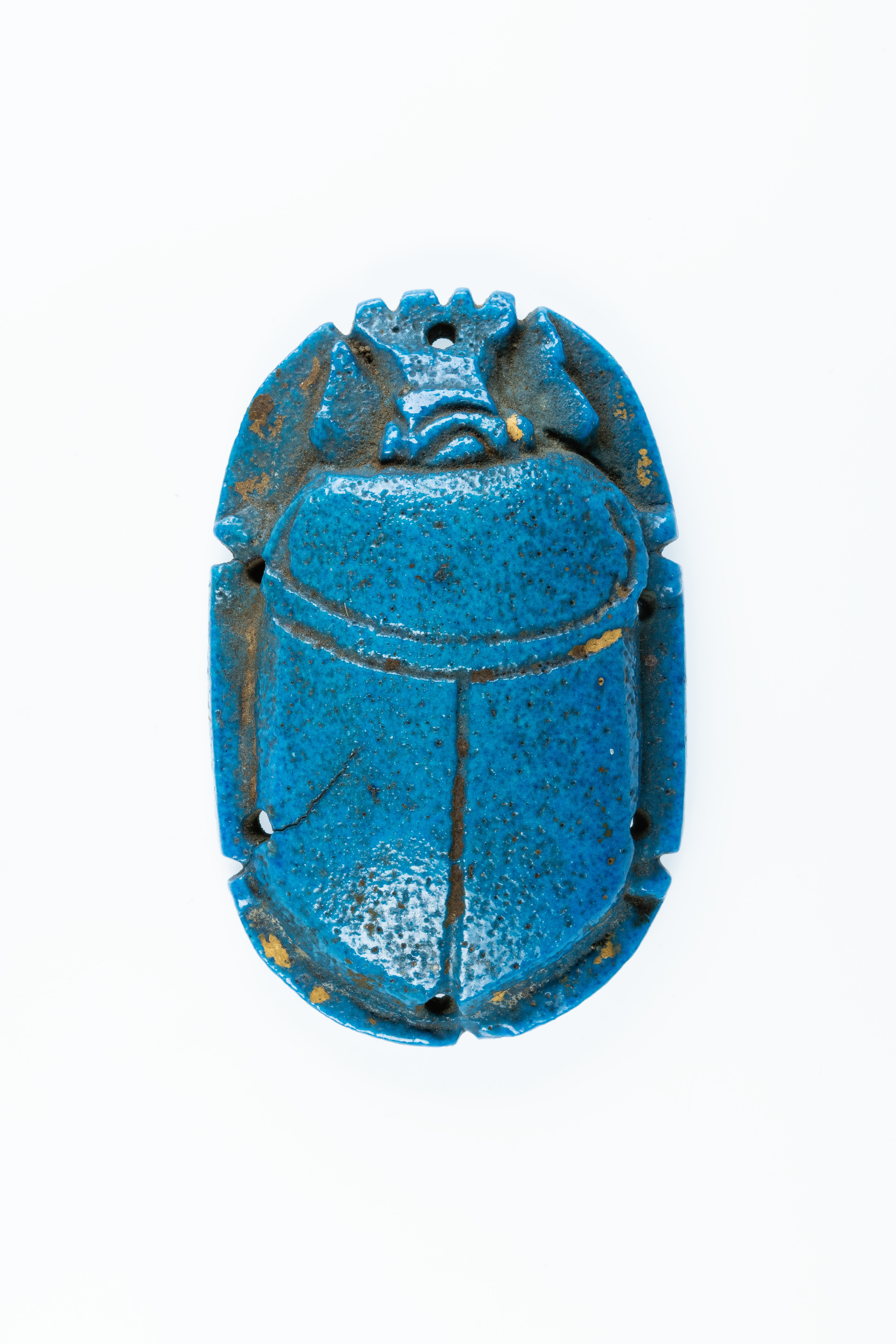 Scarab from mummy wrappings. Third Intermediate Period, ca. 1070-664 BC; Metropolitan Museum of Art.
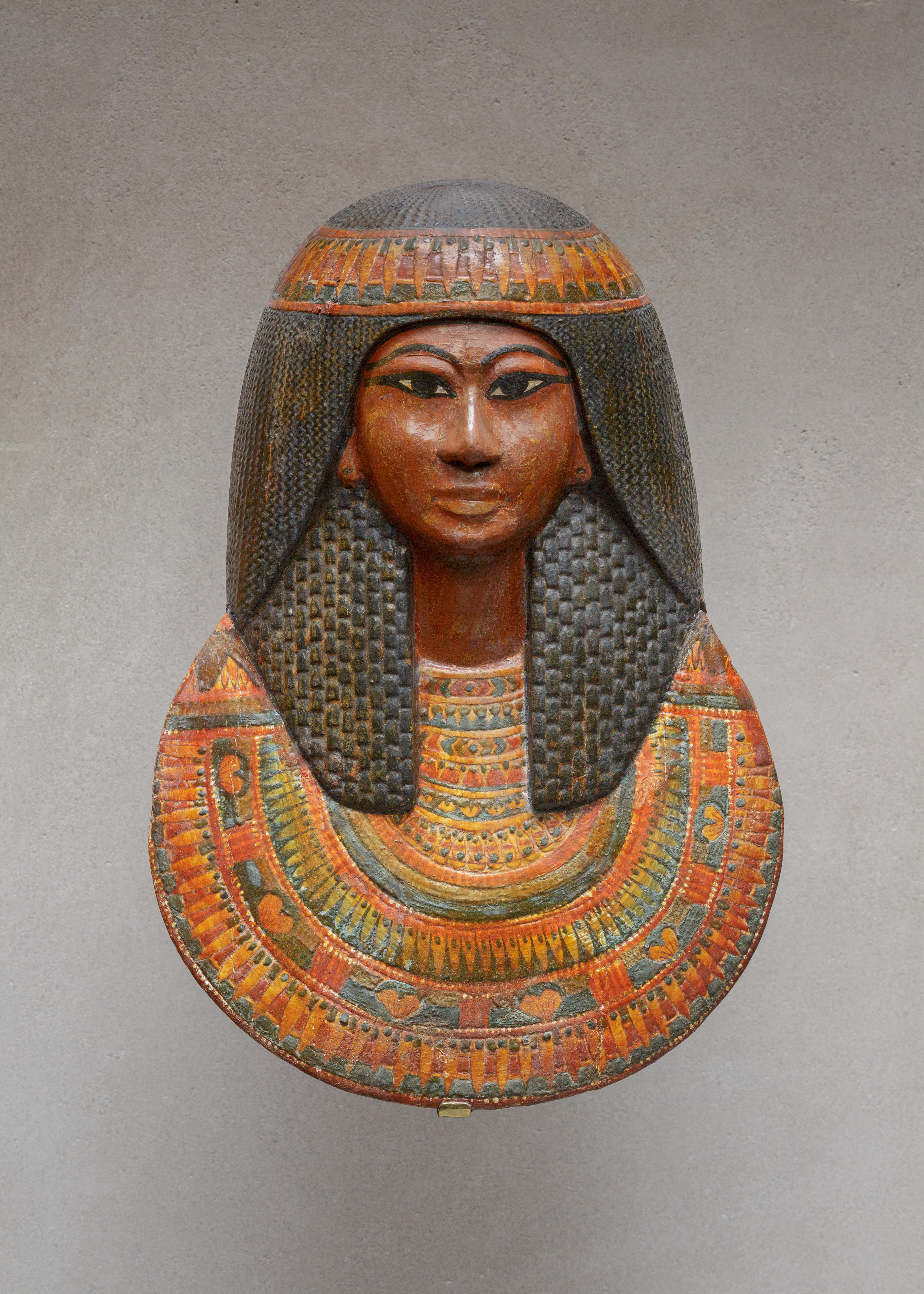 Mummy mask of Khonsu. Dynasty 19, ca. 1279-1213 BC; Metropolitan Museum of Art.
Workshop, Priests and Materials
Mummification required organised labour. Embalmers, carvers, carpenters, weavers, scribes, priests and suppliers of materials took part in one process. Linen, natron, resins, oils, aromatics, wood, pigments, gold, stone, faience and prepared amulets were needed. Behind every fine coffin or mask stands a chain of crafts and trade.
The ritual side was no less important. A priest wearing the mask of Anubis could represent the god of embalming; texts named body parts, protective gods and dangers from which the deceased had to be guarded. The side incision, organ removal, wrapping and insertion of amulets were surgical, craft and sacred actions at once.
Not all mummies were made with equal care. Sometimes an expensive exterior concealed rough treatment of the body, while a modest burial preserved important technical traces. Modern studies detect resins, oils, plant substances, beeswax, bitumen, salts and heating. The mummy is therefore both a religious object and a source for ancient technology.
Coffins, Sarcophagi and Funerary Equipment
After wrapping, the mummy received a new outer form. A wooden coffin could repeat the shape of the human body and include face, wig, collar, hands, protective inscriptions and images of gods. Wealthy people could have several coffins: inner, outer and sometimes also a stone sarcophagus or burial chamber. Each layer added protection, name and image.
Funerary equipment included canopic jars, shabtis, vessels, furniture, jewellery, weapons, cosmetics, food, model boats and offering scenes. These things were not a random "treasure". Canopic jars protected organs, shabtis were to work for the dead, boats helped the journey to the necropolis and movement in the afterlife, while images and texts created a permanent supply of offerings.
A sarcophagus or coffin often tells more about belief than the mummy itself. It carries names, titles, offering formulae, images of Osiris, Isis, Nephthys, Nut, the four sons of Horus and protective gods. From these details one can understand period, status, workshop and the religious expectations of the family.
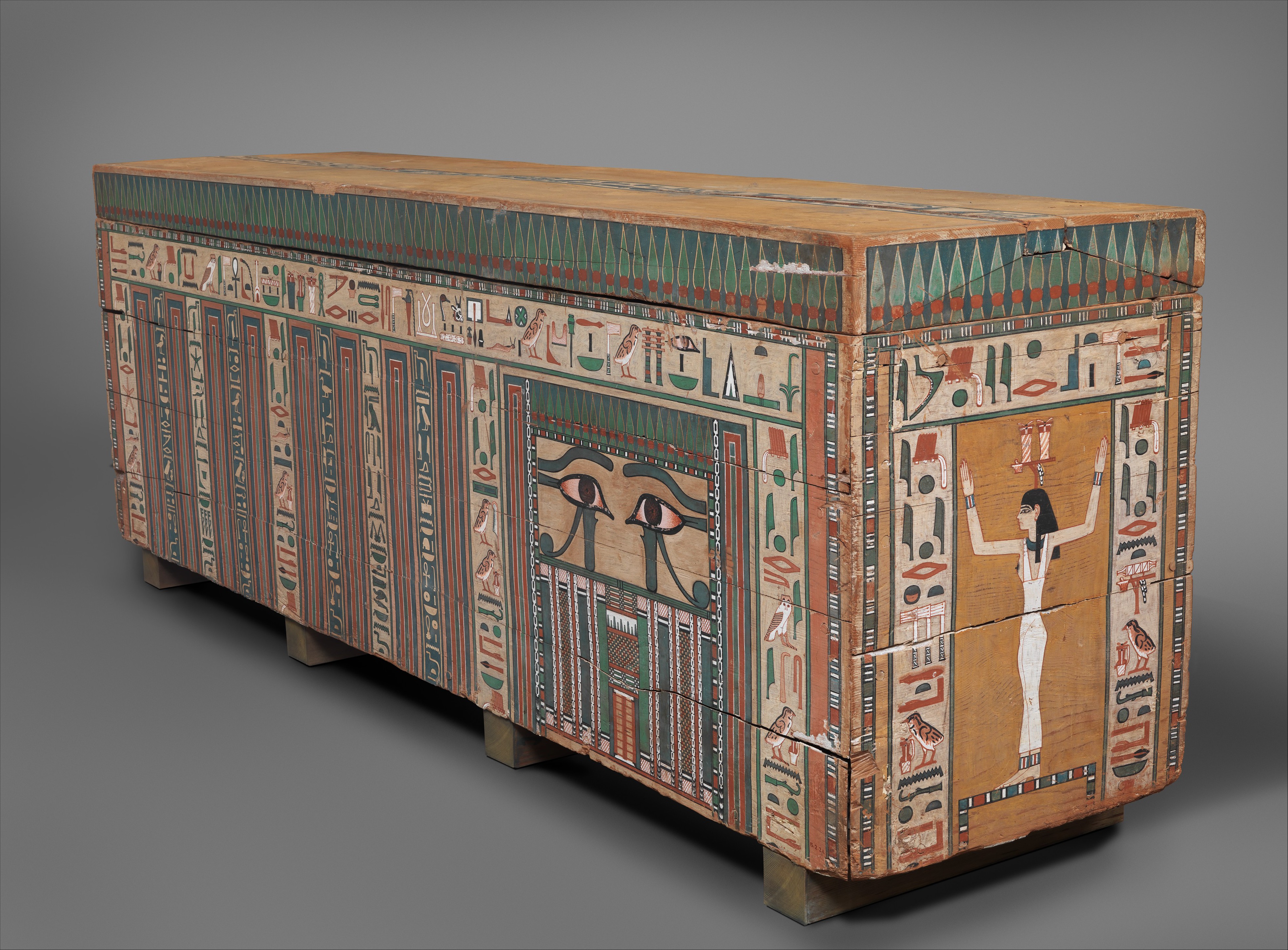 Coffin of Khnumnakht. Middle Kingdom, ca. 1850-1750 BC; Metropolitan Museum of Art.
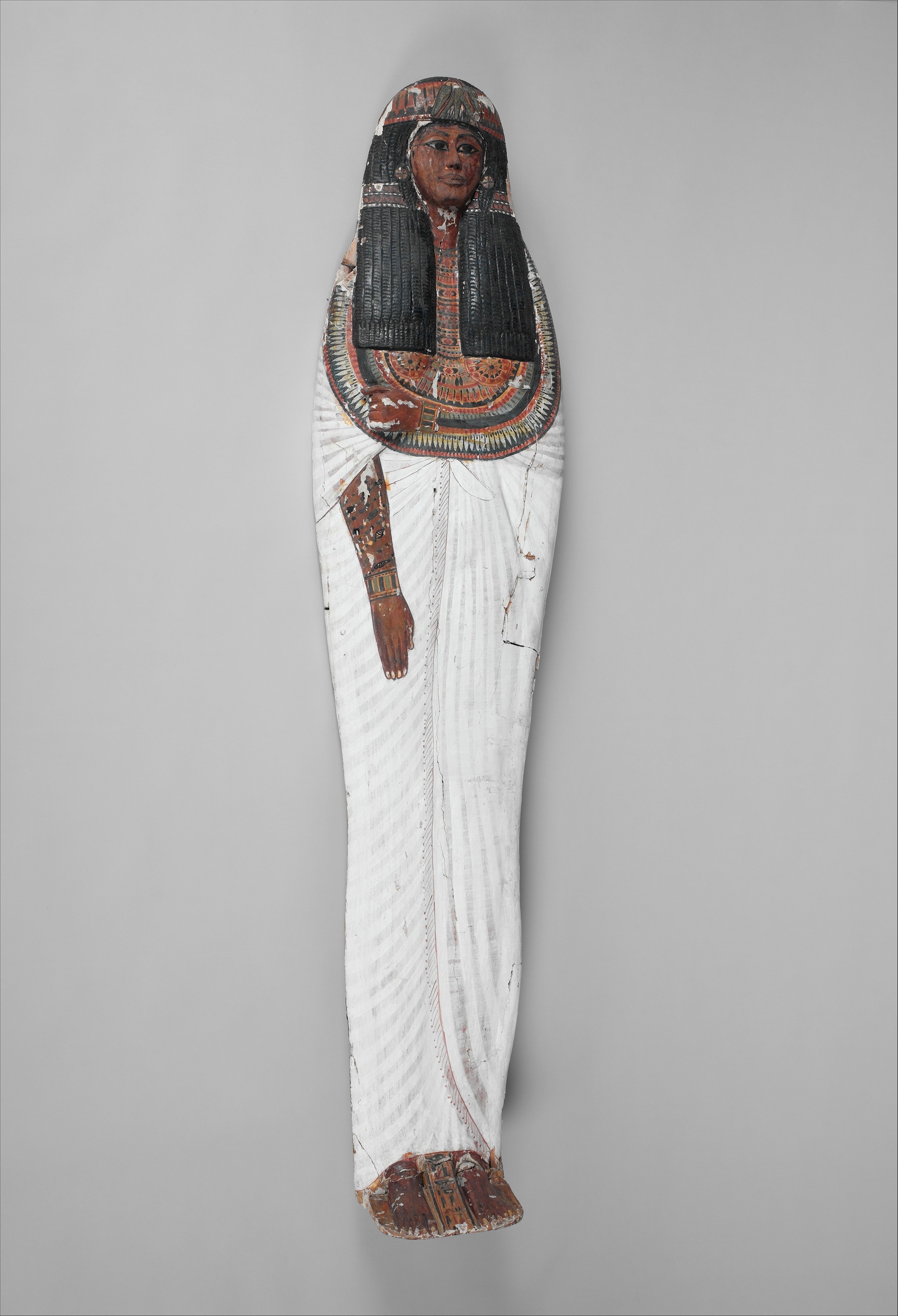 Mummy board of Iineferty. Dynasty 19, ca. 1279-1213 BC; Metropolitan Museum of Art.
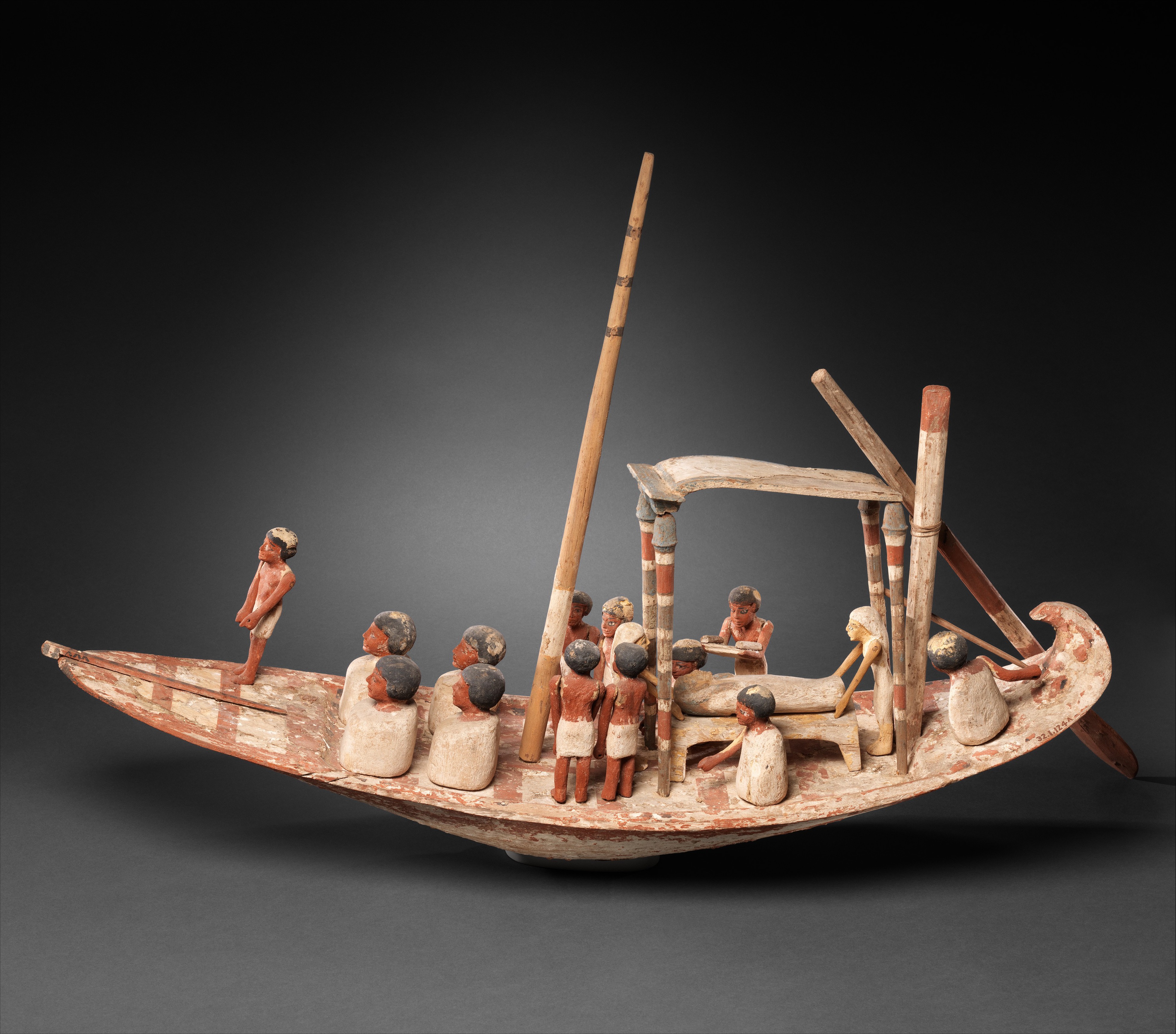 Model sailing boat transporting a mummy to the necropolis. Dynasty 12, ca. 1900-1885 BC; Metropolitan Museum of Art.
Royal, Private and Animal Mummies
Royal mummies had special significance. The pharaoh's body was linked with Osiris, Re and legitimate rule, so its preservation was a matter of state. Tombs in the Valley of the Kings, stone sarcophagi, rich coffins and funerary texts show the scale of royal ritual, but robberies and the reburial of mummies also remind us that protection depended on politics and necropolis security.
Private mummies give a more varied picture. Officials, priests, elite women, children, craftsmen and people of the later periods received different forms of burial. In Greco-Roman Egypt portrait mummies and bright cartonnage masks appear: they continue the Egyptian idea of preserving the body while adding new artistic forms and social signals.
Animals were mummified as well. Ibises, cats, falcons, crocodiles, rams, bulls and other animals could be embodiments of gods, votive gifts or sacred beings of a particular cult. Mass animal burials show not oddity but the scale of temple economy and personal piety in later Egypt.
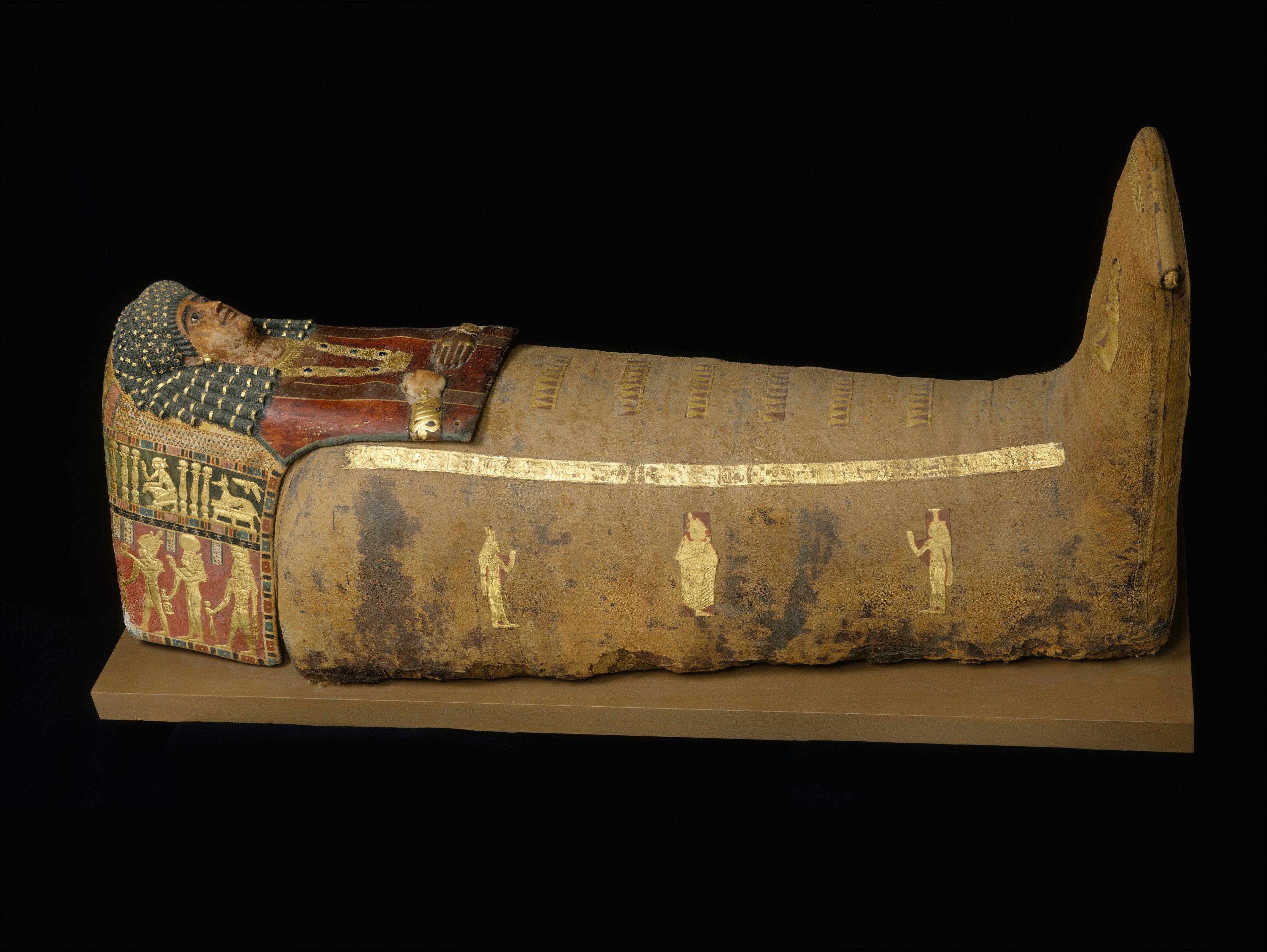 Mummy of Artemidora with painted mask. Roman Egypt, ca. AD 90-100; Metropolitan Museum of Art.
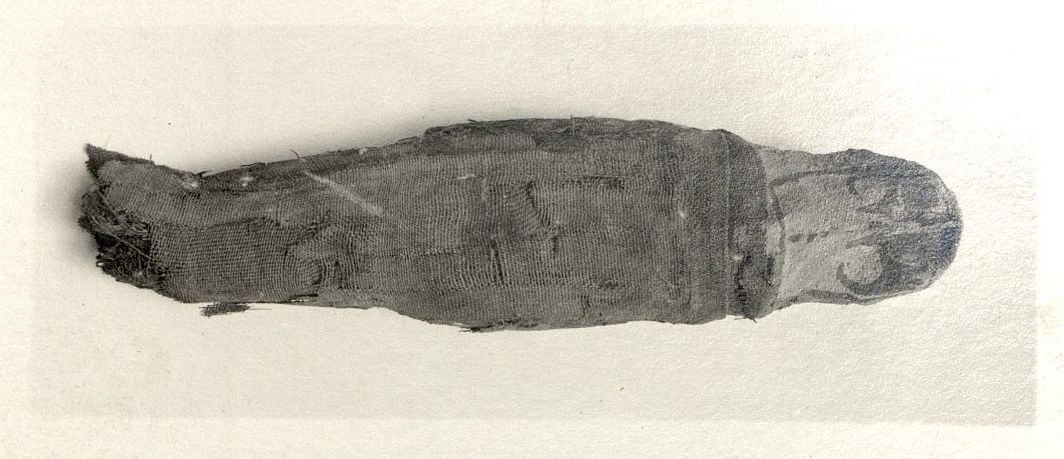 Sacred animal mummy of a falcon in cartonnage. Late Period to Ptolemaic Period, 664-30 BC; Metropolitan Museum of Art.
How Mummies Are Studied Today
Modern scholars try to study mummies without destroying them. Radiography, CT scanning, endoscopy, tissue microscopy, chemical analysis of resins and oils, and the study of textiles and pigments reveal body structure, disease, age, injuries, embalming technique and material composition. This is especially important where a mummy cannot be unwrapped or old destructive methods should not be repeated.
Evidence from a mummy must always be tied to context. An isolated photograph of a body tells less than the body together with coffin, inscriptions, amulets, position in the tomb, date and findspot. A museum caption, inventory number and archaeological publication are therefore as important as a striking appearance.
Research also shows the limits of interpretation. Not every deformation can be confidently called a disease, not every smell or colour is explained by one substance, and ancient mummy DNA requires caution because of contamination and preservation. Religious ideas, ancient techniques and modern laboratory reconstruction represent different levels of interpretation.
Radiography and CT allow internal structures to be studied without unwrapping a mummy. Tissue sampling and some other investigations require physical intervention; these methods cannot all be described as non-invasive.
Chronology of Mummification
- Predynastic period
- natural drying of bodies in desert sand creates early experience of bodily preservation.
- Early Dynastic and Old Kingdom periods
- elite burials, coffins, wrappings and early complex attempts at artificial preservation develop.
- Middle Kingdom
- coffins, masks, Coffin Texts and more stable elite funerary equipment become increasingly important.
- New Kingdom
- mummification technique reaches a high level; royal tombs, canopic equipment, amulets and painted coffins become especially complex.
- Third Intermediate and Late Periods
- bronze and faience amulets, complex coffins, animal mummies and mass votive practices spread widely.
- Ptolemaic and Roman periods
- Egyptian forms continue, while portrait mummies, bright cartonnage and new combinations of Egyptian and Mediterranean traditions appear.
Related Topics
- Ancient Egyptian Religion
- Gods of Ancient Egypt
- Pharaohs of Ancient Egypt
- Egyptian Pyramids
- Temples of Ancient Egypt
Literature and sources
- Ikram S., Dodson A. The Mummy in Ancient Egypt.
- Taylor J. H. Death and the Afterlife in Ancient Egypt.
- Assmann J. Death and Salvation in Ancient Egypt.
- Aufderheide A. C. The Scientific Study of Mummies.
- David R. Handbook to Life in Ancient Egypt.
- Metropolitan Museum of Art collection: Mummy of Ukhhotep, Mummy of Khnumhotep, Mummy of Artemidora, canopic jars, mummy masks, coffins, mummy board, model boat, falcon mummy, scarab from mummy wrappings.
- Wikimedia Commons: ThebesKV08Sarcophagus.jpg, Roland Unger, CC BY-SA 3.0/GFDL.


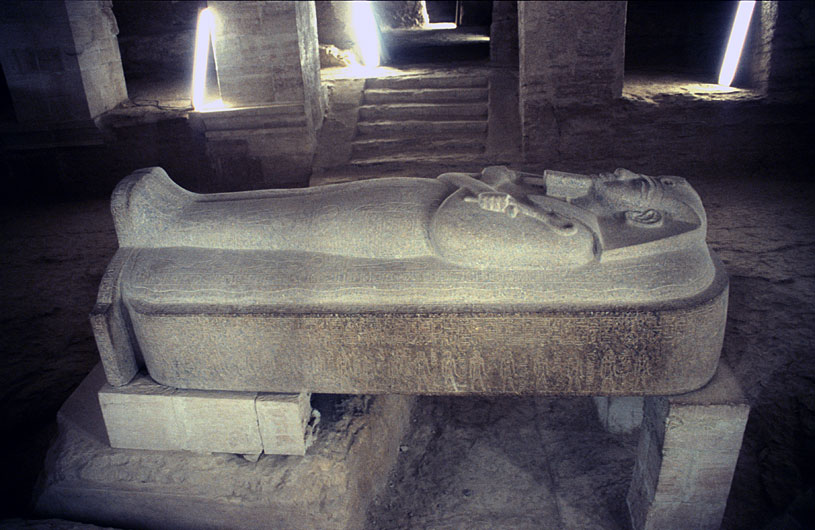 Sarcophagus of Pharaoh Merenptah in tomb KV8, Valley of the Kings, Luxor.
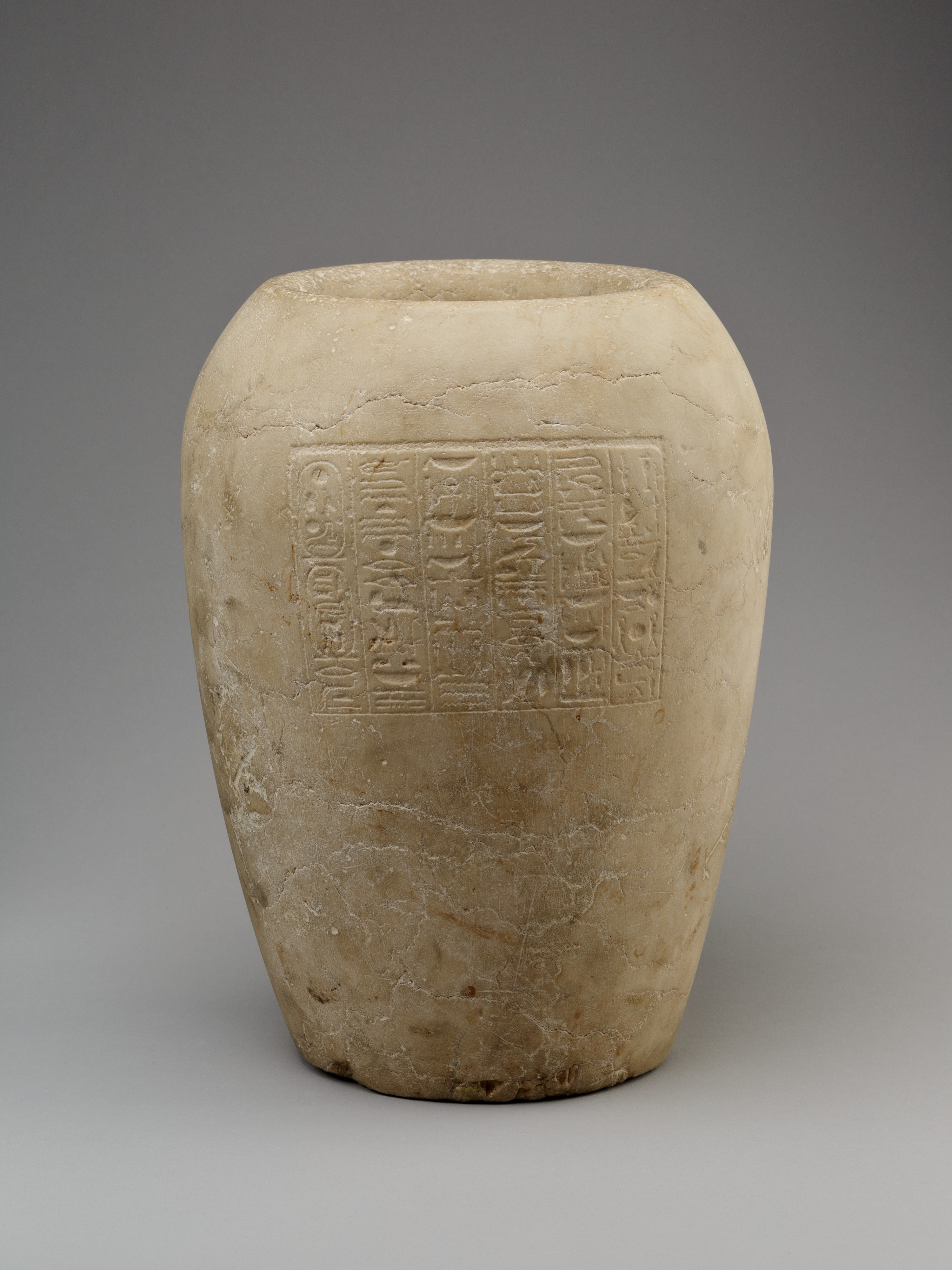 Canopic jar inscribed for King Nesibanebdjedet (Smendes). Dynasty 21, ca. 1070-1044 BC; Metropolitan Museum of Art.
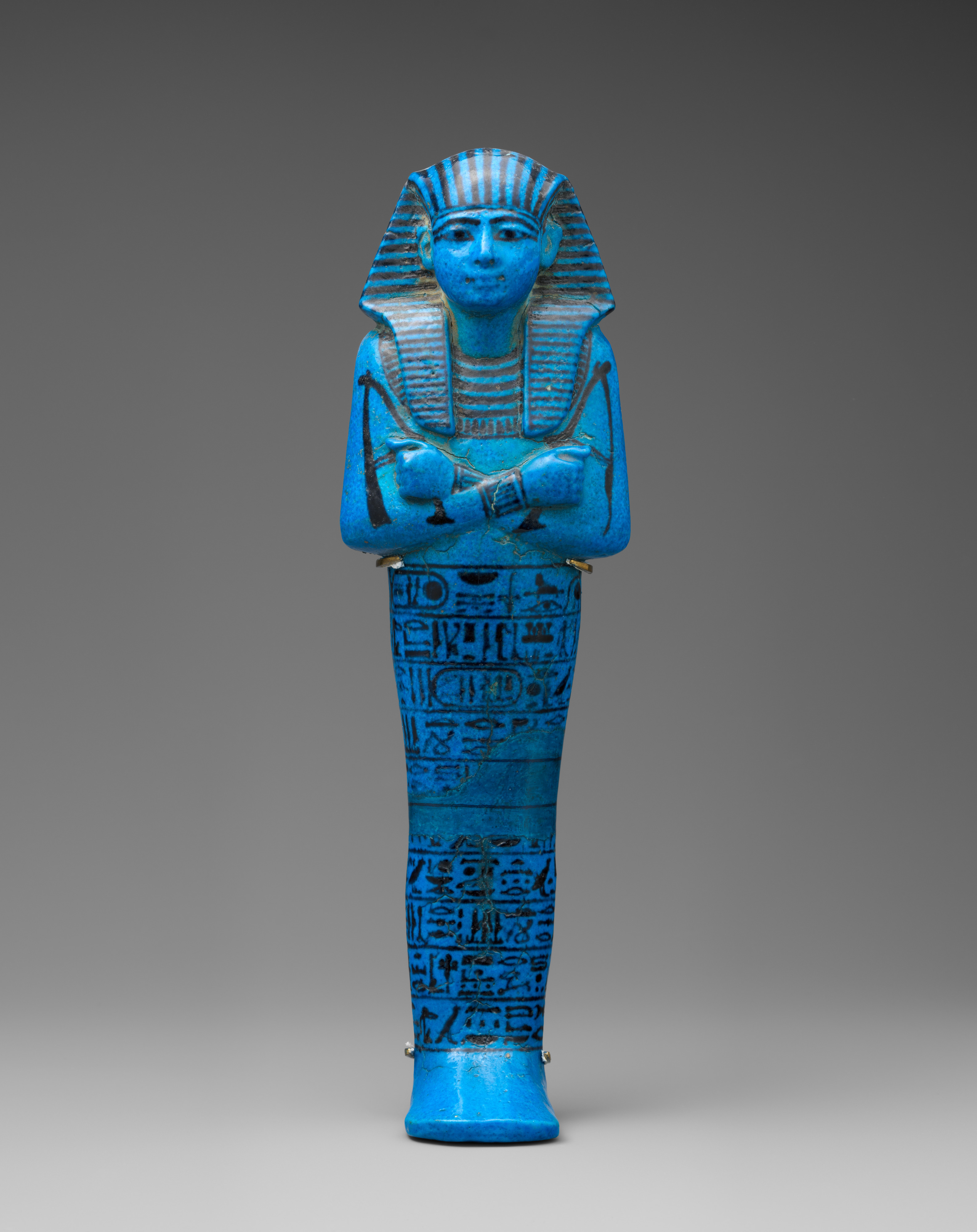 Shabti of Seti I. Dynasty 19, ca. 1294-1279 BC; Metropolitan Museum of Art.
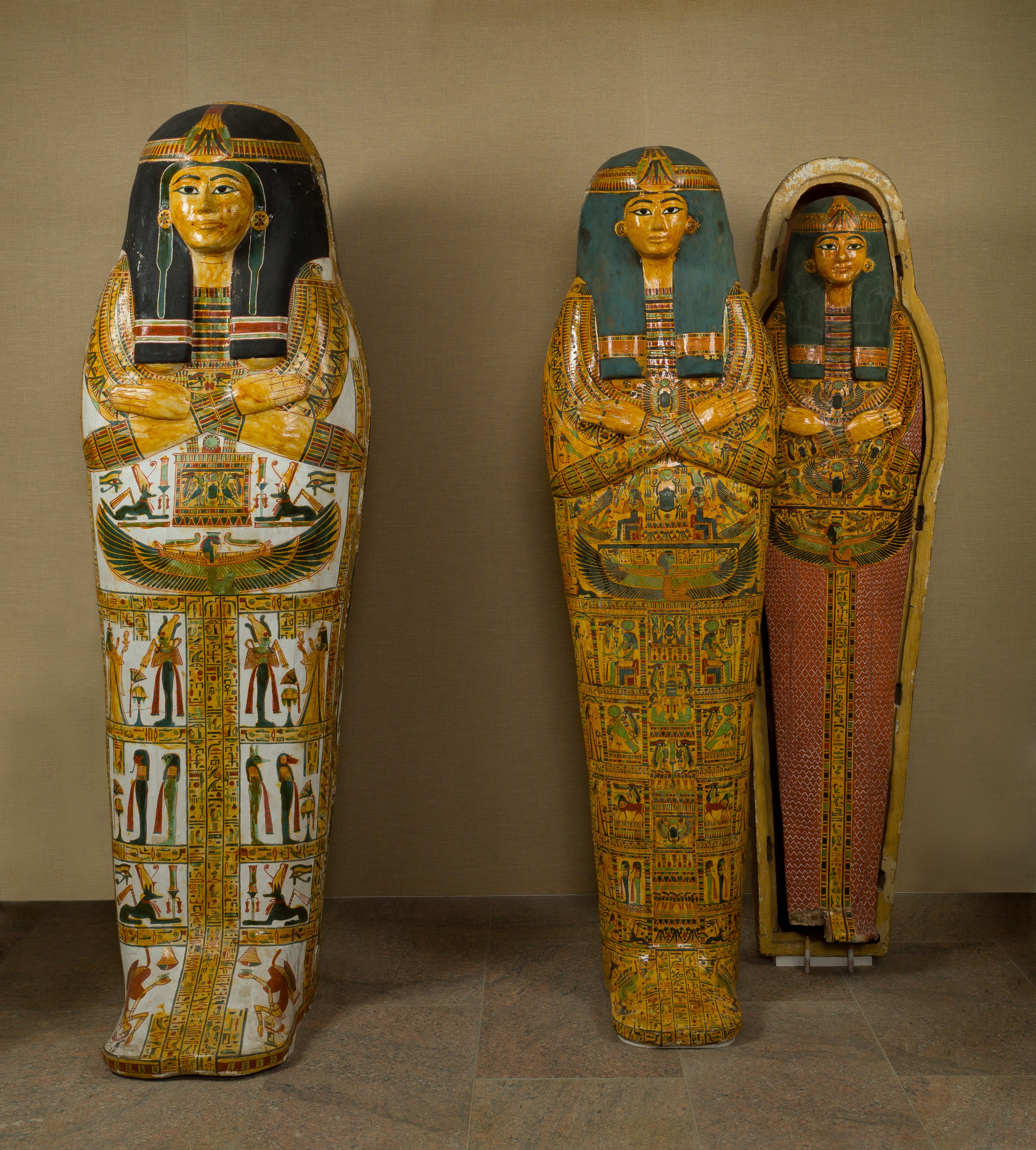 Coffin set of the Chantress of Amun-Re Henettawy. Dynasty 21, ca. 1000-945 BC; Metropolitan Museum of Art.
Interested in Ancient Rome beyond reading? Join Legio X Fretensis or explore our reenactment directions.


