Haruspex
A haruspex was a specialist in interpreting divine signs within Etruscan and Roman religious traditions. Haruspices are best known for examining the internal organs of sacrificial animals, especially the liver. Their expertise also extended to lightning, unusual events and the religious response to reported prodigies.
Haruspices and augurs
A haruspex was not the same as an augur. Roman augurs belonged to a distinct priestly college and supervised the rules governing auspices in public affairs. Haruspices practised a different body of expertise, associated above all with Etruria. Both could advise on public religious matters, but their responsibilities were not interchangeable.
Nor was a haruspex simply the attendant who killed a sacrificial animal. Slaughter, examination of the organs and interpretation were separate activities within a sacrifice.
Interpreting signs
The examination of a sacrificial animal's entrails was known as extispicy. The condition and unusual features of the organs, especially the liver, were read as signs concerning relations between humans and gods. An unfavourable result could require another sacrifice; interpreting a public prodigy could lead to an expiatory rite. These were related but distinct procedures.
Lightning and unusual events were other areas of haruspical expertise. A response could prescribe how to address a religious offence and restore favourable relations with the gods. The specialist's work therefore involved more than predicting the future from a liver.
Roman authors called this Etruscan body of religious learning the disciplina Etrusca. Traditions traced its origin to the revelation of Tages. These stories express belief in the sacred origin of the knowledge rather than a securely documented biography of a historical founder.
The bronze liver from Piacenza
The bronze model of a sheep's liver found near Piacenza belongs to the late Etruscan period, usually dated to the second or first century BCE. Its surface is divided into fields bearing Etruscan divine names. It is commonly interpreted as a teaching aid connected with the reading of entrails. The object shows the systematic character of the practice, but does not allow every ancient ritual to be reconstructed with certainty.
It belongs to the collections of the Musei di Palazzo Farnese in Piacenza.
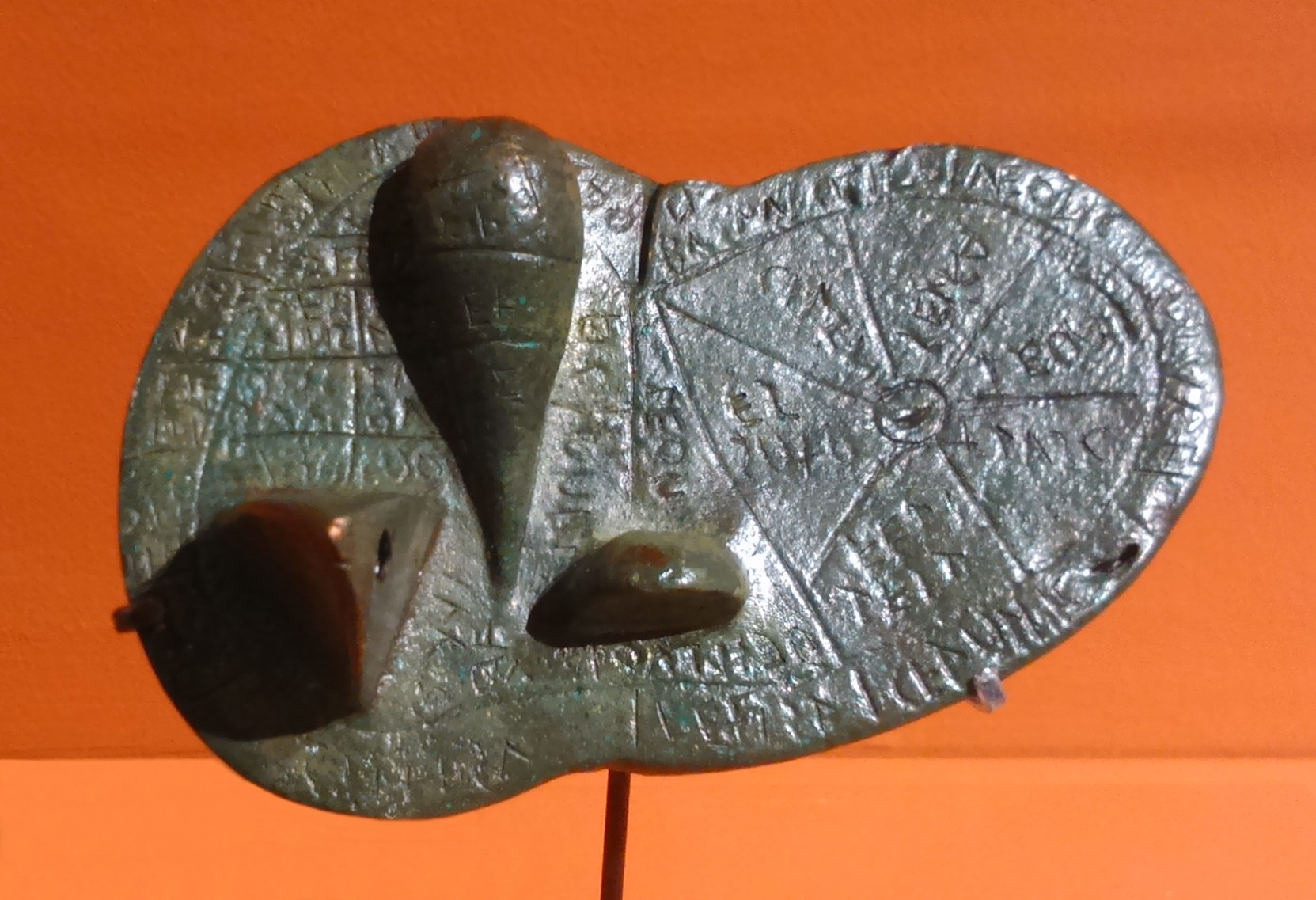 Bronze model of a sheep's liver from near Piacenza, second–first centuries BCE. Fields bearing Etruscan divine names relate to the interpretation of entrails. Musei di Palazzo Farnese, Piacenza. Photograph: Shonagon, CC0.
Haruspices in Roman public life
During the Republic the Senate requested opinions from Etruscan specialists on prodigies and the appropriate rites. Consulting haruspices did not give them control of the state: the authorities decided whether to recognise an event as a public prodigy and how to carry out the prescribed response. Consultations continued under the emperors.
Romans disagreed about divination. In Cicero's On Divination, Quintus defends its effectiveness and Marcus challenges the arguments. Philosophical criticism could coexist with the preservation of established public religious institutions.
Accounts of successful predictions were often written after the event and gave it religious meaning. Inscriptions, images and ritual objects also matter: they help establish where specialists worked and in what capacity.
Related topics
Literature and sources
- Cicero, On Divination, Book II, especially 23–41.
- Musei di Palazzo Farnese: archaeological collection.
- Mary Beard, John North and Simon Price. Religions of Rome. Cambridge University Press, 1998.
Illustration: file page and attribution; CC0.
Interested in Ancient Rome beyond reading? Join Legio X Fretensis or explore our reenactment directions.


