Lugdunum / Lyon
Lugdunum, modern Lyon, was the capital of Gaul and one of the central cities of the western empire. Its archaeological importance lies in its administrative role, the theatres on Fourviere, sanctuaries, inscriptions, crafts, trade and urban layers at the confluence of the Rhone and Saone.
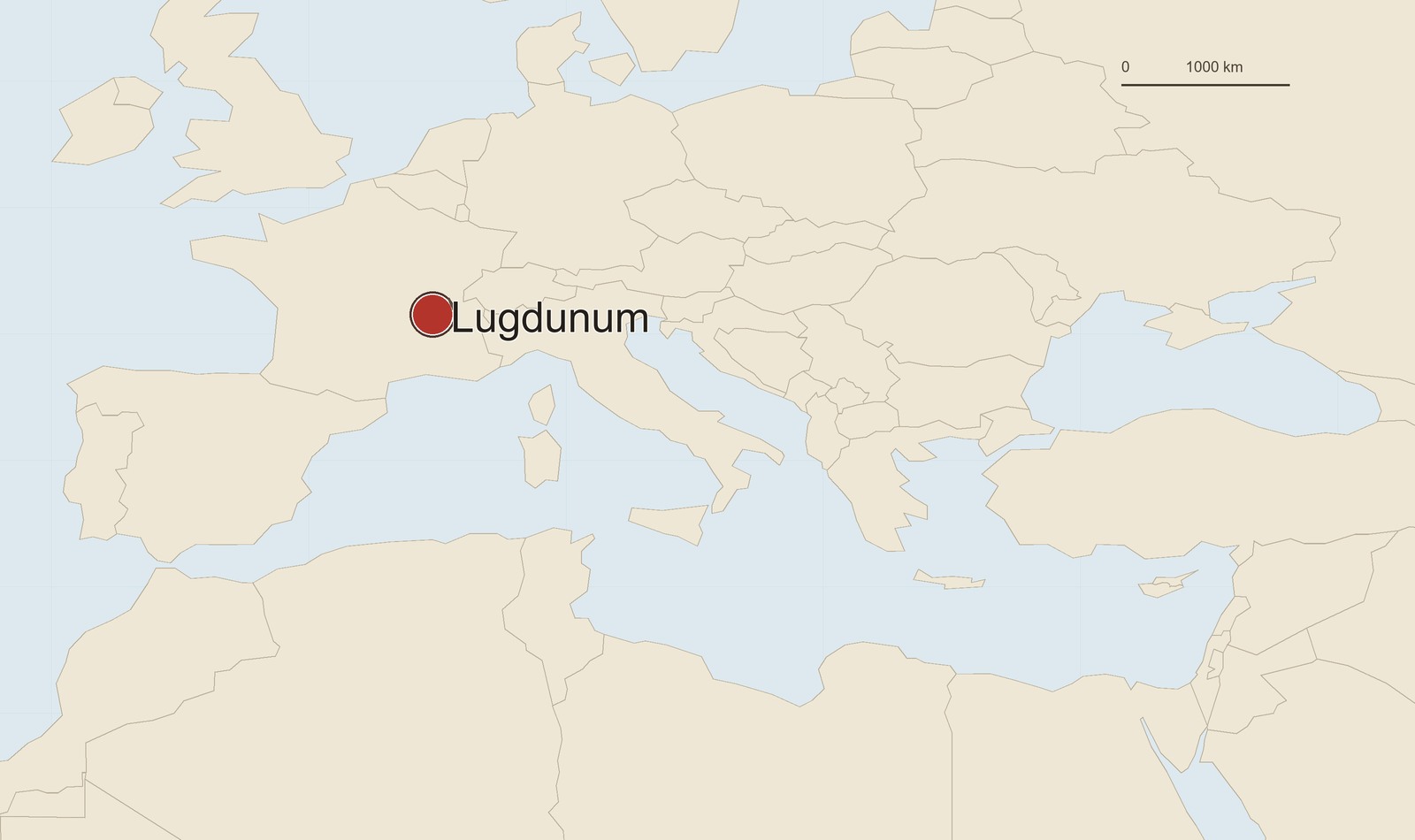 Location map: Lugdunum / Lyon. The marker shows the ancient site or main archaeological complex.
Archaeological complex
The city was founded in 43 BC and quickly became a centre of provincial power, imperial cult and communication. The theatre and odeon, aqueducts, urban quarters, workshops, cemeteries and Sanctuary of the Three Gauls show Lugdunum as a place where politics, cult and trade met in one topography.
Lugdunum is read through the topography of Fourviere hill, the theatre complex, roads, aqueducts, shrines and epigraphic finds. Visual material is important for understanding how Roman power used relief, viewpoints and communications in the capital of Gaul.
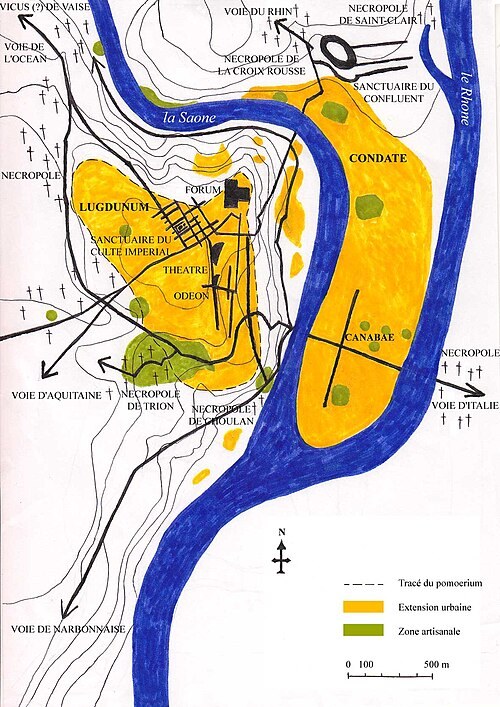 Lugdunum / Lyon: Schéma - Lyon époque romaine - avec nécropoles - voies romaines - constructions - Lugdunum; general view or excavated sector, Roman period, archaeological site or museum context.
Finds and material setting
Lugdunum provides rich epigraphy, pottery, lamps, metalwork, architectural fittings and craft-production material. For reconstructing a western Roman city, the important issue is not only monuments but the link between administrative status, roads, river routes and the market in objects.
- theatre and odeon, shrines, aqueducts and road lines;
- inscriptions, the altar of the Three Gauls, coins and urban pottery;
- hill topography and connection with the river system;
- cemetery and workshop material.
Interpretation and limits
The evidence for Lugdunum is dispersed across the modern city and museums; it is not a single park with a fully legible street grid.
Related topics
Literature and sources
- Amable Audin. Lyon, miroir de Rome dans les Gaules. Paris, 1965.
- Lugdunum - Museum and Roman theatres: collections and site material.
- Corpus of Latin inscriptions from Lugdunum.


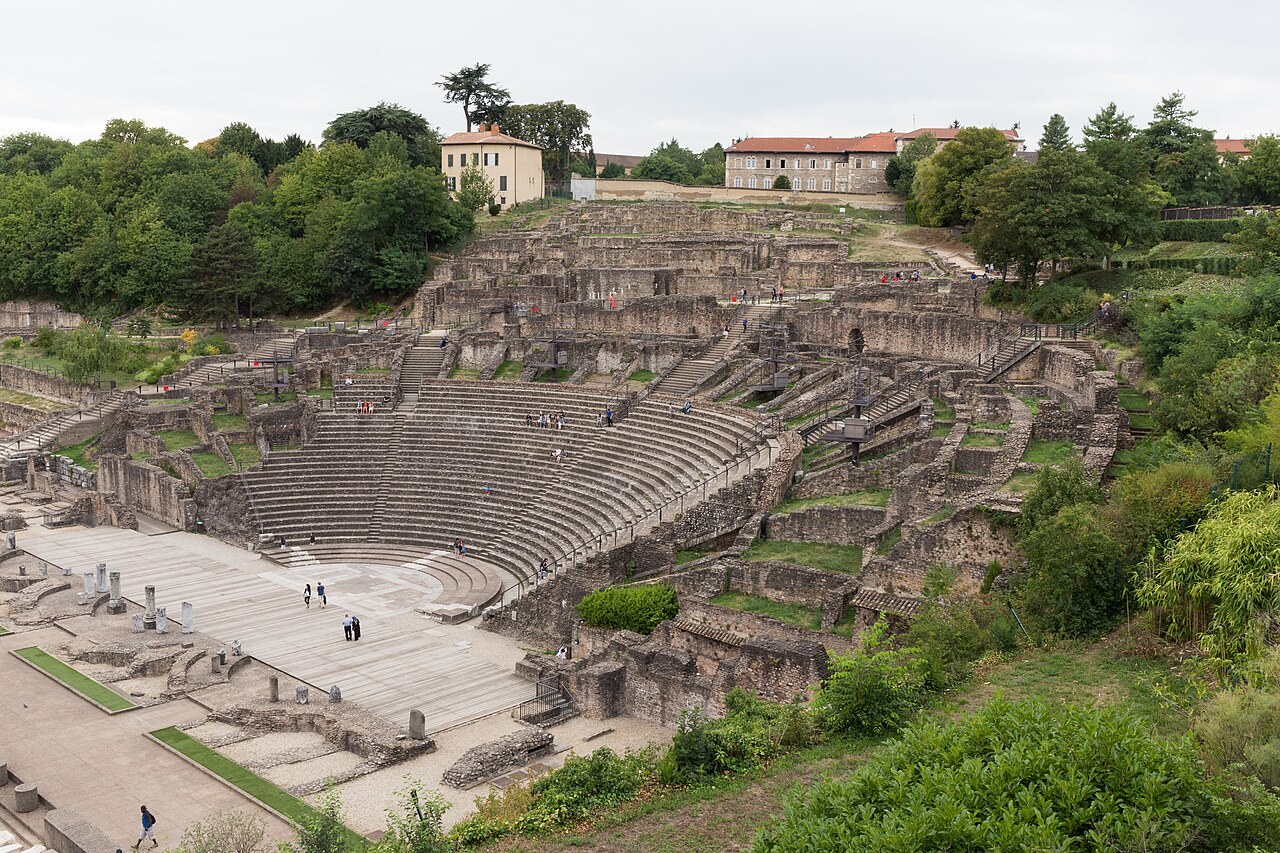 Roman theatre of Lugdunum on Fourviere hill in Lyon. The Augustan building was enlarged in the imperial period; the cavea, orchestra and parts of the stage area survive. Wikimedia Commons, CC BY-SA 4.0.
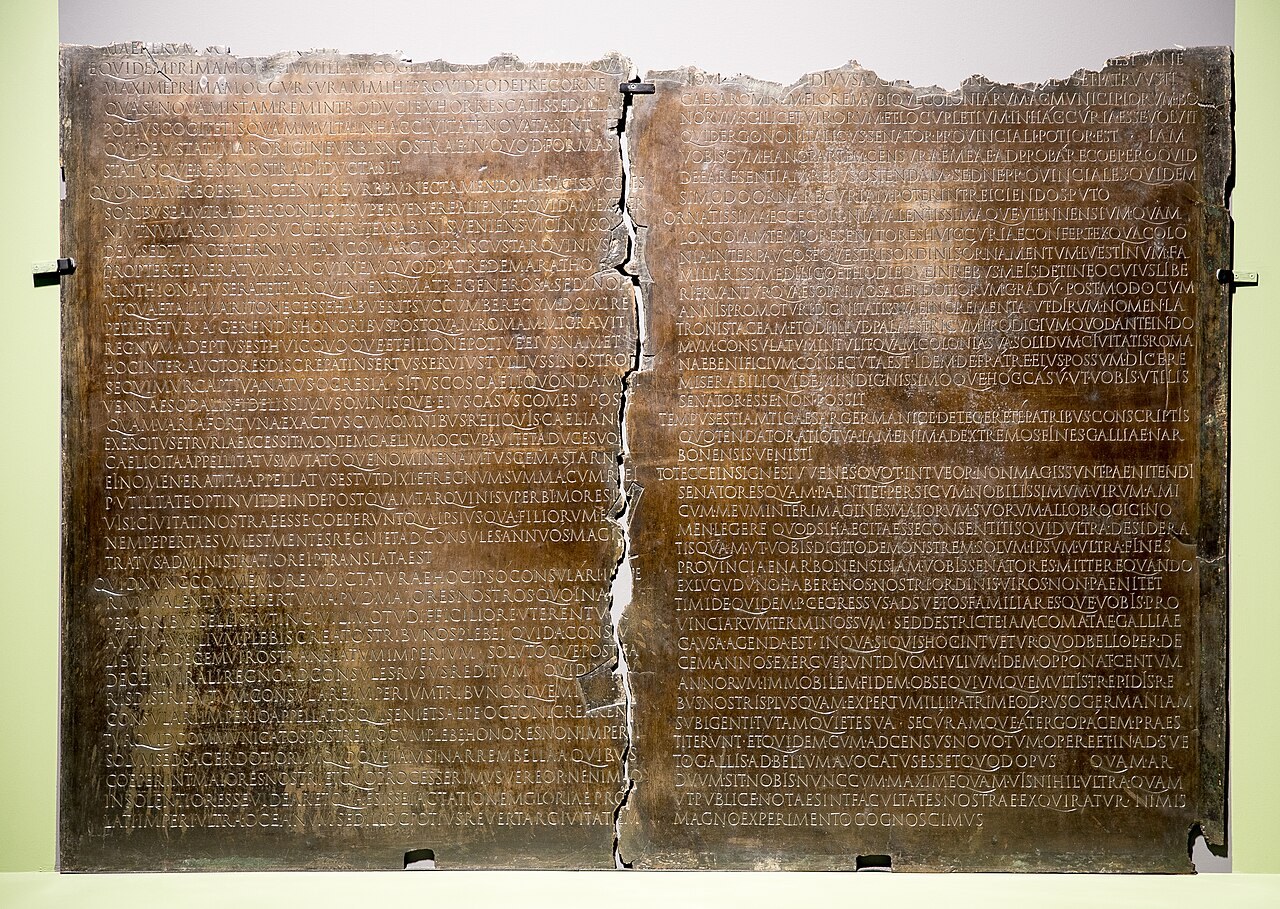 Lugdunum / Lyon: Table Claudienne; visual evidence for the site, Roman period, archaeological site or museum context.
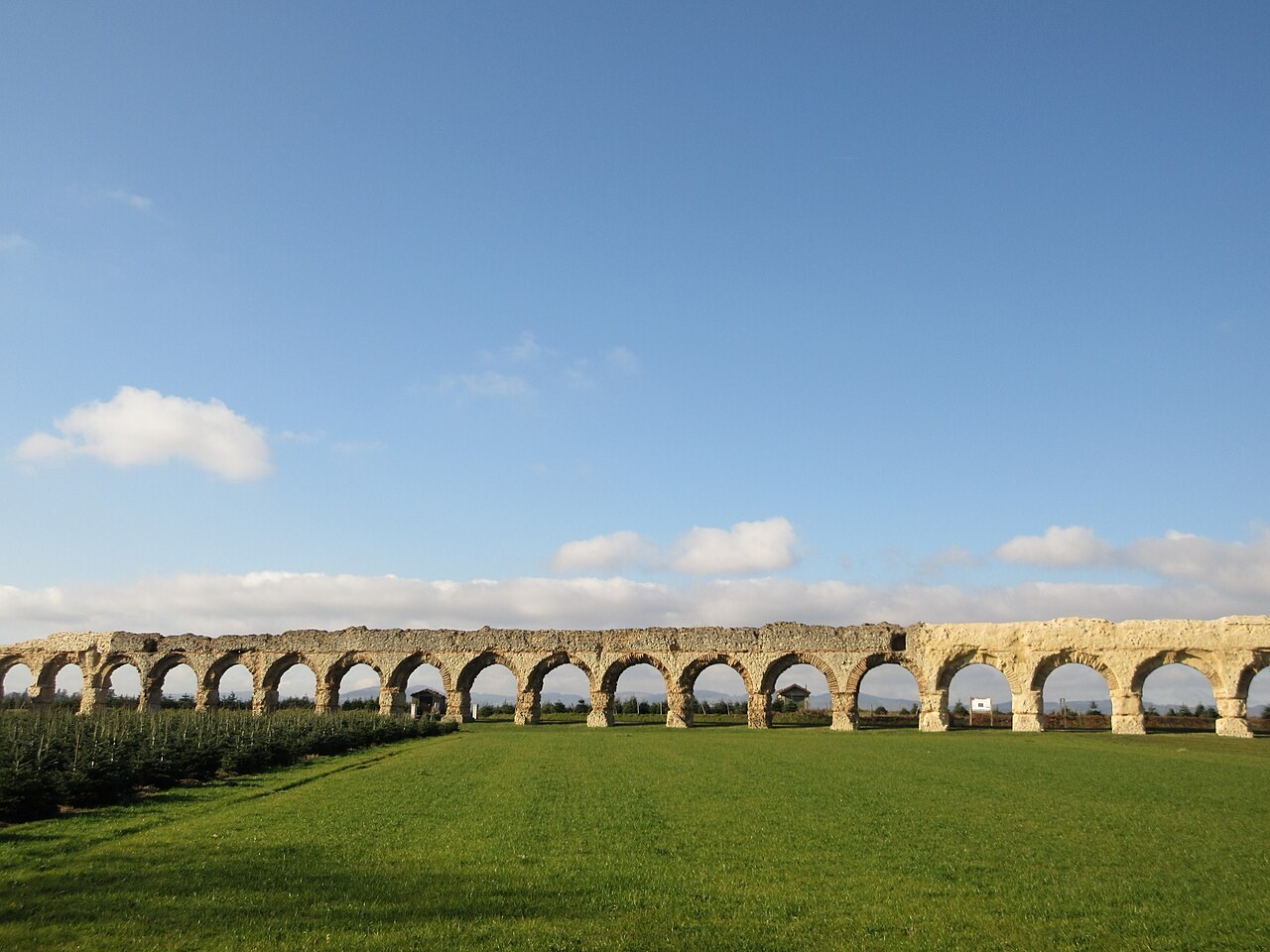 Lugdunum / Lyon: Aqueducchapo02; visual evidence for the site, Roman period, archaeological site or museum context.
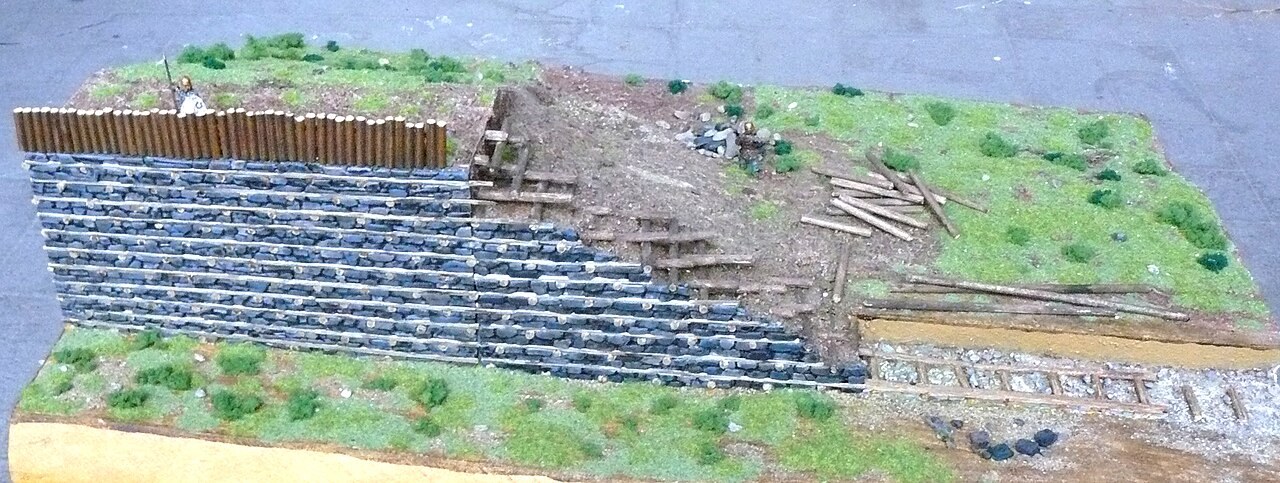 Lugdunum / Lyon: Lyon murus 1; visual evidence for the site, Roman period, archaeological site or museum context.
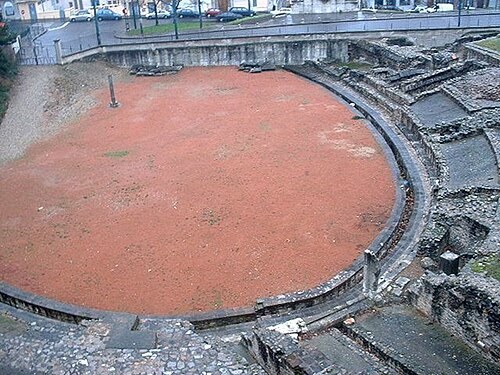 Lugdunum / Lyon: Amphiteatre Trois Gaules Lyon; visual evidence for the site, Roman period, archaeological site or museum context.
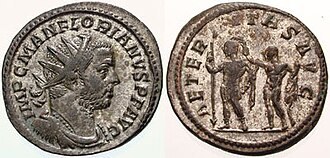 Lugdunum / Lyon: Antoninianus Florianus-unpub ant hercules; visual evidence for the site, Roman period, archaeological site or museum context.
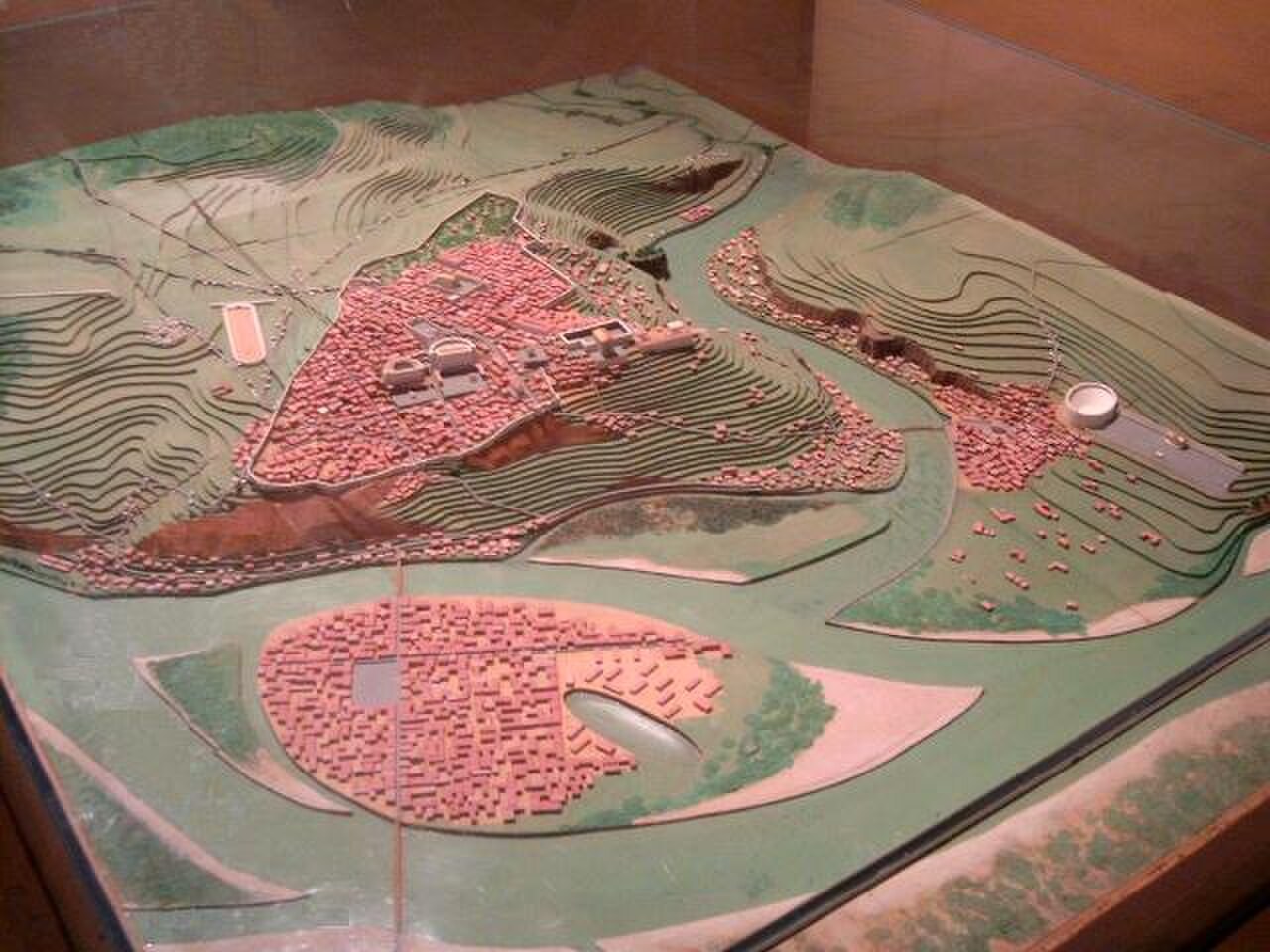 Lugdunum / Lyon: Lugdunum; archaeological view, find or museum context connected with the site, Roman period or local archaeological context.
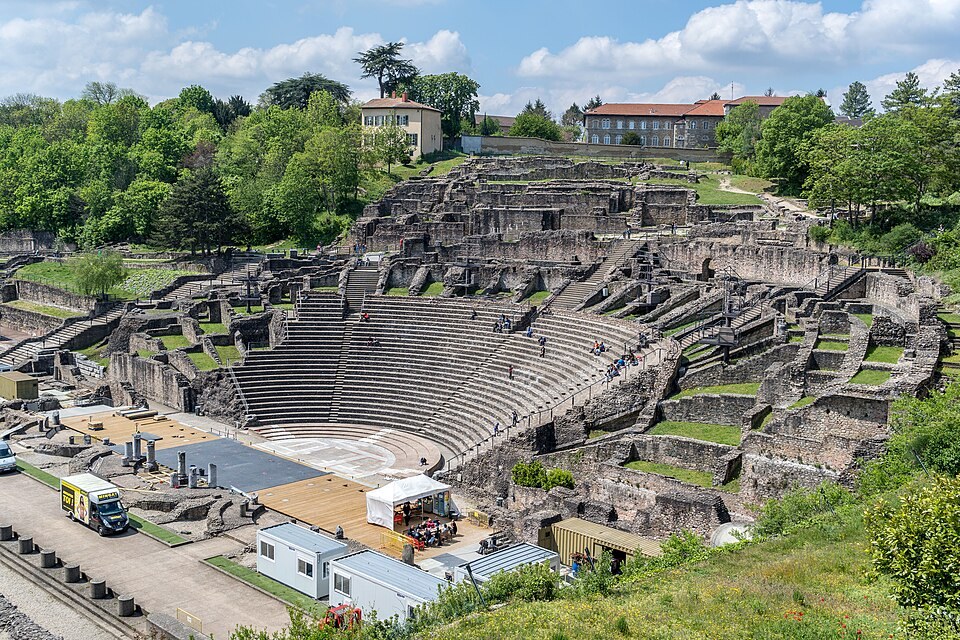 Lugdunum / Lyon: Lyon - Lugdunum - Théatre Romain; archaeological view, find or museum context connected with the site, Roman period or local archaeological context.
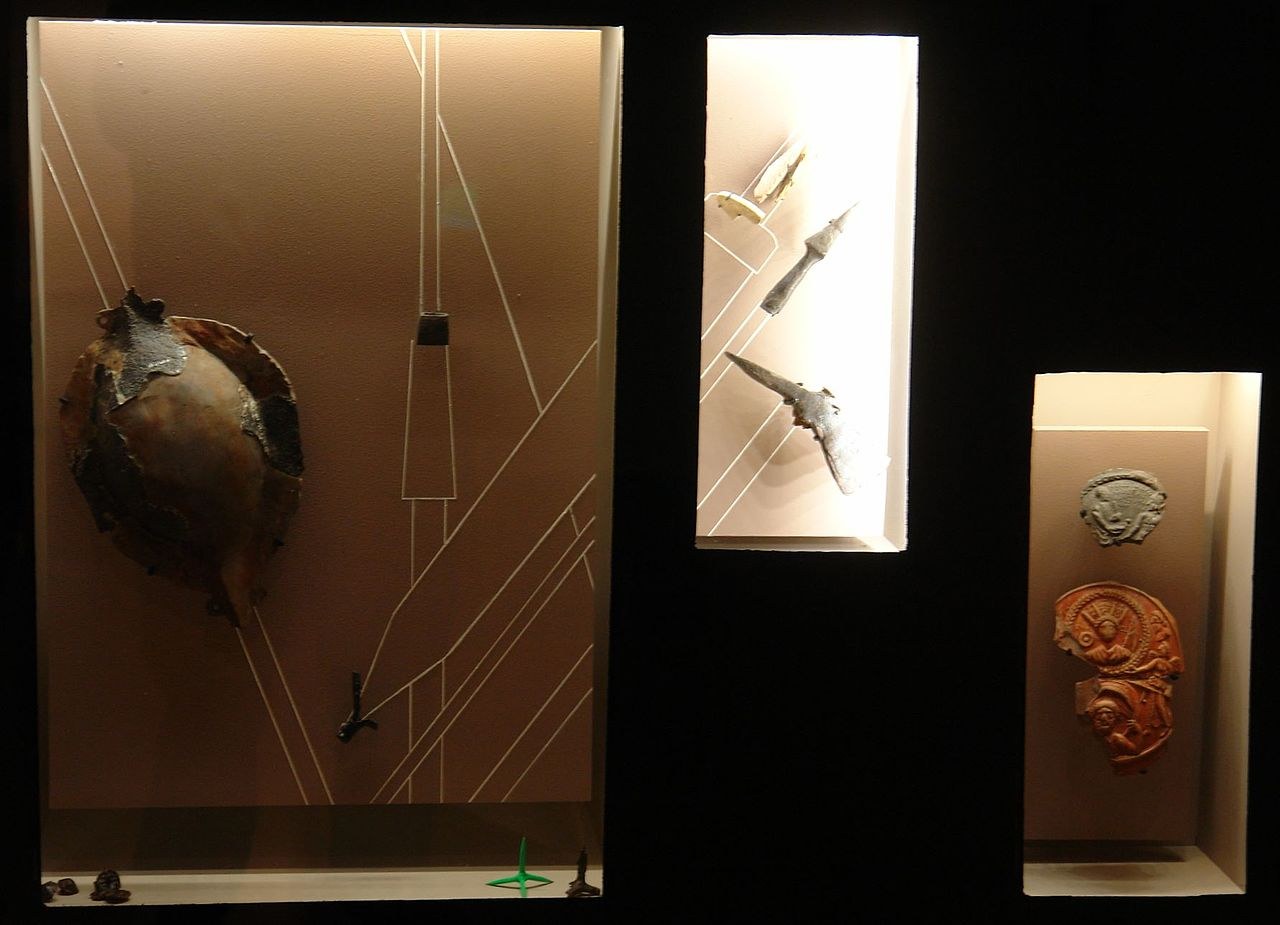 Lugdunum / Lyon: Roman military equipment. Excavation at the 'Cybelus Sanctuary', Arcaeological Parc, Ly...; archaeological view, find or museum context connected with the site, Roman period or local archaeological context.
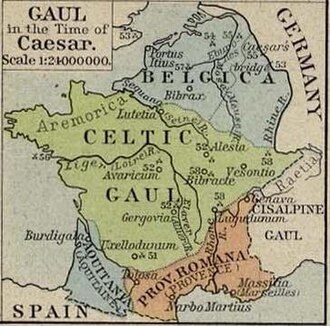 Lugdunum / Lyon: Gaul in the Time of Caesar; visual evidence for the site, Roman period, archaeological site or museum context.
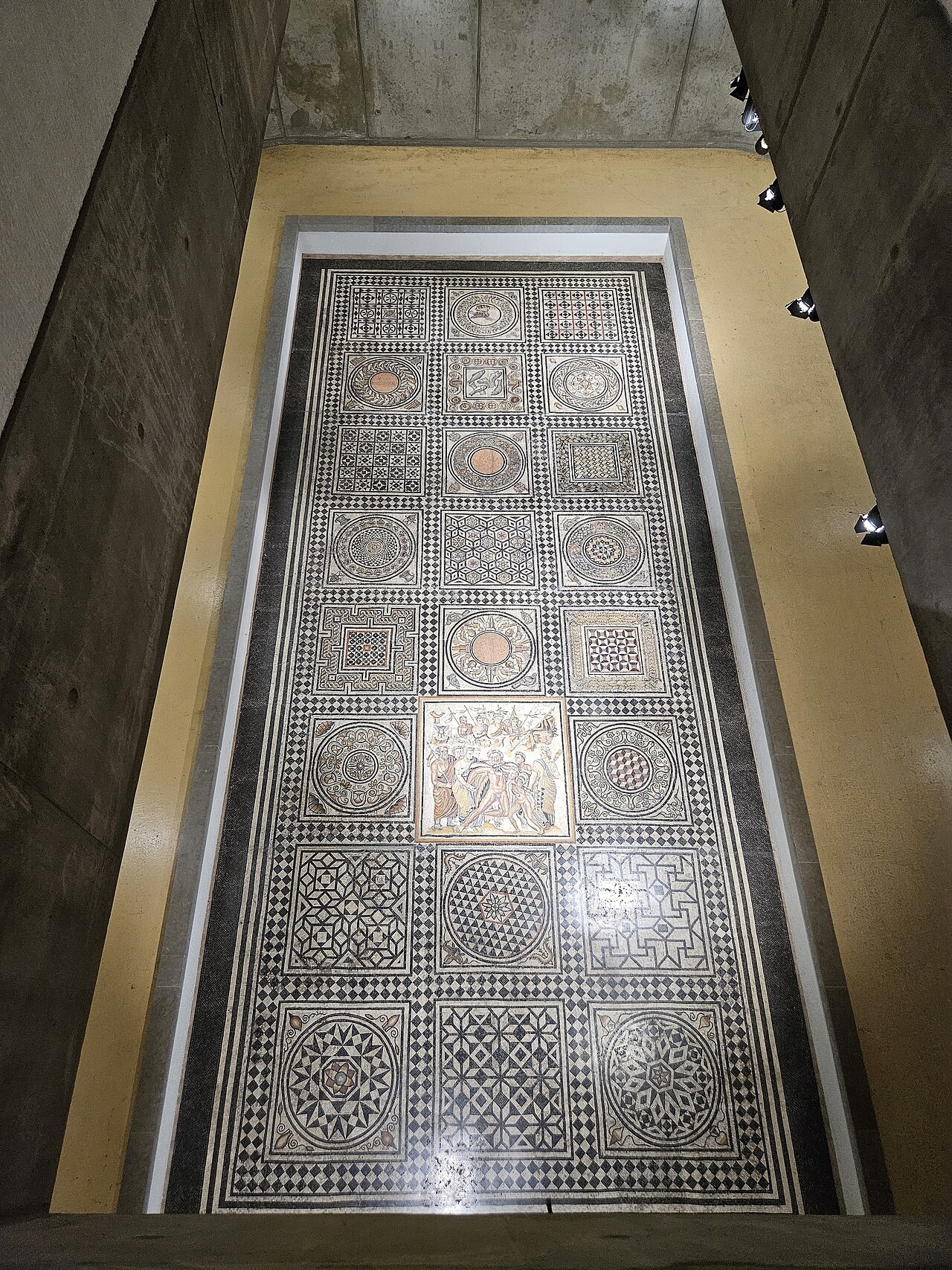 Lugdunum / Lyon: Mosaic of Hercules' drunkenness, Gallo-Roman Museum in Fourviere, Lyon 01; material-culture object or museum find connected with the site, Roman period or local archaeological context.
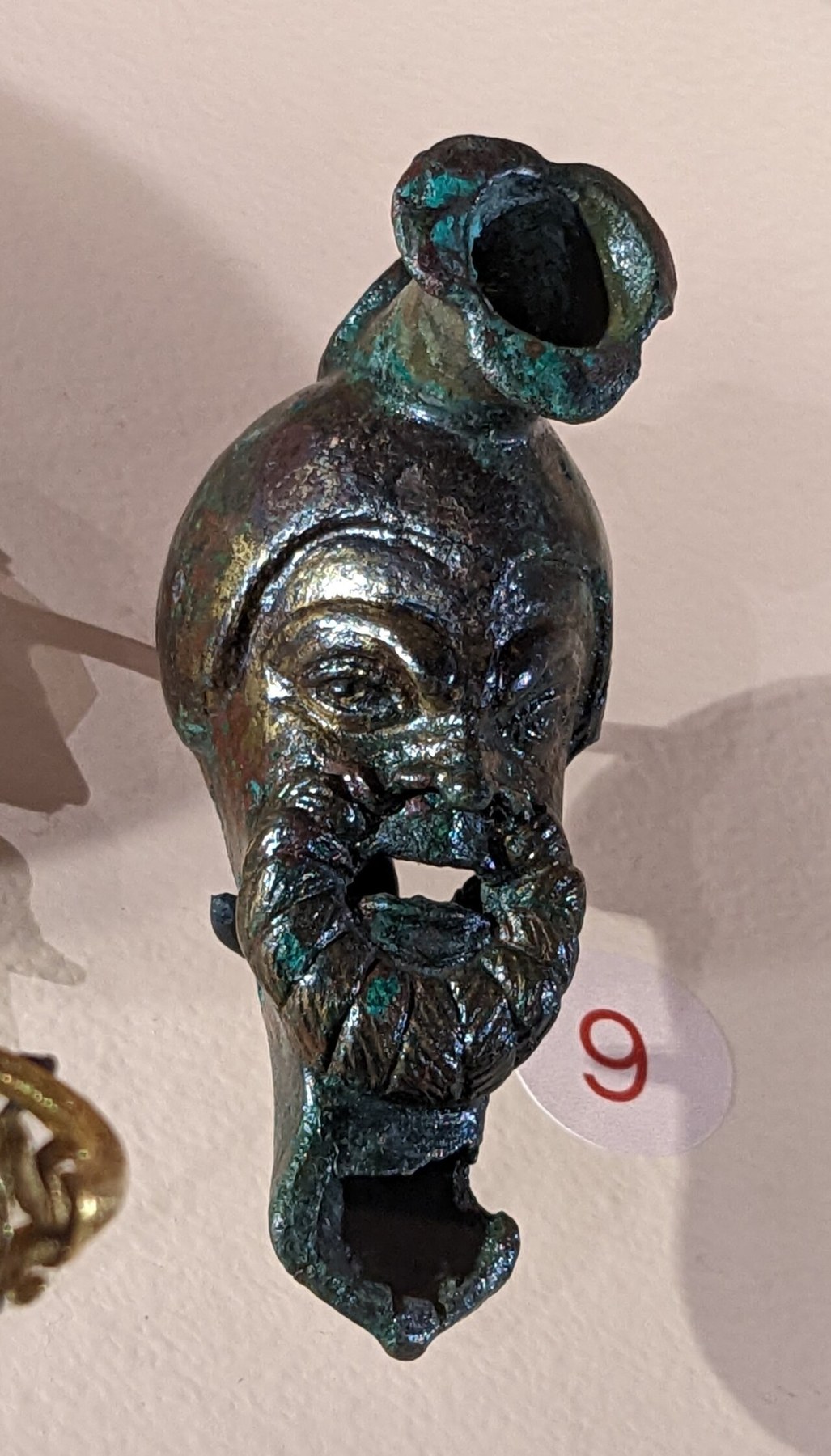 Lugdunum / Lyon: Lyon 5e - Musée Lugdunum - Exposition SPECTACULAIRE - Lampe à huile en bronze; material-culture object or museum find connected with the site, Roman period or local archaeological context.
Interested in Ancient Rome beyond reading? Join Legio X Fretensis or explore our reenactment directions.


