Ostia Antica
Ostia Antica was the main harbour town at the mouth of the Tiber and one of the best archaeological sources for Roman daily life outside the capital. Its value lies not in a single monument, but in a dense urban record: warehouses, apartment blocks, shops, baths, guild buildings, temples, mosaics, inscriptions and harbour logistics.
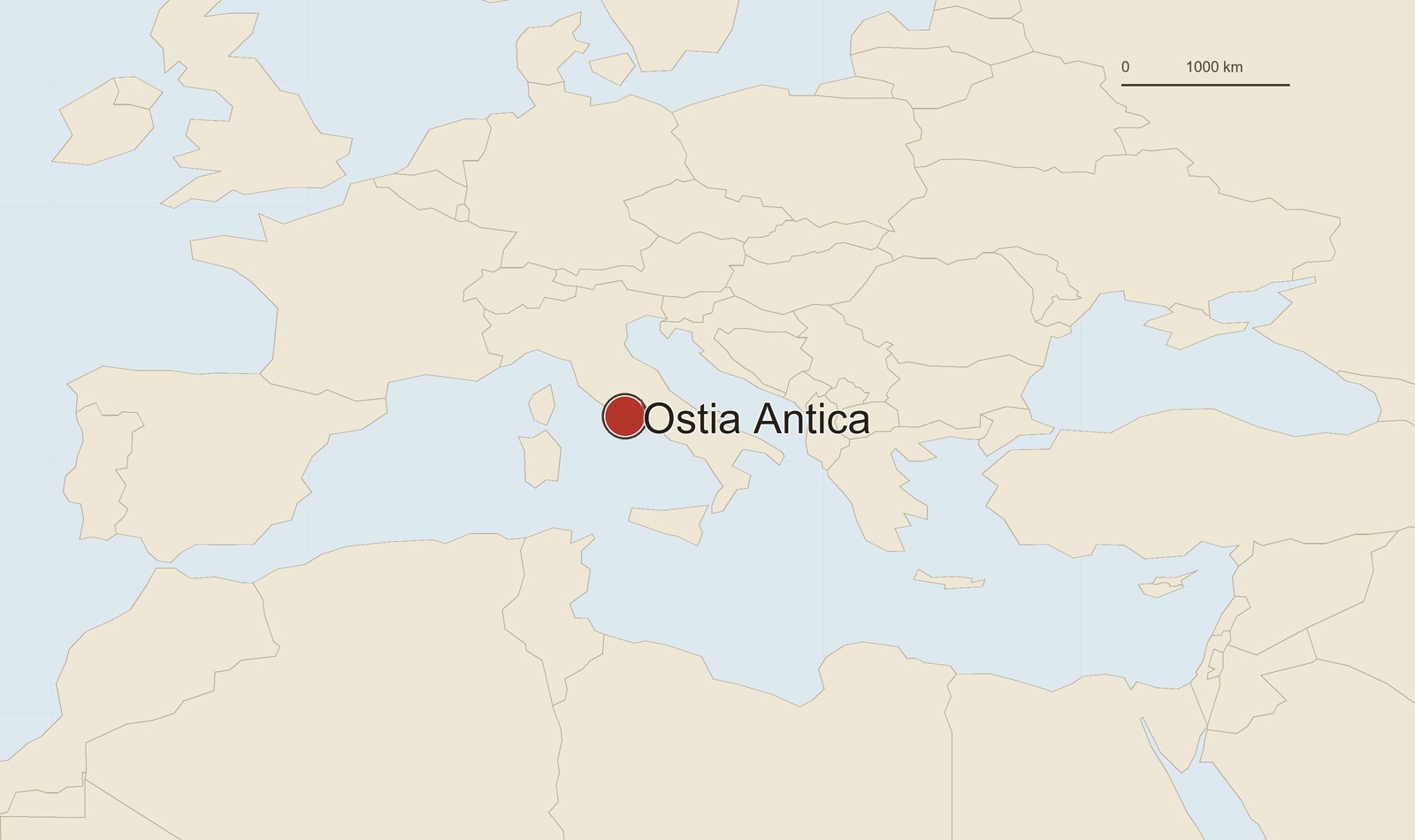 Location map: Ostia Antica. The marker shows the ancient site or main archaeological complex.
Archaeological complex
The town developed as Rome's harbour node from the Republican period into Late Antiquity. The decumanus, fora, theatre district, horrea, apartment quarters, synagogue, mithraea, baths and guild buildings are especially important. Ostia shows maritime trade, river transport, food supply and urban religion functioning in one environment.
The visible remains of Ostia read as an urban fabric: decumanus, apartment quarters, warehouses, shops, baths, the theatre district and shrines are connected by streets and courtyards. A site photograph is therefore useful not only as a view of ruins, but as evidence for the scale of rooms, passages, porticoes, stairways and street life.
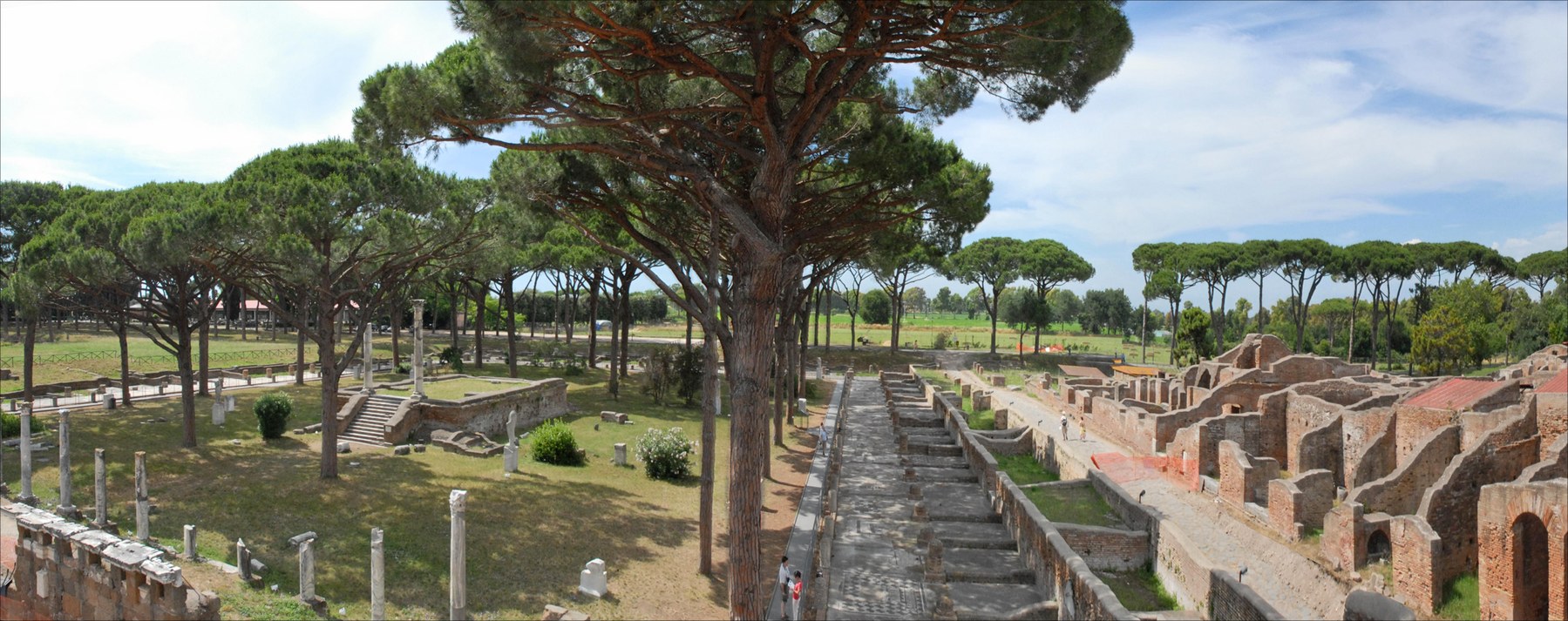 Ostia Antica: La place des corporations (Ostia Antica); general view or excavated sector, Roman period, archaeological site or museum context.
Finds and material setting
Ostia is rich in inscriptions, mosaics with guild emblems, architectural fittings, amphorae, lamps, cooking and table wares, shop spaces and traces of repair. For reconstructing urban settings, the site is valuable because objects can be tied to rooms: shops, courtyards, warehouses, baths, apartments and shrines produce different assemblages and different patterns of behaviour.
- city plan, streets and insulae;
- horrea, shops, baths and cult rooms;
- guild inscriptions, mosaics, amphorae, lamps and domestic pottery;
- building phases, repairs and Late Antique contraction.
Interpretation and limits
Ostia should not be transferred mechanically to every Roman town: it was a harbour centre tied closely to the supply of the capital. Precisely for that reason it complements Pompeii and Herculaneum: instead of a catastrophe-sealed town, it gives a long history of rebuilding, use and late decline.
Related topics
Literature and sources
- Russell Meiggs. Roman Ostia. Oxford, 1973.
- Janet DeLaine, David E. Johnston (eds.). Roman Ostia Revisited. London, 1999.
- Parco archeologico di Ostia antica: official site and excavation notes.


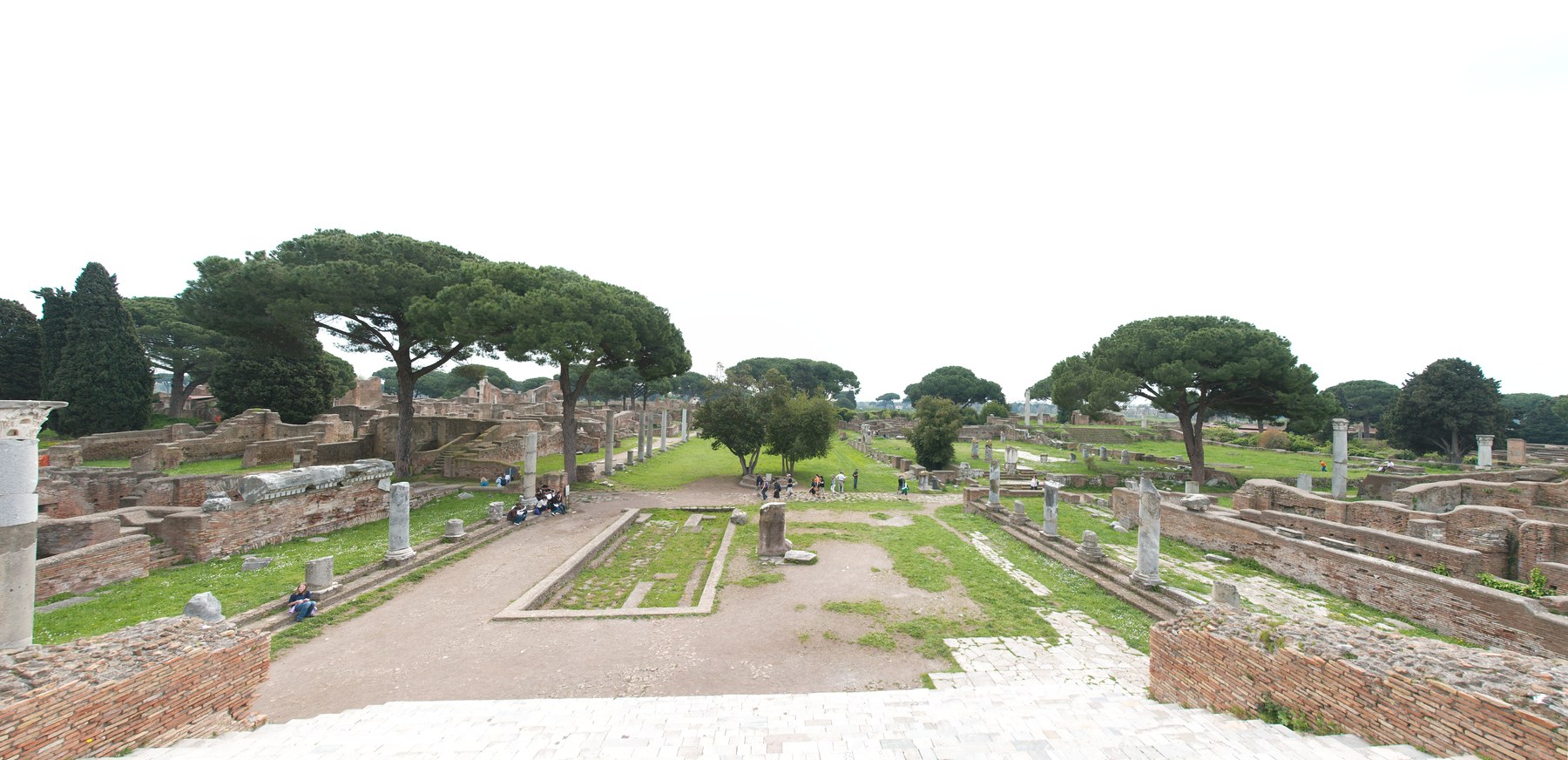 Ostia Antica: Ostia Antica view from temple of Jupiter; visual evidence for the site, Roman period, archaeological site or museum context.
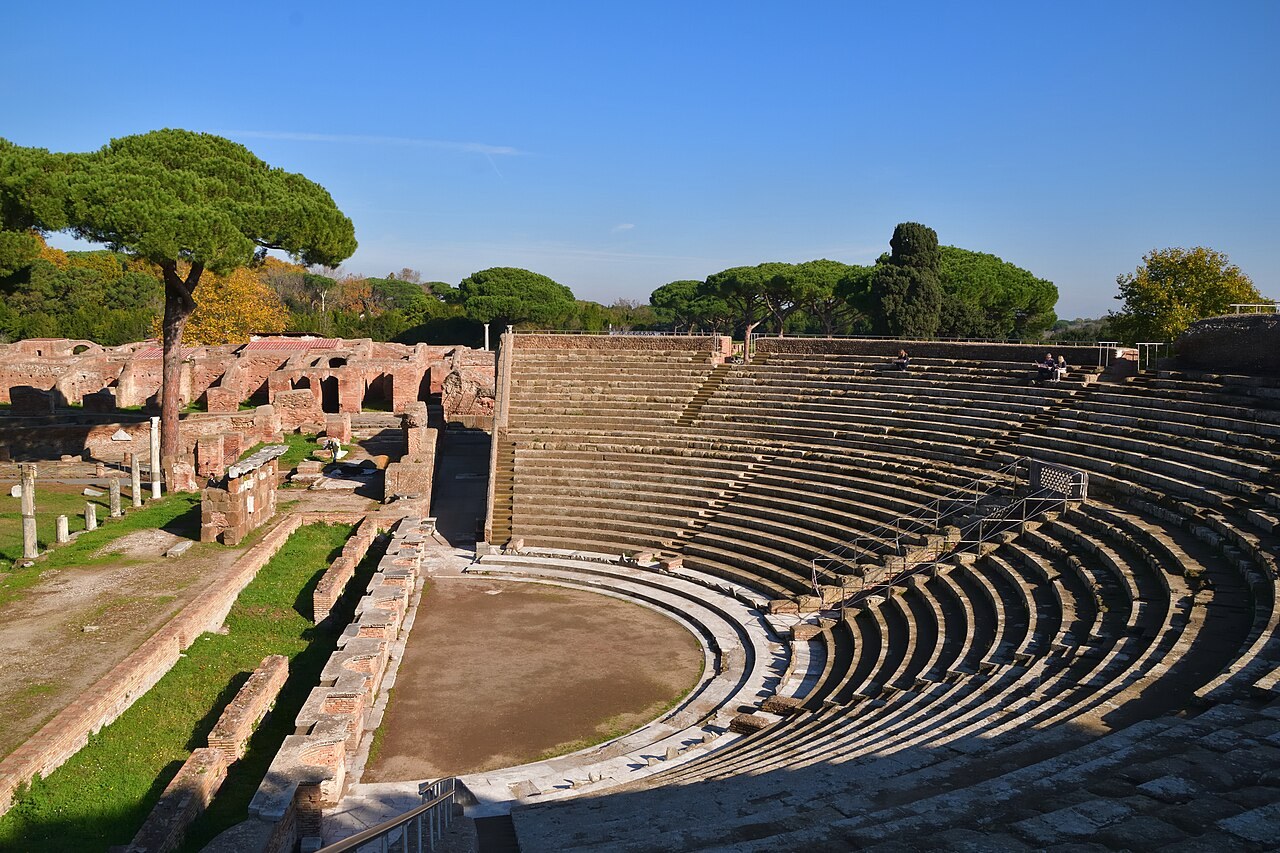 Theatre of Ostia Antica, founded in the Augustan period and enlarged in the late 2nd century CE. Much of the visible cavea was reconstructed in the 1920s-30s, so the view must be read together with its restoration history. Wikimedia Commons, CC BY-SA 4.0.
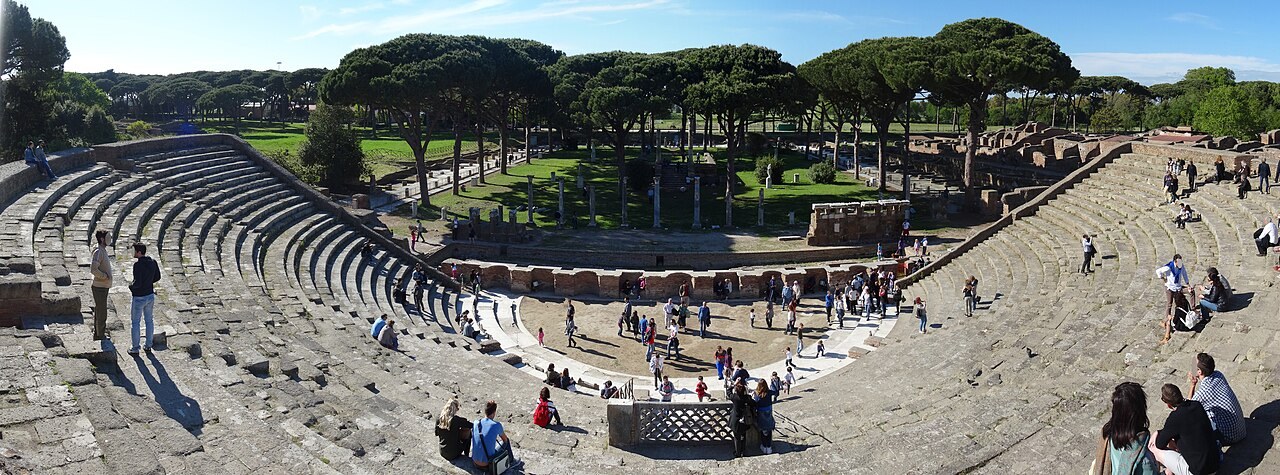 Ostia Antica: Panoramica Teatro di Ostia; visual evidence for the site, Roman period, archaeological site or museum context.
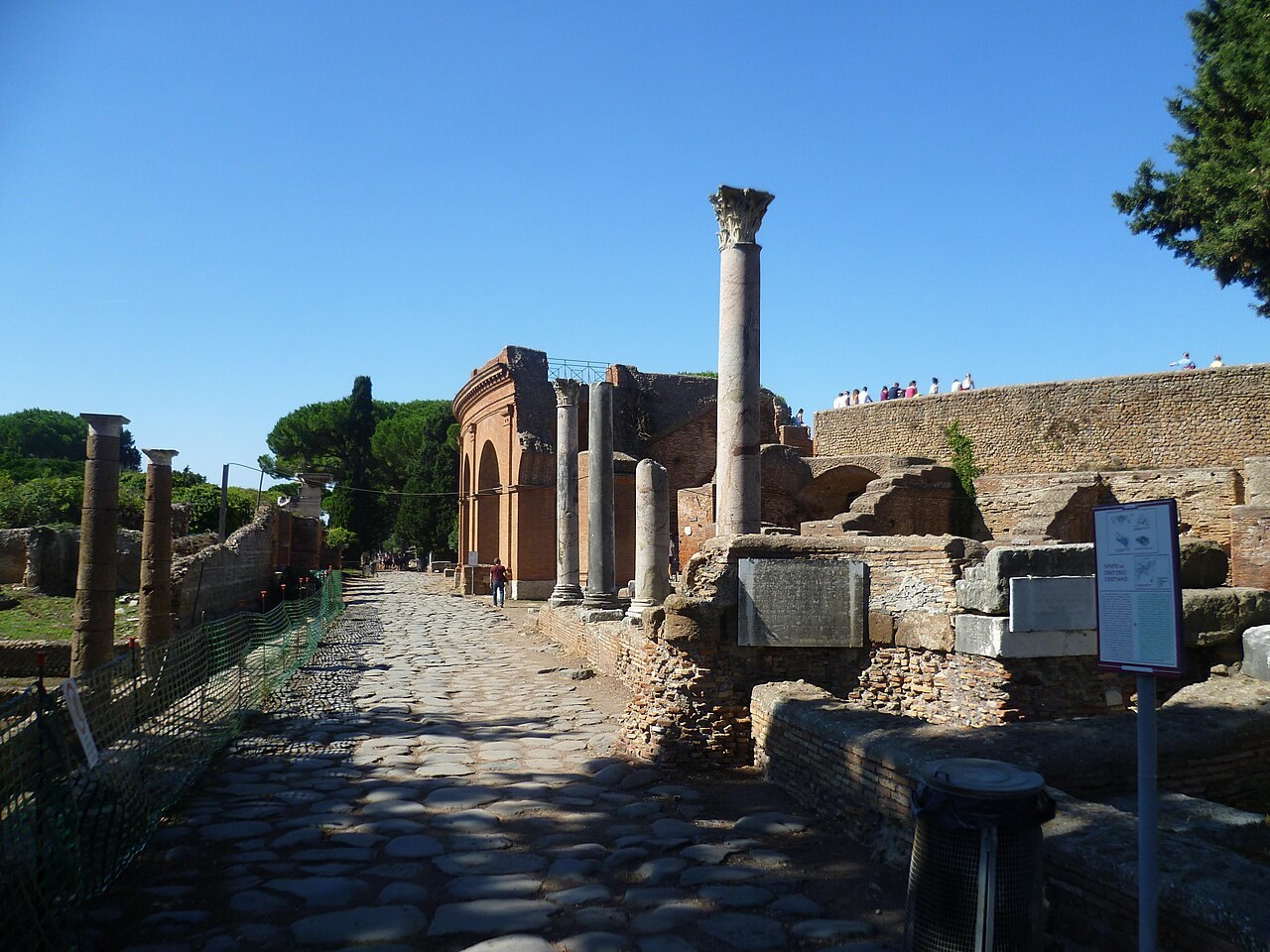 Ostia Antica: Decumanus maximus (Ostia antica) (1); visual evidence for the site, Roman period, archaeological site or museum context.
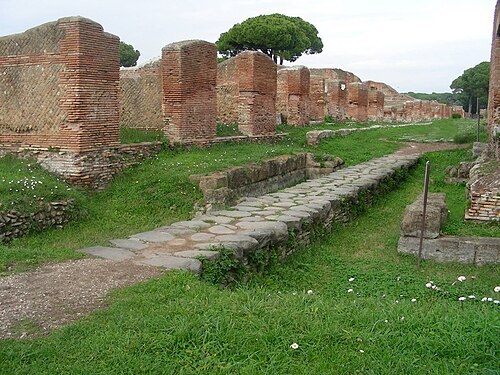 Ostia Antica: OstiaAnticaPortaMarina; visual evidence for the site, Roman period, archaeological site or museum context.
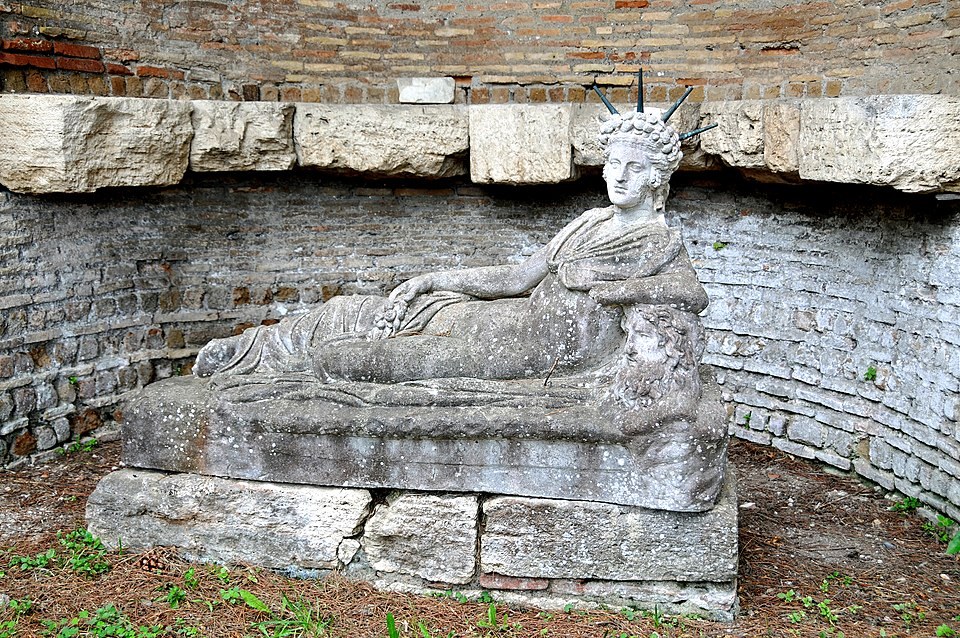 Ostia Antica: Statue of a reclining Attis at the Shrine of Attis 1; material-culture object or museum find connected with the site, Roman period or local archaeological context.
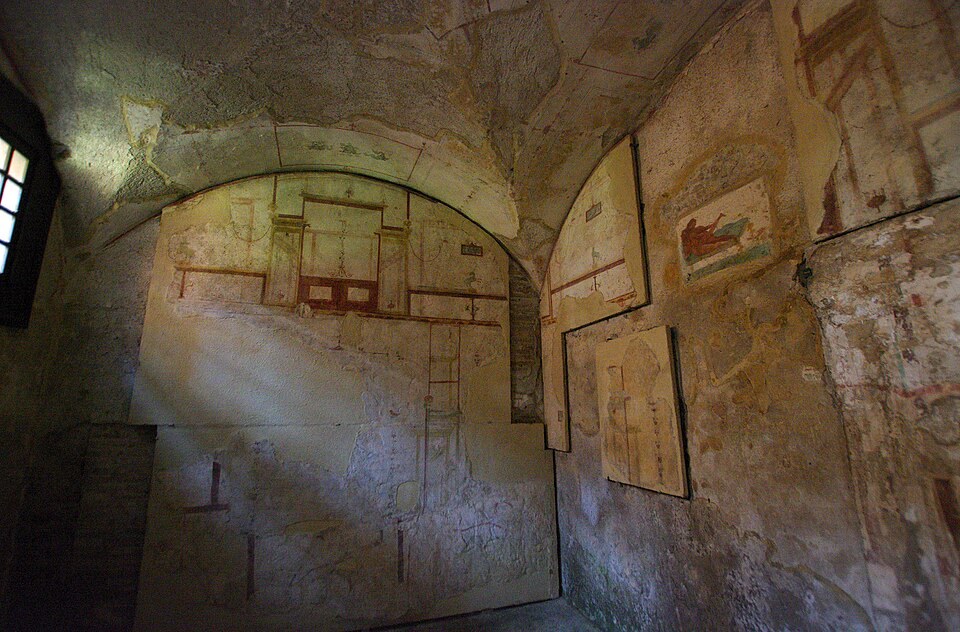 Ostia Antica: Ostia Antica - House of the Painted Vaults - room 5 - west and south wall - 2; archaeological view, find or museum context connected with the site, Roman period or local archaeological context.
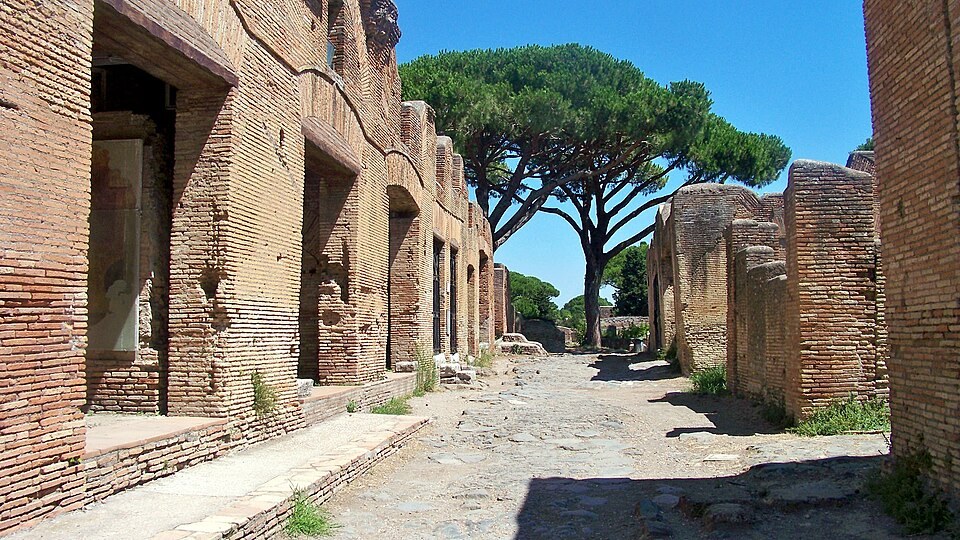 Street and residential buildings at Ostia Antica. Brick-faced concrete insulae, shops and passages show the dense fabric of the port city in the 2nd-3rd centuries CE. Photo by Carole Raddato, Wikimedia Commons, CC BY 2.0.
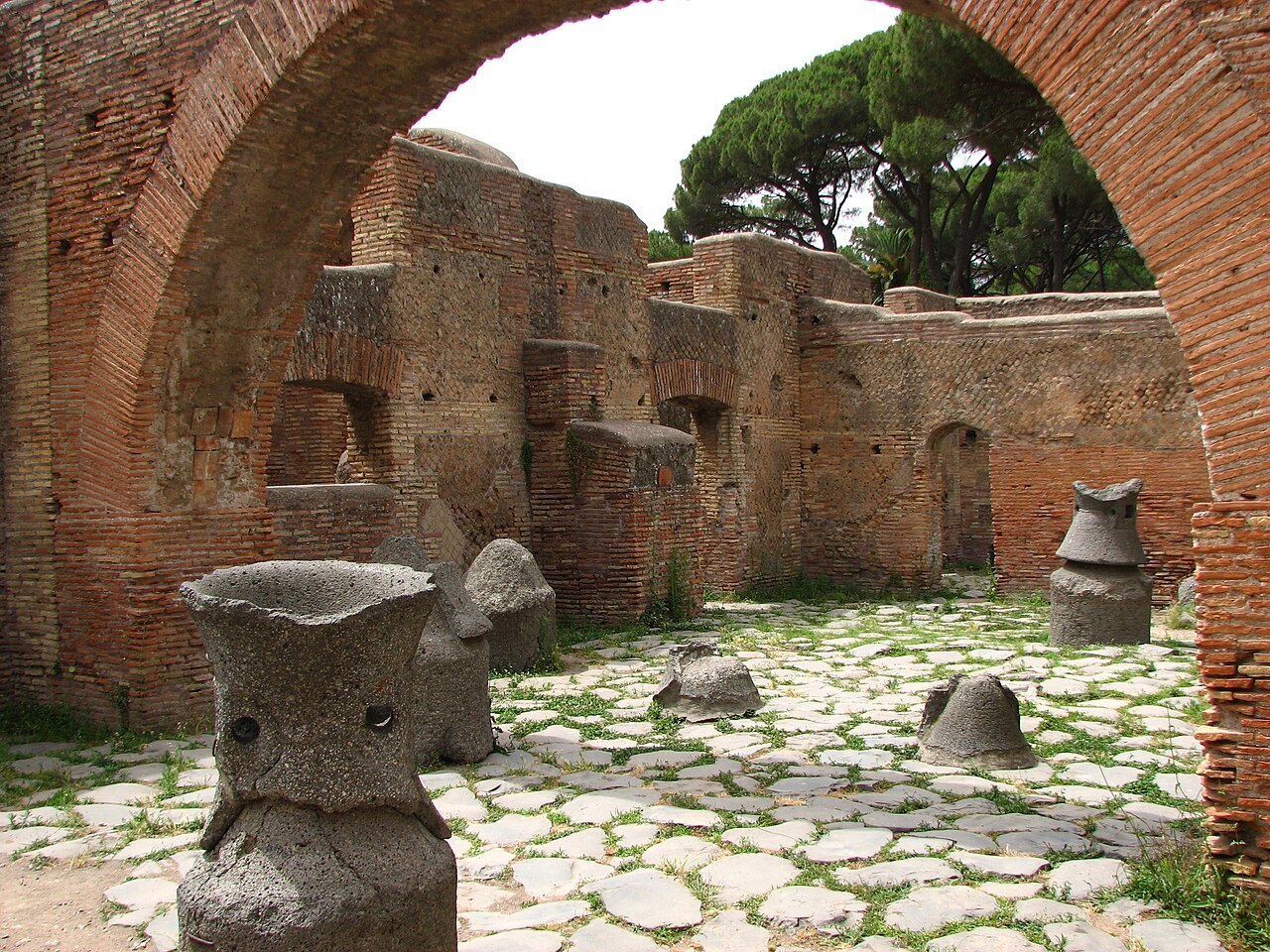 Ostia Antica: Ostia antica-14; archaeological view, find or museum context connected with the site, Roman period or local archaeological context.
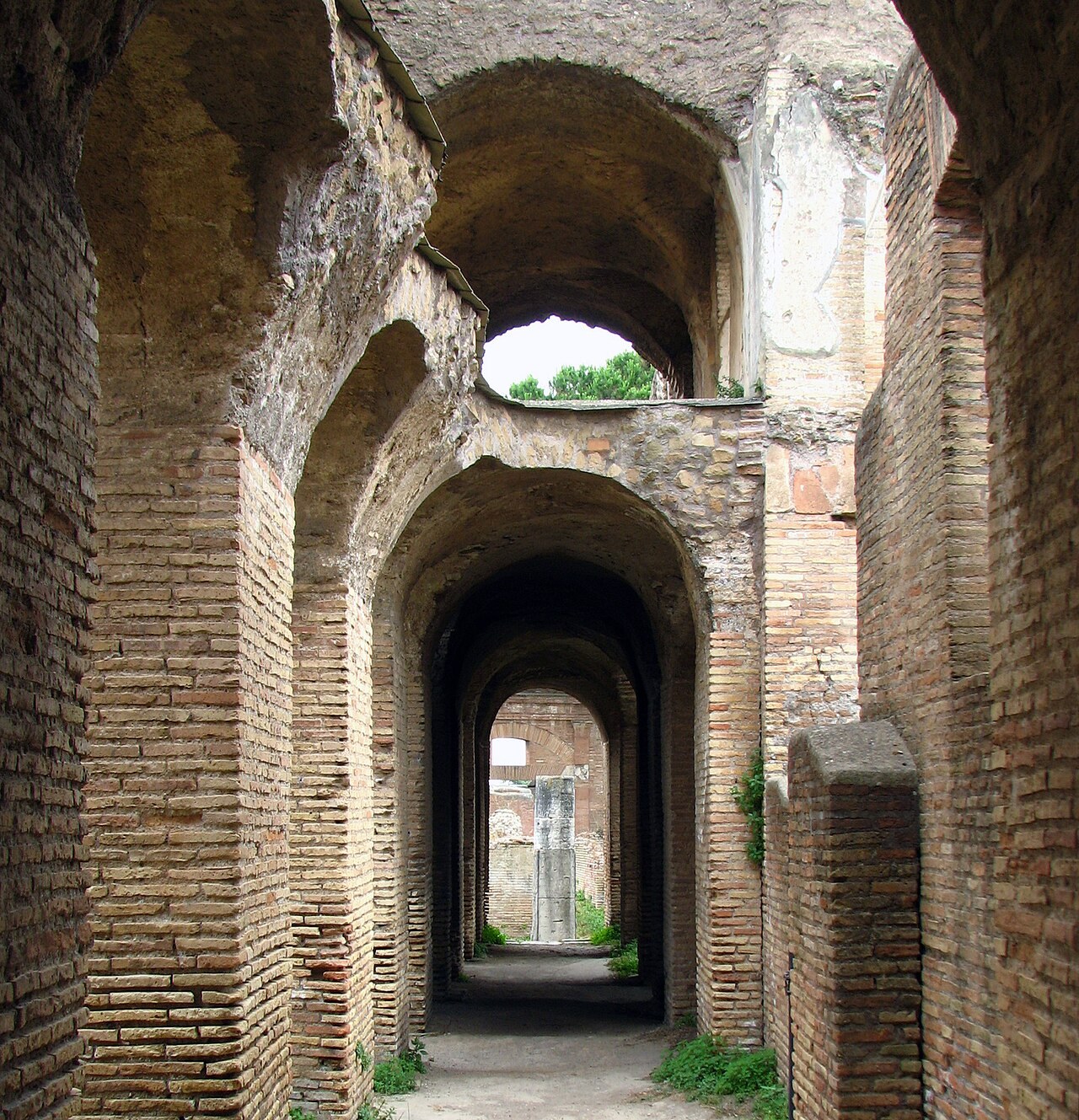 Ostia Antica: Ostia antica-21; visual evidence for the site, Roman period, archaeological site or museum context.
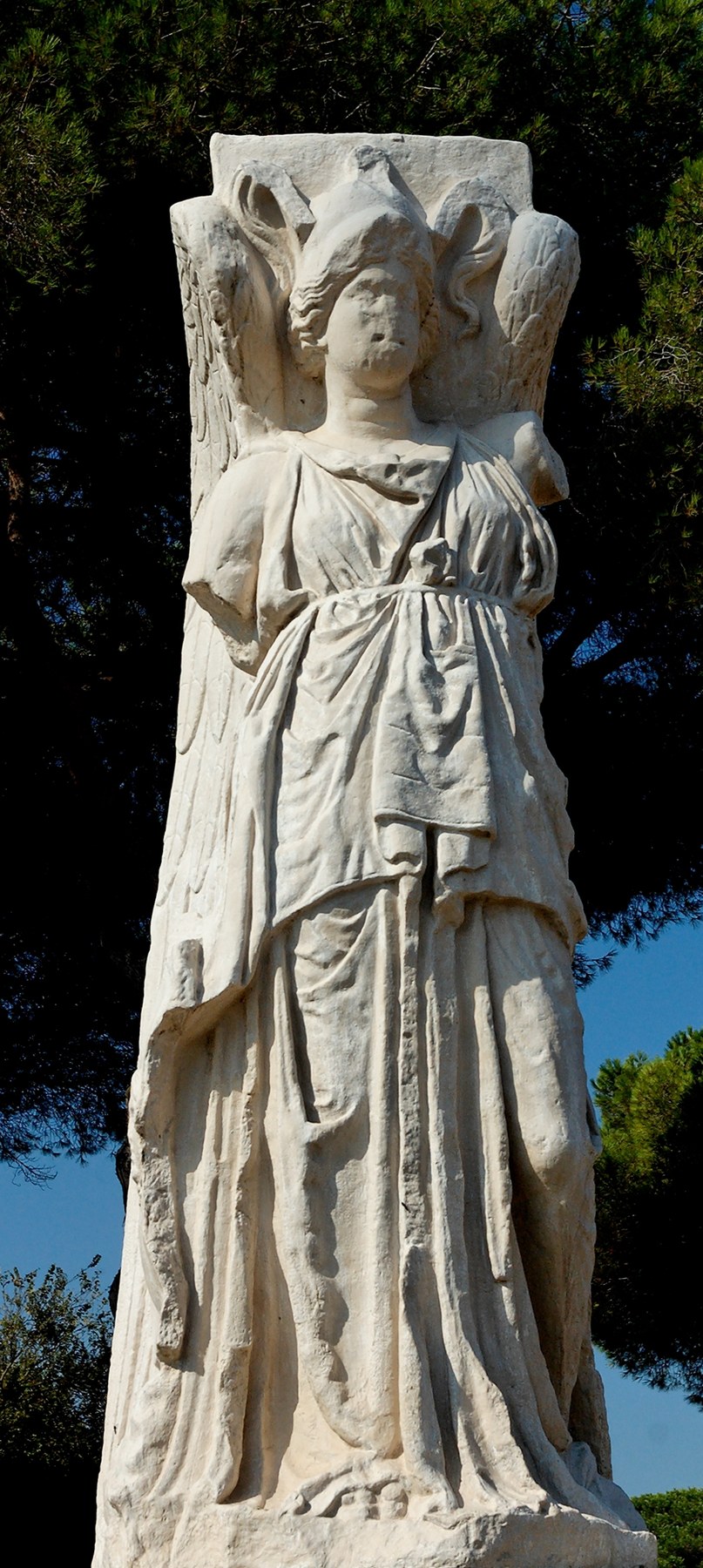 Ostia Antica: Minerva victrix Ostia Antica 2006 09 08; visual evidence for the site, Roman period, archaeological site or museum context.
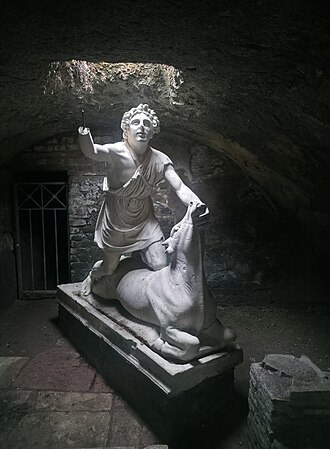 Marble group of Mithras killing the bull from the mithraeum in the service corridor of the Baths of Mithras at Ostia, 1st–2nd centuries CE; Ostia Museum, inv. 149. A Greek signature on the bull reads, 'Kriton the Athenian made it.' Wikimedia Commons, CC BY 4.0.
Interested in Ancient Rome beyond reading? Join Legio X Fretensis or explore our reenactment directions.


