Sagalassos
Sagalassos in Pisidia is a well-studied mountain city of Asia Minor, important for urban archaeology, pottery production, fountains, baths, houses, inscriptions and late antique change. It shows a Roman city not on the coast but in a complex inland landscape.
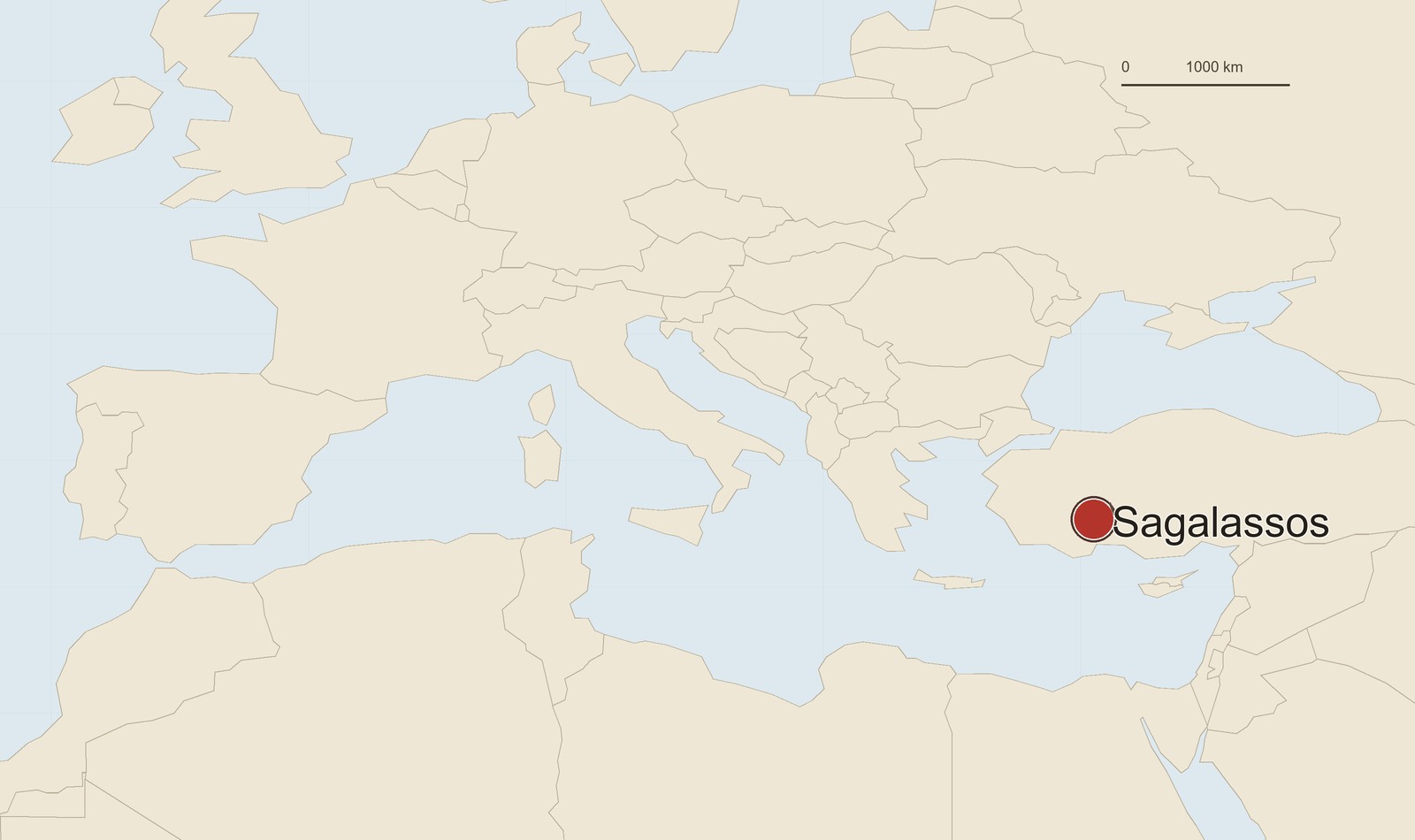 Location map: Sagalassos. The marker shows the ancient site or main archaeological complex.
Archaeological complex
The city became especially prominent in Hellenistic and Roman times, using regional connections and local resources. Upper and lower agoras, nymphaea, baths, theatre, streets and residential areas allow the study of how urban form adapted to terrain and water.
Sagalassos lies in a mountain landscape, and that setting shapes the site: agora, nymphaeum, theatre, baths and residential zones must be read together with terrain, water and roads. Excavation photographs show how urban architecture was adapted to terraces.
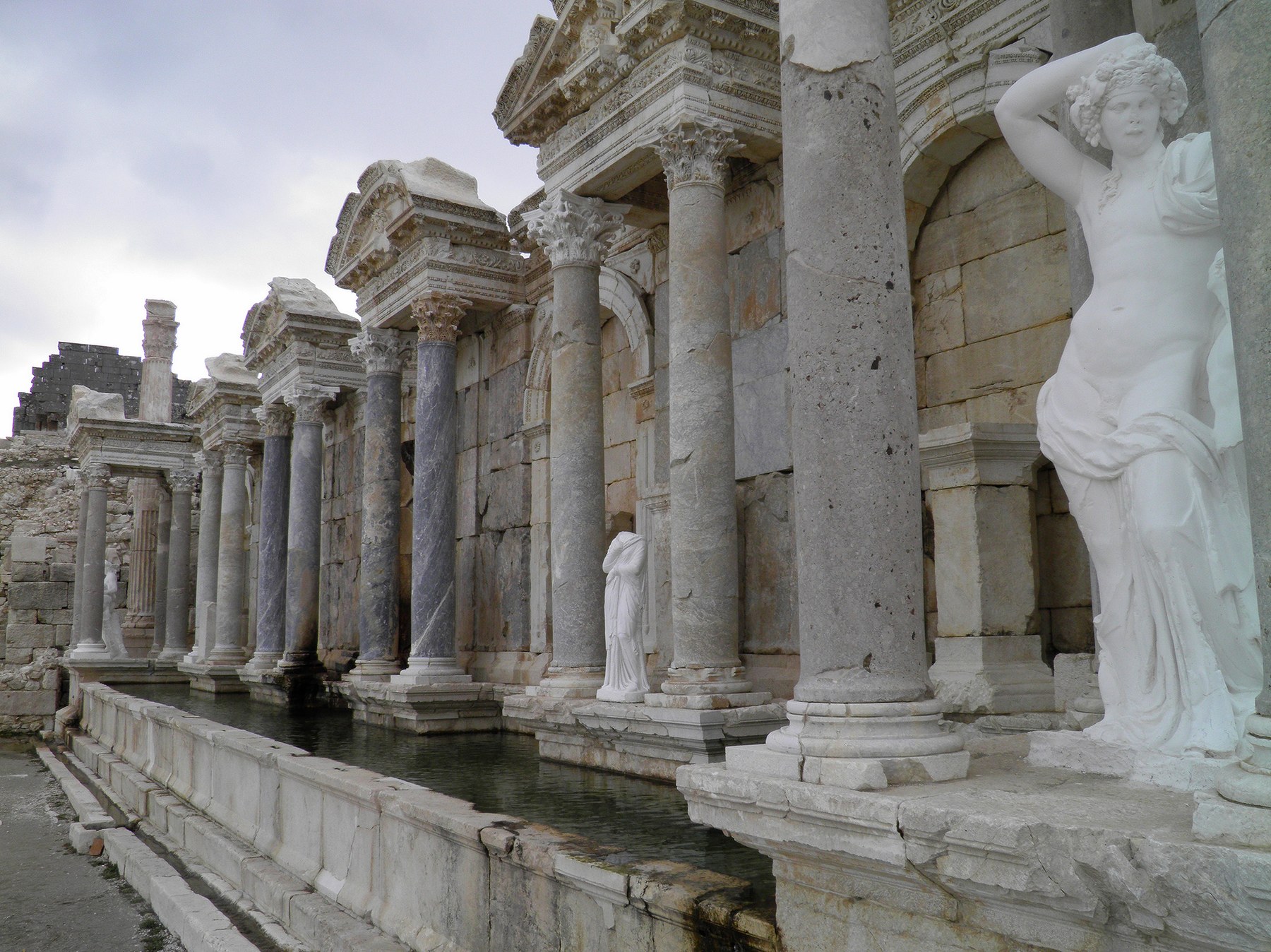 Sagalassos: Nymphaeum, Sagalassos; general view or excavated sector, Roman period, archaeological site or museum context.
Finds and material setting
Sagalassos is famous for red-slip pottery production, but the evidence is broader: statues, coins, inscriptions, architectural elements, food remains, workshops and domestic finds. For reconstructing urban consumption, the ability to trace pottery production, distribution and use within the region is especially important.
- upper and lower agoras, nymphaeum, theatre, baths and residential terraces;
- ceramic production, architectural decoration, coins and inscriptions;
- water system and mountain landscape;
- Late Antique destruction, repair and contraction.
Interpretation and limits
Sagalassos connects urban archaeology with its natural setting: water supply, pottery production, housing and later rebuilding illuminate one another. Restored fountains and statues form only part of this picture and must be distinguished from excavated deposits and ancient building remains.
Related topics
Literature and sources
- Marc Waelkens et al. Sagalassos excavation reports.
- Jeroen Poblome. Sagalassos Red Slip Ware studies.
- Sagalassos Archaeological Research Project: official publications.


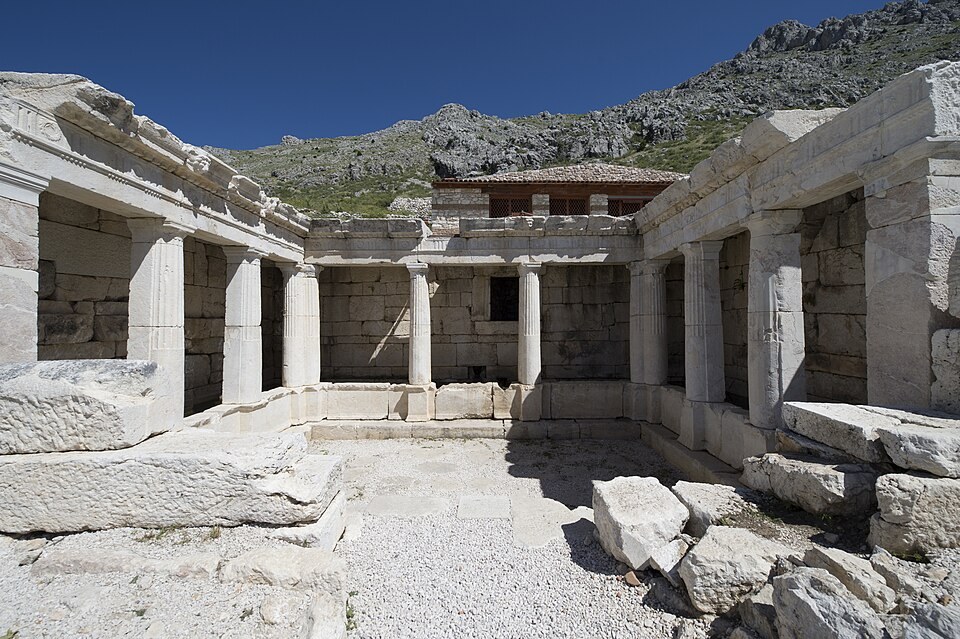 Sagalassos: Sagalassos Fountain House in 2012 2513; visual evidence for the site, Roman period, archaeological site or museum context.
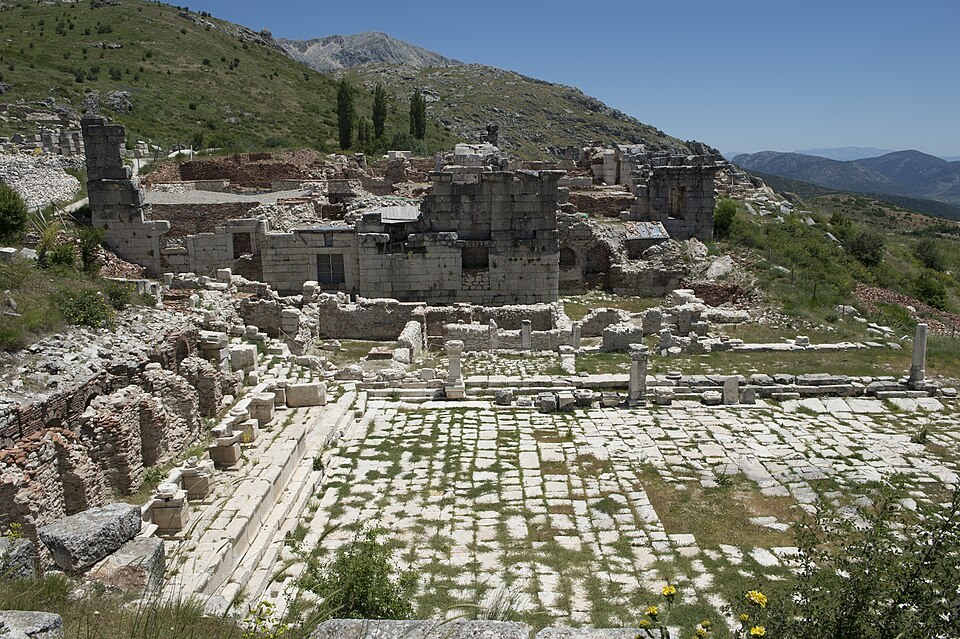 Sagalassos: Sagalassos Lower Agora in 2012 2770; visual evidence for the site, Roman period, archaeological site or museum context.
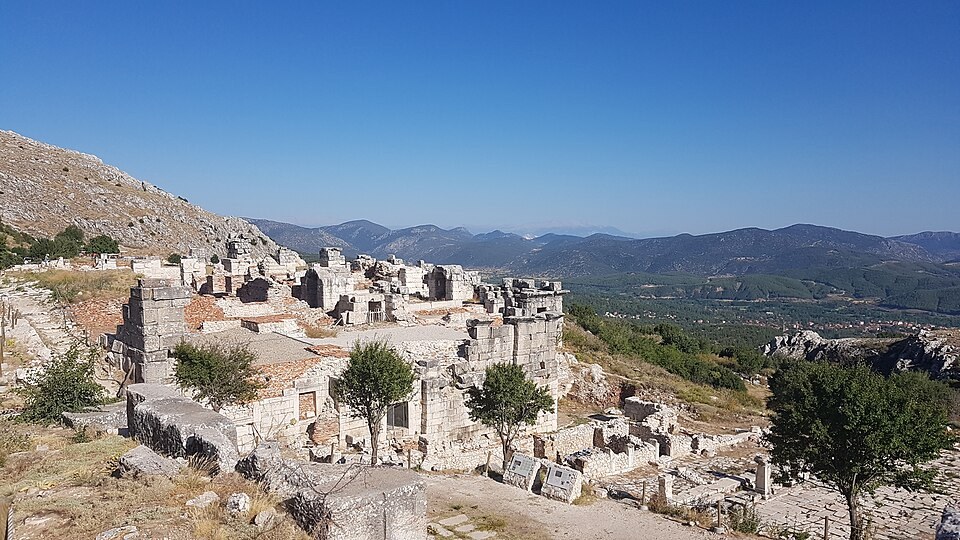 Sagalassos: Sagalassos; visual evidence for the site, Roman period, archaeological site or museum context.
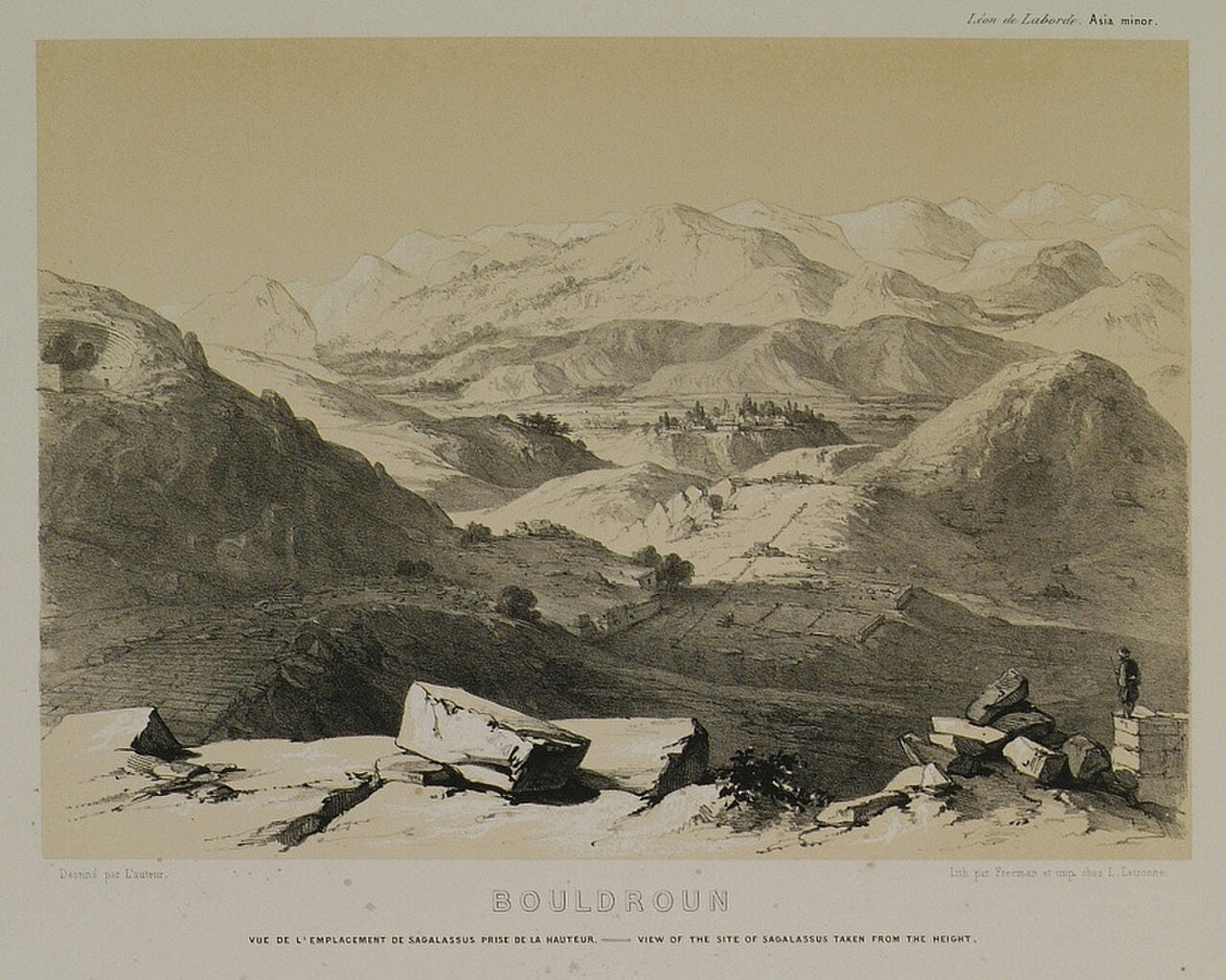 Sagalassos: Bouldroun Vue de l'emplacement de Sagalassus prise de la hauteur - Laborde Léon Emmanue...; visual evidence for the site, Roman period, archaeological site or museum context.
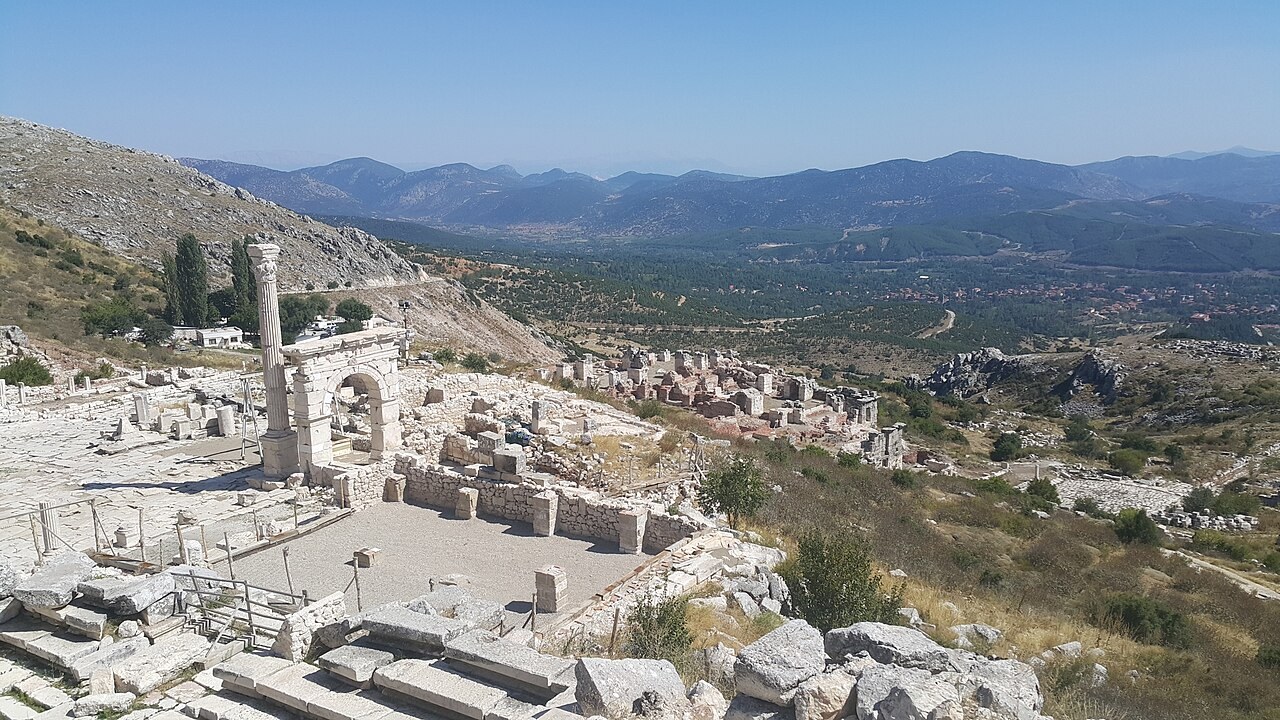 Sagalassos: Sagalassos Antik Kenti 03; archaeological view, find or museum context connected with the site, Roman period or local archaeological context.
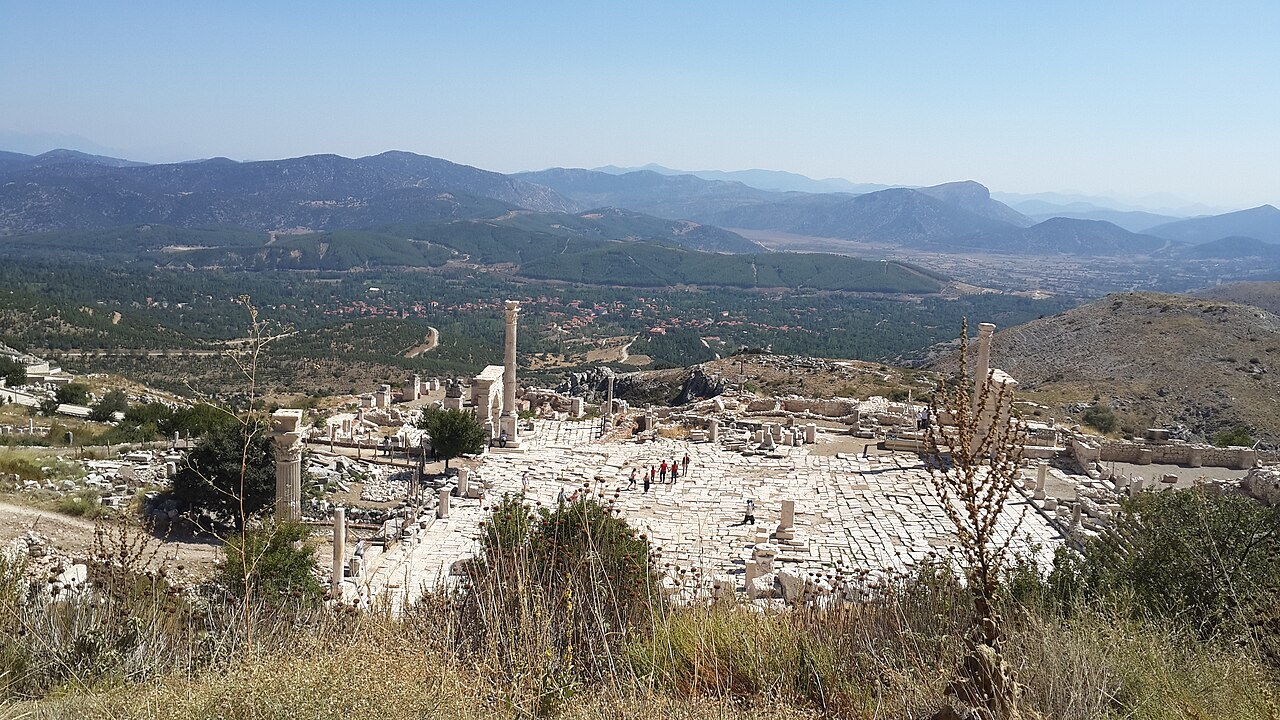 Sagalassos: Sagalassos Antik Kenti 01; archaeological view, find or museum context connected with the site, Roman period or local archaeological context.
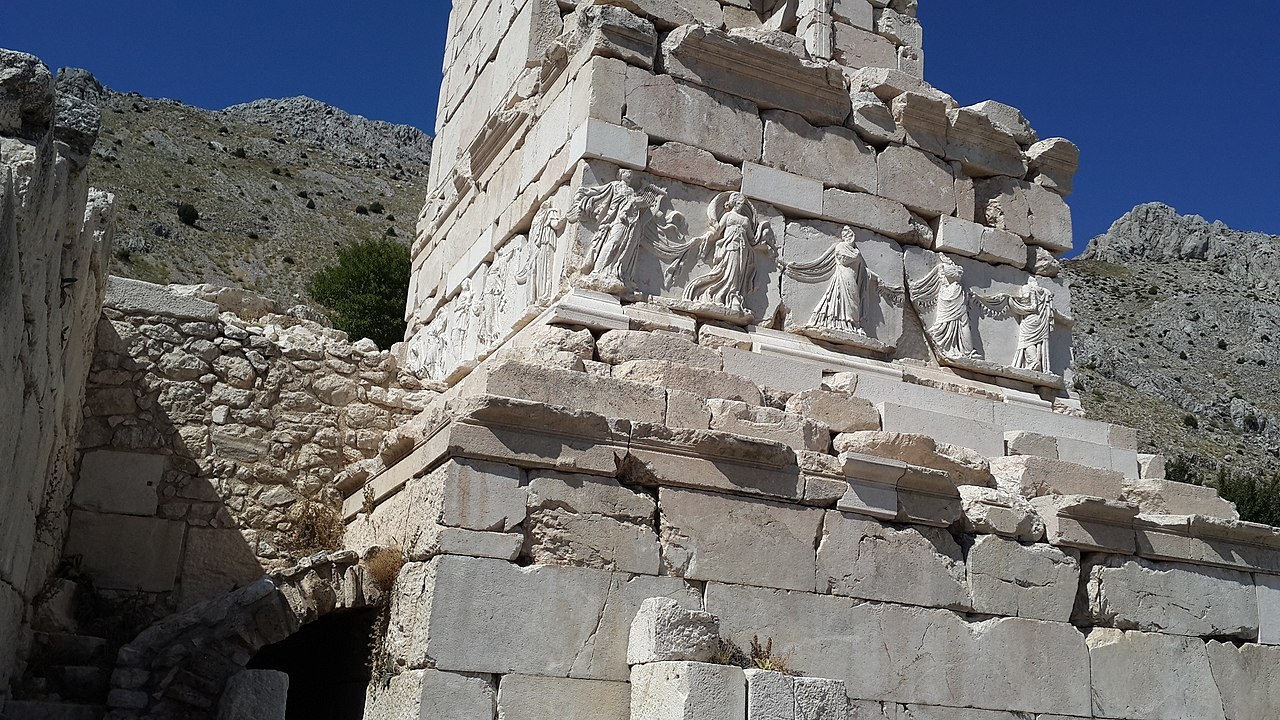 Sagalassos: Sagalassos Antik Kenti 02; archaeological view, find or museum context connected with the site, Roman period or local archaeological context.
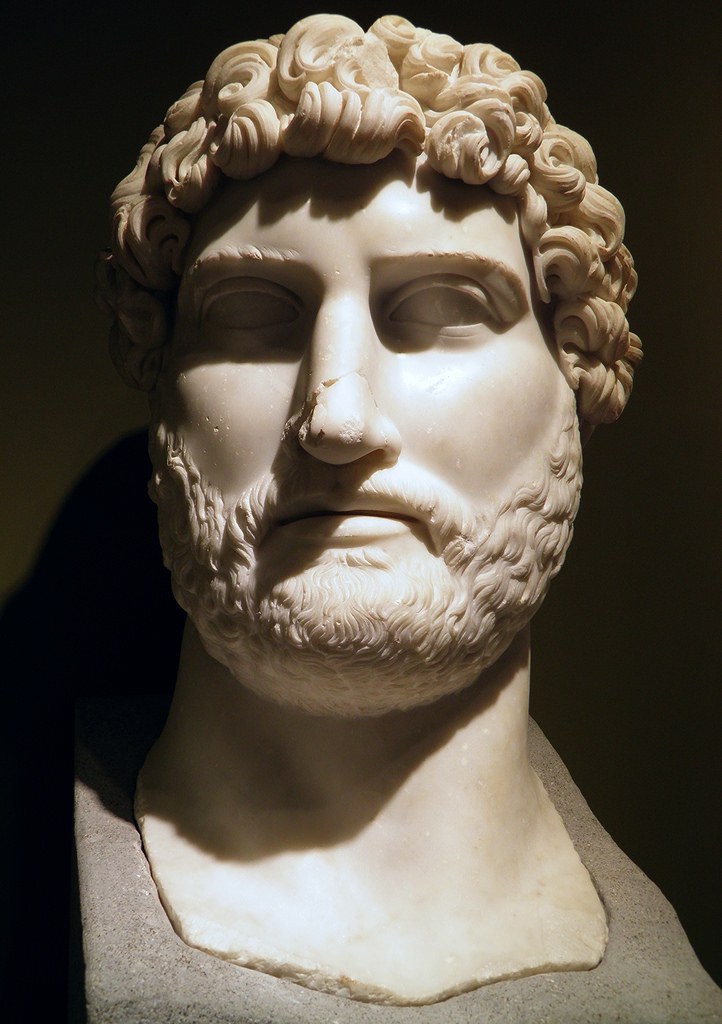 Sagalassos: Colossal Marble Head of Hadrian from Sagalassos; visual evidence for the site, Roman period, archaeological site or museum context.
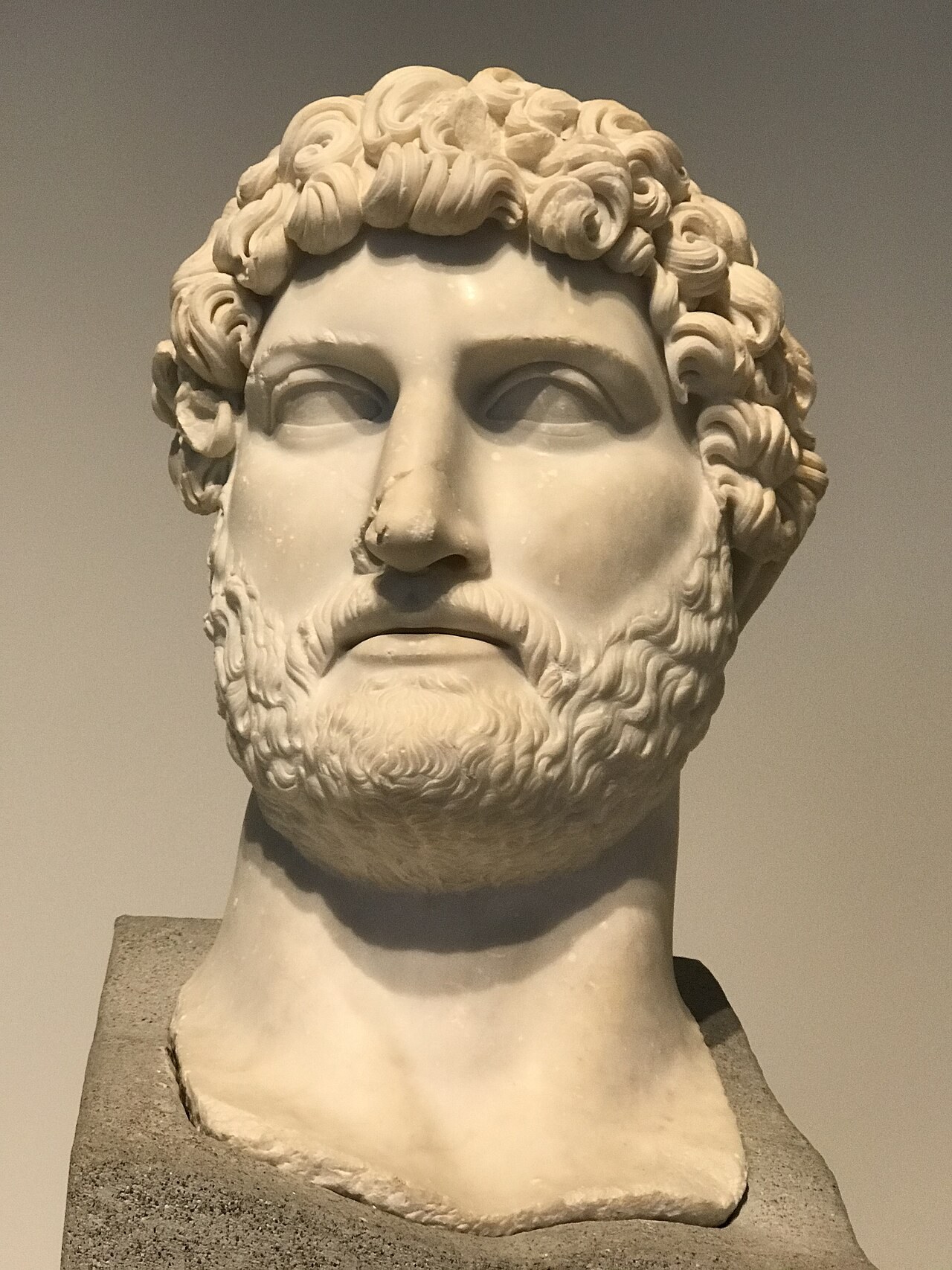 Sagalassos: Head of the statue of emperor Hadrian; visual evidence for the site, Roman period, archaeological site or museum context.
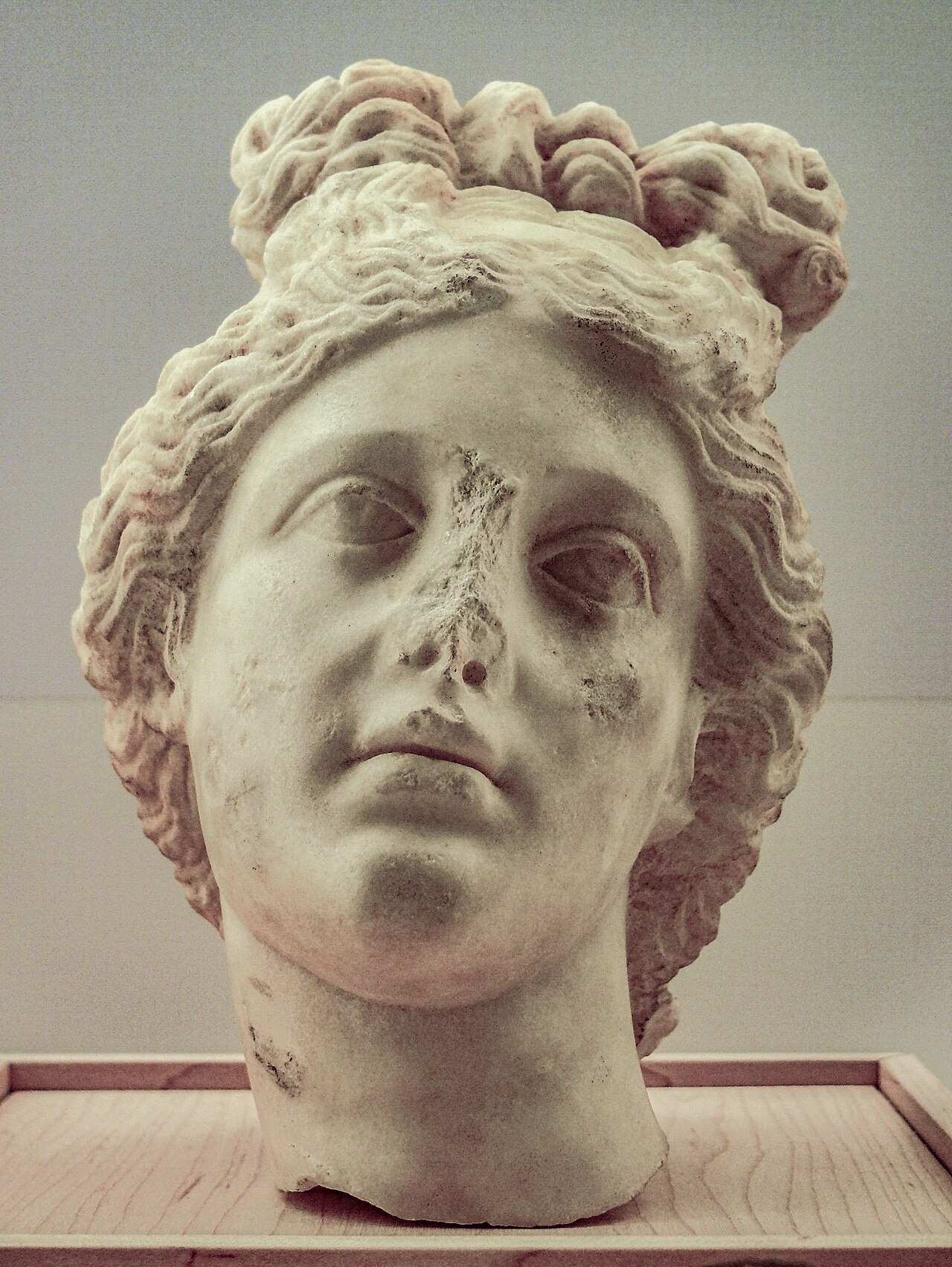 Sagalassos: Aphrodite Sagalassos Tongeren 01; visual evidence for the site, Roman period, archaeological site or museum context.
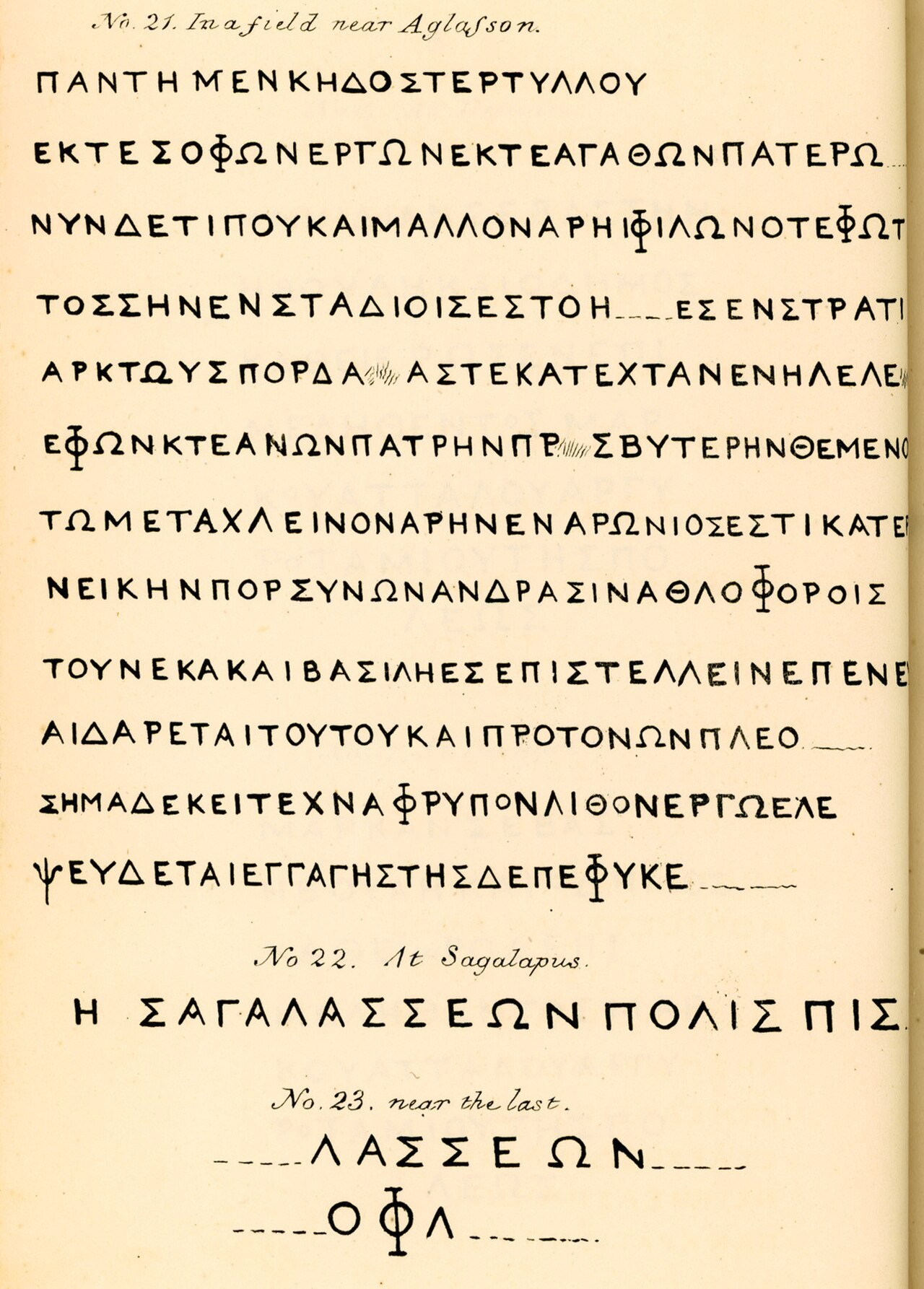 Sagalassos: Inscriptions from the area of ancient Sagalassos (today Ağlasun) - Arundell Francis Vyv...; material-culture object or museum find connected with the site, Roman period or local archaeological context.
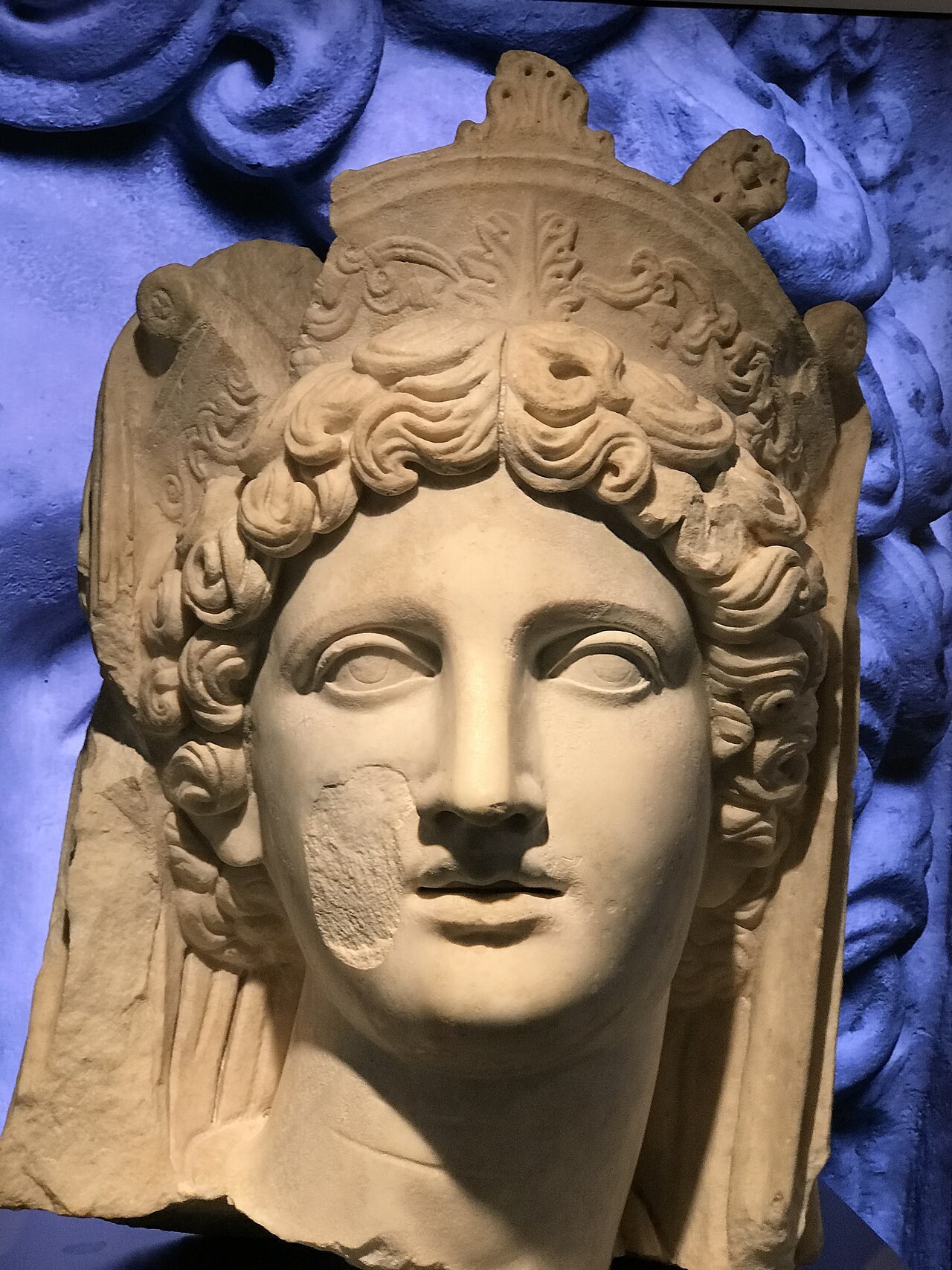 Sagalassos: Head of statue of Demeter; material-culture object or museum find connected with the site, Roman period or local archaeological context.
Interested in Ancient Rome beyond reading? Join Legio X Fretensis or explore our reenactment directions.


