Religion of the Celts and Germans
The religion of the Celts and Germans in antiquity was a body of cults, mythological ideas, and ritual practices of the peoples of northern and western Europe, known through archaeology, reports of ancient authors, and later written traditions. This article complements the ethnographic pages on the Celts and Germans by focusing specifically on religion.
It is important to remember that Celtic and Germanic societies left no single ancient theological corpus. Their religious history is reconstructed from fragments: sanctuaries, votive objects, inscriptions, Roman descriptions, and medieval Irish, Welsh, and Scandinavian texts. Many conclusions therefore remain probabilistic.
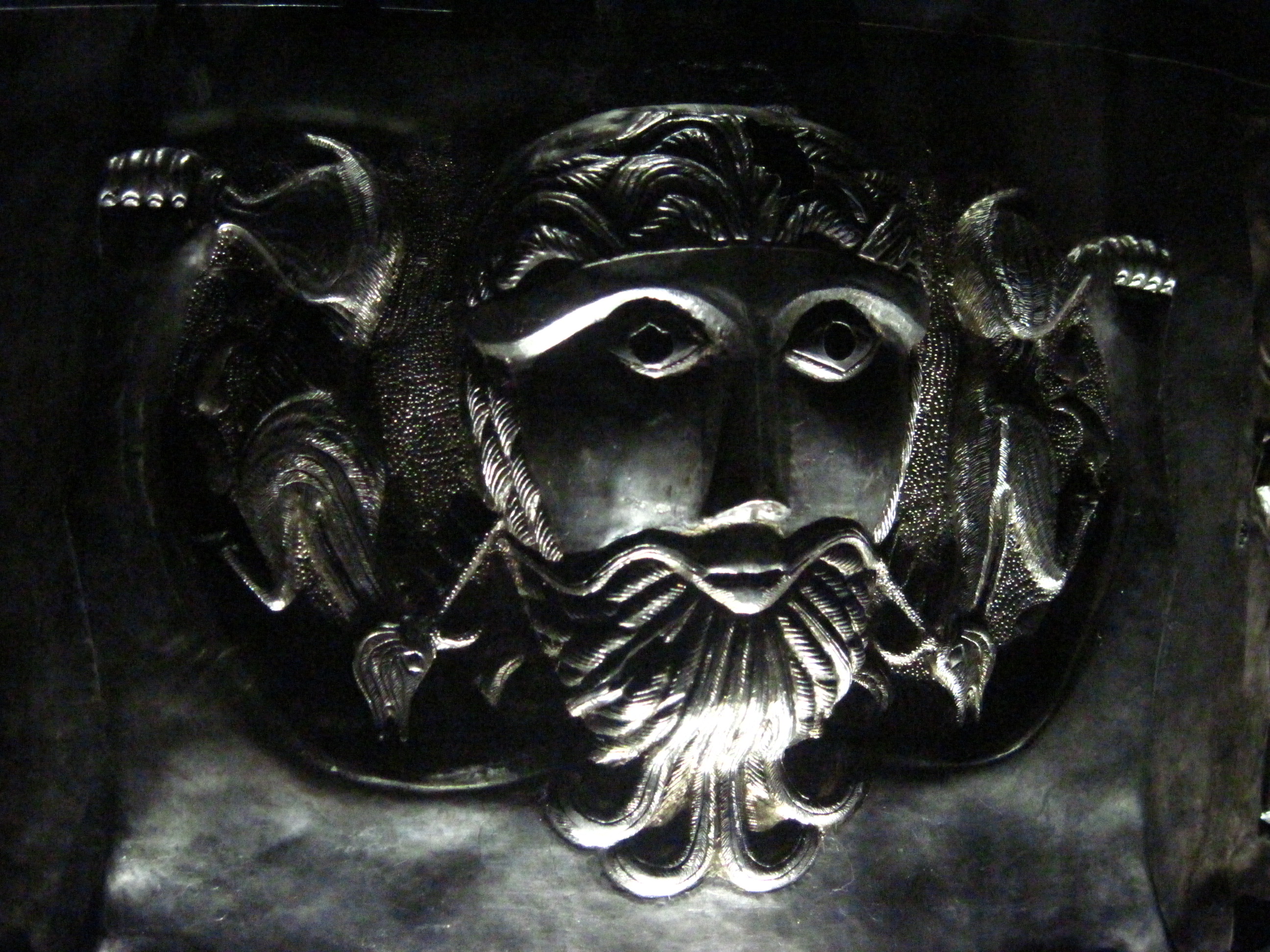 Detail of the Gundestrup Cauldron, c. 150-0 BC; National Museum of Denmark. Photo: Ktp72, Wikimedia Commons, CC BY-SA 3.0.
The Problem of Sources
Archaeology gives the most direct but not always easily readable evidence: sacred places, offering pits, weapons in bogs, images of gods, coins, altars, and burial complexes. These reveal ritual actions, but do not always explain the myths and meanings behind them.
Ancient authors, including Caesar and Tacitus, wrote about Celts and Germans from an external perspective. Their information is important, but it reflects Roman interests, political rhetoric, and the habit of explaining foreign gods through the Roman pantheon. Later insular and Scandinavian texts were written down in the Christian period and must be used with caution.
Celtic Deities and Druids
The Celtic religious world was local and diverse. Names are known of gods and goddesses connected with war, craft, fertility, healing, waters, horses, roads, and tribal protection. In the Gallo-Roman period many received Latin inscriptions and images alongside Roman gods.
According to ancient testimony, druids were connected with ritual, education, law, memory, and authority within the community. They should not be reduced simply to priests: they could combine the roles of teachers, judges, keepers of tradition, and mediators between people and sacred order.
Sanctuaries, Sacrifices, and Votive Objects
Celtic sanctuaries could be located in groves, near springs and rivers, and in specially organized cult places. Water, earth, and spatial boundaries played an important role. Archaeological finds reveal the practice of gifts to the gods: weapons, ornaments, coins, vessels, figurines, and parts of military equipment could be sacrificed or left as vows.
Ancient authors also report human sacrifice, but such accounts require cautious evaluation: some information may reflect real practices, while some may reflect Roman ideas about barbarian cruelty. The safest approach is to compare written testimony with archaeological context.
Germanic Cults and Sacred Groves
Germanic religion of the ancient period is less well known than later Scandinavian mythology. For the early period, Roman authors, northern European archaeology, and traces of cult in names, burials, and military offerings are important. Tacitus especially emphasized sacred groves and the worship of gods without temple images familiar to Romans.
A sacred grove could be a place of assembly, sacrifice, oath, and contact with divine power. In Germanic contexts sacrality was often connected with lineage, chieftainship, military fortune, victory, and protection of the community.
Warrior Sacrality
Among both Celts and Germans, war could have a religious dimension. Weapons, trophies, oaths, battle signs, songs, leaders, and ancestral memory created a sacred language of war. Victory could be understood as a gift of the gods, and booty as something to be dedicated to supernatural powers.
This aspect is especially important for contacts with Rome. Romans often described their northern neighbors through warlikeness, fury, and unusual rites, but behind these descriptions stood real forms of collective identity and ritual behavior.
Roman Interpretation of Foreign Gods
Romans often used interpretatio Romana: explaining foreign gods through the names and functions of Roman deities. A Celtic god could be called Mercury, Mars, or Apollo if he reminded Romans of a patron of trade, war, or healing. This helped incorporate local cults into the religious language of the Empire.
But such identifications do not mean full identity. Local deities retained their own names, sanctuaries, epithets, and connections with specific communities. Gallo-Roman or Romano-Germanic religion was therefore not a simple replacement of older cult by Roman cult, but a mixed system.
Contacts with Rome and Christianization
Contacts between northern peoples and the Roman Empire changed the religious environment. In Gaul and on the Rhine-Danube frontier, mixed cults, Latin inscriptions to local gods, military dedications, and new forms of public religion appeared. Political and military contacts, including the Gallic invasion and later barbarian invasion, were accompanied by cultural exchange.
Late Christianization was uneven. In some regions it was connected with Roman urban and church structures; in others, with the conversion of rulers, missions, diplomacy, and the incorporation of barbarian kingdoms into the post-Roman world. These processes became part of the broader transformation connected with the Fall of the Western Roman Empire.
Related Topics
- Ancient Celts
- Germans
- Gallic invasion
- Barbarian invasion
- Fall of the Western Roman Empire
- Roman Empire
- Religion in Antiquity
Literature and sources
- Caesar. Commentarii de Bello Gallico.
- Tacitus. Germania.
- Green M. The Gods of the Celts. Sutton Publishing, 1986.
- Hutton R. The Pagan Religions of the Ancient British Isles. Blackwell, 1991.
- Simek R. Dictionary of Northern Mythology. D. S. Brewer, 1993.
- Image: Detail of Gundestrup Cauldron.jpg. Wikimedia Commons; photo by Ktp72; CC BY-SA 3.0.
Interested in Ancient Rome beyond reading? Join Legio X Fretensis or explore our reenactment directions.


