Timgad / Thamugadi
Timgad, Roman Thamugadi, was a colony in Numidia and one of the clearest examples of regular Roman urban planning in North Africa. Its archaeological importance lies in the street grid, forum, theatre, library, baths, arch, houses and later Christian complexes.
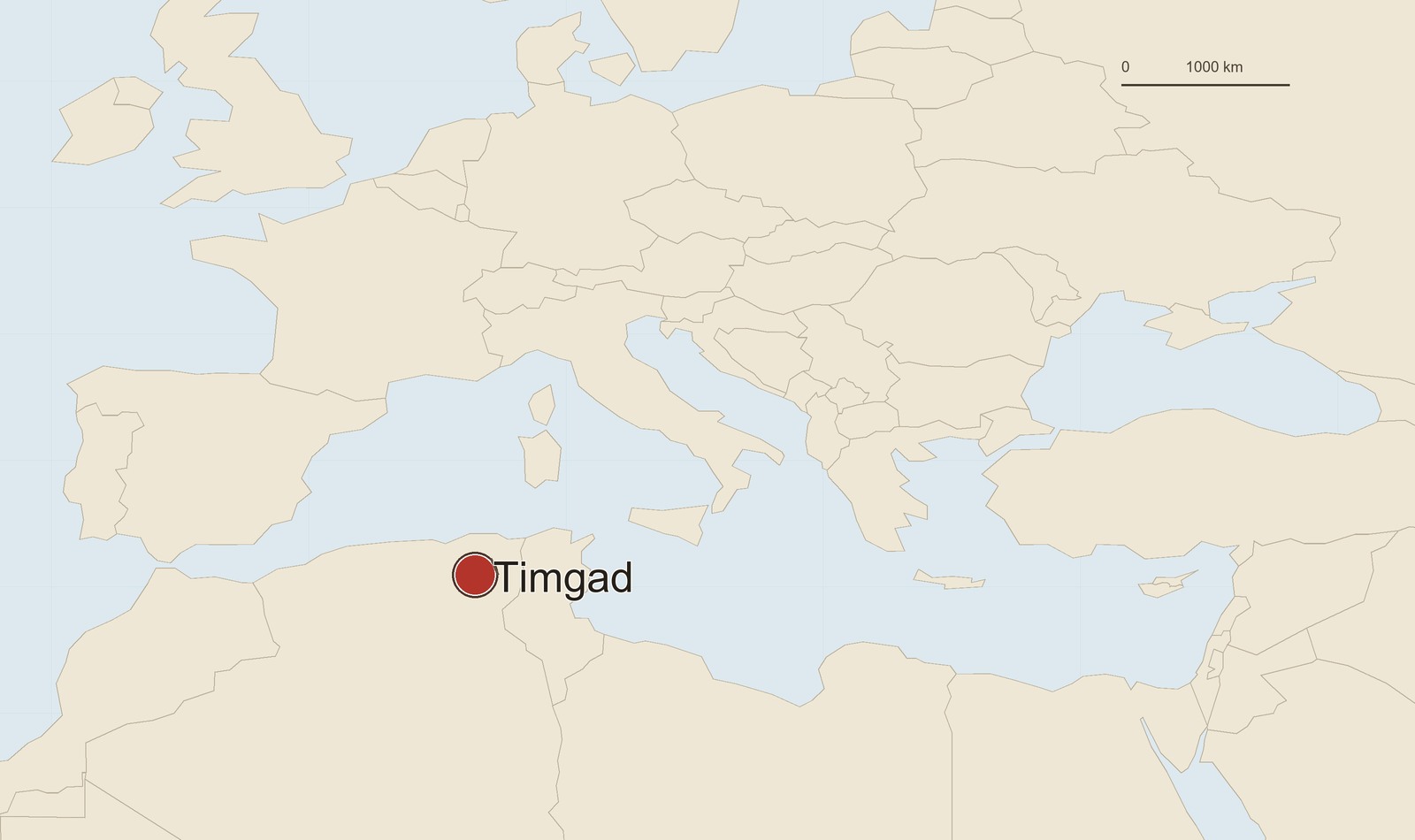 Location map: Timgad / Thamugadi. The marker shows the ancient site or main archaeological complex.
Archaeological complex
The colony was founded under Trajan and originally had a clear rectangular plan. Decumanus, cardo, forum, market, theatre, baths and urban quarters show military and colonial logic becoming a civic environment.
Timgad is famous for its regular colonial plan, but the excavations show more than a street grid: forum, library, arch, baths, houses, market and later Christian zones reveal the city's development after foundation. Photographs help separate the ideal scheme from real urban growth.
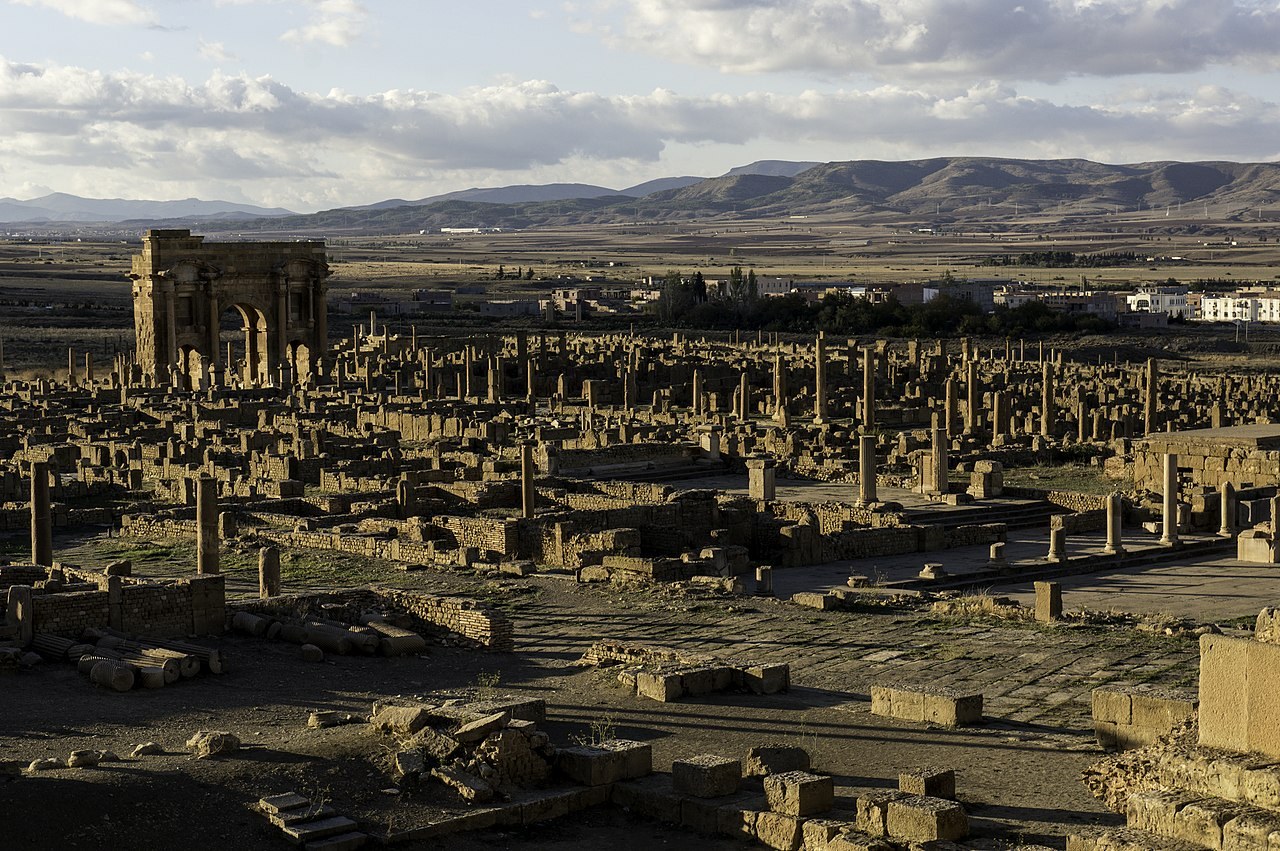 Timgad / Thamugadi: Timgad; general view or excavated sector, Roman period, archaeological site or museum context.
Finds and material setting
Finds from Timgad include inscriptions, architectural elements, mosaics, pottery, coins, everyday objects and funerary material. The plan itself is especially useful for reconstruction: distances between streets, public buildings and houses allow the scale of urban life to be tested.
- regular street grid, forum, library, arch, baths and residential quarters;
- inscriptions, sculpture, mosaics, coins and pottery;
- evidence for a veterans' colony and municipal life;
- Late Antique Christian and defensive zones.
Interpretation and limits
Timgad is often presented as an ideal Roman city, but its history is more complex: expansion beyond the original grid, late rebuilding and Christian buildings changed the initial scheme. The regular plan is important, but it should not turn the city into a static diagram.
Related topics
Literature and sources
- Pierre Gros. Roman Architecture. Paris, 1996.
- UNESCO World Heritage: Timgad.
- Studies on Roman urbanism in Numidia.


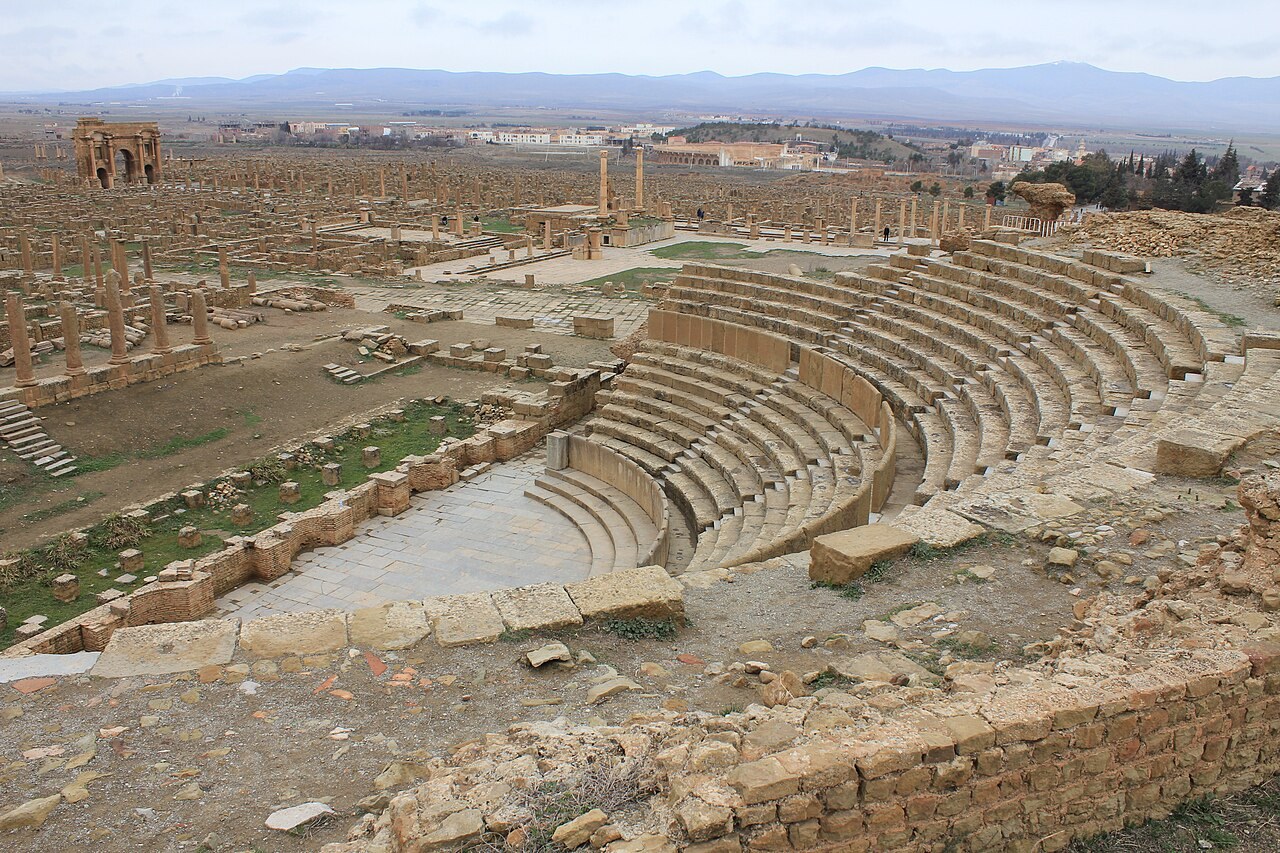 Timgad / Thamugadi: Timgad, Algeria - panoramio (30); visual evidence for the site, Roman period, archaeological site or museum context.
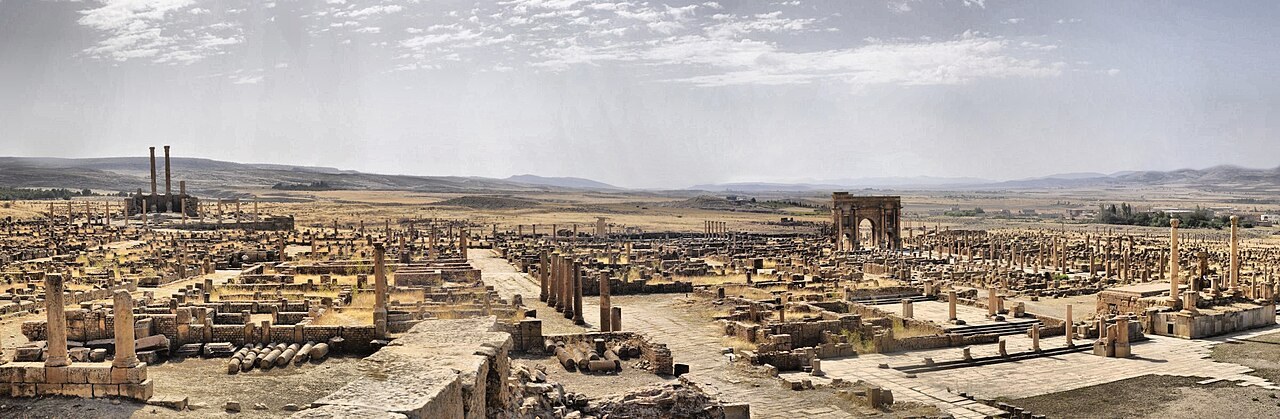 Timgad / Thamugadi: Timgad Ruins Panorama; visual evidence for the site, Roman period, archaeological site or museum context.
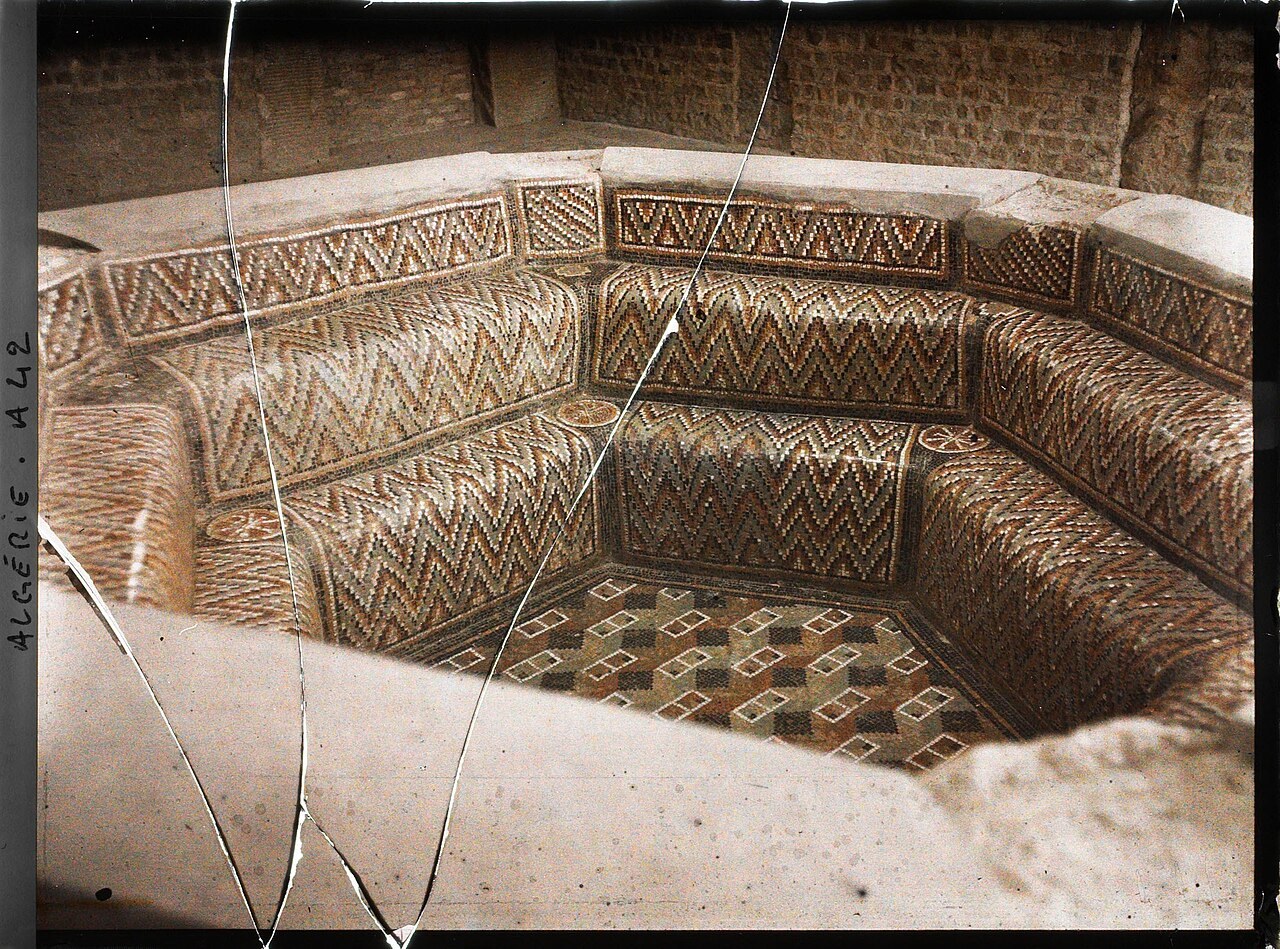 Timgad / Thamugadi: La cuve du Baptistère; visual evidence for the site, Roman period, archaeological site or museum context.
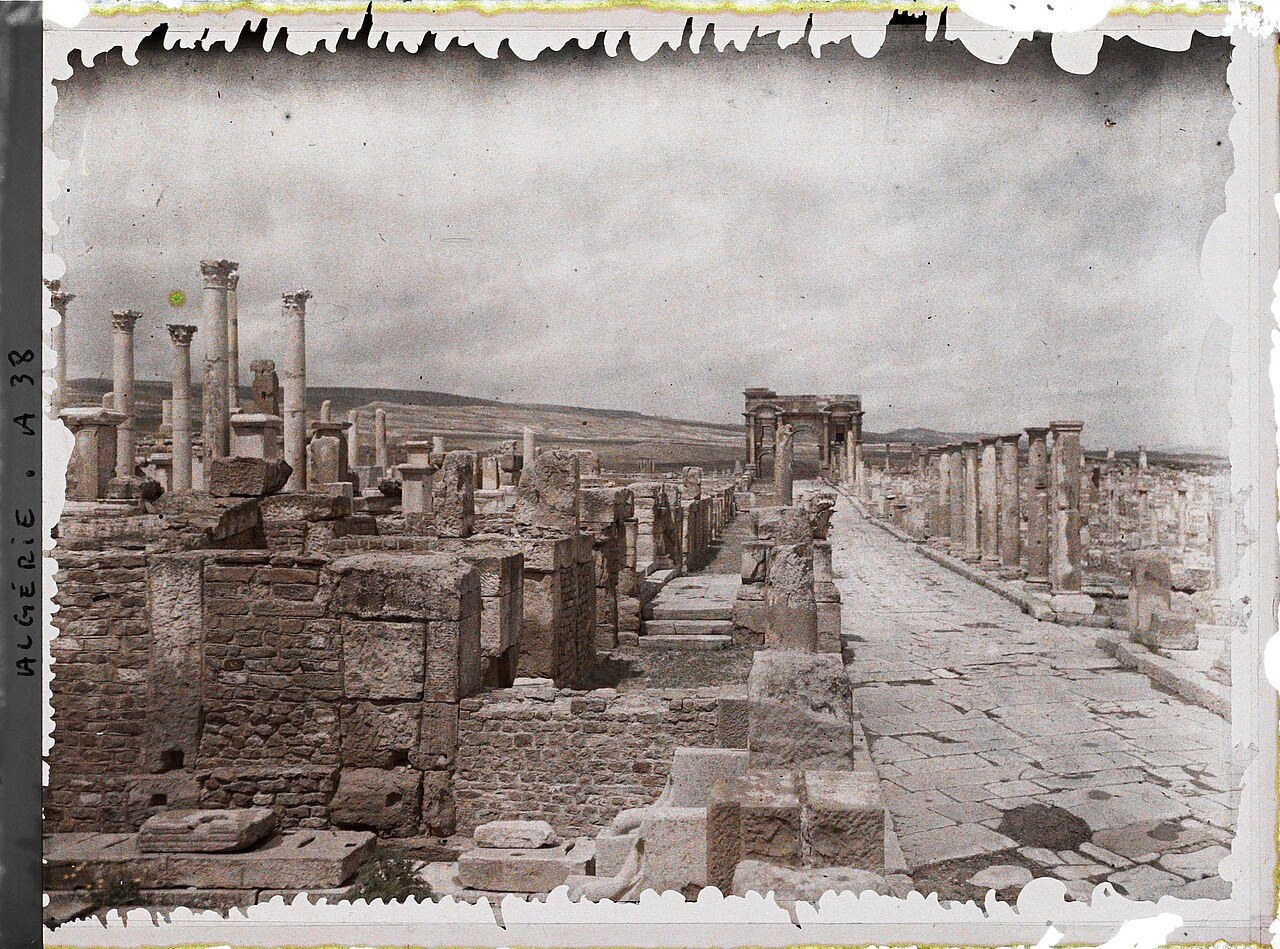 Timgad / Thamugadi: Les ruines du forum, l'arc dit de Trajan et le Decumanus maximus - Timgad, Algérie; visual evidence for the site, Roman period, archaeological site or museum context.
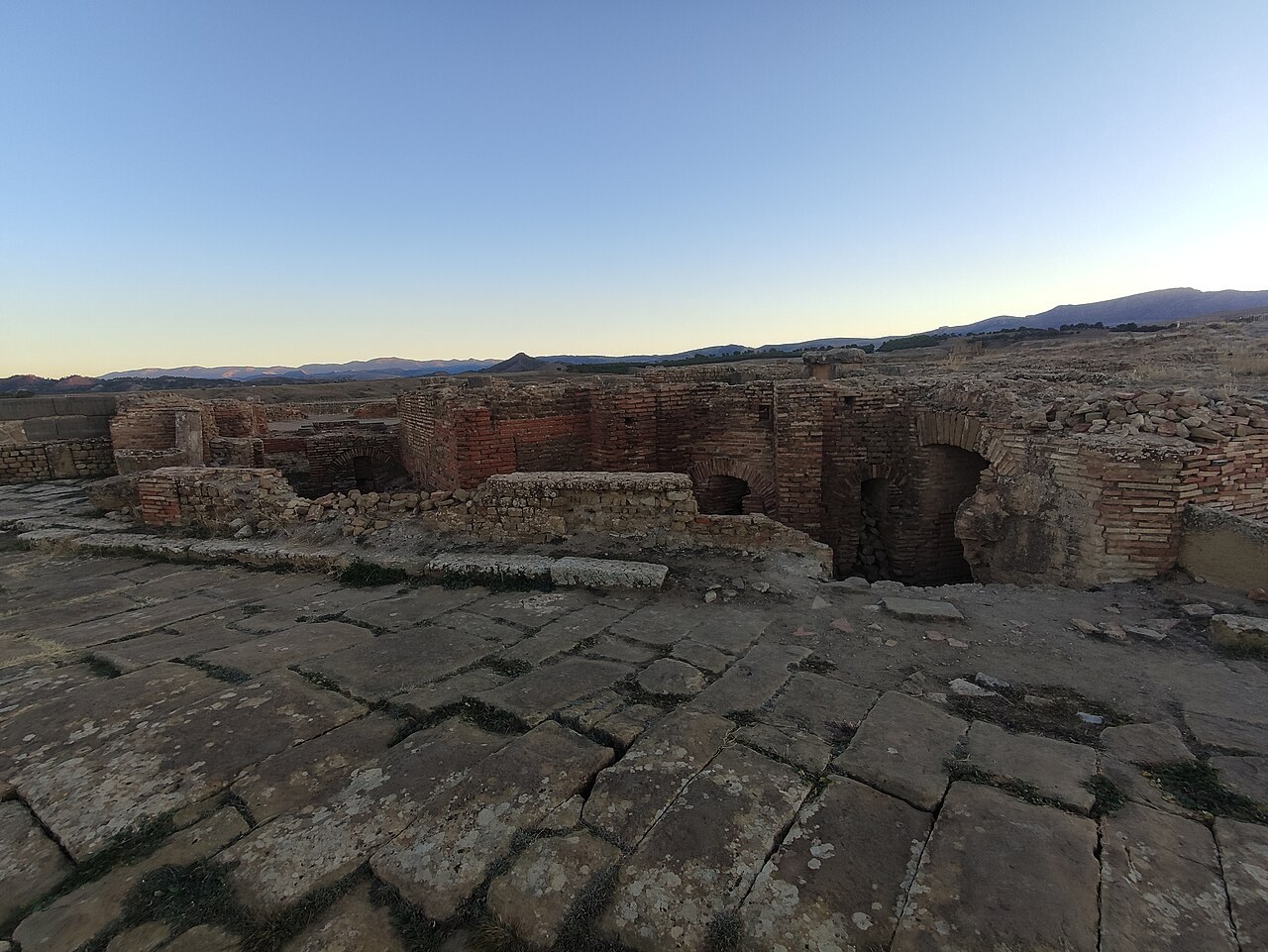 Timgad / Thamugadi: The Ruins of Timgad (Thamugadi) – A Roman Colonial City in Algeria 34; visual evidence for the site, Roman period, archaeological site or museum context.
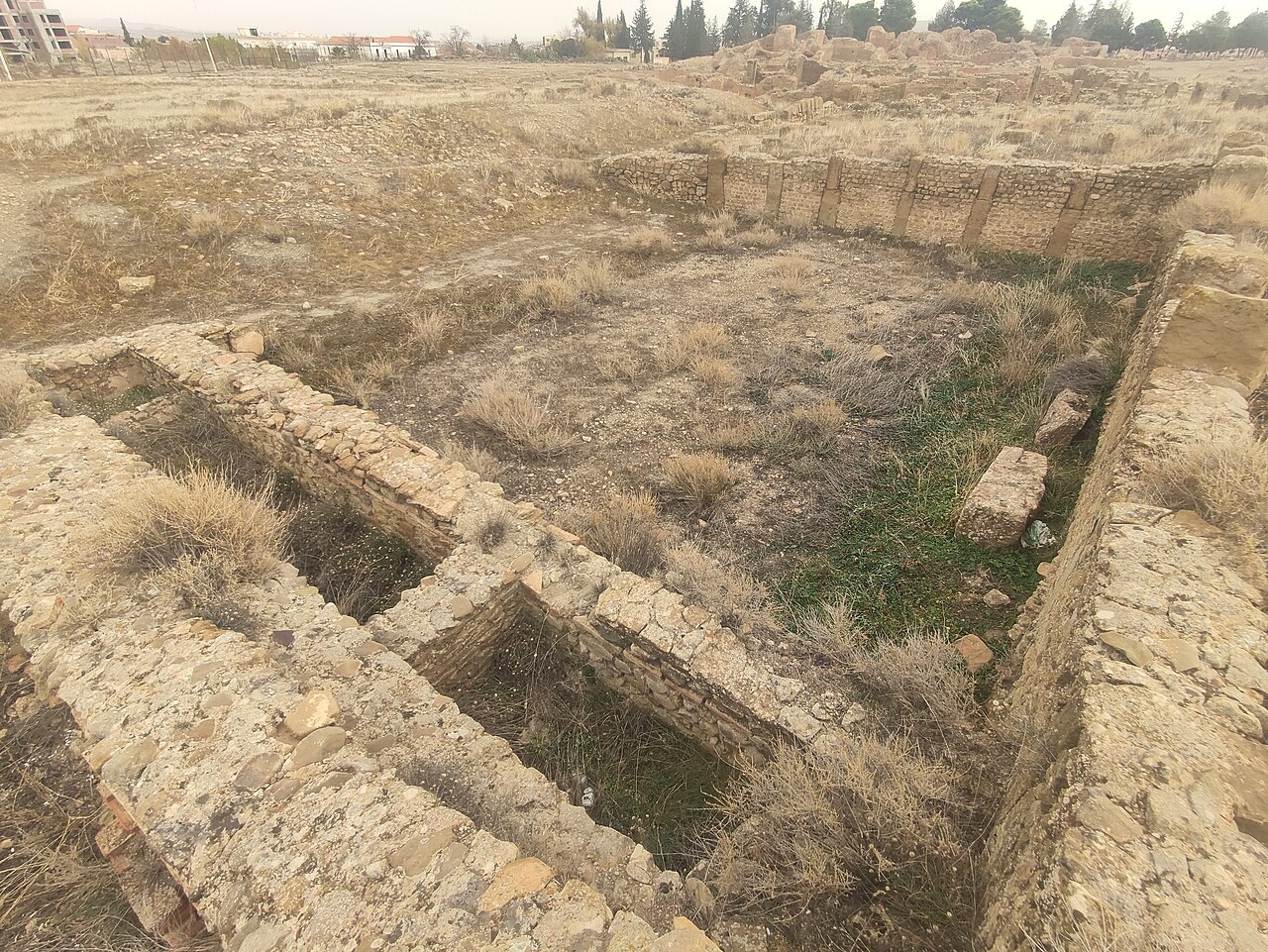 Timgad / Thamugadi: Timgad- A Roman Colonial City and UNESCO World Heritage Site in the Aurès Mountains 218; archaeological view, find or museum context connected with the site, Roman period or local archaeological context.
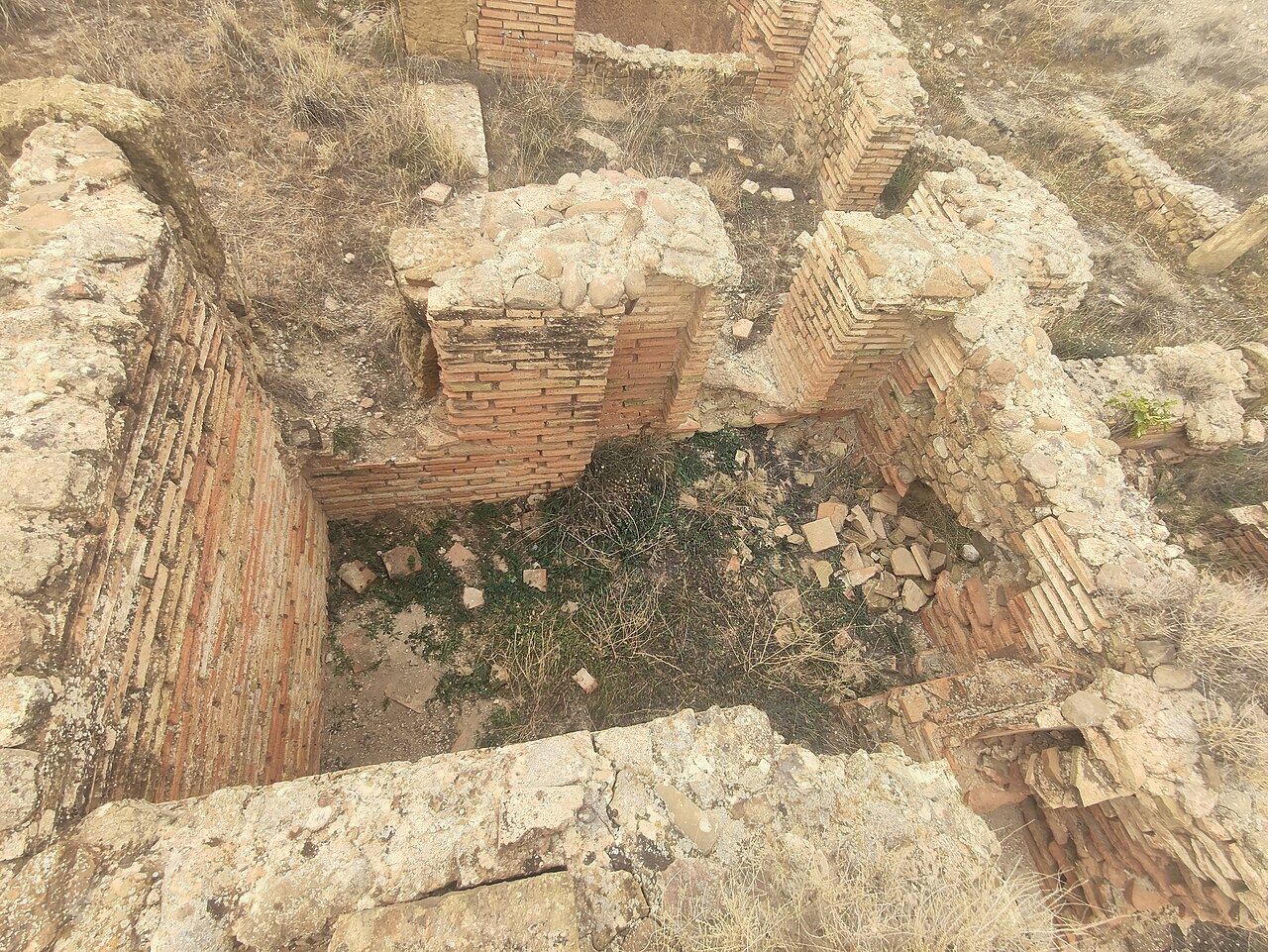 Timgad / Thamugadi: Timgad- A Roman Colonial City and UNESCO World Heritage Site in the Aurès Mountains 219; archaeological view, find or museum context connected with the site, Roman period or local archaeological context.
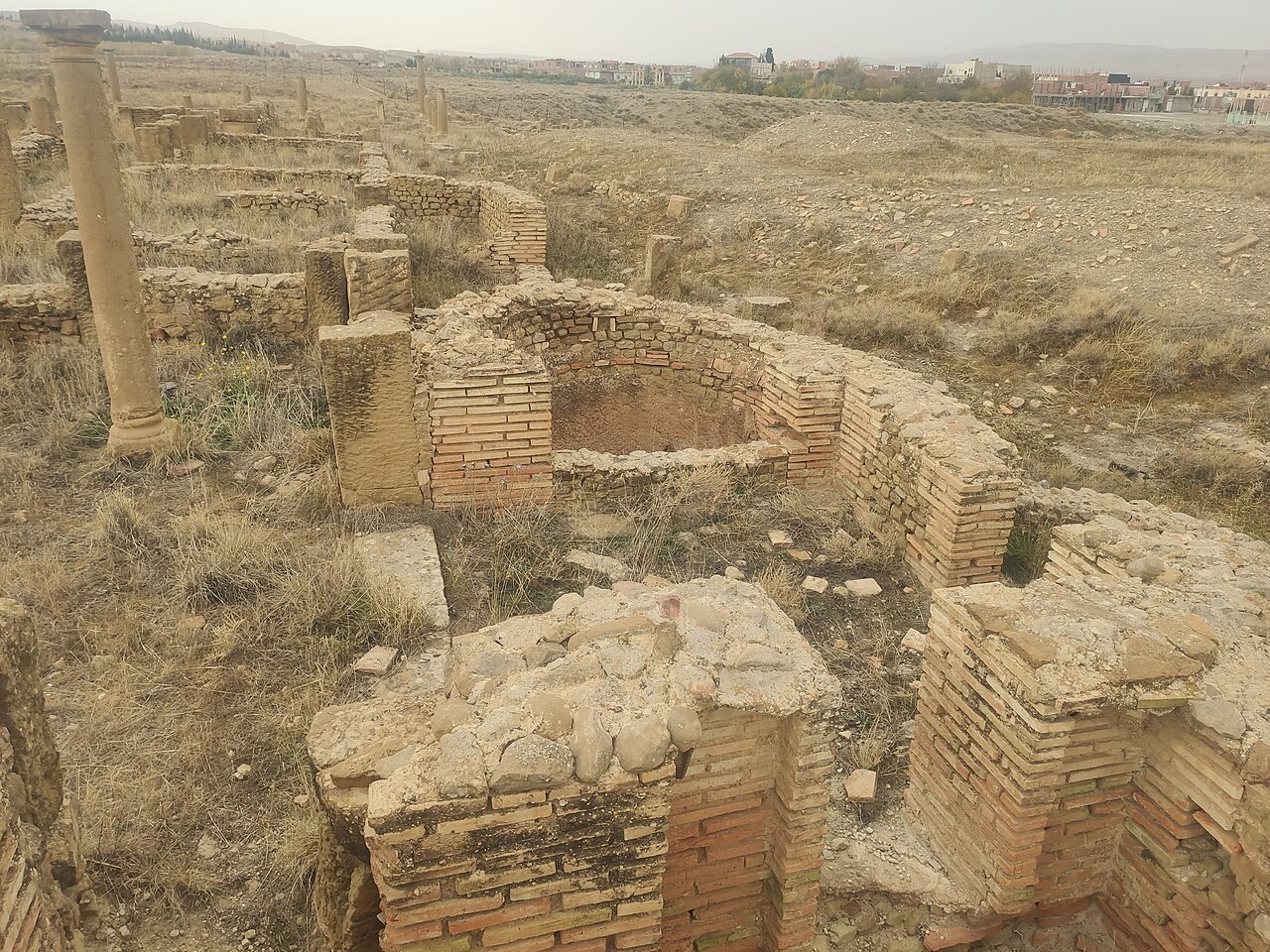 Timgad / Thamugadi: Timgad- A Roman Colonial City and UNESCO World Heritage Site in the Aurès Mountains 220; archaeological view, find or museum context connected with the site, Roman period or local archaeological context.
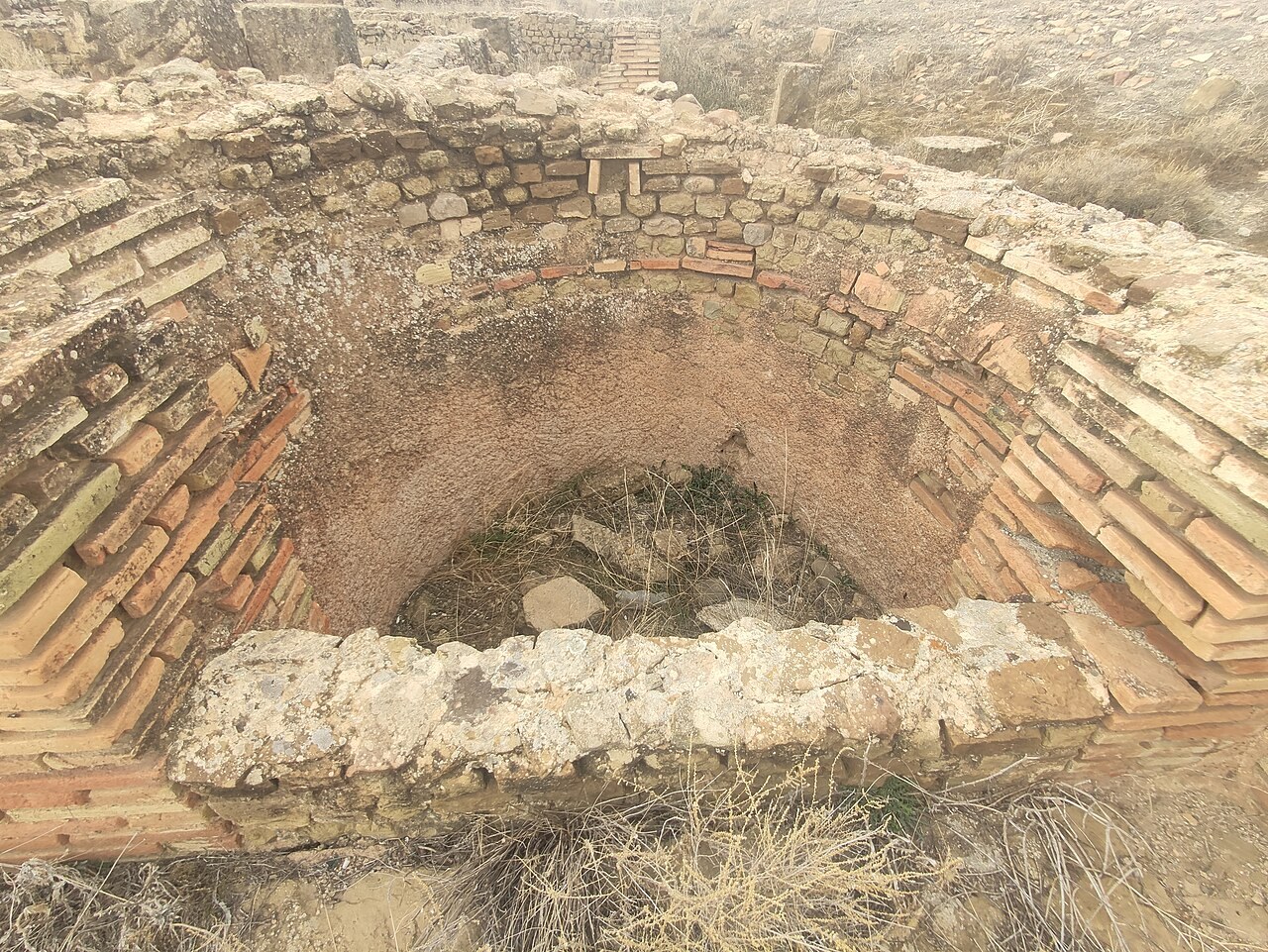 Timgad / Thamugadi: Timgad- A Roman Colonial City and UNESCO World Heritage Site in the Aurès Mountains 221; archaeological view, find or museum context connected with the site, Roman period or local archaeological context.
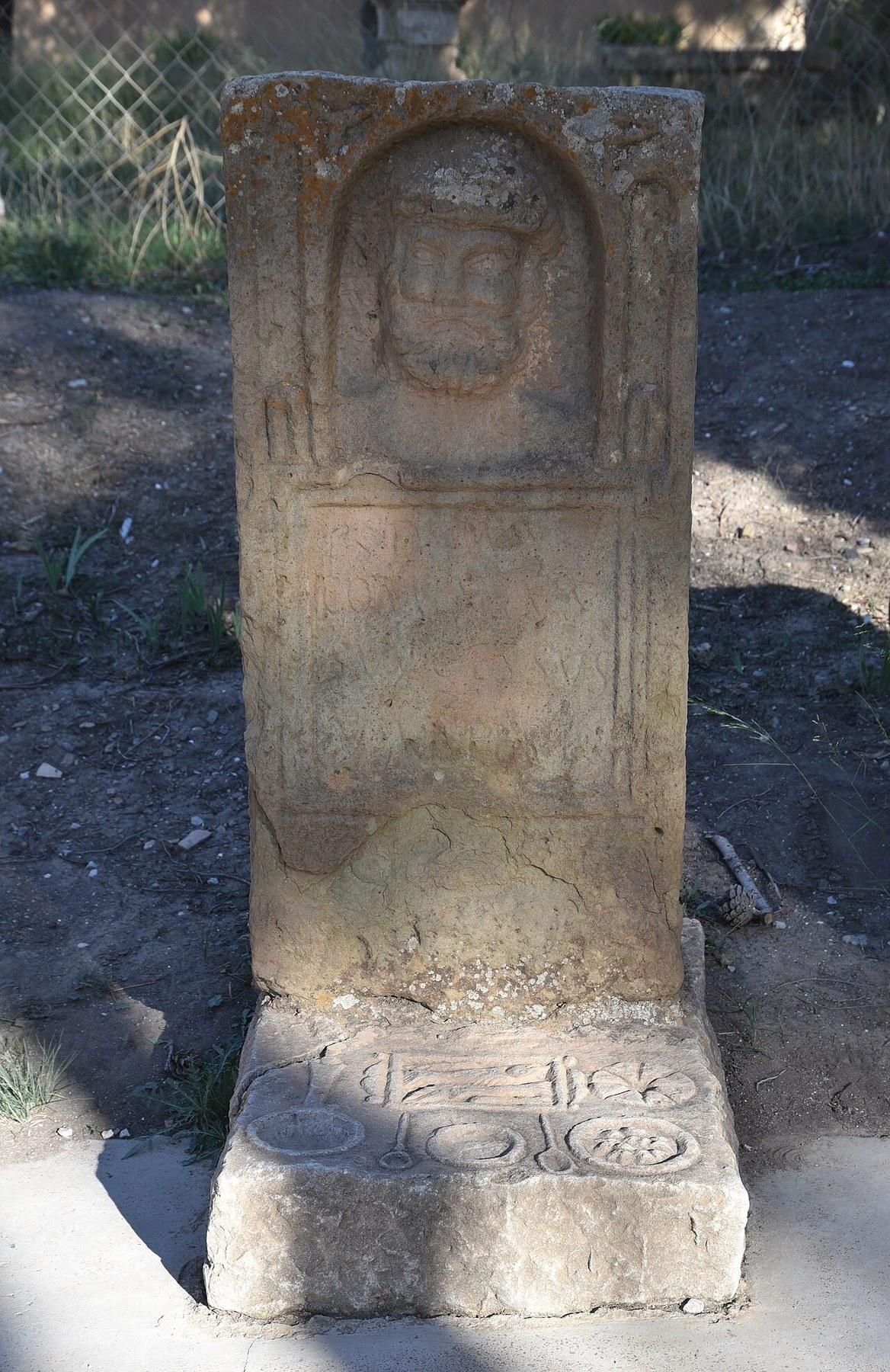 Timgad / Thamugadi: Stele dedicated to Saturnus with an offering table, Musée de Timgad, Algeria; visual evidence for the site, Roman period, archaeological site or museum context.
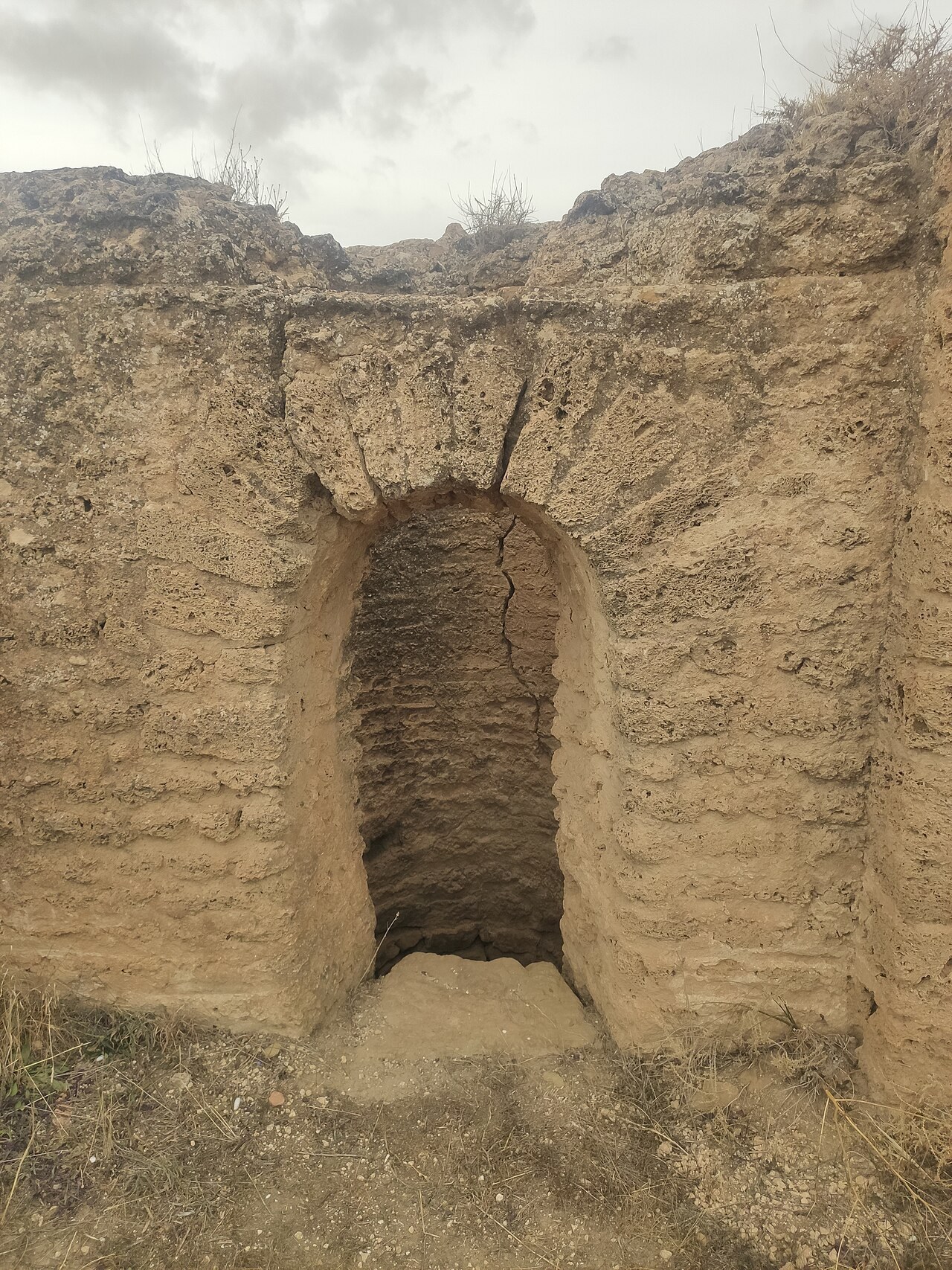 Timgad / Thamugadi: The Ruins of Timgad (Thamugadi) – A Roman Colonial City in Algeria 18; visual evidence for the site, Roman period, archaeological site or museum context.
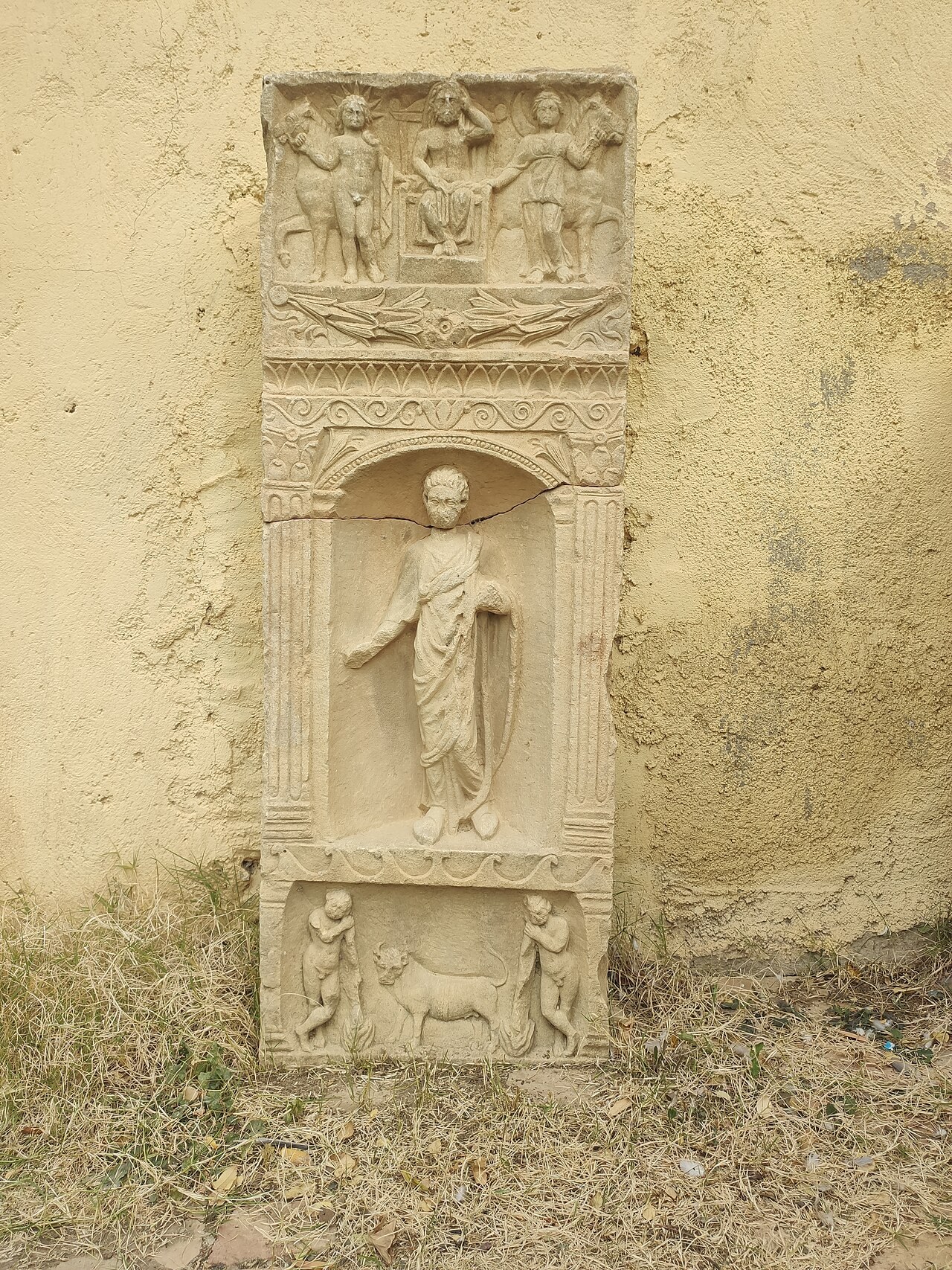 Timgad / Thamugadi: Timgad- A Roman Colonial City and UNESCO World Heritage Site in the Aurès Mountains 2; archaeological view, find or museum context connected with the site, Roman period or local archaeological context.
Interested in Ancient Rome beyond reading? Join Legio X Fretensis or explore our reenactment directions.


