Recreating Roman Footwear from Mainz
Reconstructing Roman footwear starts not with an attractive shape, but with a specific archaeological source. In this work the starting point is the Mainz material: footwear and leather elements from Roman Mogontiacum provide a clear basis for the upper, fit, sole and overall construction logic.
The practical value lies not only in the finished pair, but in the sequence of decisions: how a find becomes a pattern, where parallels are needed, how leather is chosen, how fit is tested and which weak points appear only after wear.
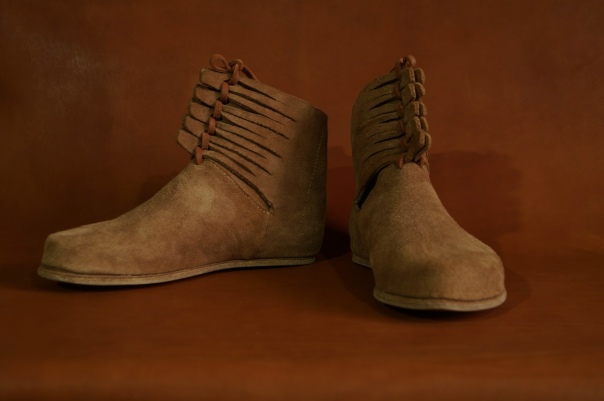 Finished pair of calcei reconstructed from a Mainz model.
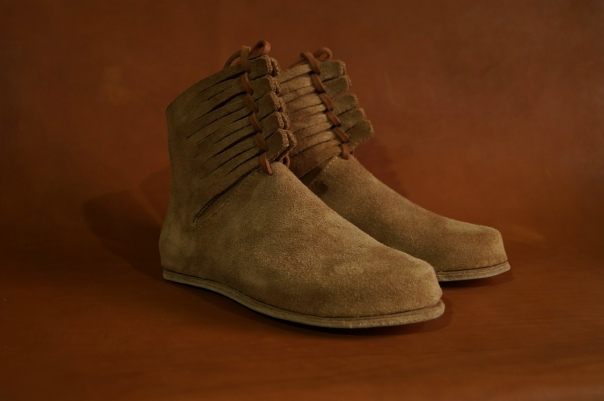 Finished pair: side view and ankle fit.
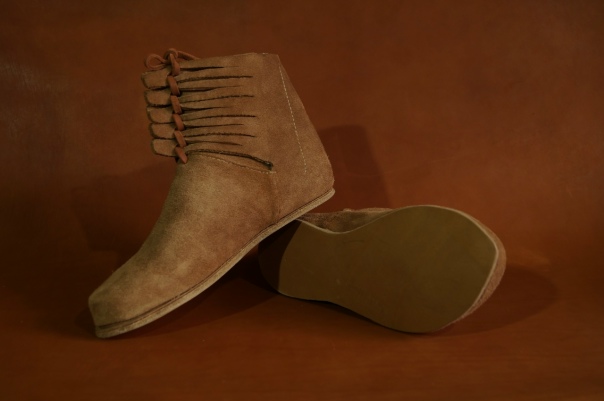 Sole and profile of the finished calceus.
Source and Footwear Type
Mainz is useful because it is not an abstract reference to "Roman footwear", but a specific urban and military environment on the Rhine. When choosing a prototype, the preserved shape has to be separated from lost details: cuts, edges, seams and the sole outline are clearer than leather thickness, the fastening of some straps or the original stiffness of the material.
The prototype therefore cannot simply be enlarged to fit a modern foot. Secure features are recorded first, close Roman footwear parallels are then selected, and only after that is a working pattern made. This prevents two mistakes: making comfortable modern shoes with an ancient outline, or copying a museum fragment mechanically without adapting it to a living foot.
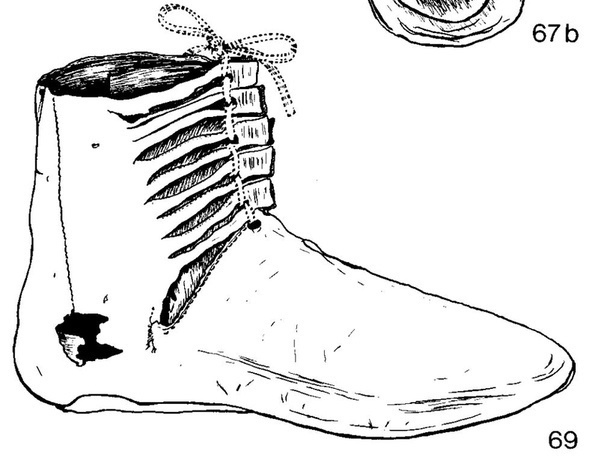 Drawing of the Mainz model used as a guide for the form.
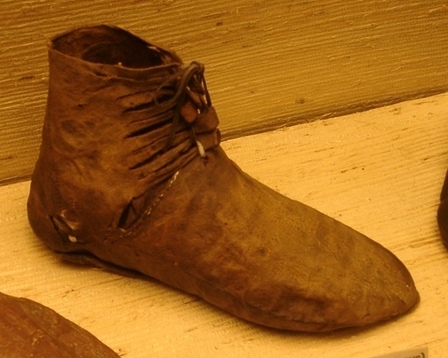 Finished calceus: lacing, toe and ankle shape.
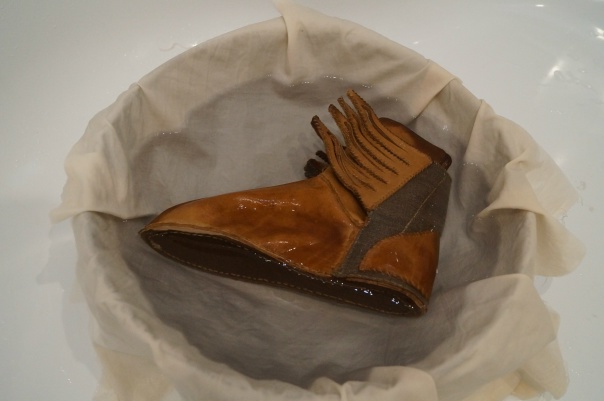 Finished pair after leather finishing.
Measurements and Pattern
Measurements begin with the foot outline, instep, forefoot width and heel position. For leather footwear, volume matters as much as length: a loose pattern soon shifts, while a tight one produces creases and rubbing around seams and cuts.
A draft pattern is necessary even when the source is good. It is best tested first in paper or inexpensive material, then transferred to leather with allowance for forming and trimming. At this stage the maker decides where the leather may stretch, where it should remain firm, and where cuts and ties will help the shoe fit the foot.
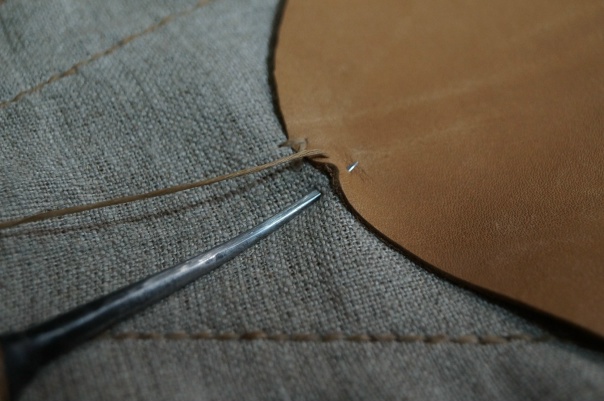 Marking a leather part before stitching.
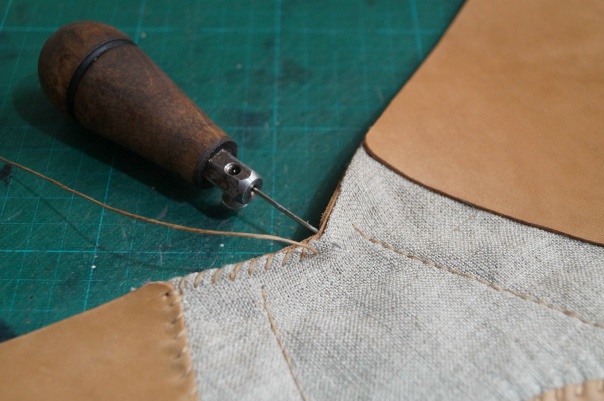 Punching holes along the join line.
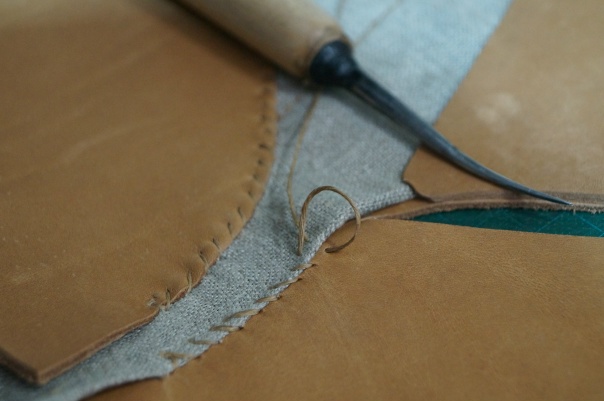 Stitching the edge of an upper part.
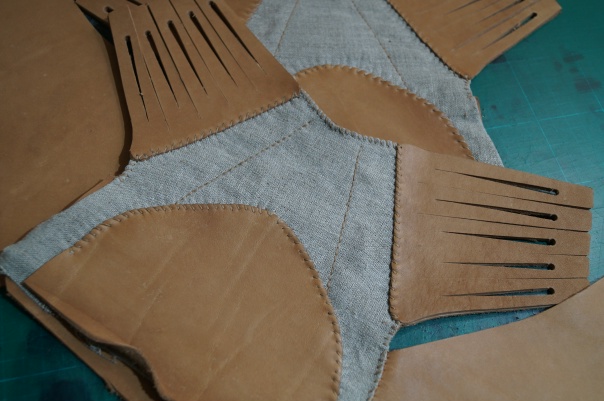 Upper parts laid out with lace cuts.
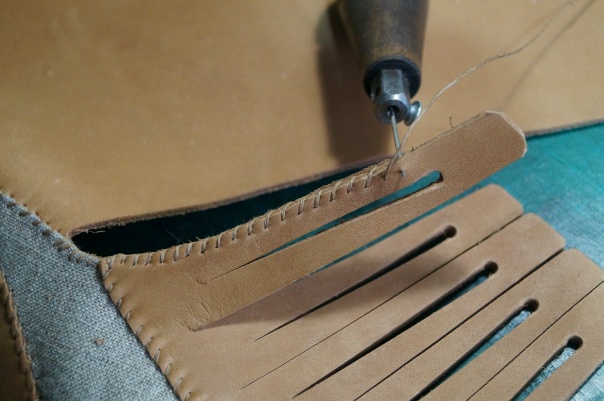 Cuts in the upper before final assembly.
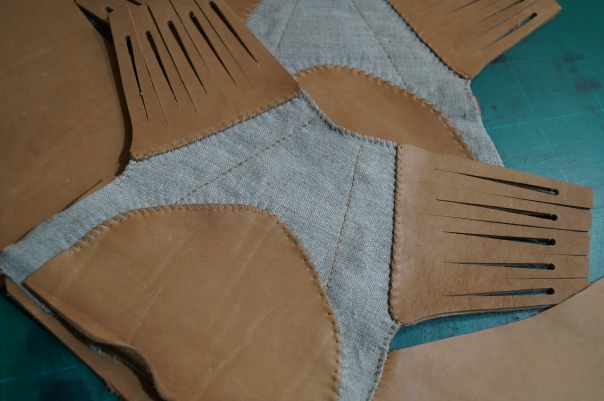 Cut upper parts before stitching.
Leather, Sole and Assembly
The upper needs leather that holds shape without turning the shoe into a rigid case. Leather that is too soft stretches quickly; leather that is too thick fits poorly and forms coarse folds. The sole should be denser than the upper, and the maker should decide early whether it will be single, double or reinforced with an extra layer.
Assembly requires repeated fitting. Wet forming helps seat the leather around the instep and heel, but after drying the material may behave differently. If hobnails are used, their pattern should match the chosen footwear type and the function of the sole, rather than act as decoration.
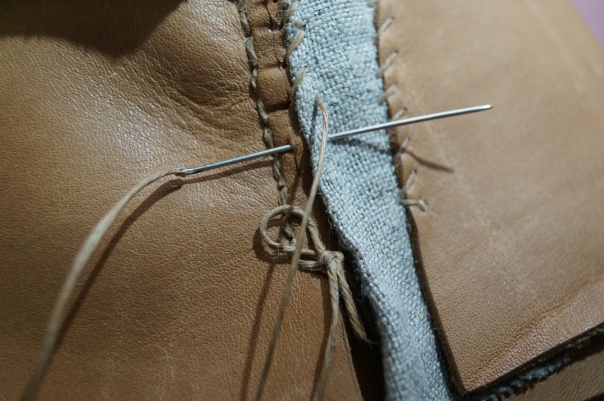 Joining upper parts and checking lace tension.
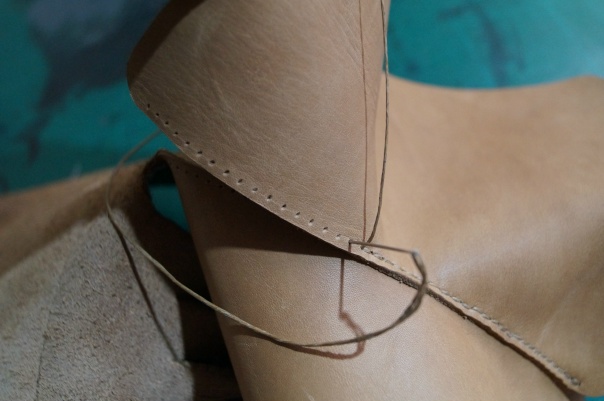 Forming the instep and side of the upper.
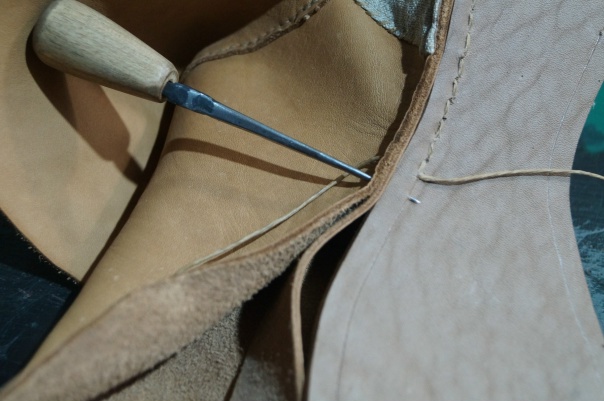 Working on the inner join and fit of the upper.
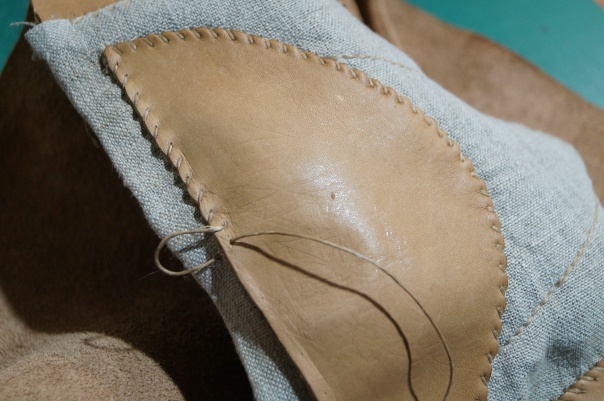 Stitching the toe area and checking the edge.
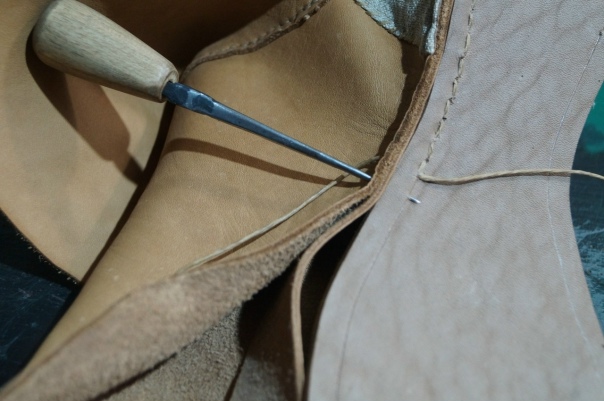 Assembly of the inner upper and seam check.
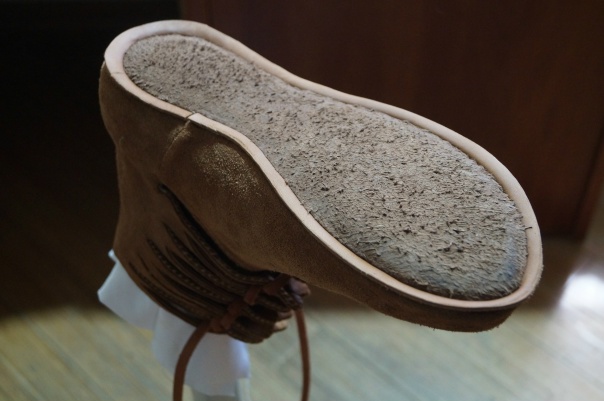 Sole of the finished pair with its working surface.
Testing and Adjustment
A finished pair should be tested before an event. At first it is enough to walk at home and outside, then increase distance and check the footwear on soil, grass and stone. After each walk the maker should examine both the feet and the object: where the leather stretched, where the sole began to separate, how the ties hold and whether the heel shifted.
The first successful fitting is not the end of the work. Footwear changes after several hours of wear: leather takes the shape of the foot, seams take load and straps stretch. Reconstruction of footwear therefore almost always includes a second stage: trimming, replacing ties, reinforcing the sole, adding insoles or correcting hobnails.
Related Topics
Literature and sources
- Legio X Fretensis club material: footwear reconstruction post
- Club material: practical footwear-making post
Interested in Ancient Rome beyond reading? Join Legio X Fretensis or explore our reenactment directions.


