Pompeii as a Source for Reconstruction
Pompeii is one of the central sources for daily life in a Roman town of the first century AD. For reconstruction its value lies in houses, shops, frescoes, inscriptions, vessels, lararia, thermopolia, craft traces and organic material preserved in one catastrophe-dated context of AD 79.
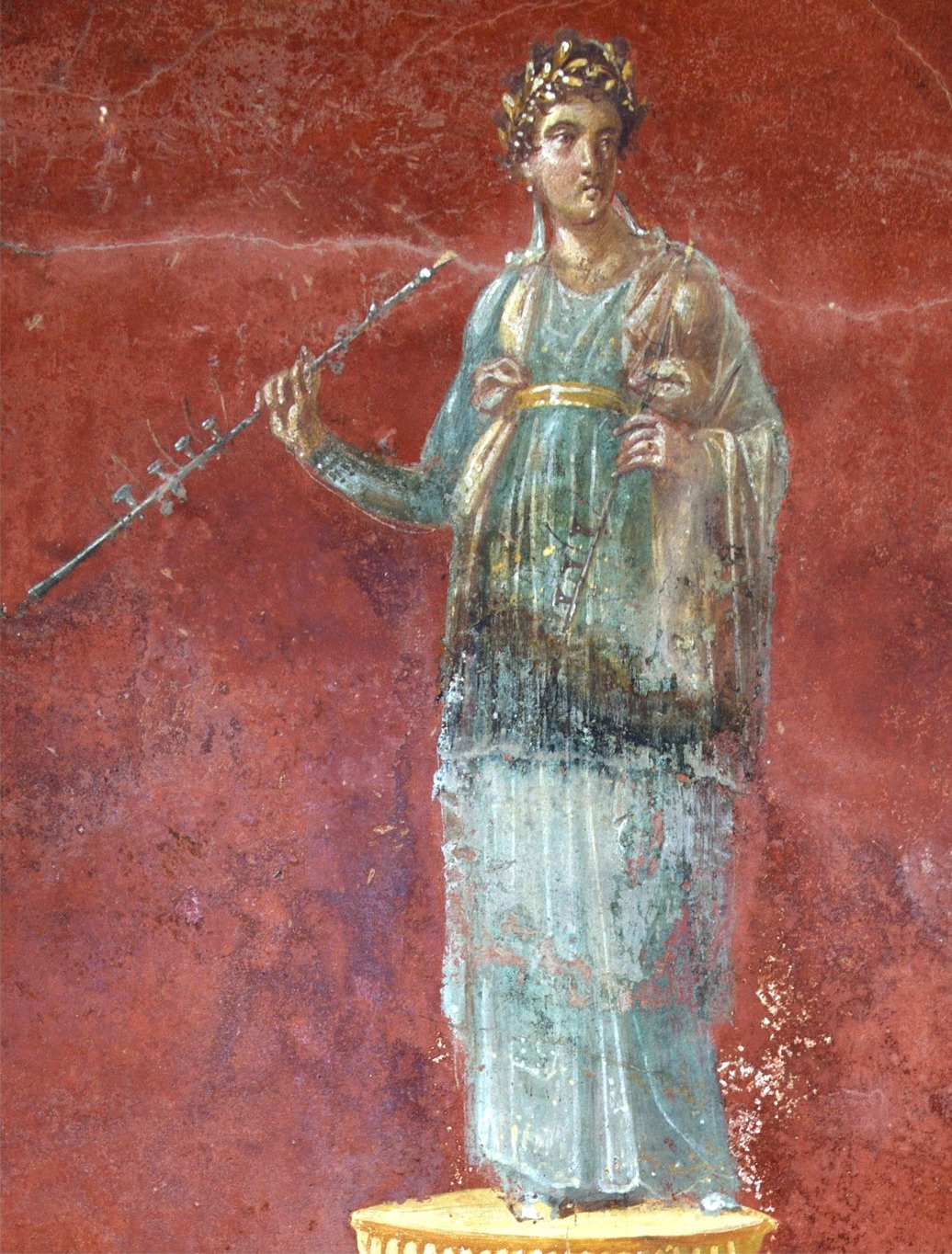 Euterpe Muse or possibly actress from the time of Nero,Pompeii,Villa Moregine,Eastern Triclinium,1st century AD
 Artisan with tunic worn over one shoulder,Pompeii,1st century AD
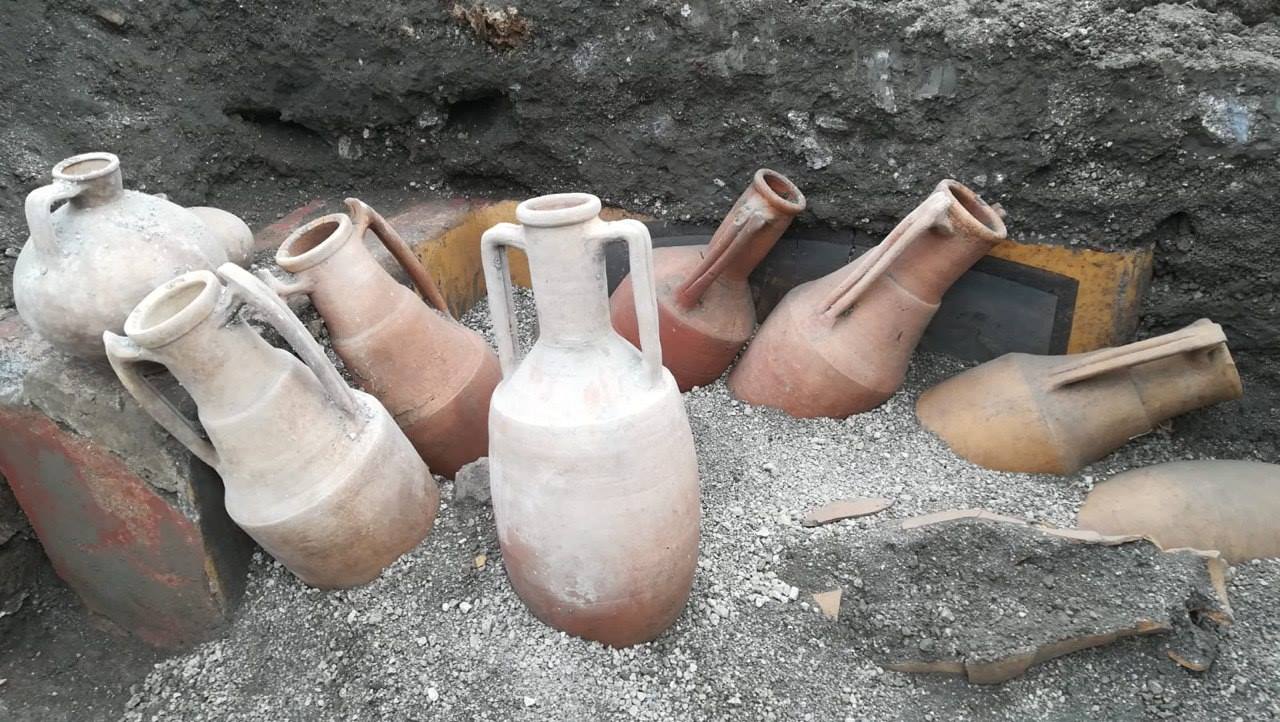 Clearing out props in the thermopoly. Pompeii. 1st century AD
The city as a complex
Pompeii is especially useful because objects can be tied to rooms. A jug, hearth, lararium, painting, counter, graffito or tool is not floating in isolation: it belongs to a house, shop, street, workshop, bath or sanctuary. For reenactors this allows a scene to be built from an environment rather than from a single object.
The date must be kept visible: Pompeii is not all of Rome and not all antiquity, but a Campanian town destroyed in AD 79. Its material works well for the first century AD, but needs caution when transferred to the Republic, late empire or northern provinces.
House, Lares and craft
For household religion Pompeii provides lararia, images of Lares, Penates, the household Genius, snakes and sacrificial scenes. This helps reconstruct not only an altar but the place of ritual in a house: courtyard, kitchen, entrance area or service room. The link with daily objects shows that household cult was part of the everyday structure of the home.
For craft and trade, thermopolia, bakeries, dyeing workshops, shops, signs and wall inscriptions are important. They provide scenarios for work, vessels, clothing, counters and interaction with customers.
Images and caution
Pompeian paintings are indispensable for poses, gestures, furniture, costume, footwear and the visual vocabulary of the house. But an image is not always literal daily realism: a mythological scene, theatrical mask or decorative figure should be separated from a portrait of an actual townsperson.
A good Pompeii-based reconstruction therefore keeps three things together: archaeological context, the object or image itself, and the museum or excavation publication. If a painting is used, the house, room and AD 79 context, or a more precise attribution, should be stated.
Related topics
- Roman Archaeological Sources for Reconstruction
- Roman Empire
- Roman Army
- Roman Household Religion
- Lararium
- Lares
- Penates
- Thermopolium
- Clothing in Ancient Rome
Additional archaeological evidence
Pompeii now has more artefactual material so the article is not only a general text on daily life. Additional sources show the military and ceremonial layer of the town: a gladiatorial relief, parazonium, bronze eagle head and swords from the AD 79 Pompeian context.
This does not turn Pompeii into a military camp. The gallery instead helps separate domestic, cult, spectacle and weapon contexts from army articles.
Sources and images
- Archaeological Park of Pompeii
- Archaeological Park of Pompeii: storage areas and collections
- Images on this site: Pompeian paintings and daily-life scenes, local X-Legio media library


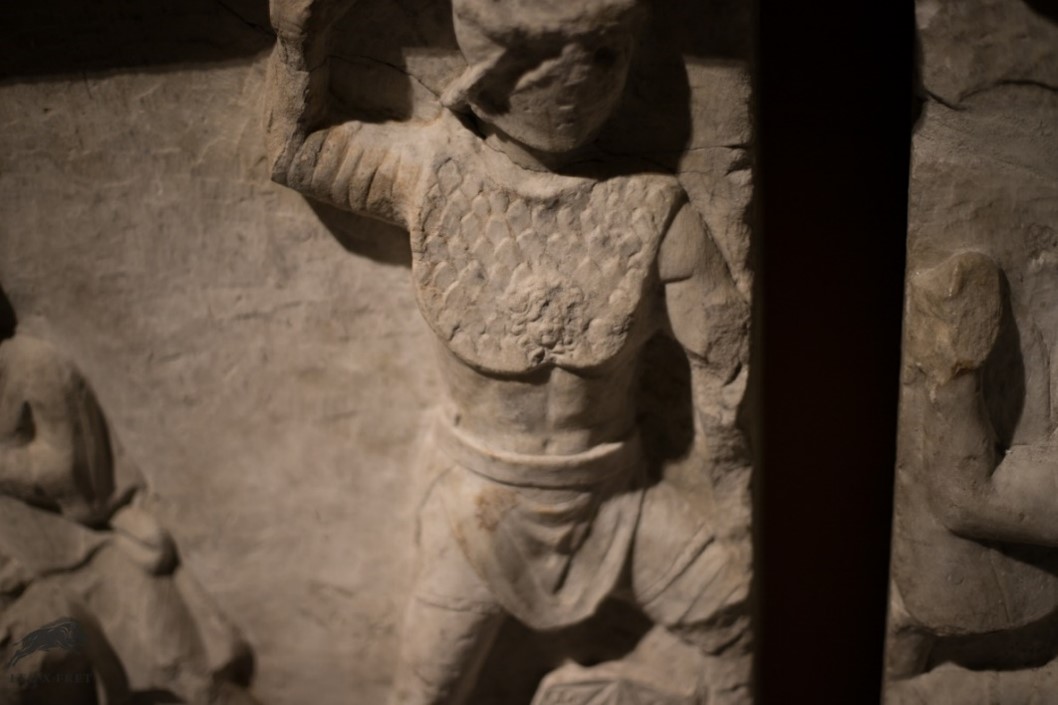 Bas-relief with gladiators,marble. 20-50 years. Pompeii,Stabian Gate,National Archaeological Museum,Naples
 Parazonium with the eagle's head from Pompeii (Regio VII,Insula 7). Second half of the first century AD
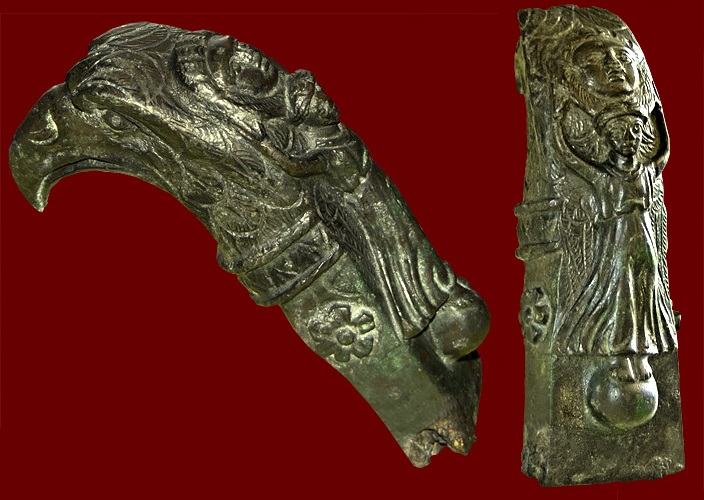 Bronze eagle head,presumably from the handle of a parasonium. Found in the Pompeii Theater. Second half of the 1st century AD
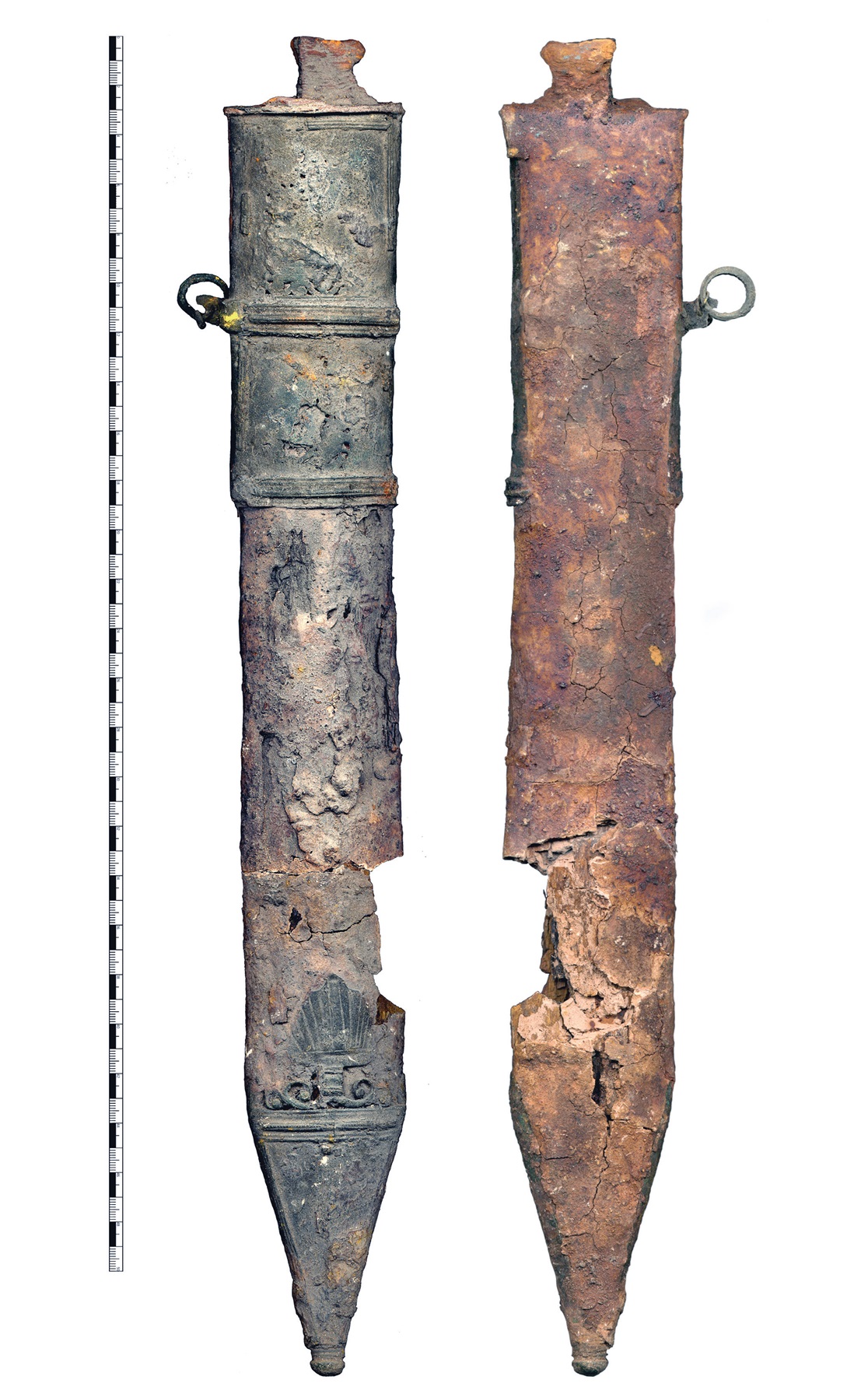 Pompeii - type sword with scabbard from the Villa of the Mysteries in Pompeii (Italy), 79 AD.
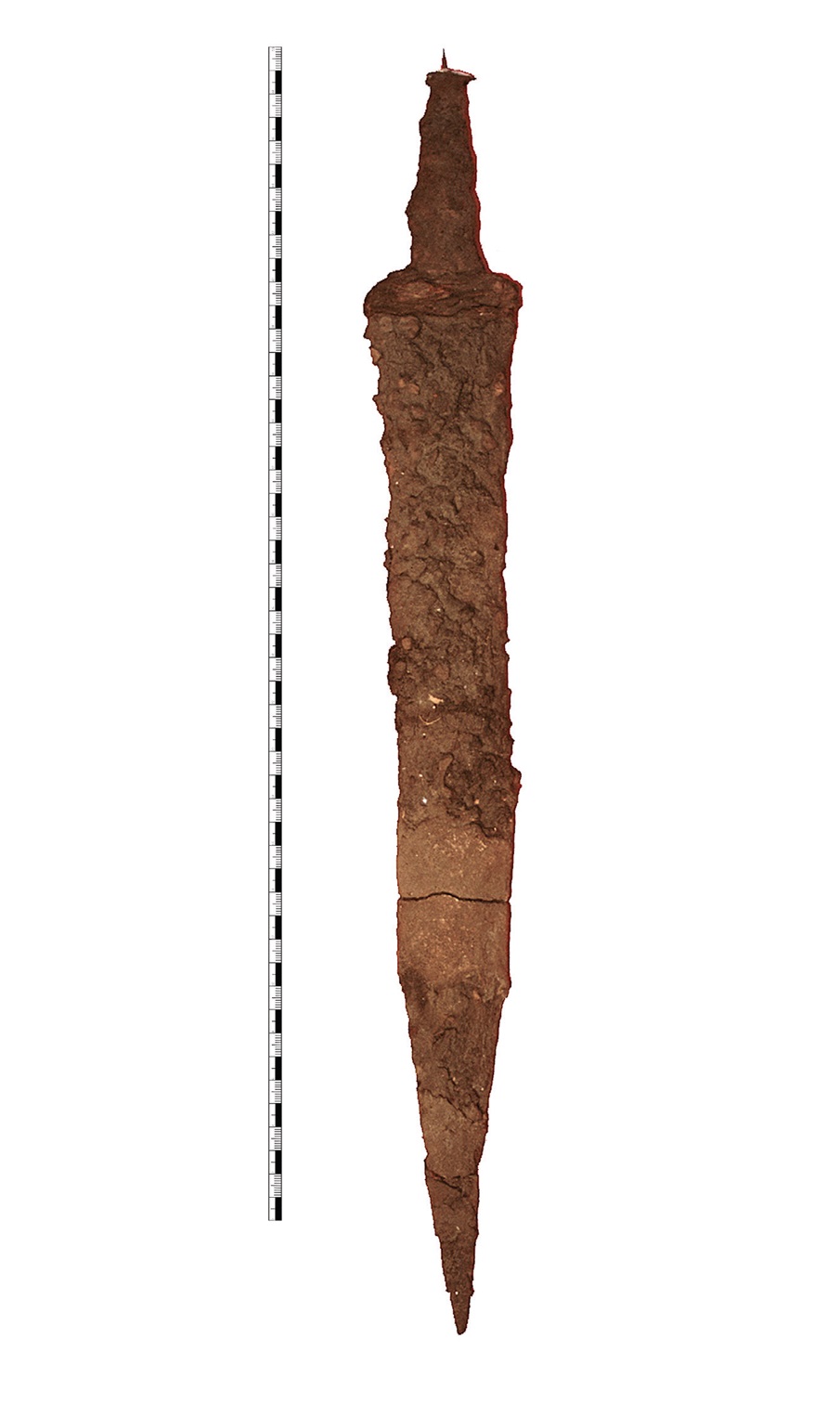 Gladius of the Mainz type from one of the monuments of the Bay of Naples, possibly Pompeii (Italy), 79 AD.
Interested in Ancient Rome beyond reading? Join Legio X Fretensis or explore our reenactment directions. Reenactment


