Symbolism and Beauty of Auxiliary Weapons
Elaborate scabbard decoration is especially associated with type II pugiones. Earlier examples used in the Roman army were often comparatively plain, with fittings primarily serving to secure the scabbard and hold the blade.
By the transition from the Republic to the Principate, some scabbards had become remarkably ornate. Inlay, coloured materials, decorative rivets and non-ferrous metals turned them into demanding works of craftsmanship.
Their motifs can be considered alongside the visual language of the age of Augustus: victory, divine protection, imperial authority and loyalty. These connections offer possible readings, not a fixed symbolic code that can be applied to every dagger.
The Sun (Sol)
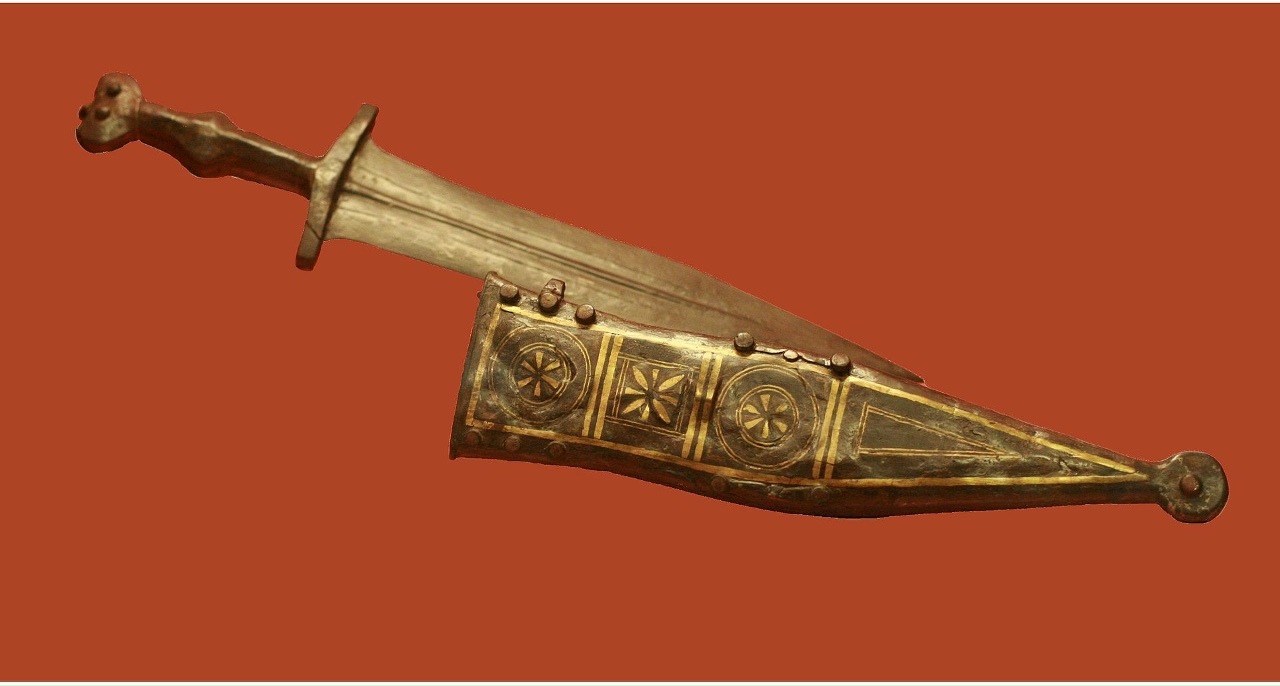 Detail of a type II pugio scabbard with a solar motif; Roman military dagger, Early Empire.
Radiating circles and rosettes can suggest the sun, a source of light and life with strong divine associations. On dagger scabbards, rays may be enclosed within circles, squares or other geometric frames.
One interpretation connects a circle within a square with the relationship between heaven and earth; another relates it to Rome and imperial order. These readings remain hypotheses. The number and arrangement of rays may also reflect symmetry, available space and the craftsman’s design rather than a precise religious message.
Twelve rays might invite comparison with the months or other groups of twelve in Roman tradition, but the connection cannot be assumed without supporting evidence. Colour, neighbouring motifs and the wider composition all matter.
Laurel (Laurus)
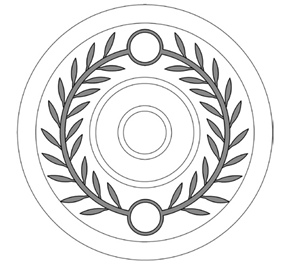 Detail of laurel ornament on a type II pugio scabbard; Roman military equipment, Early Empire.
Laurel was sacred to Apollo and closely associated with victory, honour and the triumph. Its evergreen leaves also made it suitable for ideas of enduring vitality and fame. On military equipment, a laurel motif could therefore evoke successful service and divine favour. Its appearance beside a radiating design may strengthen a proposed connection with Apollo, although the individual object must be considered in context.
The Palm
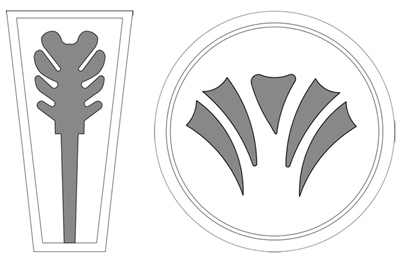 Palm motif in the decoration of a type II pugio scabbard; symbol of victory and renewal, Early Empire.
The palm is associated with Apollo’s birth on Delos and, more broadly, with victory. Palm branches were awarded to victors and appear widely in ancient triumphal imagery. Their spreading leaves also lend themselves to radiating ornamental compositions. Associations with renewal or immortality are possible, but should not be treated as the sole meaning of every palm-like design.
The Temple
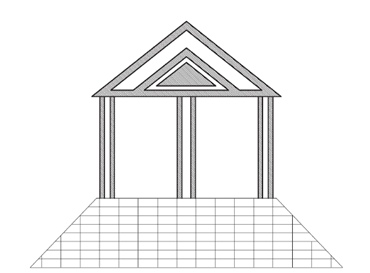 Temple architectural motif in pugio decoration; Roman military symbolism of the Early Empire.
Architectural motifs can evoke a sanctuary and the relationship between human and divine authority. In the Augustan context, temple-like designs on military equipment have been connected with the emperor’s patronage of Apollo and claims of divine protection.
Suggested identifications include temples of Apollo and the Temple of Jupiter Feretrius, associated with trophies taken from defeated enemy leaders. A schematic façade is rarely sufficient to identify a particular building securely. The interpretation must remain distinct from what the surviving decoration actually shows.
Cypress
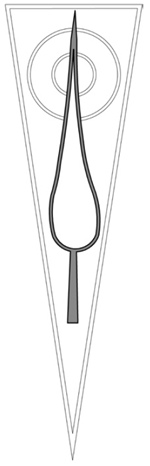 Cypress motif on a type II pugio scabbard; symbolism of death, memory and eternity.
For Greeks and Romans, the evergreen cypress had strong funerary associations. Its longevity and persistent foliage could also evoke endurance beyond death. A cypress-like motif on a scabbard may invite such a reading, but stylised plants are not always identifiable to species, and a funerary meaning is not automatic.
Circles and Semicircles
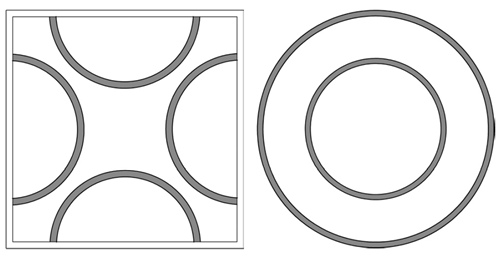 Sets of circles and semicircles in pugio scabbard ornament; a geometric motif of Early Imperial military equipment.
Circles and semicircles are widespread decorative forms. They may suggest the sun, moon, repetition or completeness, but they also provide simple ways to organise a surface. Their meaning depends on context rather than on a universal association shared by all cultures.
The Pelta
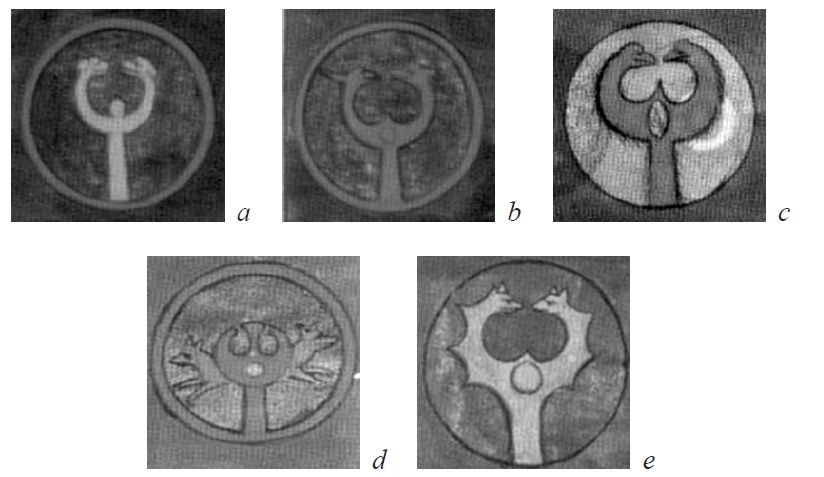 Pelta motif in pugio decoration; a crescent with animal heads in Roman military ornament.
The pelta motif takes its name from a crescent-shaped shield associated with Thracian and Greek traditions. Variations occur throughout Roman decorative art, including military equipment and funerary monuments.
Some examples end in animal heads, such as wolves, bulls or snakes. These may add protective or animal associations to the design. Paired heads have also been interpreted as a balance of opposing forces, although this remains a proposed reading rather than a documented meaning for every example.
Connections between wolves, Apollo and the solar symbolism discussed by ancient writers offer another interpretative possibility. They should not, however, be used to assign an Apolline meaning to every pelta or to establish a linguistic derivation solely from similar-sounding Greek words.
Curving Lines: Snakes and Waves
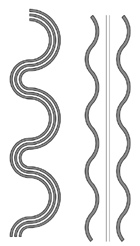 Sinusoidal lines and serpent motif on a pugio scabbard; symbolism of movement, water and cyclicity.
Undulating ornament may resemble snakes, waves, horns or other natural forms. Repetition can suggest movement and continuity, but may also serve a purely decorative purpose.
Snakes had many associations in the ancient world, including renewal, household protection, healing and the underworld. Their shedding of skin made them especially suitable for ideas of regeneration.
The paired snakes of Mercury’s caduceus provide a recognisable example of serpentine symbolism. A generic wavy line, however, should not automatically be identified as a caduceus or assigned the same meaning.
The Square
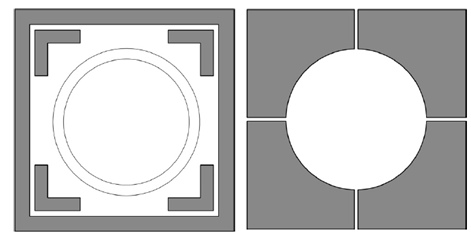 Square geometric motif in pugio decoration; a possible reference to the idea of Urbs Quadrata.
The combination of circles and squares has sometimes been interpreted through Roman ideas about sacred space and the founding of cities. The expression Roma quadrata and traditions concerning the mundus have encouraged comparisons between earthly order and the divine world.
These ancient concepts are difficult to reconstruct, and they do not establish that every square on a dagger scabbard represents Rome. A rectangular frame can organise a design without carrying a specific cosmological message.
A symbolic reading is most persuasive when the geometry accompanies more recognisable imperial, military or religious imagery. On its own, shape offers several possibilities rather than a single answer.
The Eagle
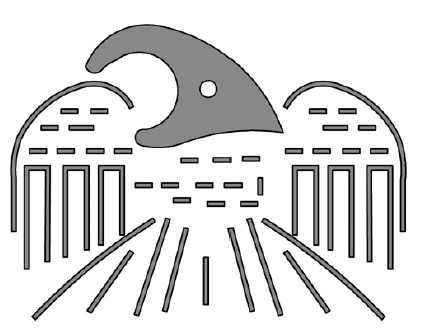 Eagle motif in pugio decoration; a sign of Jupiter, the sun and Roman military power.
The eagle had a particularly strong relationship with Jupiter, Roman authority and imperial power. Ancient writers also connected it with the sun and described its supposed ability to face the sun’s brightness. These are ancient beliefs, not observations of the bird’s actual behaviour.
On military equipment, an eagle may evoke divine protection or Roman power. Its presence does not necessarily mean that the object depicts a particular legionary eagle standard.
The Vine
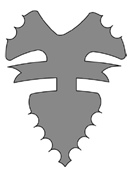 Grapevine in the decoration of a pugio scabbard; Dionysian symbolism of life, death and immortality.
Vines and grapes evoke wine and the cult of Dionysus/Bacchus. Their seasonal growth also lends itself to ideas of vitality, renewal and abundance. Such motifs can have religious or funerary associations, but their use as attractive plant ornament should not be overlooked.
V-Shapes and Chevrons
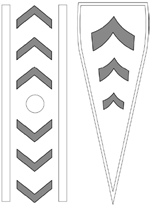 V-shaped signs in pugio ornament; chevron motif on Roman military equipment.
V-shapes and chevrons can be repeated, inverted or arranged in opposing rows. Their long history has encouraged comparisons with birds, fertility and other natural imagery. On a Roman scabbard, however, these broad parallels do not by themselves demonstrate a specific meaning. Repetition, symmetry and the framing of other motifs may explain the pattern just as well.
Conclusion
Decorated pugio scabbards combine exceptional craftsmanship with a rich visual vocabulary. Plant forms, animals, architectural motifs and geometry may evoke victory, protection, imperial identity, vitality or remembrance. Their meanings can overlap, and individual compositions may invite several readings.
It is important to distinguish a plausible interpretation from a securely documented ancient message. A laurel wreath, radiating circle and square might be read together as an expression of Roman glory and divine favour, but there is no surviving universal key that proves such a sentence was intended.
The surviving type II daggers show substantial variety. Some scabbards rely on repeating geometric patterns; others combine floral, animal and architectural designs. This diversity is part of their artistic interest and should not be reduced to a single symbolic system.
Related topics
Literature and sources
- M. Saliola and F. Casprini. Pugio — Gladius Brevis Est. Archaeopress, 2012.
- M. C. Bishop and J. C. N. Coulston. Roman Military Equipment: From the Punic Wars to the Fall of Rome.
- Original Legio X Fretensis club publication on VKontakte, 26 December 2018.


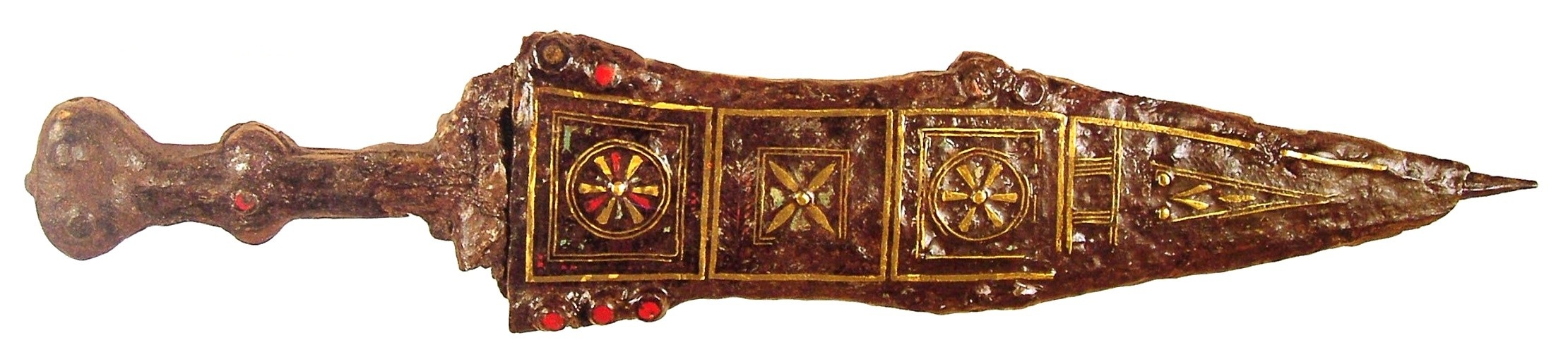 Type II pugio with richly decorated scabbard; Early Imperial Roman military dagger.
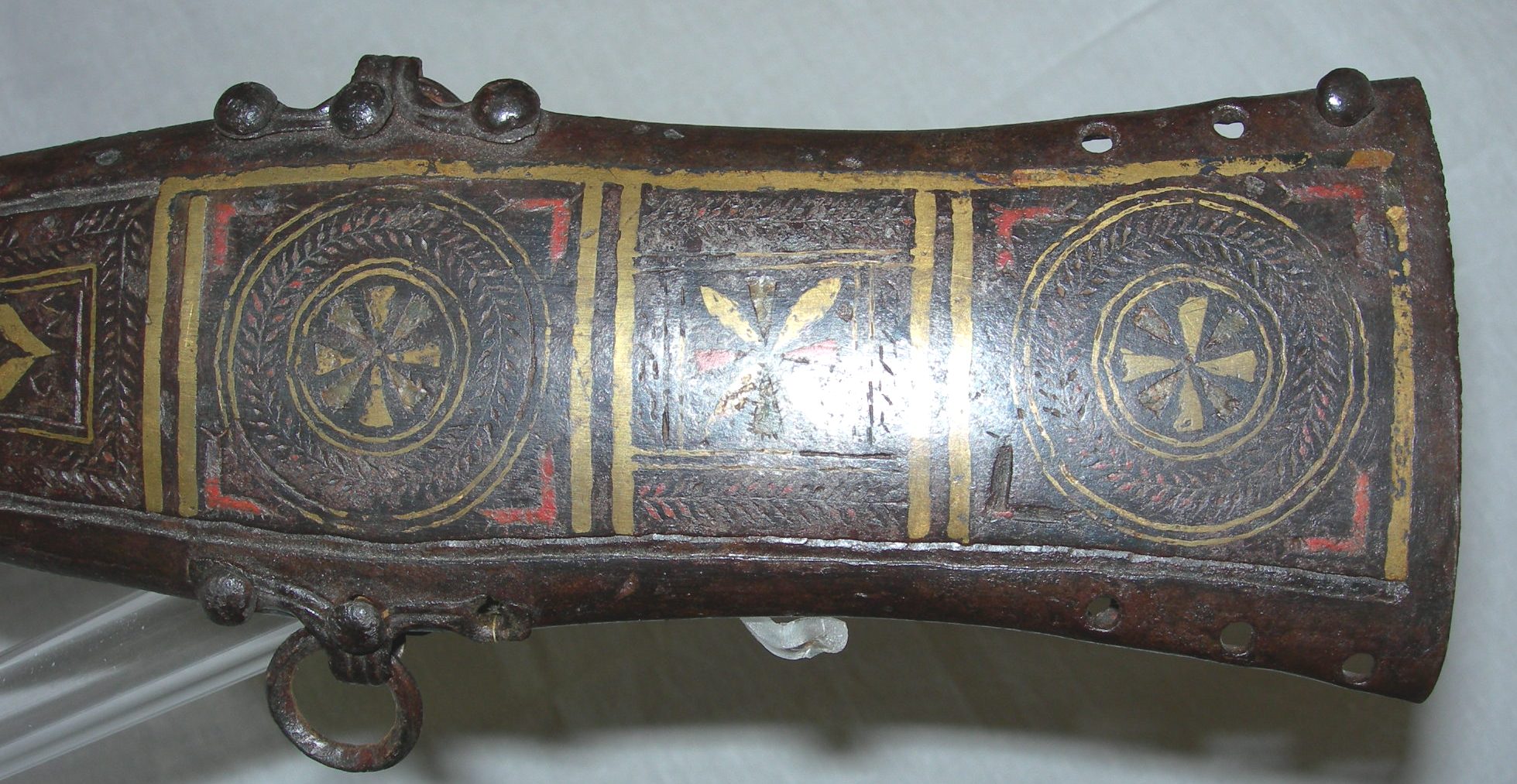 Type II pugio with ornamented scabbard; example of combined geometric and vegetal decoration.
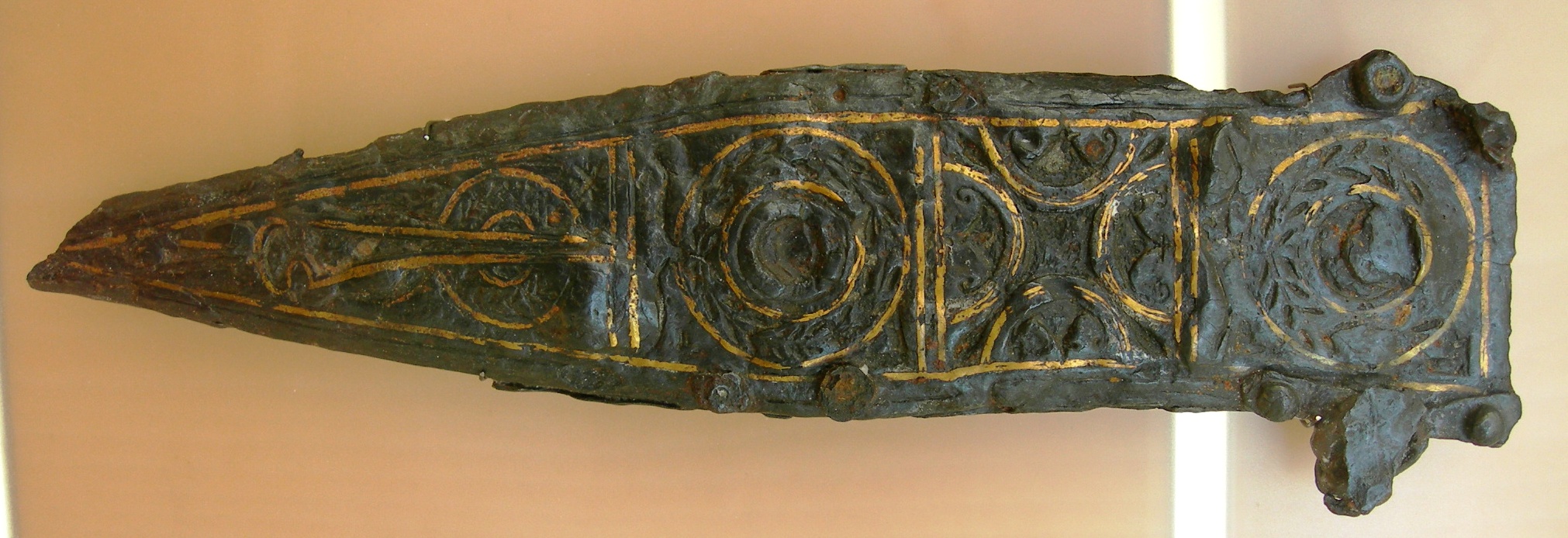 Type II pugio with decorated scabbard; example of a decorative programme on Roman auxiliary weaponry.
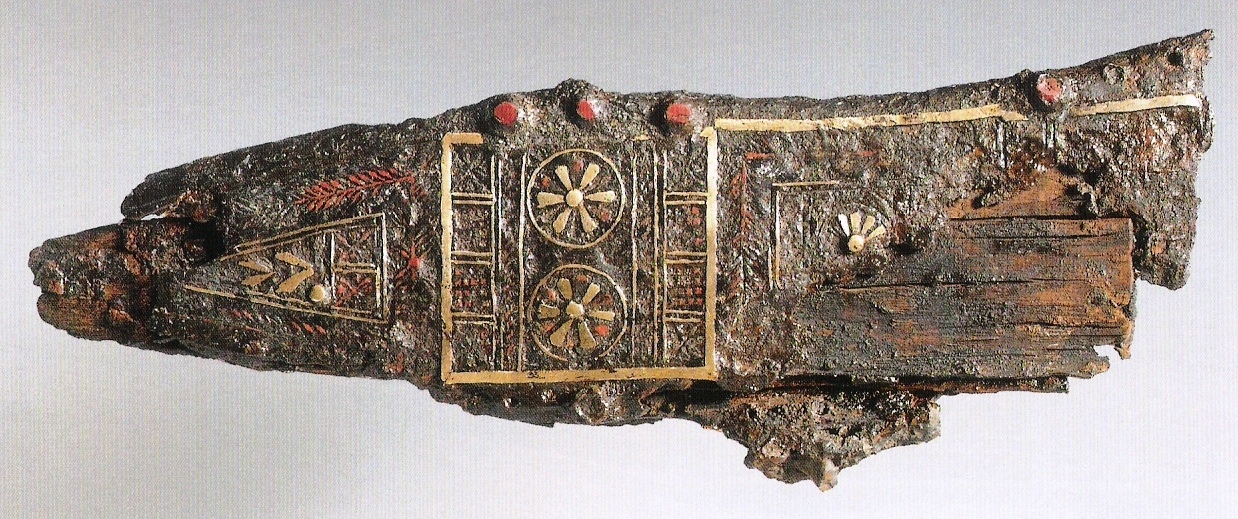 Type II pugio with artistic scabbard decoration; Early Empire.
Interested in Ancient Rome beyond reading? Join Legio X Fretensis or explore our reenactment directions.


