Punic Wars
The Punic Wars were three wars between Rome and Carthage in 264-146 BCE. They began as a struggle for Sicily and naval power in the western Mediterranean and ended with the destruction of Carthage and Rome's rise as the dominant power of the region.
In brief:
- First Punic War: 264-241 BCE, fought over Sicily and naval power;
- Second Punic War: 218-201 BCE, Hannibal's campaign in Italy and Scipio's victory at Zama;
- Third Punic War: 149-146 BCE, the siege and destruction of Carthage;
- result — Rome gained Sicily, Sardinia, Corsica, Spain and decisive influence in the western Mediterranean.
The central figure of the Second Punic War was Hannibal Barca, whose victories in Italy placed the Roman alliance system under its greatest strain.
Topic guide
In brief
| Question | Answer |
|---|---|
|
When |
264-146 BCE |
|
Sides |
Rome and Carthage; Romans called the Carthaginians Punici. |
|
Outcome |
Rome destroyed Carthage and became the dominant power in the western Mediterranean. |
Participants and forces
| Side | Key actors | Related topics |
|---|---|---|
|
Rome |
The Republic, senate, consuls, citizen legions and navy. |
|
|
Carthage |
Carthaginian elites, mercenary forces, navy and Barcid commanders. |
Timeline
| Period | War | Core meaning |
|---|---|---|
|
264-241 BCE |
The struggle for Sicily and Rome’s rise as a naval power. |
|
|
218-201 BCE |
Hannibal’s campaign in Italy and Rome’s strategic response. |
|
|
149-146 BCE |
The siege and destruction of Carthage. |
Key articles
- First Punic War
- Second Punic War
- Third Punic War
- Hannibal Barca
- Punici / Carthaginians
- Roman Republican navy
FAQ
Why are they called Punic Wars? The name comes from Latin Punici, the Roman term for the Phoenician-descended Carthaginians.
Which war was decisive? The Second Punic War was Rome’s most dangerous military crisis, but Carthage was finally destroyed in the Third Punic War.
Where should I start? Begin with this overview, then read the three individual war articles and the article on Hannibal.
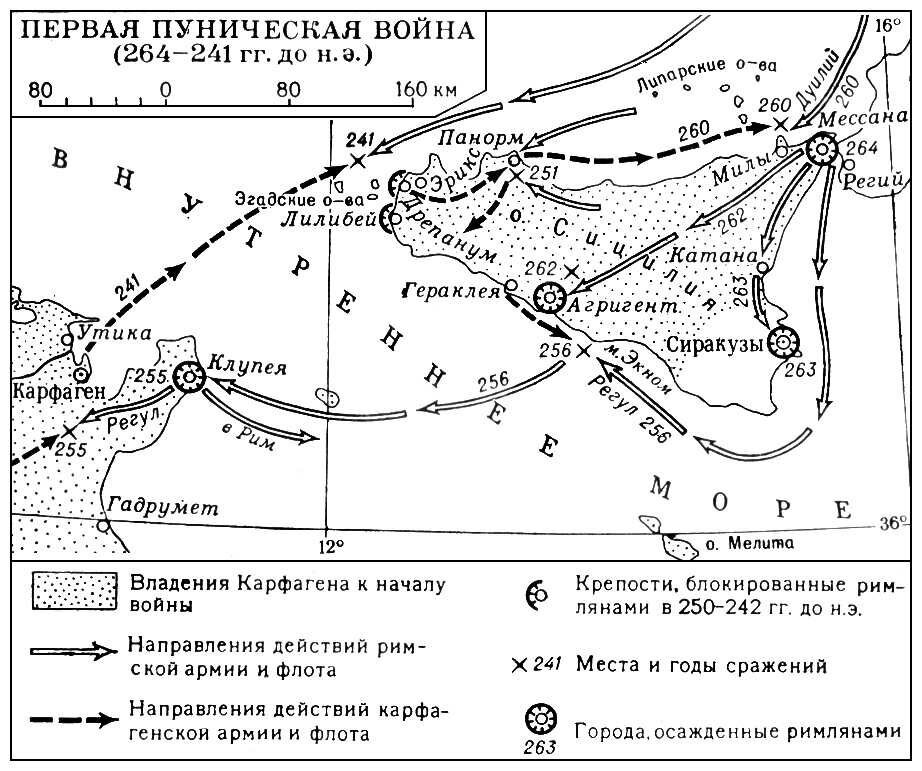 Map of military campaigns of the 1st Punic War
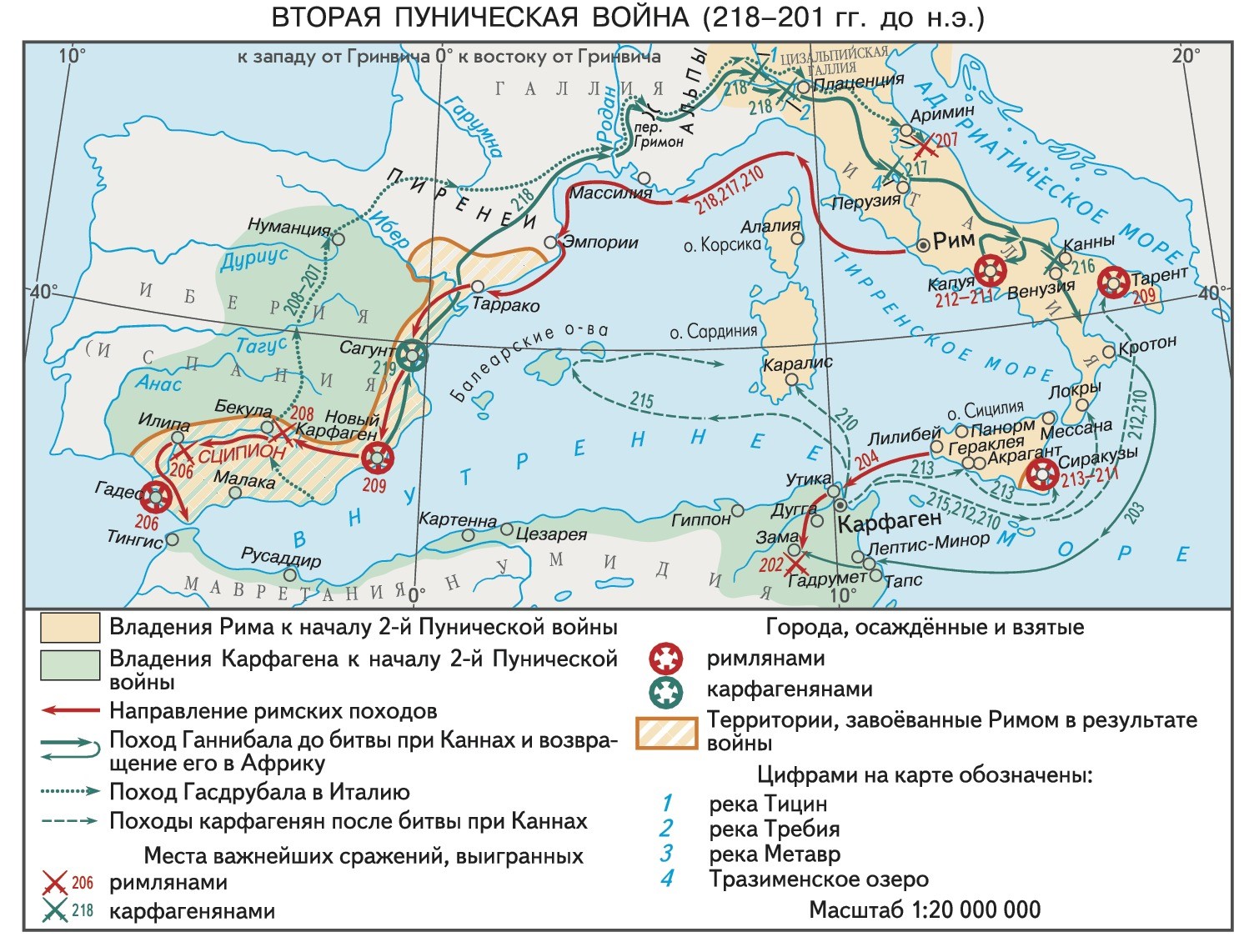 Military campaigns of the Second Punic War
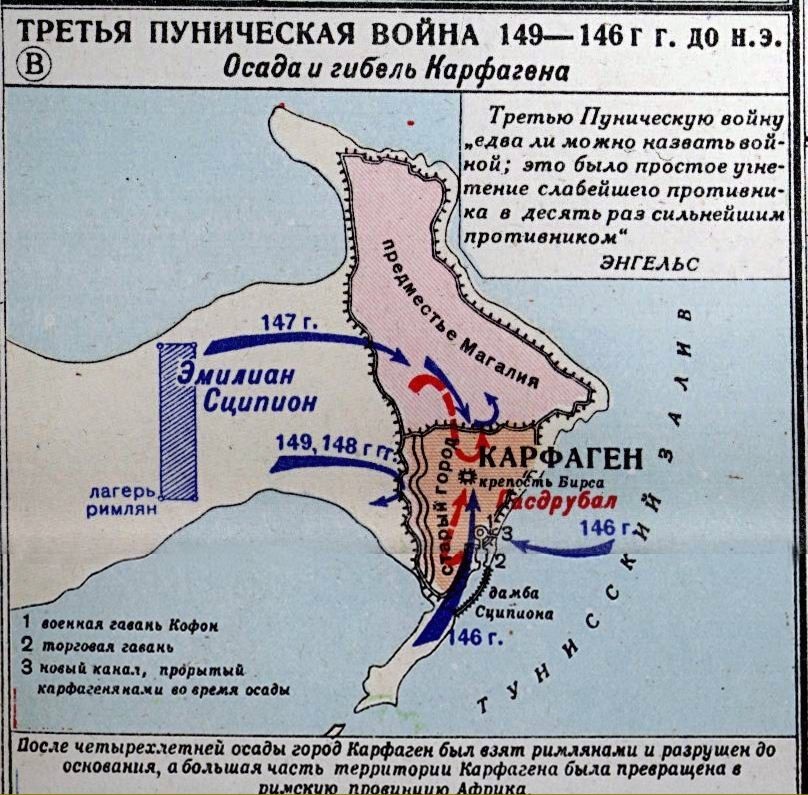 Map of the military campaign of the 3rd Punic War
Causes of the wars between Rome and Carthage
Carthage was a major naval and commercial power controlling a network of ports, alliances and markets in the western Mediterranean. After the unification of Italy, Rome found itself next to the Carthaginian sphere of influence. Sicily became the first centre of conflict: the island was strategically important for trade, fleets and control of the straits between Italy and Africa.
The rivalry did not disappear after the First War. Carthage lost Sicily, then Sardinia and Corsica, but strengthened its position in Spain. Spanish resources and the army of the Barcids became the basis for the Second Punic War. The Third War was no longer a contest between equal powers, but Rome's decision to remove a recovered yet politically dependent Carthage permanently.
The three Punic Wars
I. First Punic War Rome created a major fleet for the first time and, after a hard struggle, drove Carthage out of Sicily. The victory made Sicily Rome's first province.
II. Second Punic War Hannibal crossed the Alps and inflicted severe defeats on Rome at the Trebia, Lake Trasimene and Cannae, but he could not break the Roman alliance system in Italy. Scipio Africanus' victory at Zama ended the war in Rome's favour.
III. Third Punic War Rome besieged Carthage and destroyed the city after a three-year war. Carthaginian territory became the Roman province of Africa.
Consequences
Victory in the Punic Wars changed the Roman Republic itself. Rome acquired its first overseas provinces, became a naval power and entered the politics of Spain, Africa and the Hellenistic East. Military success increased the importance of commanders, provincial governors, tax contractors and the army.
At the same time, the wars sharpened internal problems. Long campaigns ruined small landholders, the inflow of booty and slaves changed the economy, and the government of provinces required new political solutions. The Punic Wars therefore matter not only as the struggle between Rome and Carthage, but also as the beginning of Rome's transformation from a city-state republic into a Mediterranean power.
Literature and sources
Ancient sources
1. Polybius. The Histories. 2. Livy. History of Rome. 3. Appian. Roman History. The African Wars; The Spanish Wars.
Modern studies
1. Adrian Goldsworthy. The Punic Wars. 2. Dexter Hoyos. A Companion to the Punic Wars. 3. J. F. Lazenby. The First Punic War; Hannibal's War.
Interested in Ancient Rome beyond reading? Join Legio X Fretensis or explore our reenactment directions.


