Dance in Ancient Rome
Dance in ancient Rome belonged to ritual, processions, theatre, mime and pantomime, banquets and festivals. It was not a single vocabulary of steps or a national "Roman dance." Movement depended on setting, music, story, the performer's status and the audience. A priestly dance, a stage narrative and entertainment at a private banquet occupied different social worlds.
Romans absorbed Italic and Etruscan traditions and, after conquest, a rich Greek stage language. Under the Empire, pantomime made movement, pose and gesture an independent way of narrating myth. Elite authors could admire a famous performer's skill while condemning dance as an unsuitable occupation for a free Roman citizen.
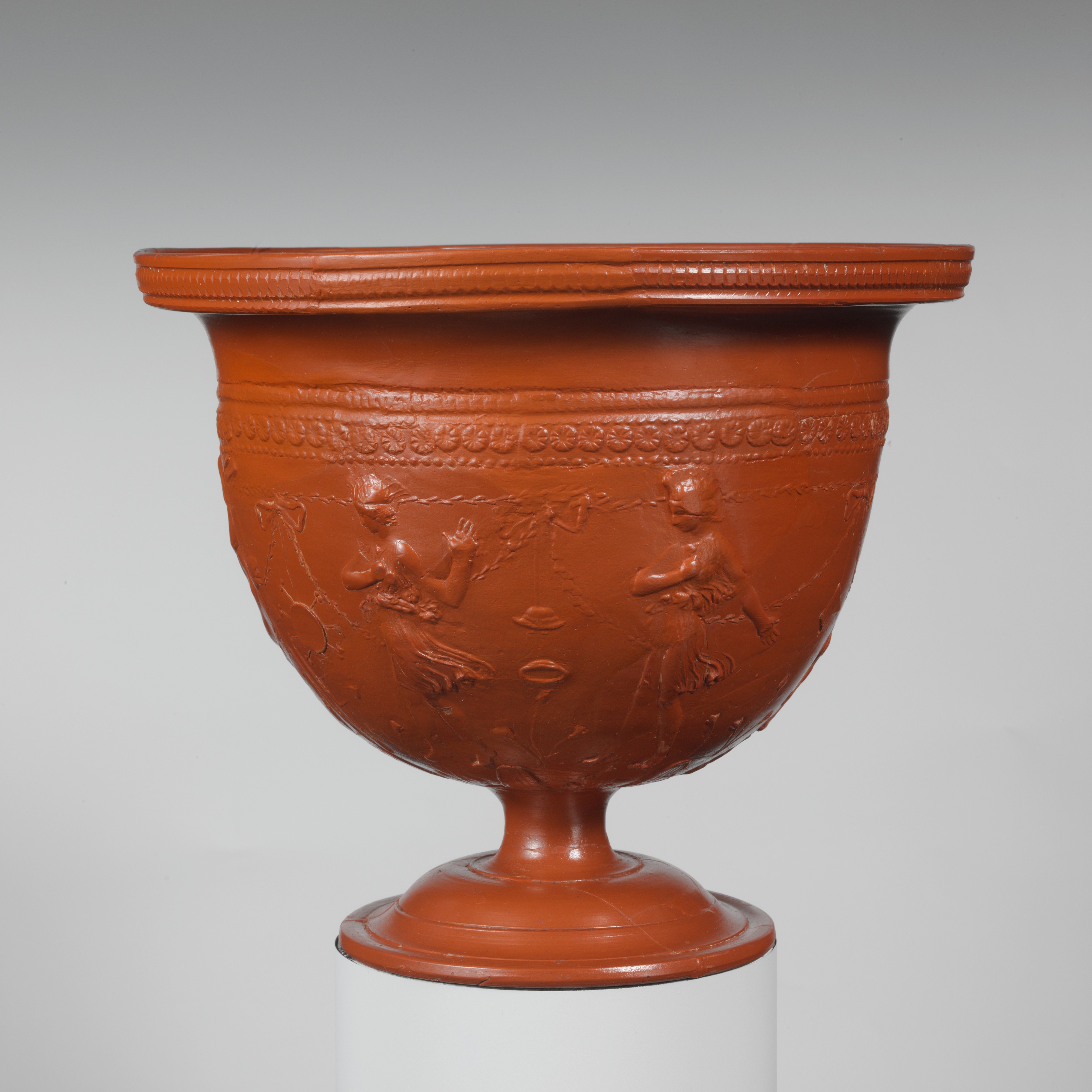 Dancing figures on a Roman terracotta bowl, c. 10 BCE-10 CE; The Metropolitan Museum of Art, acc. 10.210.37. This small object shows dance imagery entering the decoration of everyday vessels. Public Domain.
Evidence and the Limits of Reconstruction
Dance leaves no archaeological trace comparable to a wall or vessel. It is studied through texts, inscriptions, theatre masks, statuettes, reliefs, frescoes and mosaics. An inscription may name a saltator or pantomimus but say little about technique. An image preserves pose and costume but reduces movement to a selected moment.
Maenads, satyrs and Orpheus require particular caution. They document the visual language of Dionysiac dance in Roman art but belong to myth. A Roman marble relief could repeat a Classical Greek composition centuries later. It is evidence for patronage and workshop practice, not proof that an ordinary performer moved in exactly this way.
Livy, Lucian, Juvenal, Apuleius and late antique authors discuss dance for different reasons—to explain theatrical origins, praise skill, mock audiences or condemn morals. Their accounts should be compared with one another and with dated monuments.
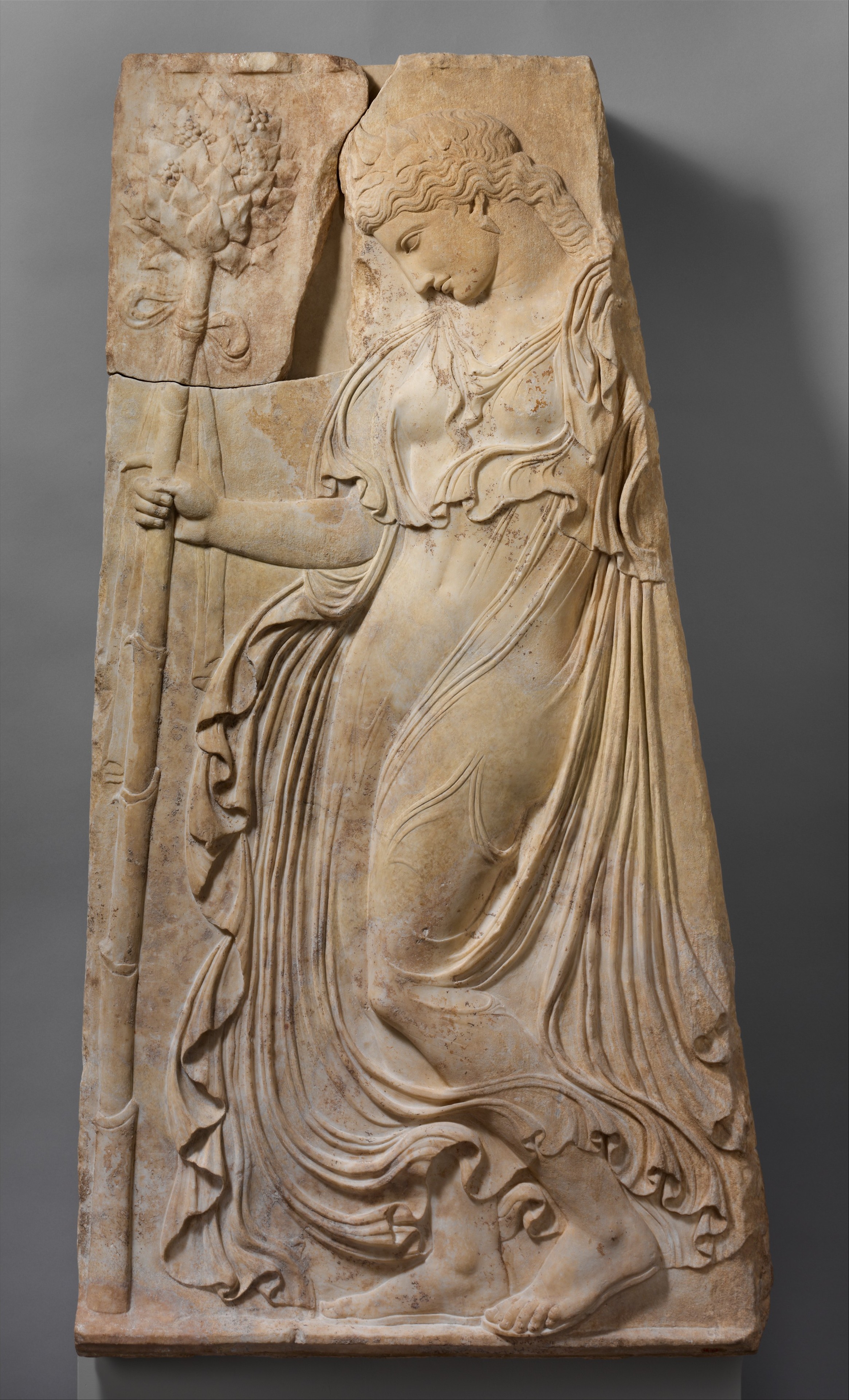 Dancing maenad with a thyrsos, Roman marble relief of the Augustan period, ca. 27 BCE–14 CE; an adaptation of a late Classical Greek type. The Metropolitan Museum of Art, acc. 35.11.3. Public Domain.
Ritual Dance and Italic Tradition
Ritual dance is most clearly visible among the Salii, priests of Mars who on appointed days processed through Rome with ancient ancilia shields, sang the Carmen Saliare and performed an armed dance. Movement, song, striking the shield, calendar and priestly office formed a single rite. It cannot be generalised to the army or ordinary celebration.
Livy connects the arrival of stage performances at Rome with 364 BCE, when Etruscan performers were summoned during an epidemic. His account describes dance to the pipe, imitation by Roman youths and the development of stage tradition. It is an important Roman story about theatrical origins, but it was written centuries later and is not a record of the first performance.
Etruscan tomb paintings show musicians and dancers in banqueting and funerary settings. They predate the Roman Empire and should not be labelled Roman dances, but they illuminate the Italic artistic background with which Rome interacted.
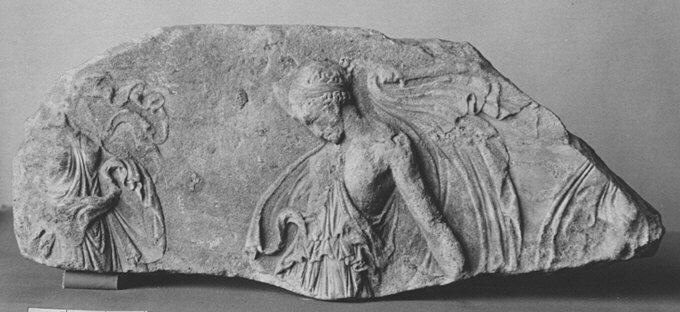 Fragment of a Roman marble relief with dancing maenads, 1st-2nd centuries CE; The Metropolitan Museum of Art, acc. 21.88.12. Pentelic marble. Public Domain.
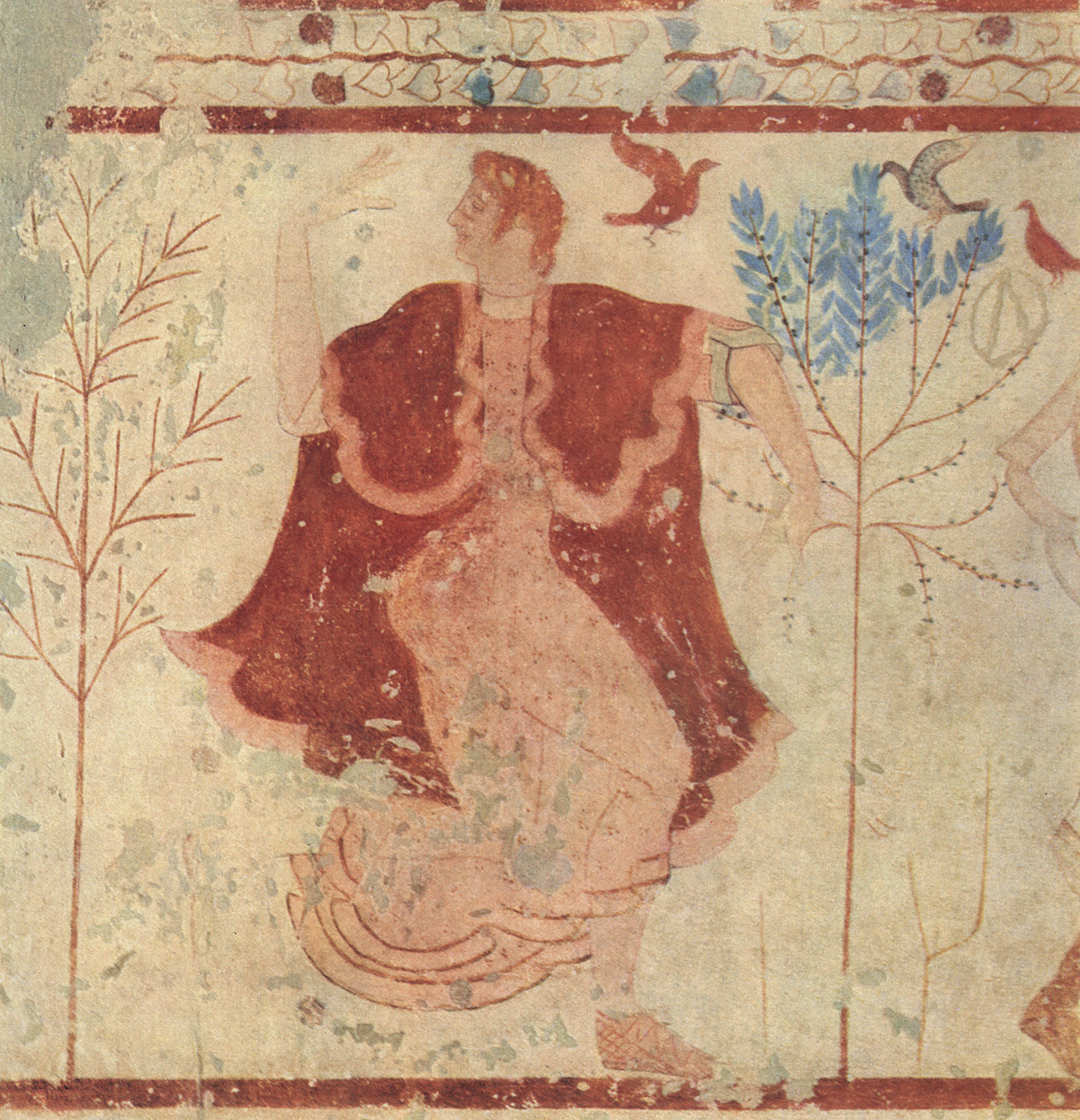 A dancer. Tarquinia,Tomb of Triclinius. V century BC
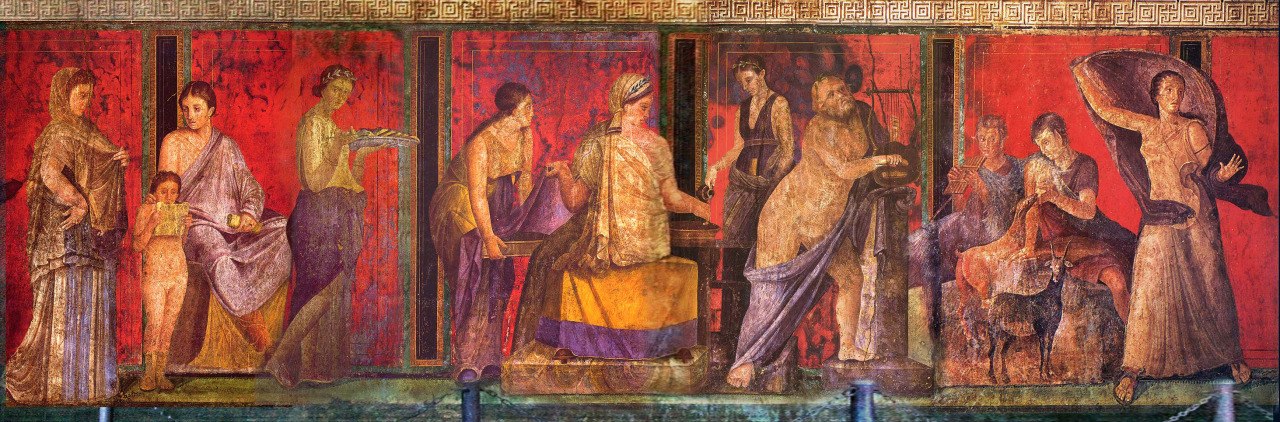 Fragment of the monumental wall painting from the Villa of the Mysteries near Pompeii, mid-1st century BCE. Second-Style figures form a continuous ritual and mythological frieze; the scene's precise interpretation remains debated.
Theatre, Mime and Pantomime
Dance belonged to several forms of theatre. In comedy and other productions it worked with speech, mask, costume and music. Mime allowed spoken dialogue and everyday or comic subjects, and women performed in it. Genre boundaries changed, so an ancient term cannot always be translated by one modern category.
Imperial pantomime centred on a dancer who, without speaking the text, represented several characters in a mythological narrative. A singer or chorus carried the story, an orchestra supplied the music, and mask, mantle, pose and gesture distinguished roles. The audience was expected to recognise a hero from movement and situation.
Pylades and Bathyllus were associated with the Augustan tradition, but the genre did not depend on two founders alone. Audiences formed rival groups of fans, and performers could acquire wealth and influence. Imperial authorities used spectacle, rewarded artists and also restricted them when theatrical rivalry turned into disorder.
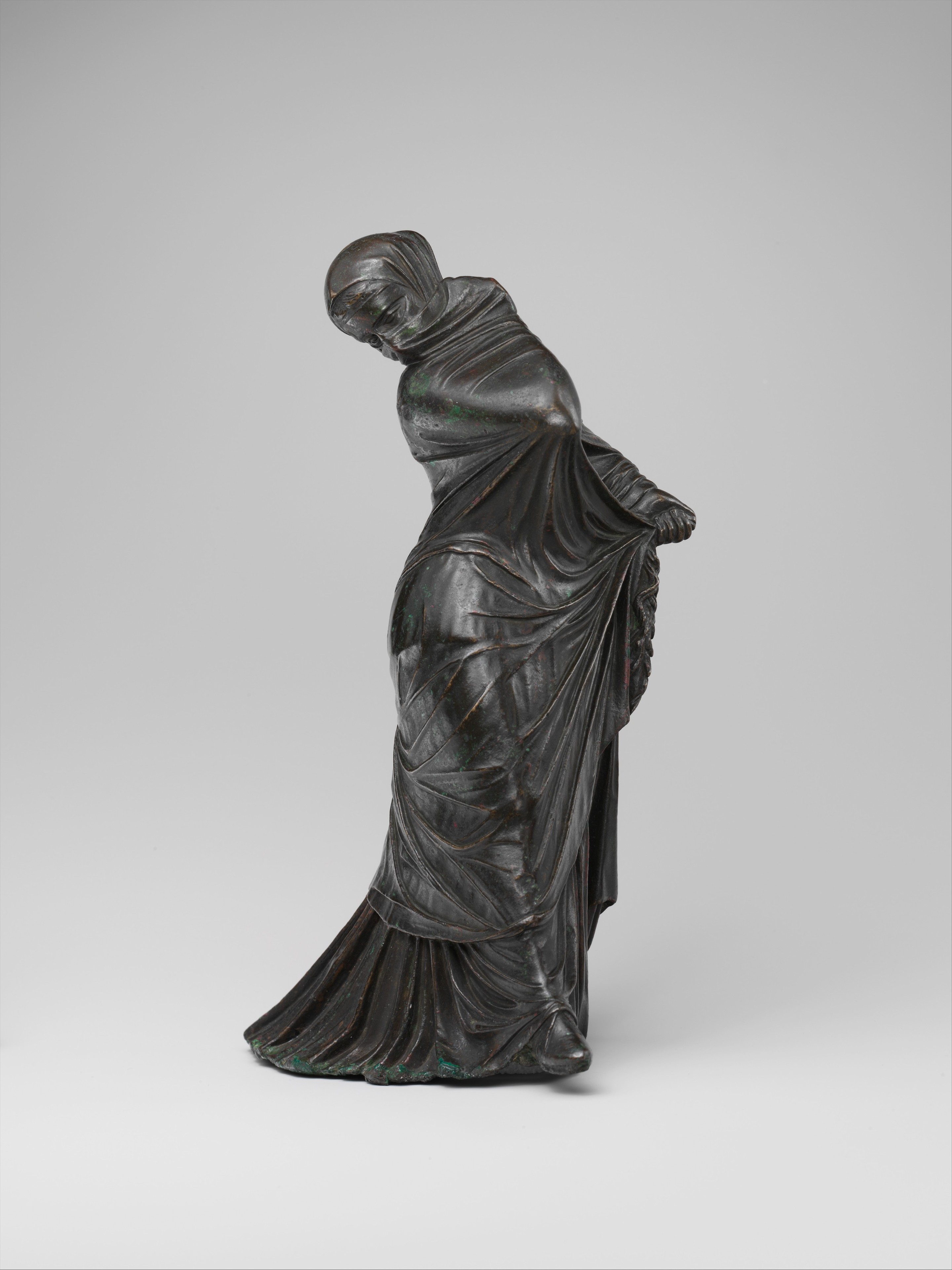 Bronze statuette of a veiled and masked dancer, 3rd-2nd centuries BCE; The Metropolitan Museum of Art, acc. 1972.118.95. This Hellenistic object represents one of the stage traditions inherited by the Roman world. Public Domain.
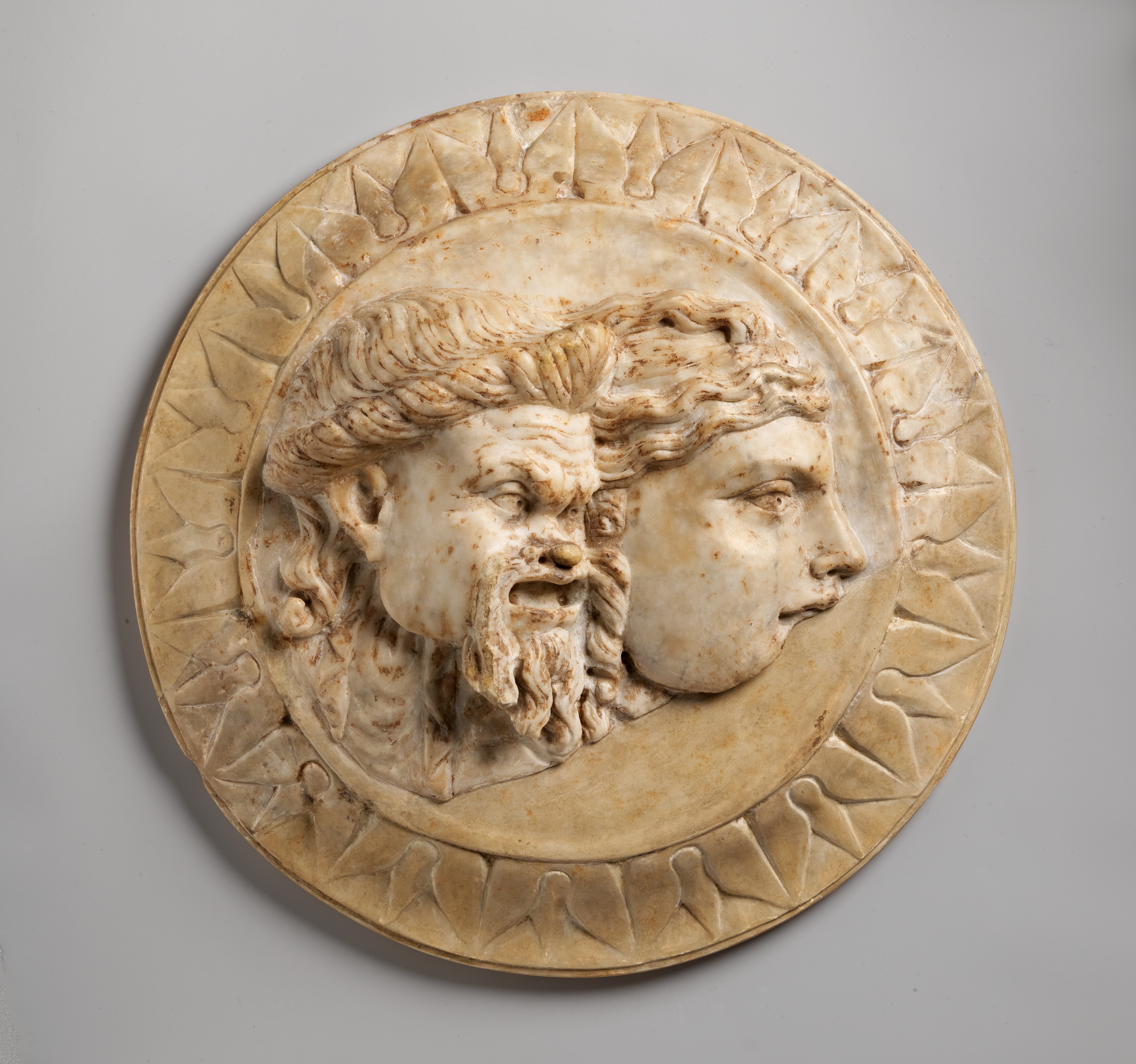 Marble disk with two theatre masks in relief. Roman, third quarter of the 1st century CE; The Metropolitan Museum of Art, acc. 13.229.6. Public Domain.
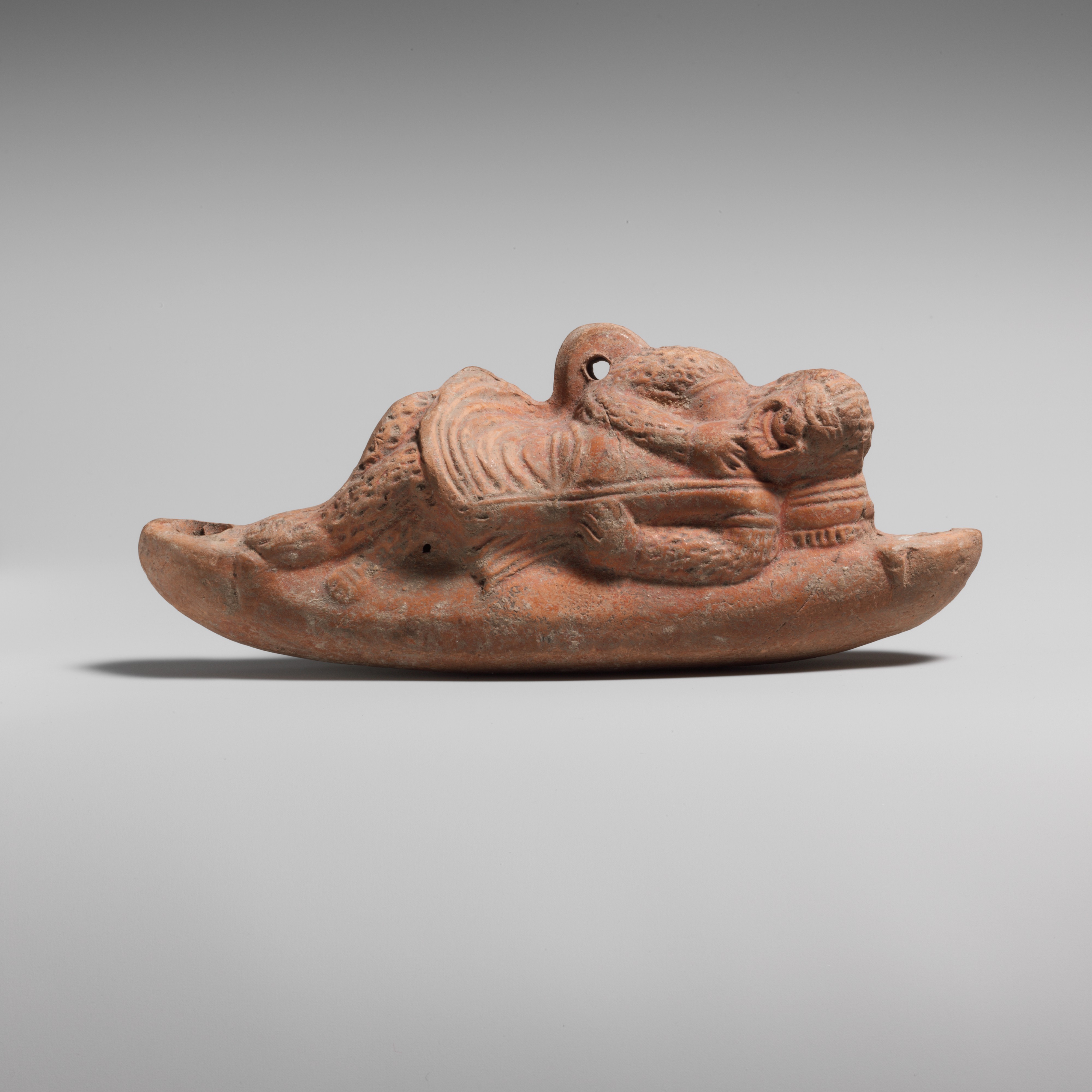 Roman terracotta hanging lamp in the form of a comic actor, 2nd century CE; The Metropolitan Museum of Art, acc. 17.194.1810. Public Domain.
Banquets, Festivals and Professional Performers
At a private banquet, music and dance could accompany courses, recitation, acrobatics and other entertainment. Performers belonged to the household or were hired for the occasion. Literary accounts often impose a moral judgement: the host's luxury, a dancer's attractiveness or noisy guests matter more to the author than precise choreography.
The profession was diverse. Performers included enslaved people, freedpeople, the freeborn, immigrants and women. The legal and social dishonour attached to stage work did not prevent fame. Tombstones and honorific inscriptions record careers, stage names, patrons and commemoration by colleagues.
Dance also belonged to street festival and religious procession, but communal participation differed from a hired act. A shared instrument or costume does not turn all such events into a single genre.
 Musicians with a hydraulis and cornu. Floor mosaic from the Roman villa at Nennig on the Moselle, Germany, mid-3rd century CE. The scene shows a water organ and a curved brass instrument in the context of public games.
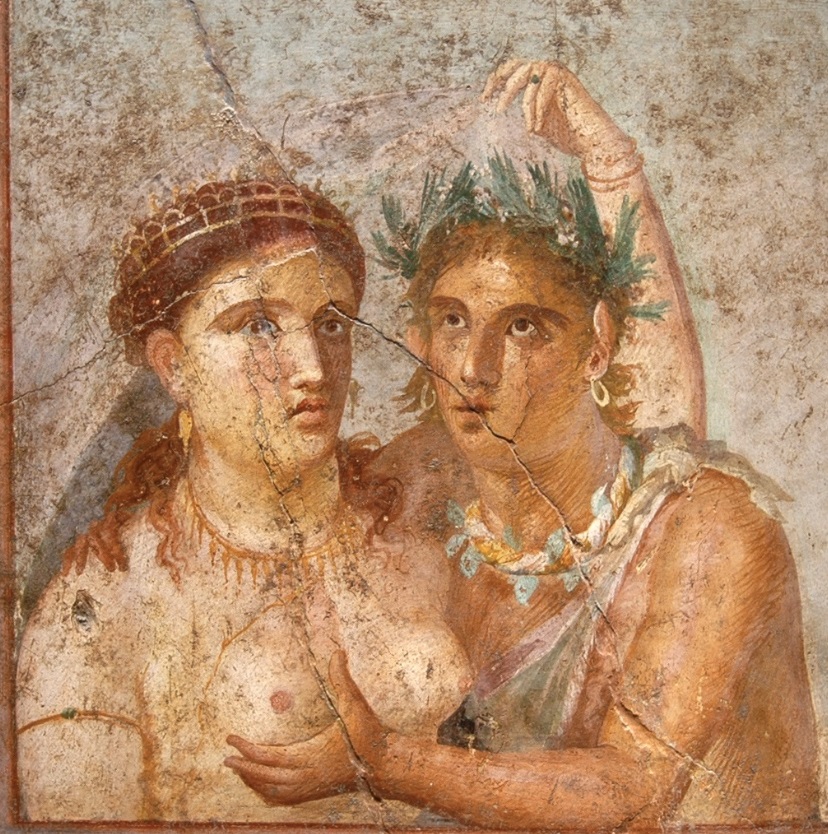 Satyr embracing a maenad. Pompeii; National Archaeological Museum, Naples, inv. 110590. Early first century CE.
Gesture, Mask and Costume
An ancient viewer read not one gesture but a sequence of movement. Head position, gaze, step, turn of the torso, hands and the folds of a mantle created a character together. A mask concealed facial expression but strengthened the silhouette of a role; changing masks helped a dancer move between characters.
Modern reconstruction can mistake an elegant sculptural pose for a frozen frame of actual dance. A sculptor could exaggerate swirling cloth and a difficult turn for composition, while an early modern restorer might replace missing arms and attributes. Movement should therefore be reconstructed through comparison: several images, a description of performance, the construction of costume and the physical possibility of the pose.
Music was inseparable from movement. Tibia, percussion, strings, chorus and hydraulis created different conditions for ritual, chamber entertainment and the large stage. Instruments and performers are surveyed in Music in Ancient Rome.
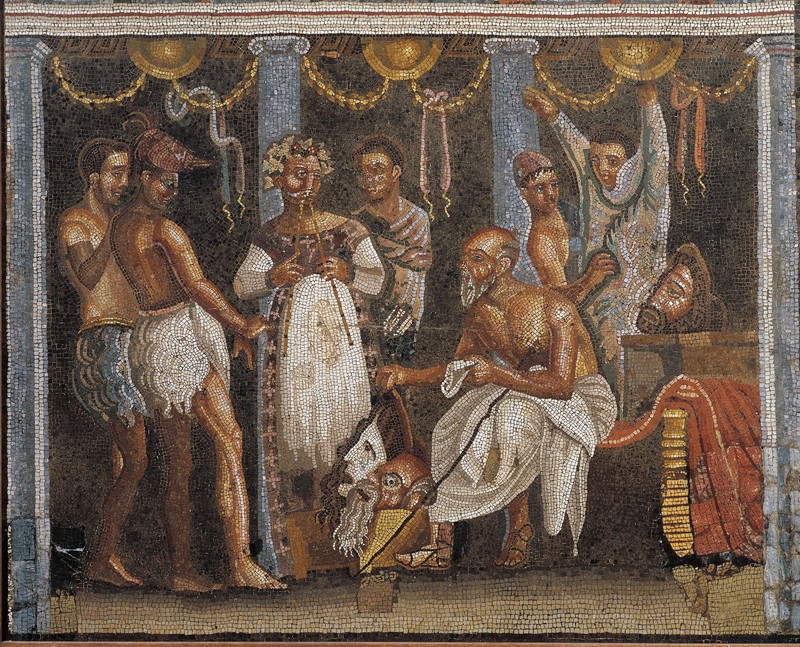 Actors preparing for a satyr play. Mosaic from the House of the Tragic Poet at Pompeii, 69–79 CE; Naples, National Archaeological Museum, inv. 9986. Masks, costume, danced movement and a double-pipe player turn a lost performance into a carefully organised image.
What Can and Cannot Be Reconstructed
The evidence securely distinguishes settings, lists instruments, shows masks and clothing, establishes individual poses and explains the narrative role of gesture. It confirms the popularity of pantomime and the high degree of professional specialisation.
Exact sequences of steps, tempo, duration and regional variants are much harder to recover. A modern name for a movement does not become ancient merely because it resembles a figure on a relief. A historically responsible performance should identify what is directly attested and what a director has supplied to create continuity.
Related Topics
- Art of Ancient Rome
- Music in Ancient Rome
- Theatre
- Roman Religion
- Religion of Ancient Greece and Rome
- Pompeii
- Greek Mythology
- Gladiatorial Games
- Painting in Ancient Rome
Literature and Sources
- Livy. Ab urbe condita, VII.2.
- Lucian. On Dance.
- Apuleius. Metamorphoses, X.29-34.
- Schlapbach, Karin. The Anatomy of Dance Discourse: Literary and Philosophical Approaches to Dance in the Later Graeco-Roman World. Oxford University Press, 2018.
- Lada-Richards, Ismene. Silent Eloquence: Lucian and Pantomime Dancing. Duckworth, 2007.
- Garelli, Marie-Hélène. Danser le mythe: la pantomime et sa réception dans la culture antique. Peeters, 2007.
- Hall, Edith; Wyles, Rosie, eds. New Directions in Ancient Pantomime. Oxford University Press, 2008.
- Webb, Ruth. Demons and Dancers: Performance in Late Antiquity. Harvard University Press, 2008.
- The Metropolitan Museum of Art. Marble relief with a dancing maenad
- The Metropolitan Museum of Art. Roman terracotta bowl with dancers
- Image source: Fragment of a Roman marble relief with dancing maenads, 1st-2nd centuries CE; The Metropolitan…
- Image source: Bronze statuette of a veiled and masked dancer, 3rd-2nd centuries BCE; The Metropolitan Museum of…
- Image source: Marble disk with two theatre masks in relief
- Image source: Roman terracotta hanging lamp in the form of a comic actor, 2nd century CE; The Metropolitan Museum…
Interested in Ancient Rome beyond reading? Join Legio X Fretensis or explore our reenactment directions.


