Art of Ancient Rome
The art of ancient Rome includes architecture, sculpture, painting, mosaic, metalwork, glass and terracotta, as well as theatre, music and dance. These forms did not exist in isolation: a temple combined architecture, cult statue, relief and paint; a theatre joined building, costume, mask, music and movement; a house brought together plan, wall painting, mosaic, furniture and small sculpture.
There was no single unchanging "Roman style." Artistic culture developed over more than a millennium in Italy, Europe, North Africa and Asia, absorbing Etruscan, Greek, Hellenistic, Egyptian and local provincial traditions. What made it Roman was not the absence of borrowing but the ability to place images in new political, religious and domestic contexts.
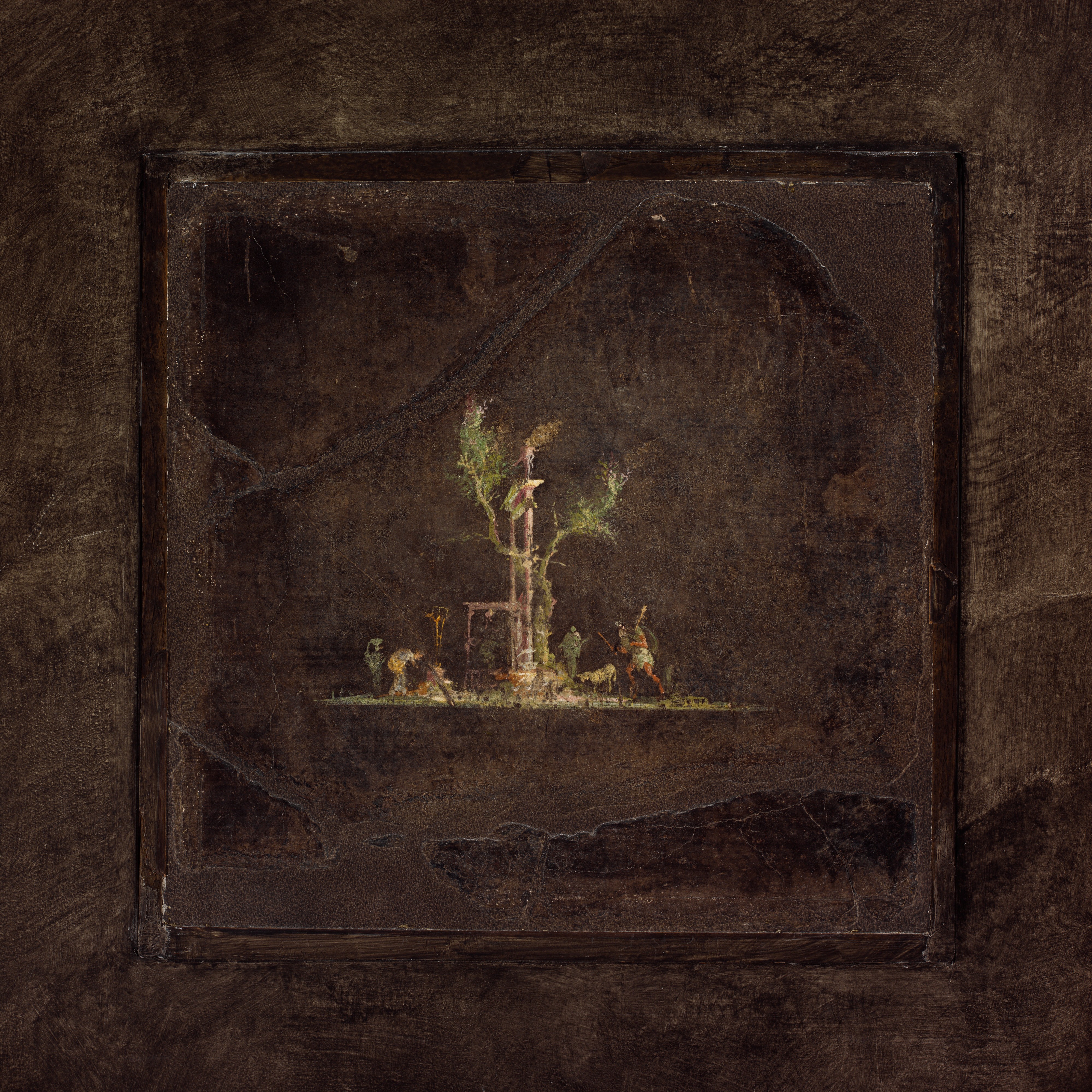 Wall painting on a black ground with a landscape vignette from the imperial villa at Boscotrecase. Fresco, last decade of the 1st century BCE; The Metropolitan Museum of Art, acc. 20.192.10. Third Pompeian Style. Public Domain.
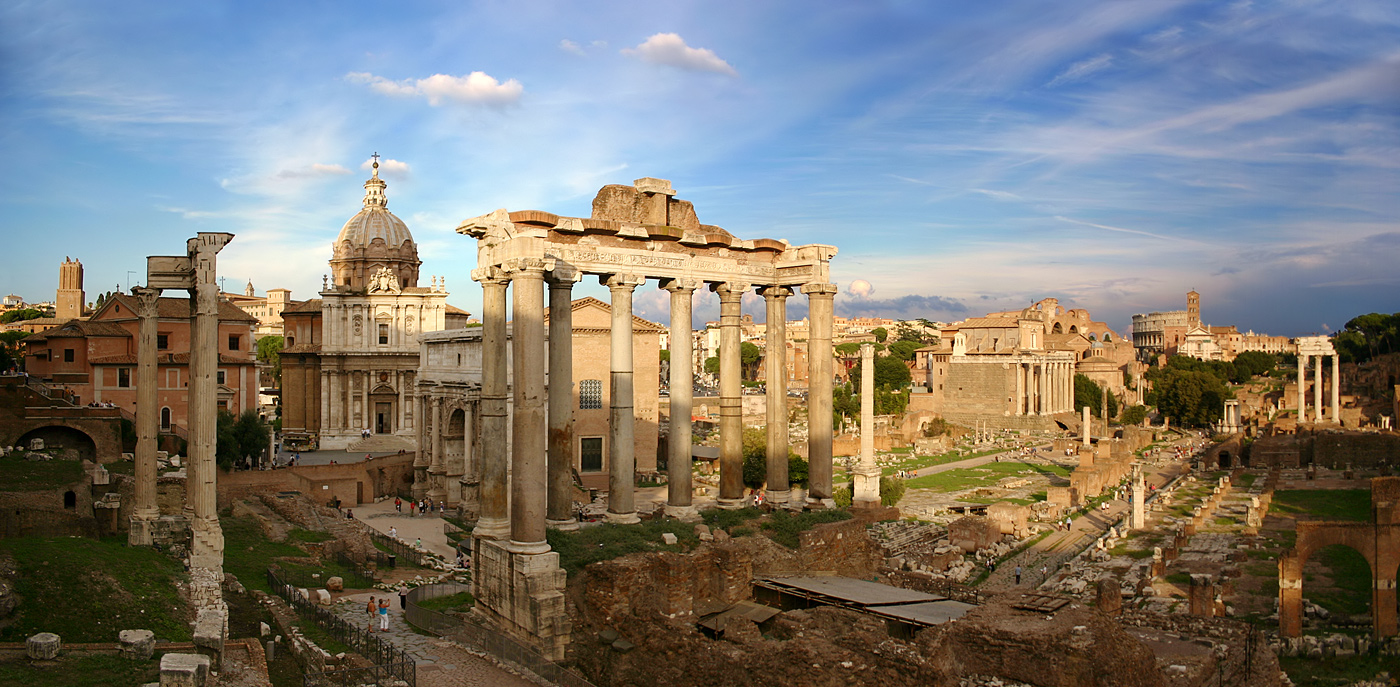 Roman Forum, modern view. Temples, basilicas, curia, rostra, arches and roads formed not a single design but a layered centre rebuilt over centuries.
Forms of Art in Roman Culture
The modern division between "fine" and "applied" arts fits ancient practice poorly. A statue might be a sacred image, political monument, ancestral portrait or garden ornament; a silver cup was at once a household object, a display of wealth and a surface for mythological imagery. Several broad routes are useful:
- Architecture of Ancient Rome — temples, forums, baths, theatres, houses, engineering and the organisation of space.
- Painting in Ancient Rome — wall painting, lost portable pictures, technique, subjects and the four Pompeian styles.
- Sculpture in Ancient Rome — cult statues, imperial images, private busts, funerary reliefs and adaptations of Greek models.
- Roman Mosaics and Decorative Arts — floors and walls, stone and glass paste, metalwork, pottery, jewellery, furniture and small objects.
- Theatre in Ancient Rome — comedy, tragedy, mime and pantomime, actors, masks, stage and audience.
- Music in Ancient Rome — voice, tibia, kithara, cornu, hydraulis and music in ritual and spectacle.
- Dance in Ancient Rome — ritual movement, banquet performance, stage dance and mythological pantomime.
Literature and oratory interacted closely with these forms but were transmitted primarily through text and performance. An ancient work often existed in several media at once: a myth could be heard in poetry, seen on a wall and recognised in a pantomime's gestures.
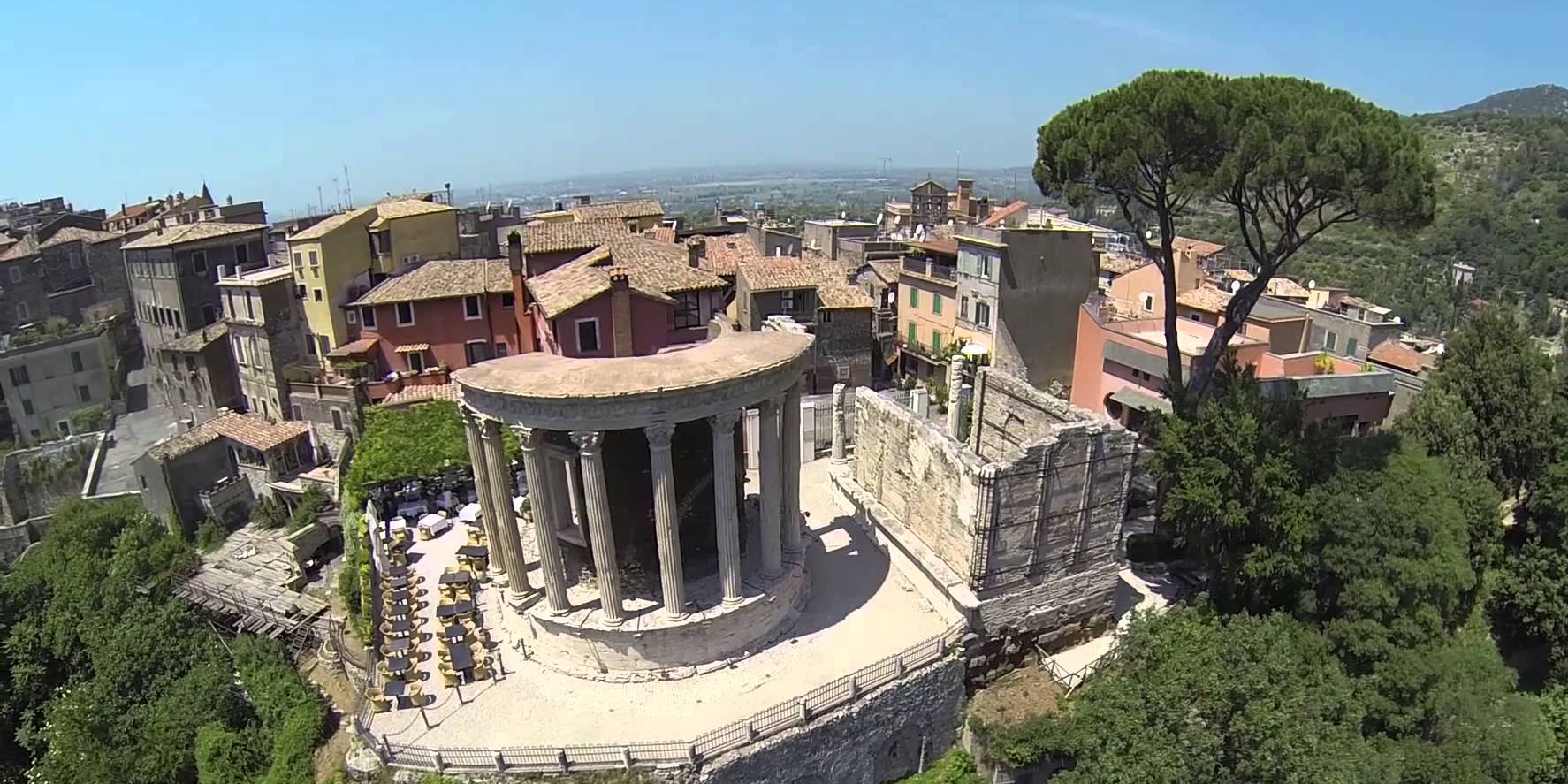 The so-called Temple of Vesta at Tivoli, late Republic, 1st century BCE. Its circular cella, Corinthian colonnade and high podium combine the Greek tholos form with Italic frontality.
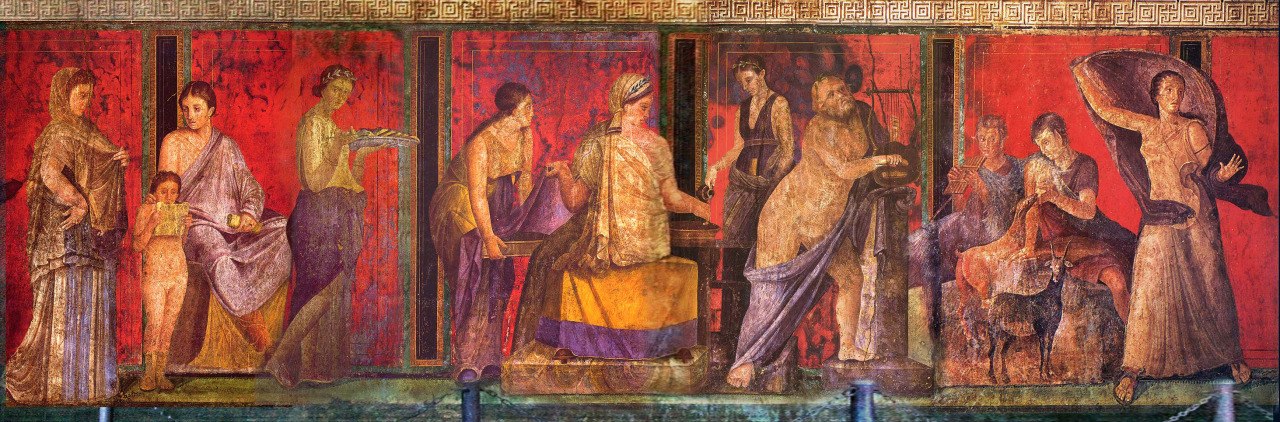 Fragment of the monumental wall painting from the Villa of the Mysteries near Pompeii, mid-1st century BCE. Second-Style figures form a continuous ritual and mythological frieze; the scene's precise interpretation remains debated.
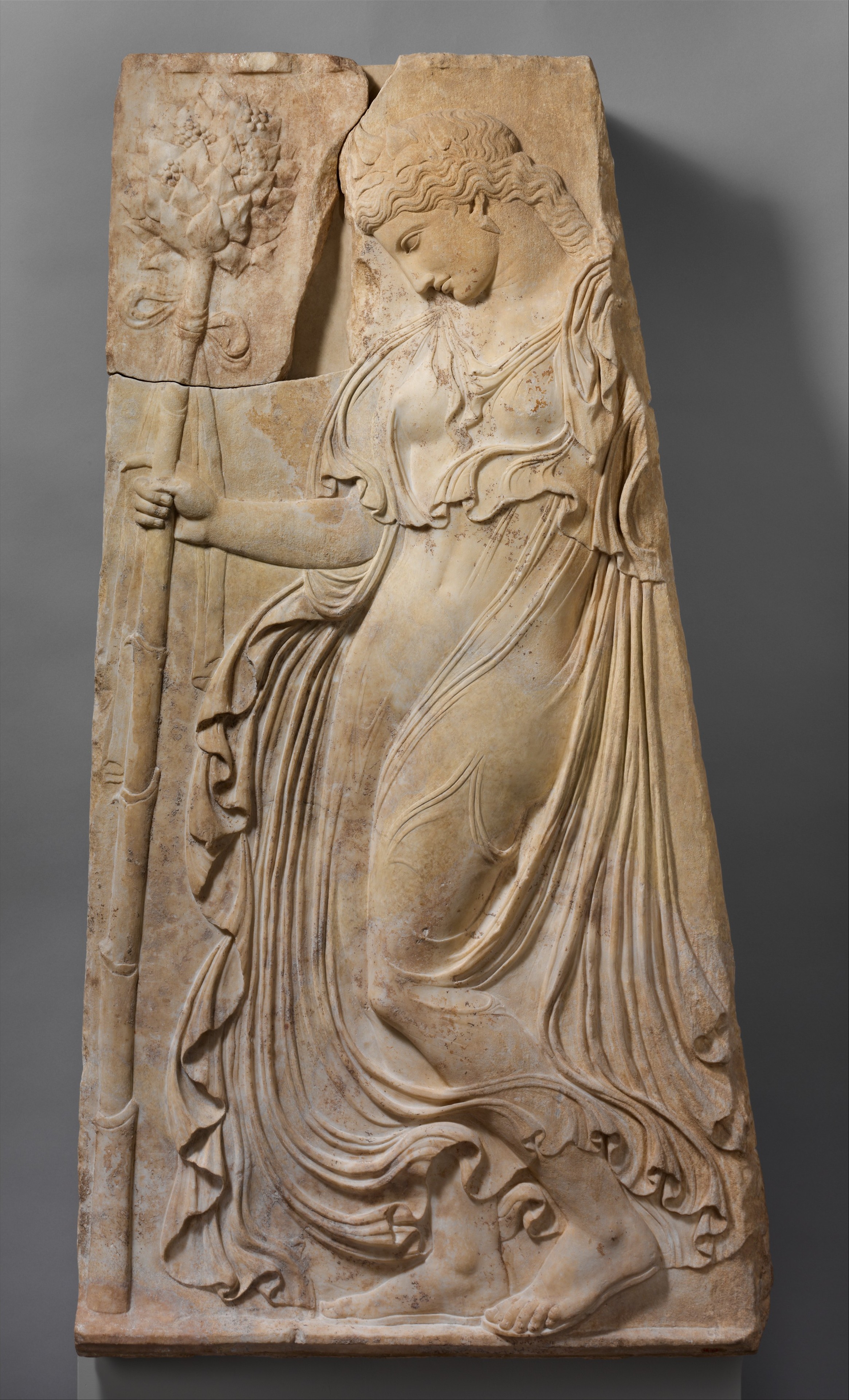 Dancing maenad with a thyrsos, Roman marble relief of the Augustan period, ca. 27 BCE–14 CE; an adaptation of a late Classical Greek type. The Metropolitan Museum of Art, acc. 35.11.3. Public Domain.
Origins and Main Periods
Early Roman art formed within the cultures of Italy. Etruscan cities transmitted temple forms, terracotta decoration, funerary painting, bronze casting and ways of representing authority. Greek colonies in southern Italy, trade and warfare exposed Romans to Greek pottery, statues and mythological subjects long before the conquest of mainland Greece.
During the Republic victories brought spoils, craftsmen and a huge market for Greek works to Rome. At the same time Roman historical relief, public monuments and portraits developed ways to emphasise age, experience and social role. Late Republican houses joined Hellenistic myths with Italic plans and displays of an owner's status.
Under Augustus classical Greek forms became a language for a new political order: idealised portrait, altar, forum and temple connected peace, piety and dynasty. Imperial art of the 2nd and 3rd centuries does not form a straight line from "realism" to "decline": classicising, expressive, hierarchical and regional approaches could coexist. Late Antiquity favoured frontality, symbolic hierarchy and new Christian subjects, but mosaic, portraiture, architecture and the adaptation of older images continued.
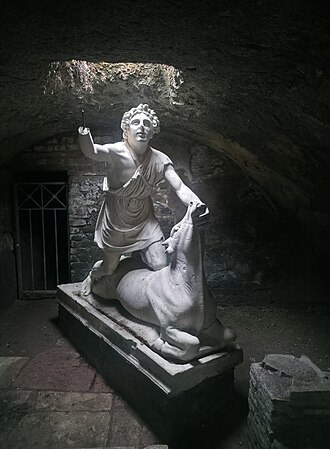 Marble group of Mithras killing the bull from the mithraeum in the service corridor of the Baths of Mithras at Ostia, 1st–2nd centuries CE; Ostia Museum, inv. 149. A Greek signature on the bull reads, 'Kriton the Athenian made it.' Wikimedia Commons, CC BY 4.0.
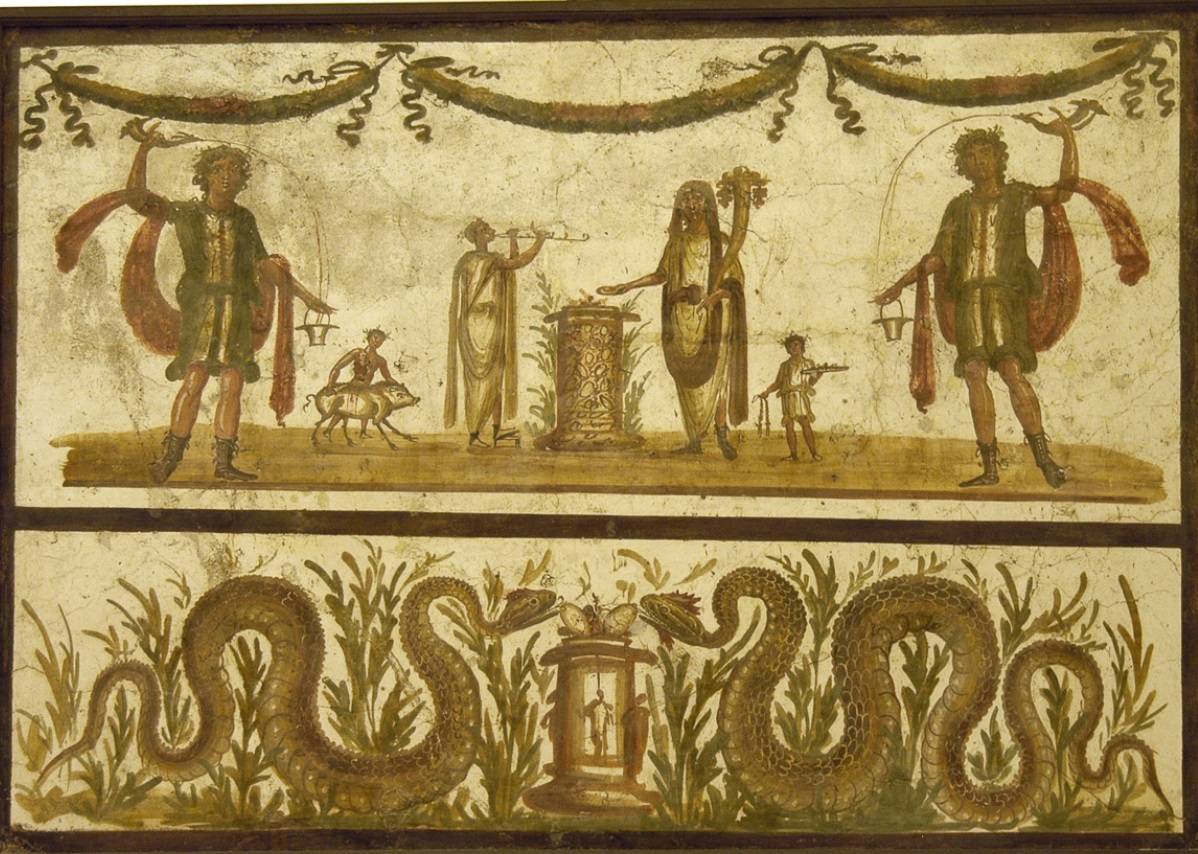 Lares, genius and serpents on a fresco from a Pompeian lararium, Insula VIII.2; Naples, National Archaeological Museum, inv. 8905, AD 69-79.
Architecture and Monumental Space
Architecture provided the framework for other arts. A temple facade directed procession towards altar and cult statue; a forum placed portraits, honorary inscriptions and monuments; baths combined vaulted halls, marble veneers, pools, mosaic and sculptural collections. In a private house, painting and mosaic responded to light, a visitor's route and a room's function.
Romans did not invent the column, arch or concrete as isolated phenomena, but they joined the architectural orders with arches, vaults and opus caementicium on a broad scale. This produced interiors and systems of movement impossible within a post-and-lintel scheme alone. The Sanctuary of Fortuna at Praeneste shows how terraces, stairs, ramps and views made a visitor's movement part of the artistic effect.
Monumental language spread through the provinces not as an exact copy of the capital. Local materials, craft traditions, cults and civic elites altered Roman types. A temple in Gaul, a theatre in Asia Minor and a house in North Africa could therefore belong to a shared imperial culture while retaining regional character.
 Sanctuary of Fortuna Primigenia at Praeneste, modern Palestrina, late 2nd-early 1st century BCE. Terraces, stairs, ramps and vaulted substructures organise movement up the hillside.
Painting, Sculpture, Portraiture and Mosaic
Most surviving Roman painting consists of wall decoration on plaster. Written sources mention pictures on wooden panels and other portable works, but organic supports have largely vanished. Pompeii, Herculaneum and Campanian villas provide exceptionally rich evidence because of the eruption of 79 CE; this is a remarkable sample, not proof that painting existed only around Vesuvius.
Roman sculpture included cult images, portraits, tombstones, sarcophagi, historical relief and garden decoration. A "copy of a Greek original" was not necessarily a mechanical repetition or cheap substitute: material, scale, attributes, composition and display context could all change. A portrait might combine individual features with an ideal body, dynastic hairstyle, official dress and an inscription.
Mosaic belonged to architecture. A geometric floor set the rhythm of a room, a figured emblema marked its centre, and a glass wall mosaic could work with water and plants in a nymphaeum. Mosaics preserve myth, spectacle, craft, food and animals, but meaning depends on room and viewer. Small bronzes, lamps, vessels and jewellery carried the same imagery into everyday life.
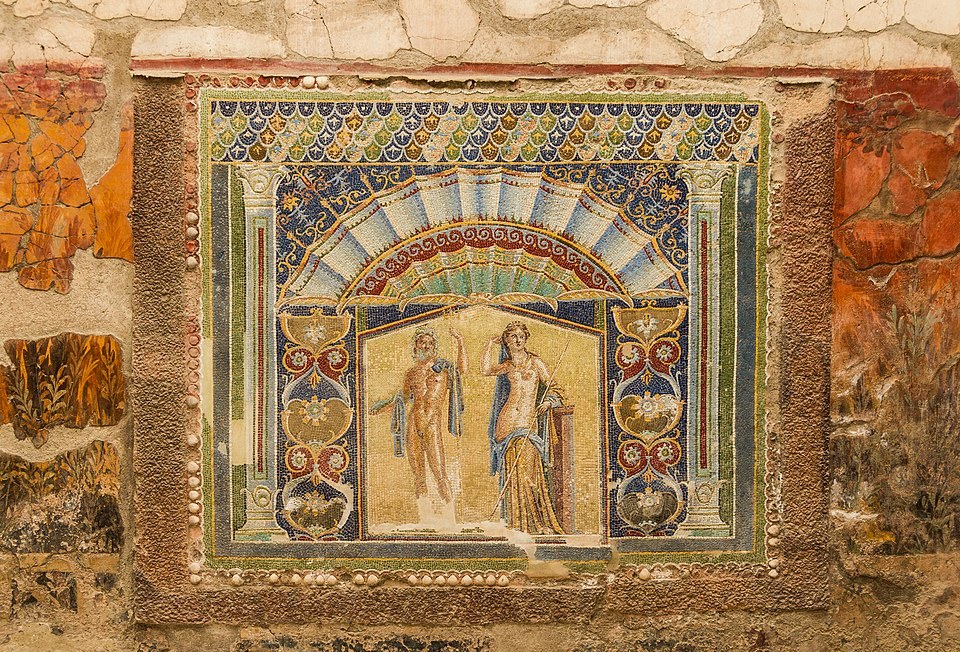 Mosaic of Neptune and Amphitrite in the summer triclinium of the house named after them at Herculaneum, before 79 CE. Glass paste, shells and architectural framing joined wall and nymphaeum into one decorative ensemble. Wikimedia Commons, CC0.
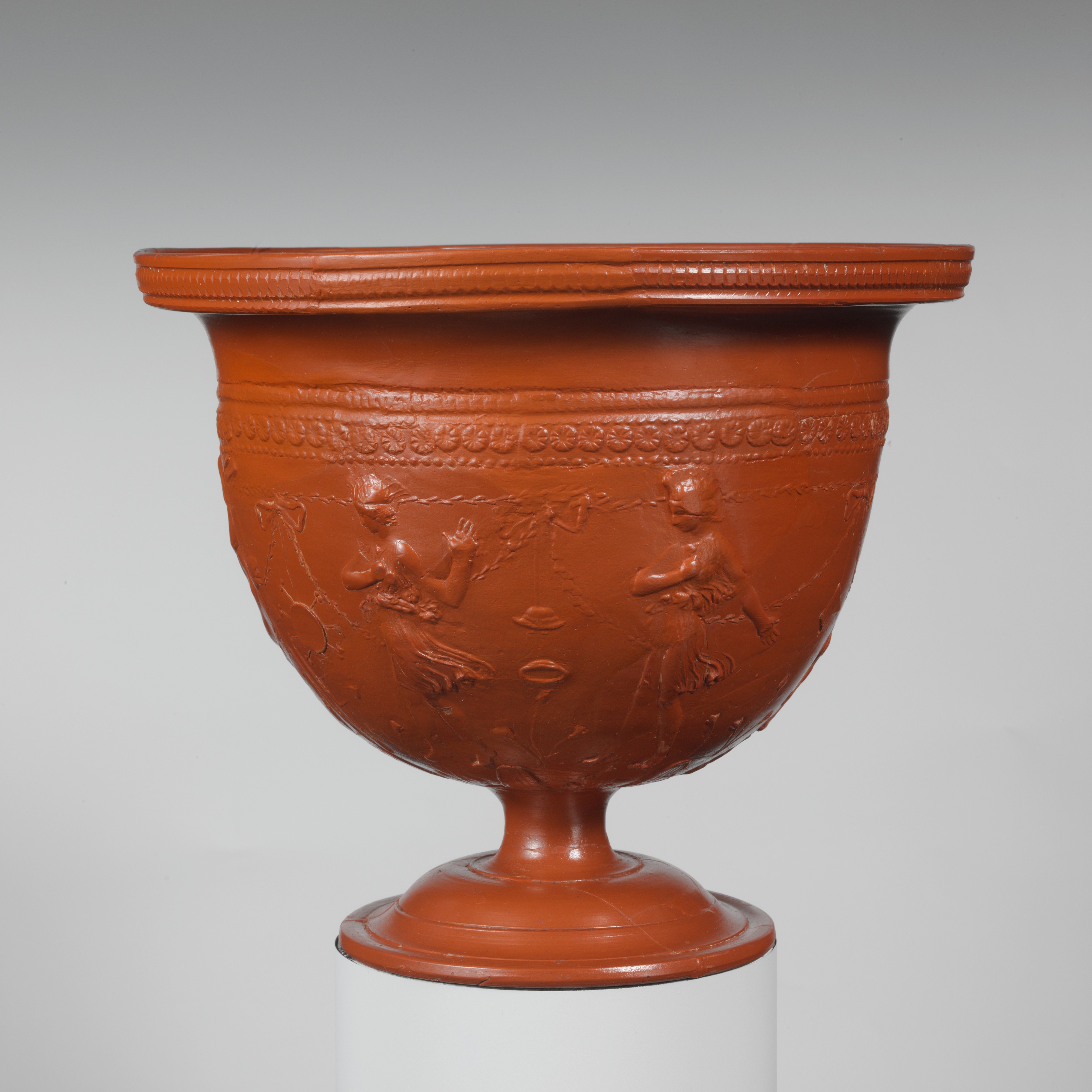 Dancing figures on a Roman terracotta bowl, c. 10 BCE-10 CE; The Metropolitan Museum of Art, acc. 10.210.37. This small object shows dance imagery entering the decoration of everyday vessels. Public Domain.
Theatre, Music and Dance
Performing arts are less securely known than stone buildings because voice, music and movement disappear with performance. A comedy's text does not preserve an actor's timbre; a mask does not record gesture; an instrument without a player does not reproduce ancient sound. Reconstruction must join plays, inscriptions, images, surviving instruments, theatre architecture and comparison among different kinds of evidence.
Theatre combined speech, song, costume, mask and movement. Mime could rely on everyday parody and responsive improvisation, while pantomime centred on myth, orchestra and the expressive body of a dancer. Music also accompanied sacrifice, procession, banquet, funeral, games and military signalling, but these settings required different ensembles and sounds. Dance belonged to religious ritual, private entertainment and the professional stage.
Images of performers are not neutral records of a show. A maenad relief represents mythical ecstasy, a lamp in the form of a comic actor turns a stage type into a household object, and masks in decoration can signal education and a connection with Dionysus. They must be read with the find context and function of the object.
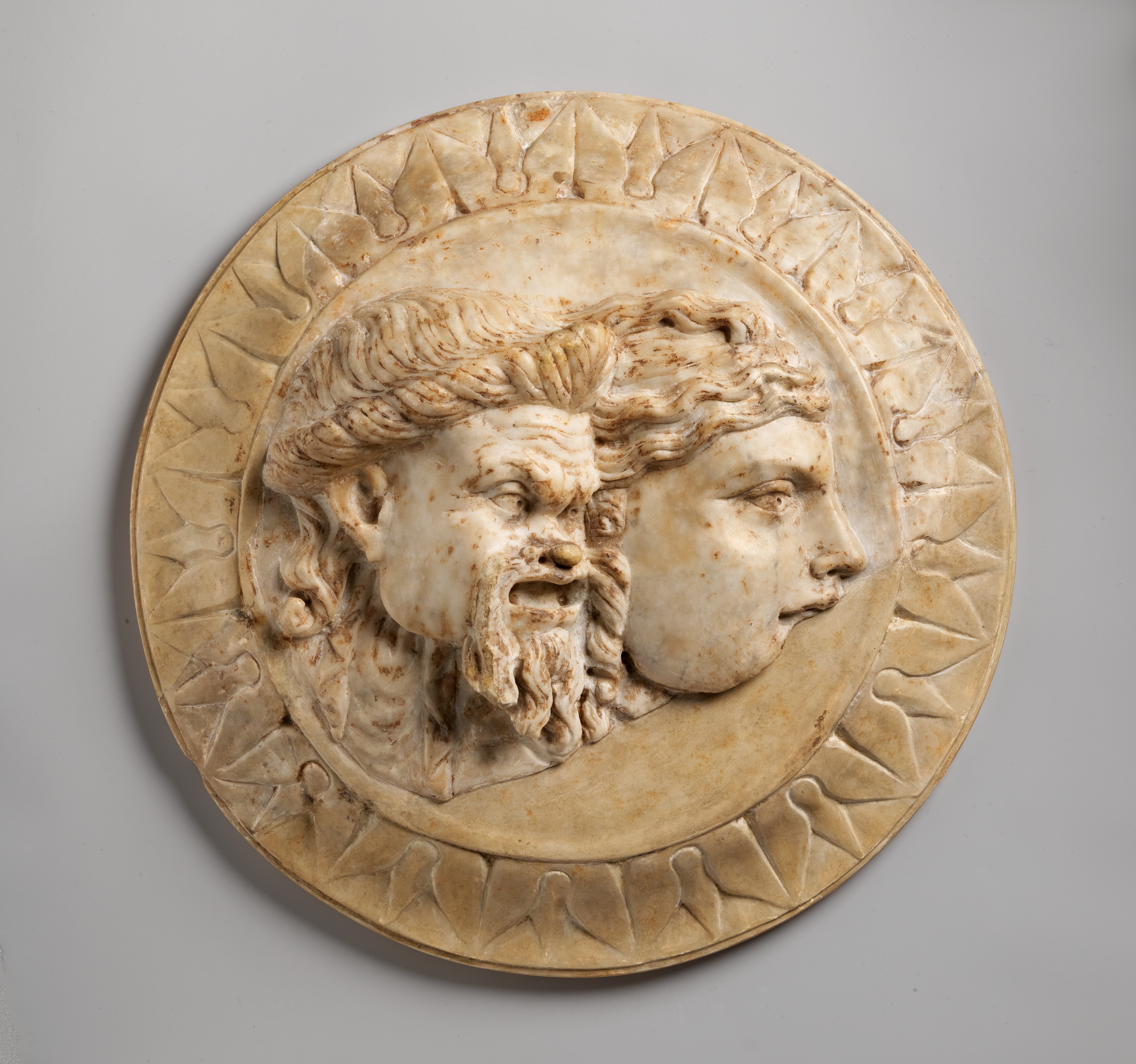 Marble disk with two theatre masks in relief. Roman, third quarter of the 1st century CE; The Metropolitan Museum of Art, acc. 13.229.6. Public Domain.
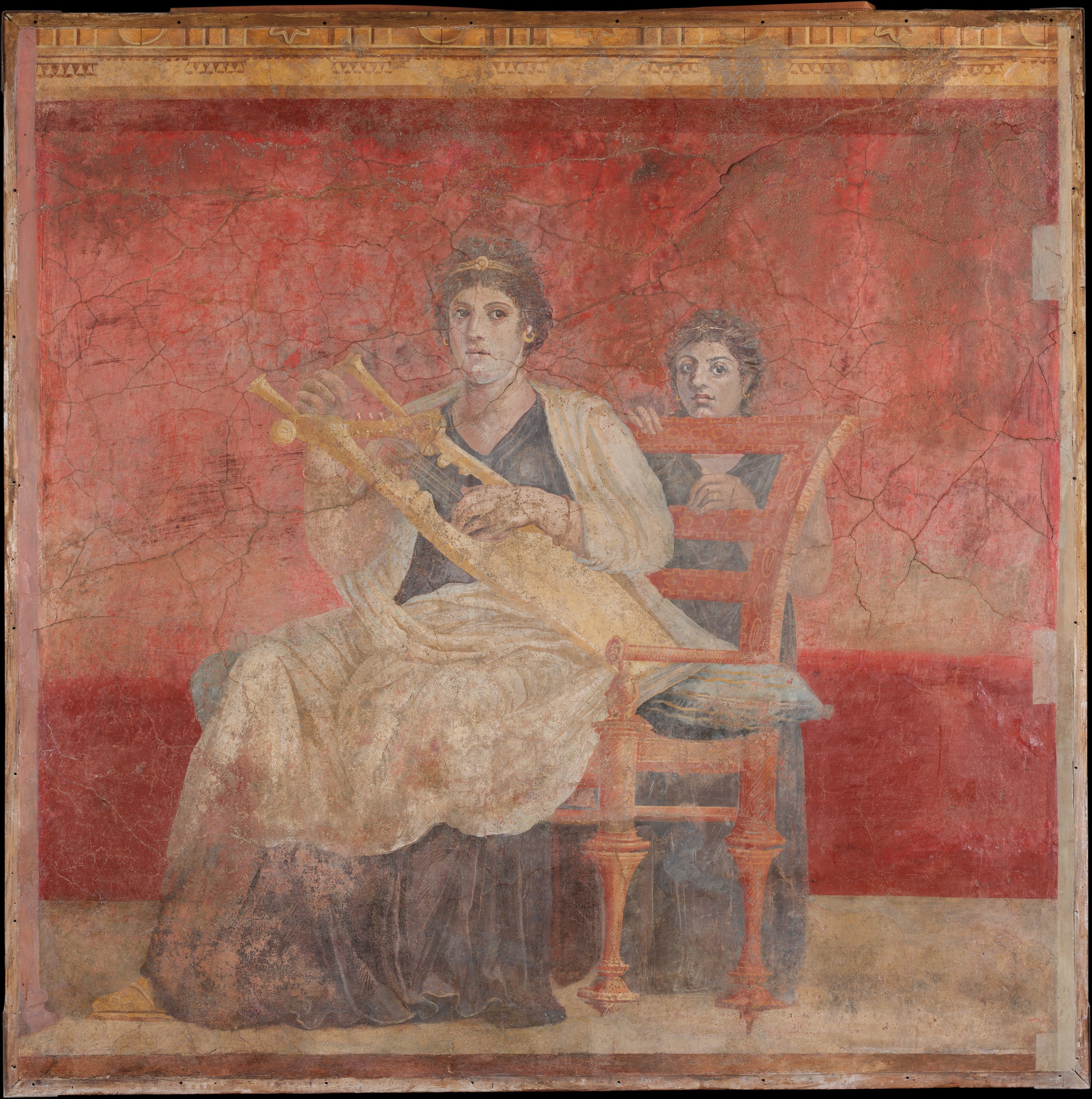 A woman with a kithara and a girl in a wall painting from Room H of the Villa of Publius Fannius Synistor at Boscoreale. Fresco, c. 50-40 BCE; The Metropolitan Museum of Art, acc. 03.14.5. Public Domain. Source: The Met, 03.14.5
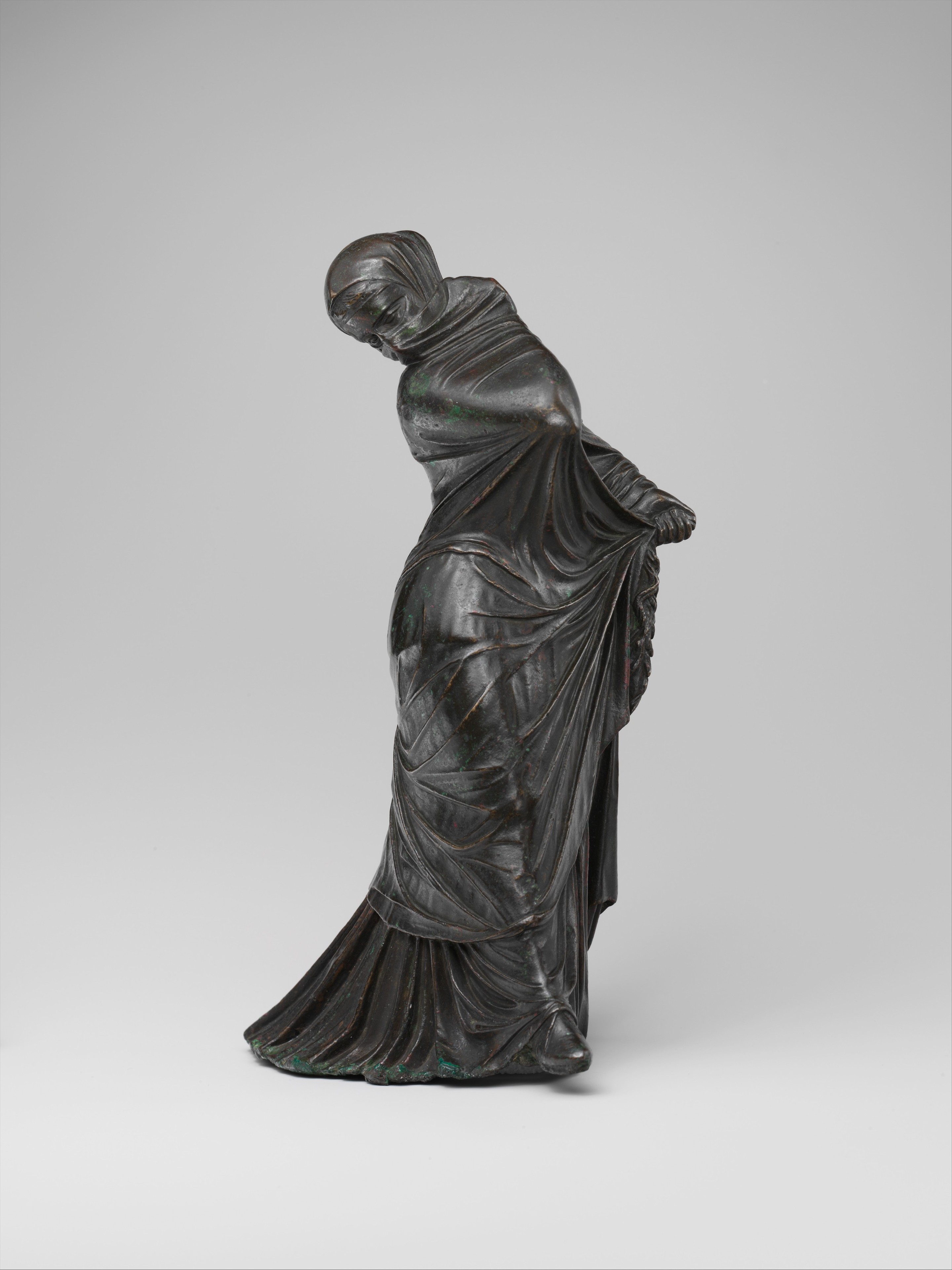 Bronze statuette of a veiled and masked dancer, 3rd-2nd centuries BCE; The Metropolitan Museum of Art, acc. 1972.118.95. This Hellenistic object represents one of the stage traditions inherited by the Roman world. Public Domain.
Patrons, Makers and Viewers
Art was commissioned by emperors and senators, civic magistrates, temples, associations, military units, merchants, freedpeople and householders. Some monuments addressed a whole city, others guests in an atrium, members of a cult or visitors to a tomb. The same myth changed meaning in a temple, bedroom, bath and sarcophagus.
The patron's name can conceal the labour of a workshop. Architects, masons, sculptors, founders, painters, mosaicists, carpenters, musicians, actors and dancers could be freeborn, freed or enslaved. A Greek name does not always prove a maker's origin, while the absence of a signature does not imply the absence of design. Some objects were produced in series, but a template was combined with hand finishing and the patron's choices.
Viewers also shaped a work. An urban crowd read inscriptions and recognised an imperial portrait; a house guest related painting to the owner's education; a worshipper encountered divine presence in a statue; a theatre audience applauded and demanded repetition. Roman art was not only an object but a relationship among image, place and community.
How Roman Art Is Studied
Reliable interpretation begins with context. We need to know where an object was found, which layer and room it belonged to, whether it was moved in antiquity and what restorers added. A museum statue without base and inscription may lose its name; a fresco cut from a wall its relation to neighbouring scenes; a mosaic the direction from which an entering viewer saw it.
Written sources supplement objects but do not replace them. Vitruvius describes architecture and painting technique, while Pliny the Elder discusses artists, materials and famous works, yet both select evidence for their own purposes. Inscriptions, brick stamps, graffiti, inventory numbers and early excavation reports often supply more prosaic but verifiable information.
Ancient statues and buildings were much more colourful than the modern appearance of ruins: pigment, gilding, cloth, water, plants, smoke and sound contributed to perception. This does not license imaginary colouring. Pigment traces, materials analysis, comparison among copies and documented reconstruction distinguish evidence from probability.
The mosaic of actors preparing for a satyr play illustrates the central principle: the image joins a Greek subject, a Roman object, a Pompeian house and a modern museum display. None of these levels can be discarded without losing meaning.
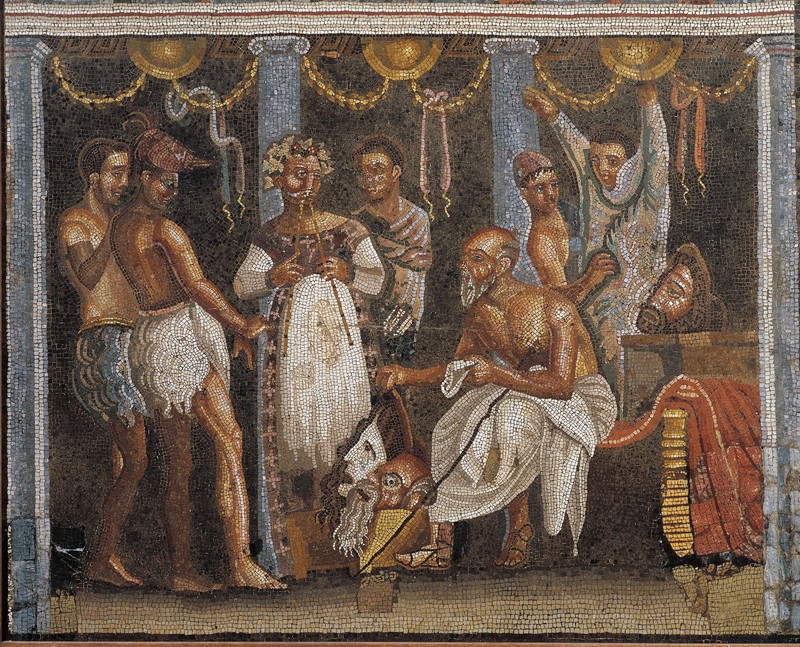 Actors preparing for a satyr play. Mosaic from the House of the Tragic Poet at Pompeii, 69–79 CE; Naples, National Archaeological Museum, inv. 9986. Masks, costume, danced movement and a double-pipe player turn a lost performance into a carefully organised image.
Related Articles
- Architecture of Ancient Rome
- Painting in Ancient Rome
- Sculpture in Ancient Rome
- Roman Mosaics and Decorative Arts
- Theatre in Ancient Rome
- Music in Ancient Rome
- Dance in Ancient Rome
- Roman Religion
- Roman Gods
- Pompeii
- Herculaneum
- Ostia Antica
- Museums of Antiquity
- National Archaeological Museum of Naples
Literature and sources
- Vitruvius. De architectura.
- Pliny the Elder. Natural History. Books 34-36.
- Clarke, John R. Art in the Lives of Ordinary Romans. University of California Press, 2003.
- Elsner, Jas. Art and the Roman Viewer. Cambridge University Press, 1995.
- Hölscher, Tonio. The Language of Images in Roman Art. Cambridge University Press, 2004.
- Kleiner, Fred S. A History of Roman Art. Cengage Learning, 2017.
- Stewart, Peter. The Social History of Roman Art. Cambridge University Press, 2008.
- Zanker, Paul. Roman Art. J. Paul Getty Museum, 2010.
- Smarthistory. Ancient Roman Art, an Introduction
- The Metropolitan Museum of Art. Roman Art
- The Metropolitan Museum of Art. Roman Painting
- The Metropolitan Museum of Art. Roman Portrait Sculpture
- Archaeological Park of Ostia Antica. Statuary Group of Mithras, inv. 149
- Image source: Wall painting on a black ground with a landscape vignette from the imperial villa at Boscotrecase
- Image source: Dancing maenad with a thyrsos, Roman marble relief of the Augustan period, ca
- Image source: Bronze statuette of a veiled and masked dancer, 3rd-2nd centuries BCE; The Metropolitan Museum of…
- Image source: Marble disk with two theatre masks in relief
- Image source: Dancing figures on a Roman terracotta bowl, c
Interested in Ancient Rome beyond reading? Join Legio X Fretensis or explore our reenactment directions.


