Triumvirate
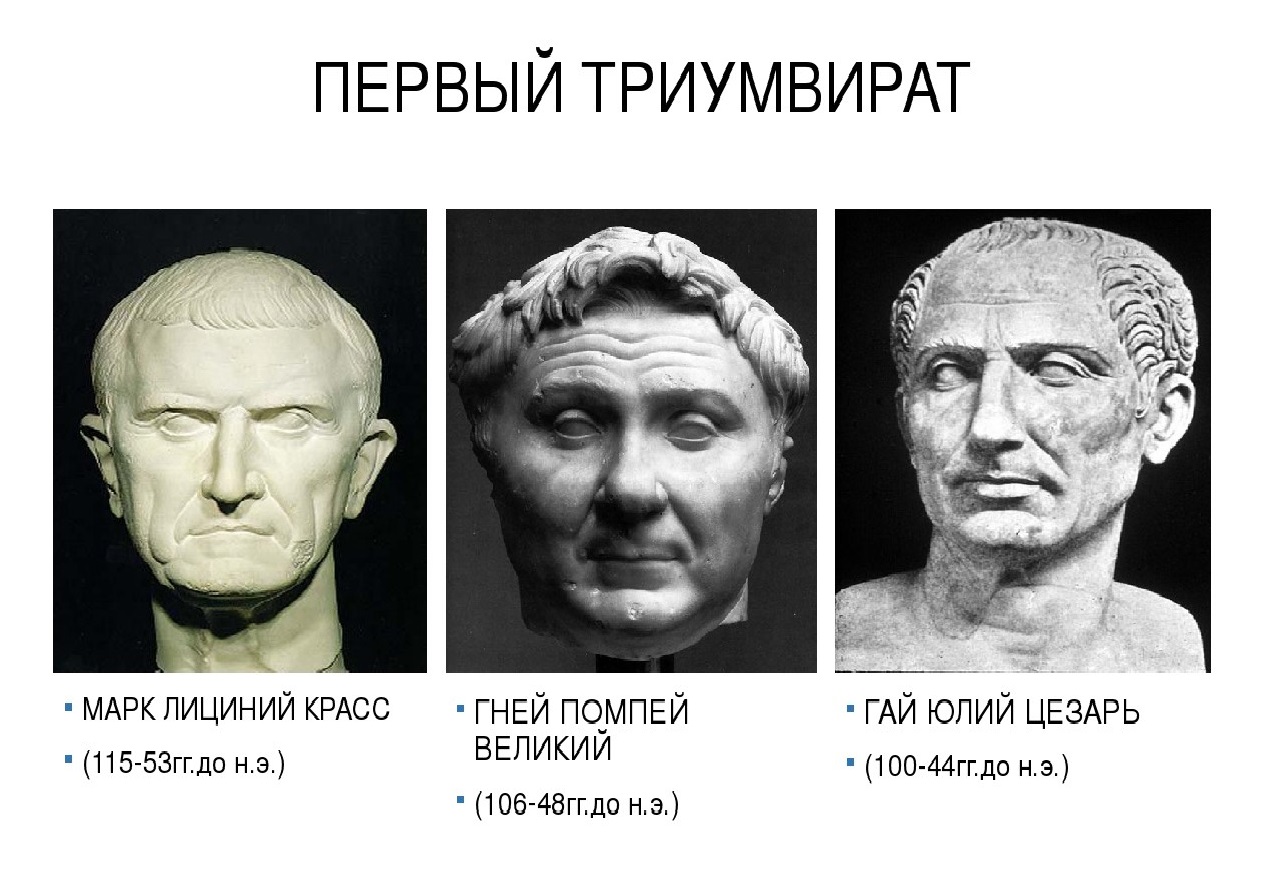
A triumvirate is rule, a commission or a political alliance of three people. In Roman history the word is most often linked with two late Republican alliances: the First Triumvirate of Caesar, Pompey and Crassus and the Second Triumvirate of Octavian, Antony and Lepidus.
In brief:
- the literal meaning is 'three men', tres viri;
- the First Triumvirate was a private agreement without a formal law;
- the Second Triumvirate was an extraordinary state commission;
- both alliances reveal the crisis of normal Republican institutions.
Quick answer
| Topic | One-paragraph answer | Read next |
|---|---|---|
|
triumvirate meaning / what is a triumvirate |
A triumvirate is rule, a commission or a political alliance of three leaders. In Roman history the key examples are the First Triumvirate of Caesar, Pompey and Crassus and the Second Triumvirate of Octavian, Antony and Lepidus. |
The First Triumvirate was an informal alliance, while the Second was legally established and received extraordinary powers. They should not be treated as identical in status.
Common follow-up questions
Was a triumvirate a monarchy? No. It concentrated power in three participants, not in one king or emperor.
Why do the triumvirates matter? They show the crisis of republican institutions and Rome’s movement toward one-man rule.
Topic guide
In brief
| Question | Answer |
|---|---|
|
What it was |
An alliance or board of three political leaders created to control power and divide authority. |
|
Main examples |
|
|
Why it matters |
The triumvirates show the institutional crisis of the late Roman Republic. |
Participants
| Triumvirate | Participants | Read next |
|---|---|---|
|
First |
Gaius Julius Caesar, Gnaeus Pompey the Great, Marcus Licinius Crassus. |
|
|
Second |
Timeline
| Date | Event | Significance |
|---|---|---|
|
60 BCE |
Caesar, Pompey and Crassus form an informal alliance. |
The First Triumvirate bypasses ordinary republican politics. |
|
53 BCE |
Crassus dies. |
The balance between the partners collapses. |
|
43 BCE |
The Second Triumvirate is legally established. |
Three men receive extraordinary powers. |
|
31-30 BCE |
Antony and Cleopatra are defeated. |
Octavian becomes the sole centre of power. |
Key articles
- First Triumvirate
- Second Triumvirate
- Roman Republic
- Political system of Republican Rome
- Domestic politics in Republican Rome
FAQ
Was a triumvirate an official office? The First Triumvirate was an informal political alliance. The Second Triumvirate was established by law and received extraordinary powers.
How did a triumvirate differ from the consulship? The consulship was a regular magistracy with annual turnover. A triumvirate concentrated power in three leaders during a crisis.
Why does the topic matter for Roman history? The triumvirates show how elite rivalry, armies and patronage networks undermined the republican balance.
First and Second Triumvirates compared
| Alliance | Members | Status |
|---|---|---|
|
First Triumvirate |
Caesar, Pompey, Crassus |
Private political agreement |
|
Second Triumvirate |
Octavian, Antony, Lepidus |
Official extraordinary commission |
Why triumvirates became possible
The triumvirates did not result from a single intrigue but from a systemic crisis of the Republic. The Senate could no longer balance the interests of commanders, veterans, provinces, equestrians and the urban plebs. Victorious generals returned with armies, prestige and clients, while political decisions were increasingly forced through popular assemblies, street pressure and military power.
The First Triumvirate showed that a private coalition could overcome senatorial opposition. The Second went further by turning an alliance of three leaders into a legally constituted emergency commission. The subject therefore explains not only the careers of Caesar and Octavian, but also the transition from Republic to Empire.
Related topics
I. Late Republic
II. First Triumvirate
III. Second Triumvirate
IV. Reference
Literature and sources
Ancient sources
1. Plutarch. Parallel Lives: Caesar, Pompey, Crassus and Antony. 2. Appian. The Civil Wars. 3. Suetonius. The Divine Julius; Augustus. 4. Cassius Dio. Roman History.
Modern studies
1. Erich S. Gruen. The Last Generation of the Roman Republic. 2. Ronald Syme. The Roman Revolution. 3. Christian Meier. Caesar.
Interested in Ancient Rome beyond reading? Join Legio X Fretensis or explore our reenactment directions.


