Roman State
The Roman state developed from an urban community into a power uniting the Mediterranean. Its institutions changed as its territory and population grew. Kingship, Republican institutions and imperial rule were not three unchanging constitutional models: each period underwent major transformations.
Political history is inseparable from Roman society and citizenship. Voting, holding office, eligibility for particular military units and legal protections depended on period and individual status. This section connects the history of government with the communities it governed.
From kingship to Empire
- Roman Kingdom — the early community, kingship and traditions about the origins of institutions. The conventional dates of 753–509 BCE do not give every reported event equal historical certainty.
- Roman Republic — conventionally 509–27 BCE; magistrates, Senate and popular assemblies interacted in government.
- Roman Empire — imperial rule is usually dated from Augustus' settlement in 27 BCE. Older institutions did not disappear overnight.
- Late Roman Empire — changes in administration, armies and the relationship between government and religion.
Republic describes a political order, whereas empire can also mean a territorial dominion. Rome acquired extensive overseas territories before government by emperors.
Senate, magistrates and assemblies
Republican powers were distributed among officeholders, the Senate and assemblies of citizens. This was not a modern separation of powers. The Senate exercised substantial political authority; magistrates performed administrative, judicial and military duties; assemblies elected officials and passed laws.
- Republican government — the system as a whole.
- Senators and Senate — membership, status and influence.
- Roman magistracies and the consul — offices and powers.
- Elections — civic participation and voting procedures.
Under emperors, many office names survived, but their holders' practical powers depended on the ruler. Continuity of terminology does not imply unchanged functions.
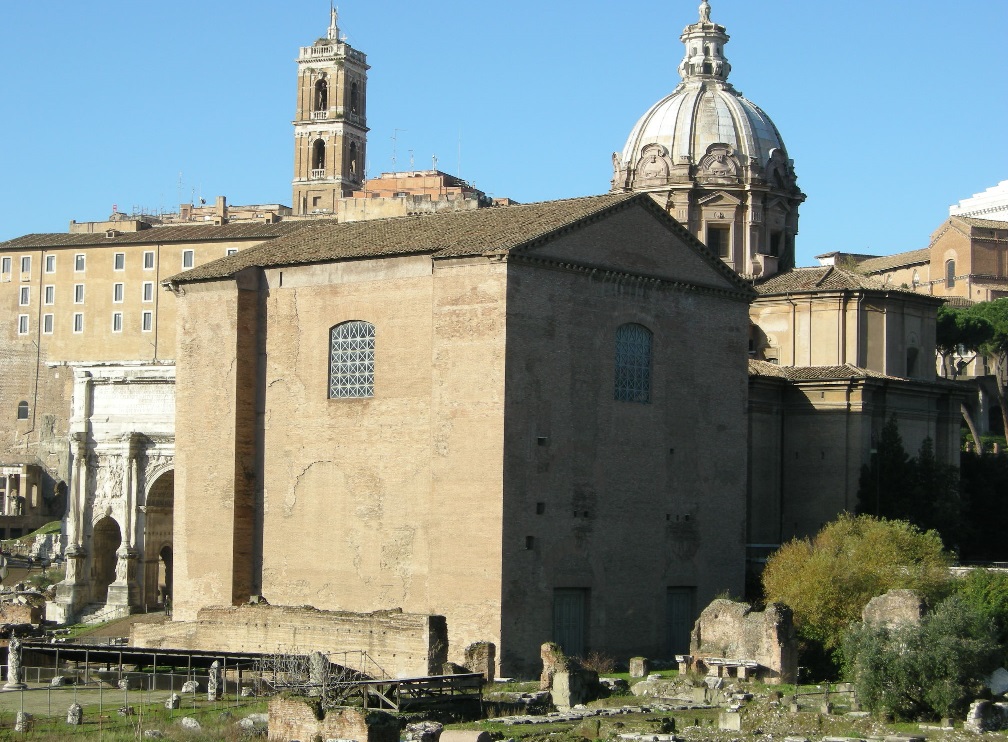 Curia Julia,meeting place of the Senate in the Roman Forum
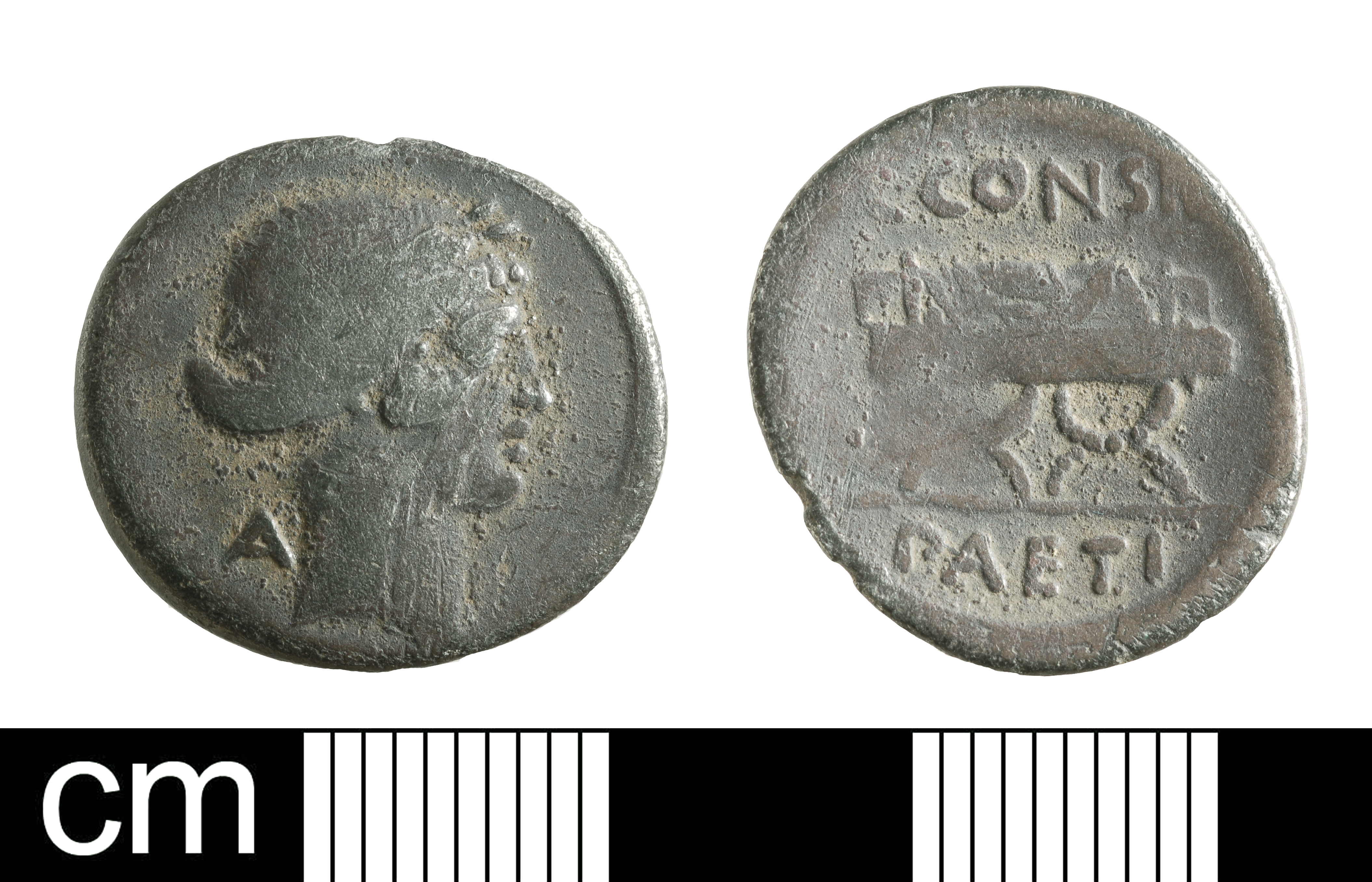 Silver denarius of C. Considius Paetus, 46 BCE. The reverse depicts a curule chair, a symbol of magisterial rank. Portable Antiquities Scheme, BH-D70528 / FindID 772011. Photograph: Julian Watters / St. Albans District Council, CC BY 2.0.
Society and citizenship
Roman society was not simply divided into wealthy patricians and poor plebeians. Descent, property, freedom and citizenship were distinct, overlapping differences. Some plebeian families were wealthy and influential; a free provincial inhabitant was not necessarily a Roman citizen. Women could possess Roman citizenship but did not vote in assemblies or hold Republican magistracies.
Roman society introduces social groups, while Roman citizenship explains legal status and its expansion. Caracalla's grant of citizenship to most free inhabitants of the Empire in 212 CE changed its legal landscape without removing economic or social inequalities.
Emperors and imperial government
Imperial authority rested on military command, legal powers, resources and recognition of the ruler. Institutional continuity coexisted with unequal political influence. The lives of the Roman emperors illustrate different ways of establishing authority and transmitting power.
In the provinces, governors worked with local cities and elites. Administration involved taxation, justice, military support and communications. The list of Roman provinces connects administrative names with geography, but provincial boundaries and status must be checked for the period concerned.
Government, warfare and religion
Armies conquered and protected territories, but their commanders could also compete for supreme power. See the Roman army and Republican campaigns. Religious observance was part of public life: cult and officeholding did not belong to wholly separate spheres. See Roman religion.
Western imperial rule ended in the fifth century, while the Eastern Roman Empire continued. The history of the Roman state therefore has no single endpoint shared by all its territories.
Related sections
Wars of Rome · Culture and Daily Life
Literature and sources
- Polybius. Histories 6.11–18 — an account of Republican institutions.
- Cicero. On the Republic; On the Laws — elite political thought, not a neutral administrative manual.
- Augustus. Res Gestae Divi Augusti — the ruler's own presentation of his achievements.
- Andrew Lintott. The Constitution of the Roman Republic. Oxford University Press, 1999.
- The Roman Republic — Metropolitan Museum of Art.
- Civilian history reading: Roman citizens.
Interested in Ancient Rome beyond reading? Join Legio X Fretensis or explore our reenactment directions.


