Wars of Rome
Rome's wars included Republican conquests, struggles for power within the state, revolts and the defence of imperial frontiers. Over the centuries, Rome's enemies, forces and ways of governing conquered territories changed. Victory in a single battle did not necessarily decide a war: alliances, supplies, naval power and the ability to replace losses were also essential.
Conflicts are best understood alongside the development of the Roman Republic, the Empire and the Roman army. The following sections connect the principal topics, from warfare in Italy to the crises of late antiquity.
The struggle for Italy
Roman supremacy in Italy emerged gradually. Military victories went together with treaties, colonies and the incorporation of communities into a network of allies. Allies had different legal positions and supplied troops for common campaigns. The unification of Italy was therefore neither a single continuous war nor an identical settlement imposed on every community.
- Samnite Wars — competition in central and southern Italy.
- The Gallic invasion — conflict with the Gauls and its place in Roman memory.
- Celts and Rome — the wider relationship between Rome and the Celtic world.
The Republic and the Mediterranean
In the third and second centuries BCE, wars against Carthage and the Hellenistic powers carried Roman intervention beyond Italy. Acquired territories required garrisons, governors and new financial arrangements. Military success sharpened aristocratic competition at Rome and transformed the lives of victors and conquered communities alike.
- Punic Wars: the First (264–241), Second (218–201) and Third (149–146 BCE).
- Macedonian Wars — Roman intervention in the Balkans and Hellenistic states.
- Military campaigns of the Roman Republic — a further overview of Republican campaigns.
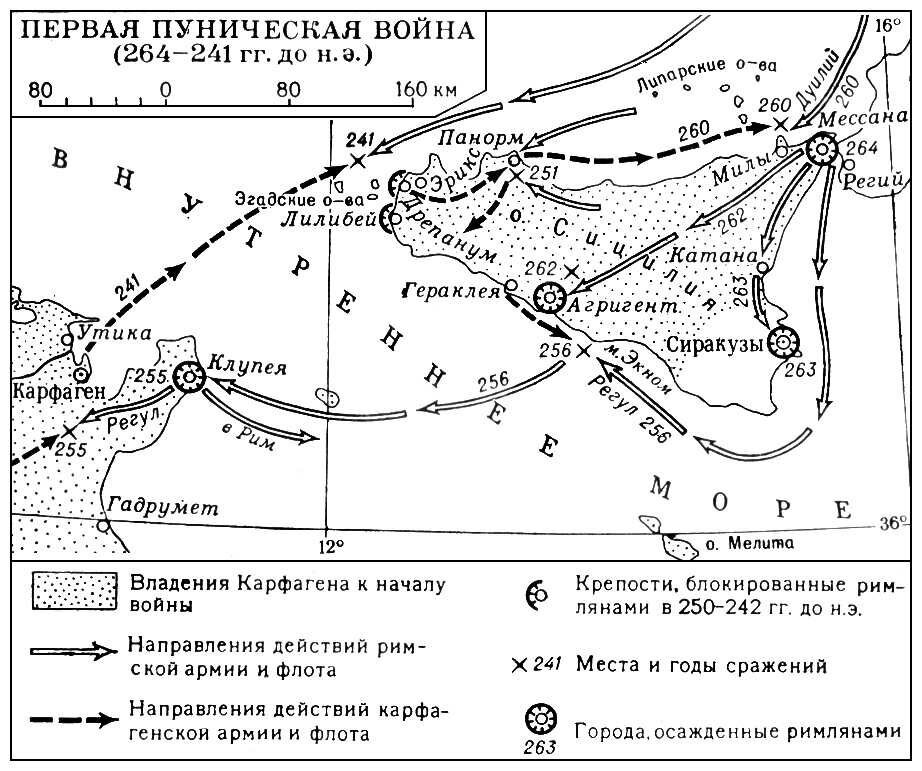 Map of military campaigns of the 1st Punic War
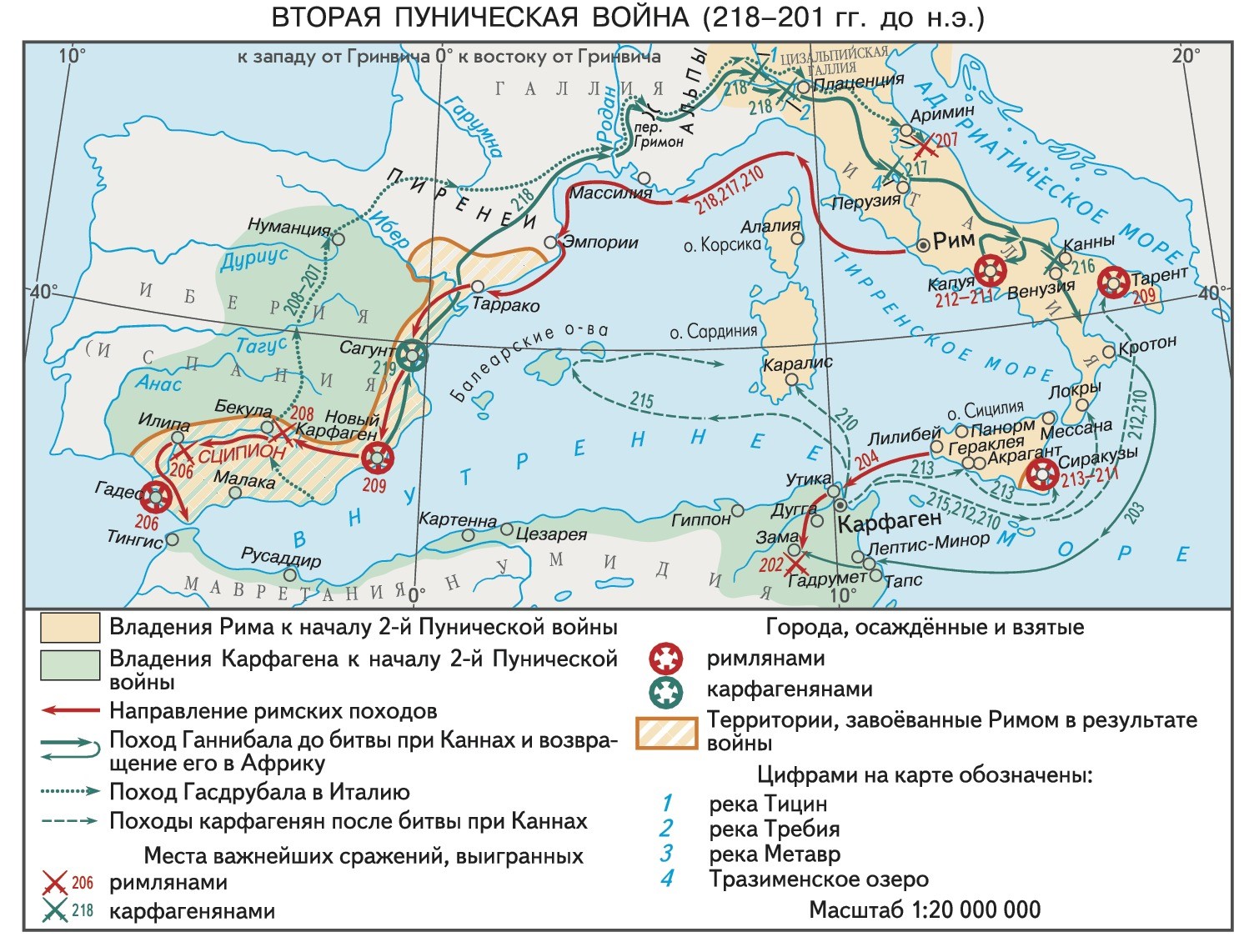 Military campaigns of the Second Punic War
Revolts and civil conflicts
Not all of Rome's enemies were external. Revolts by enslaved people differed from conflicts between Roman political factions, although both could involve substantial armies. Spartacus' revolt reveals Italy's vulnerability to an internal armed uprising. The careers of Gaius Marius, Caesar and Augustus show how military command could underpin personal power. The causes of civil war nevertheless extended beyond individual generals' ambitions.
The Empire and late antiquity
Imperial armies continued to conquer, but holding provinces and guarding extensive frontiers demanded considerable resources. On the Rhine, Danube and eastern frontier, warfare alternated with diplomacy, trade and agreements with neighbouring peoples. An image of permanent war against everyone beyond the border is misleading.
Starting points for this period are the Roman Empire, list of legions and Late Roman Empire. The fall of Rome involved prolonged political and military changes: the end of western imperial rule in the fifth century did not end the Eastern Roman Empire.
Armies on campaign and evidence for war
Campaigns depended on roads, food, transport and discipline. See ancient military campaigns, the legion, auxilia and the Roman fleet. Ancient reports of troop strengths and casualties require caution: political purposes and literary conventions influenced accounts. Inscriptions, coins, fortifications and weapon finds provide complementary evidence; see Roman archaeological sources.
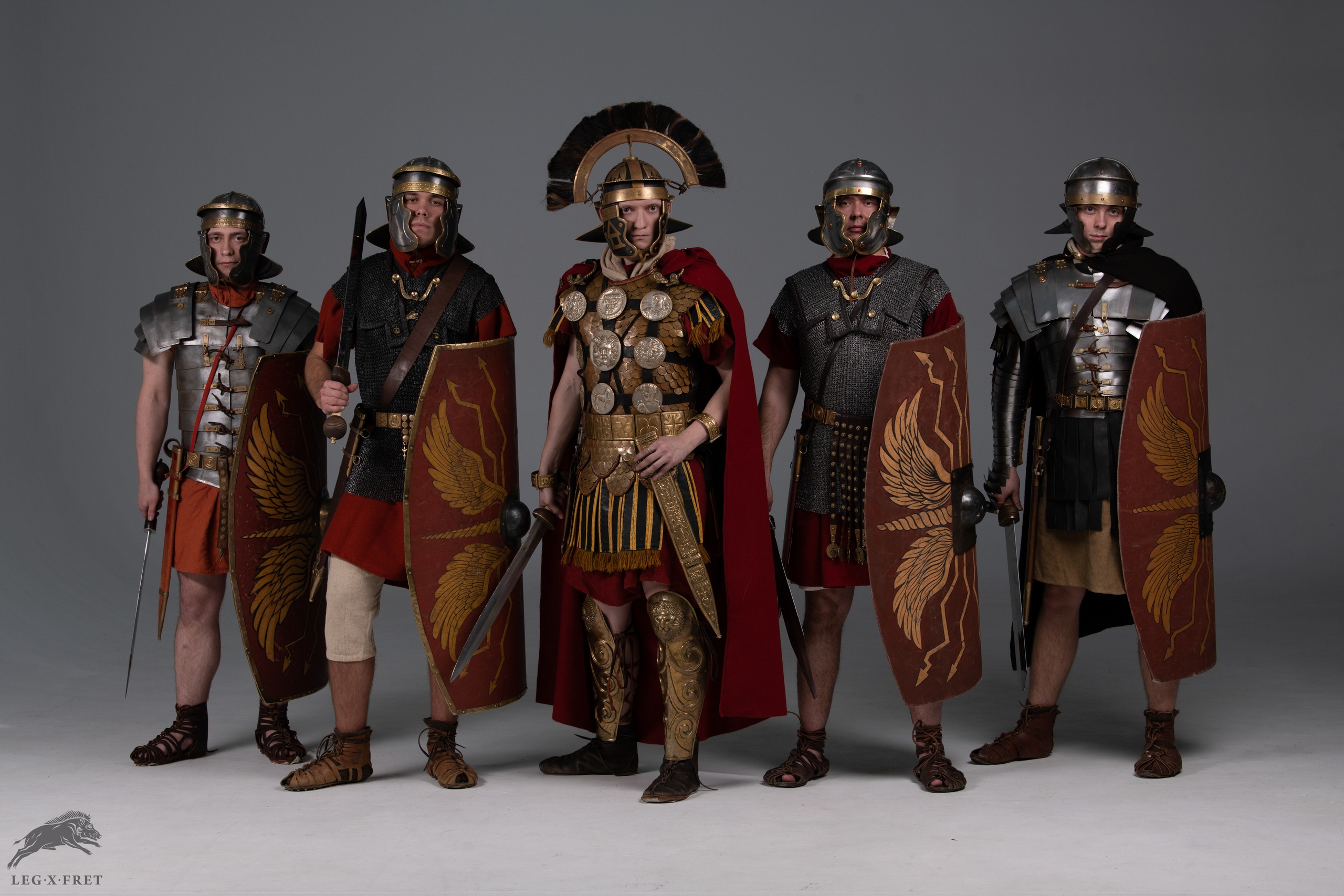 Legionnaires of Legio X Fretensis. Reconstruction
Related sections
Roman State · Culture and Daily Life
Literature and sources
- Polybius. Histories, Books 1–3 and 6.
- Livy. History of Rome, Books 21–30.
- Caesar. The Gallic War; The Civil War.
- Ammianus Marcellinus. Res Gestae.
- The Roman Republic — Metropolitan Museum of Art.
- The Roman Empire — Metropolitan Museum of Art.
- Book collections: Roman army and Late Rome.
Interested in Ancient Rome beyond reading? Join Legio X Fretensis or explore our reenactment directions.


