Culture and Daily Life
Culture and daily life in antiquity grew out of ordinary activities: dressing, preparing food, working, learning, socialising and decorating homes. These practices connected private life with the economy, social position and religion. Most materials here concern the Roman world, with links to Greece and Egypt for comparison.
There was no single way of life shared by every Roman. A wealthy householder, wage earner, rural resident and enslaved person had different experiences. Customs varied by place and period. Ceremonial dress on a statue or a banquet in a literary account should not be treated as everyone's everyday norm.
Clothing and appearance
Dress could indicate status, occupation and the occasion of a public appearance. Climate, work and available materials also influenced it. The toga was an important marker of civic culture, while the tunic served a much wider range of people and activities. Calcei, sandals and other footwear were chosen for different circumstances; one shape should not be assigned to every member of a social group.
The overview of Roman clothing connects individual garments with historical dress. Reconstruction requires comparison of date, location, fibres and images. A Late Antique Egyptian tunic and formal footwear on an Early Imperial statue did not necessarily belong to one outfit.
Homes, cities and household objects
A home was a place of rest, work and social interaction. Its organisation depended on wealth, household composition and urban development. The remains of wealthy houses are often better known than modest dwellings, so patterns of survival affect our picture of everyday life.
- Insula — urban apartment buildings and housing.
- Household utensils — objects in everyday use.
- Baths — bathing, bodily care and social interaction.
- Roman archaeological sources — sites and finds against which reconstructions can be tested.
The same kind of object could be used in different settings. Its function is best considered alongside findspot, material and traces of use.
 Baths of Caracalla in Rome, built in the early 3rd century CE. Massive brick-faced concrete walls, vaults and service areas supported a complex of halls, pools and open spaces.
Food and dining
Diet depended on income, region, season and access to markets. Grain, pulses, vegetables and other provisions formed everyday meals in varying combinations. An elaborate banquet displayed a host's resources and connections, not the normal diet of most people.
Food in antiquity introduces ingredients and culinary practices. Cooking vessels such as cauldrons show methods of preparation, while cups and flasks concern serving and carrying drinks. Recipes should be compared with kitchens and food remains: a surviving recipe does not establish that a dish was widespread.
Vessel shape does not always determine function. A drinking cup could become a burial gift, while a costly cauldron might serve at a feast and later enter a sanctuary. Its history of use matters as much as its name.
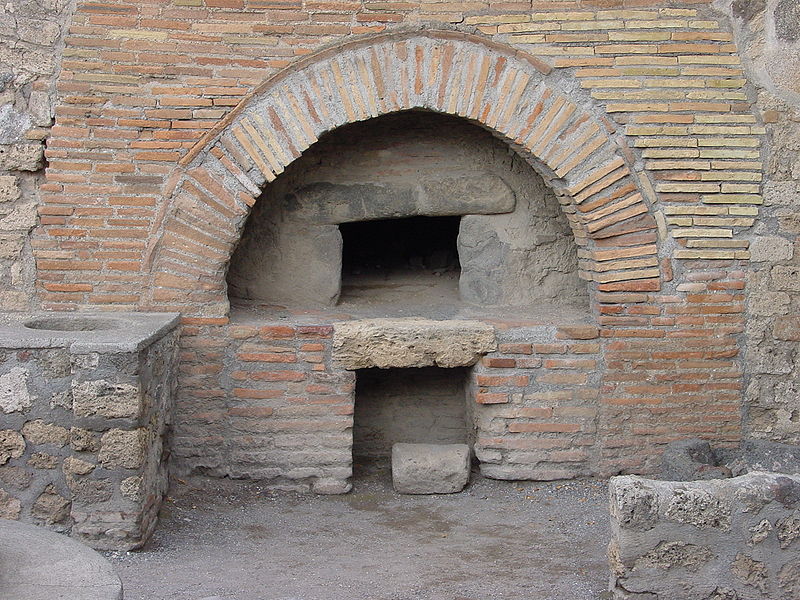 Oven in a public bakery in Pompeii
Art, education and everyday knowledge
Images decorated public buildings, sanctuaries and homes. They expressed authority, family memory, religious beliefs or a patron's taste. Roman art connects artistic forms with their purposes and Greek traditions.
Education in ancient Greece and Rome explores teaching and upbringing. Wax tablets show the material side of writing: notes, exercises and business documents. Literacy was unevenly distributed, and the existence of schools did not mean universal or identical education.
Roman names help identify people, Roman numerals explain numbers, and the Roman calendar clarifies dates and public schedules. These skills connected everyday life with commerce, law and public institutions.
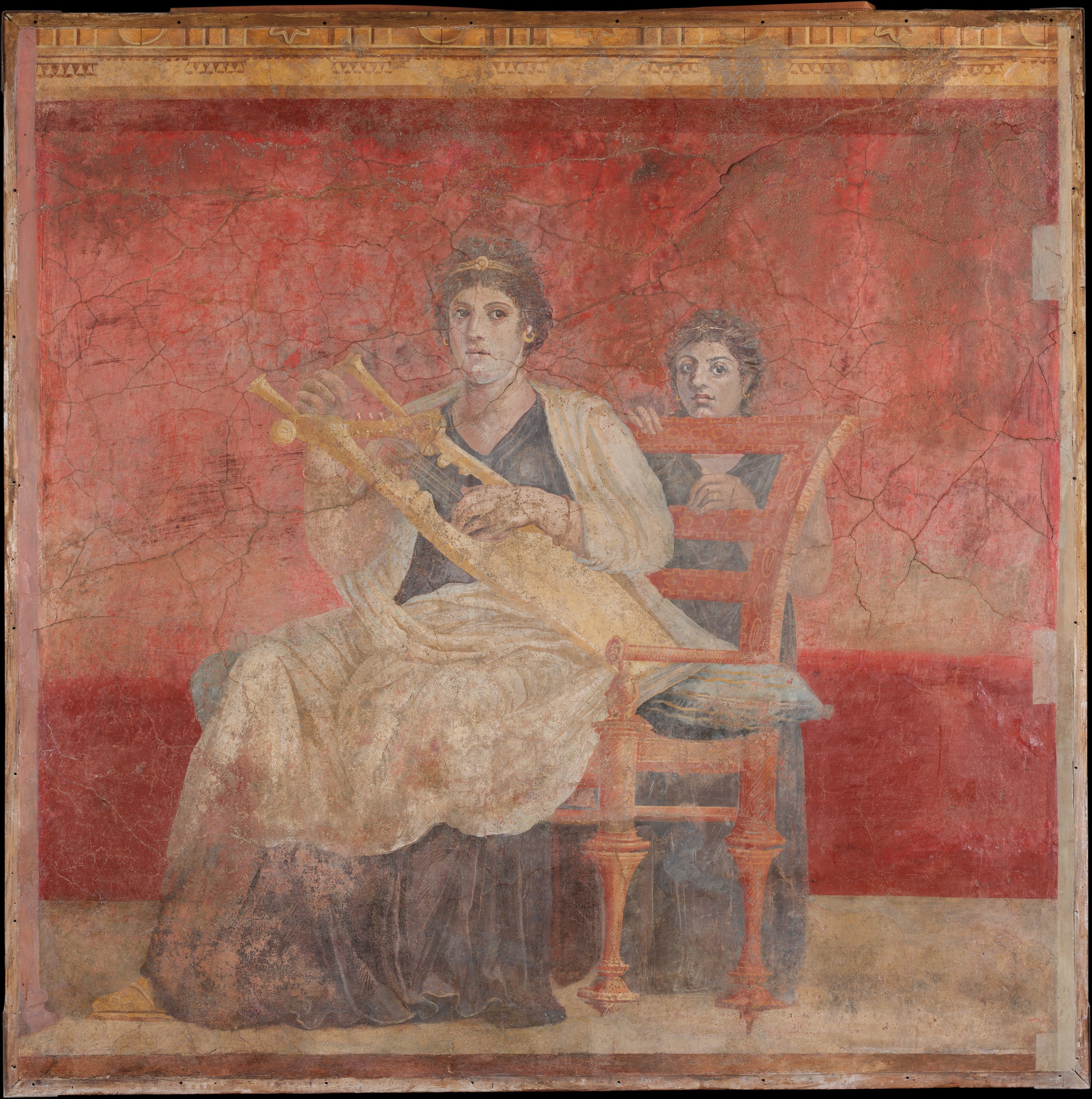 A woman with a kithara and a girl in a wall painting from Room H of the Villa of Publius Fannius Synistor at Boscoreale. Fresco, c. 50-40 BCE; The Metropolitan Museum of Art, acc. 03.14.5. Public Domain. Source: The Met, 03.14.5
Leisure, ritual and neighbouring cultures
Festivals, spectacles and acts of worship connected domestic and public life. Gladiatorial games were organised public spectacles, while Roman religion also embraced household rites. Useful comparisons include Ancient Greece and daily life in ancient Egypt.
Reconstruction begins with the questions: where, when and for whom? The Roman citizens library, museums of antiquity and practical reconstruction experience lead from a general overview to particular objects and manufacturing methods.
Related sections
Literature and sources
- Pliny the Younger. Letters — evidence for the lives of the prosperous Roman elite.
- Vitruvius. On Architecture, Book 6 — ideas about private buildings.
- Martial. Epigrams — literary observations on urban life that must be read with attention to genre.
- Roman Housing — Metropolitan Museum of Art.
- The Roman Banquet — Metropolitan Museum of Art.
- Art of the Roman Provinces — Metropolitan Museum of Art.
- Wall painting from Boscoreale: The Metropolitan Museum of Art catalogue.
Interested in Ancient Rome beyond reading? Join Legio X Fretensis or explore our reenactment directions.


